


Gothic Revival Dresser
A gothic revival dresser brings medieval architectural forms into domestic spaces through heavy carved timber and ecclesiastical detailing.
Gothic Revival Dresser
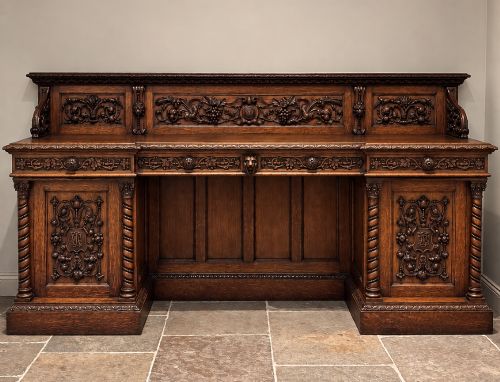
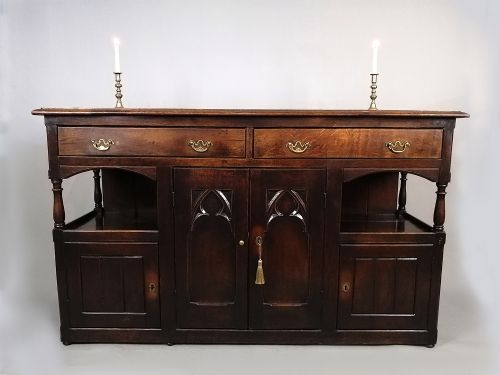
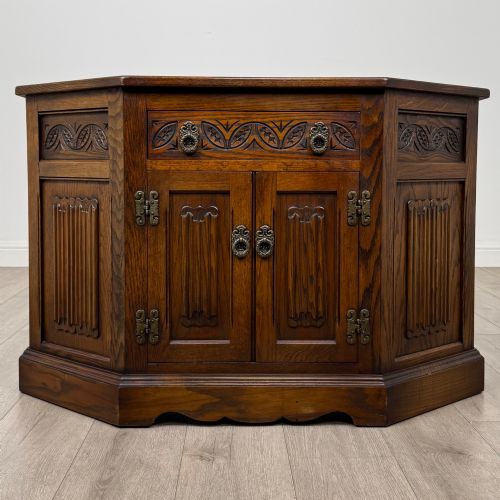
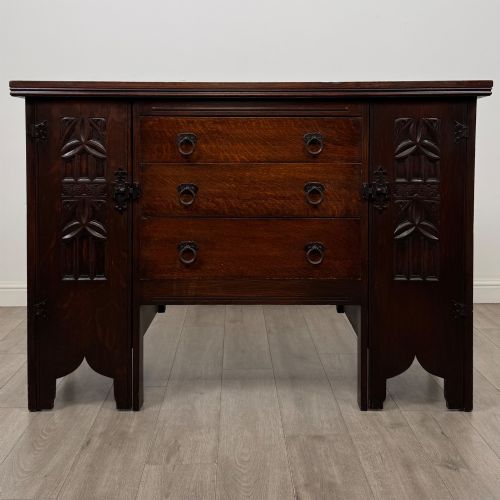
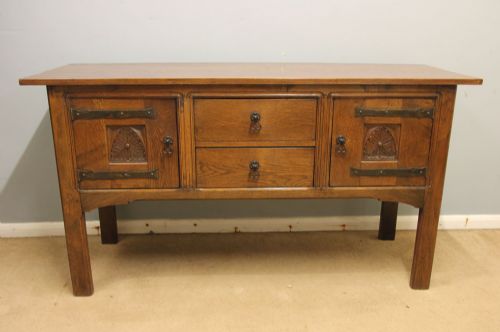
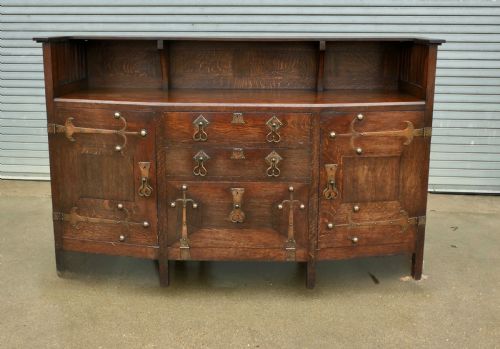
A gothic revival dresser represents large storage furniture built during the nineteenth and early twentieth centuries, drawing on medieval ecclesiastical and architectural motifs. The pieces catalogued here span periods from the nineteenth century into the twentieth, including Victorian and Edwardian examples alongside Arts and Crafts variants.
Makers and designers working in this idiom ranged from major figures associated with Liberty and commercial firms to vernacular cabinet makers producing robust oak furniture. Surviving examples demonstrate how medievalism was adapted for dining rooms, libraries, and halls across Britain and France.
How they were made
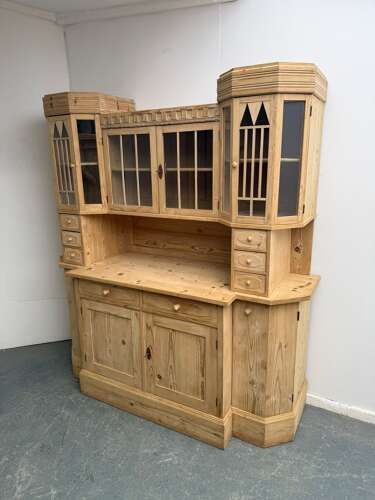
Makers relied principally upon solid oak, complemented by pine, elm, and limewood in specific regional or vernacular pieces. Timber was selected for grain pattern and quarter-sawn figure to withstand deep relief carving without splitting.
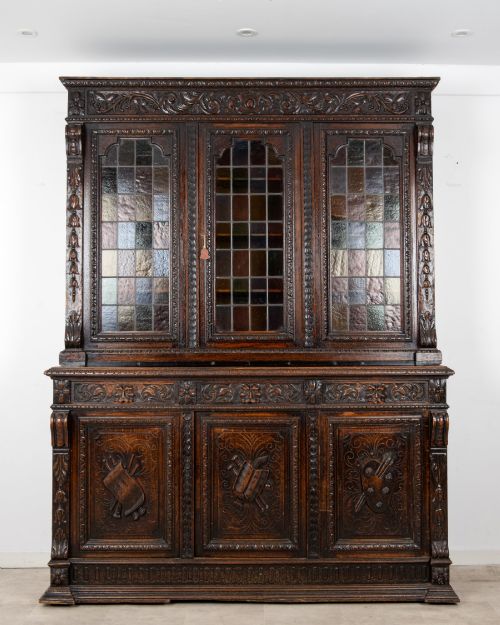
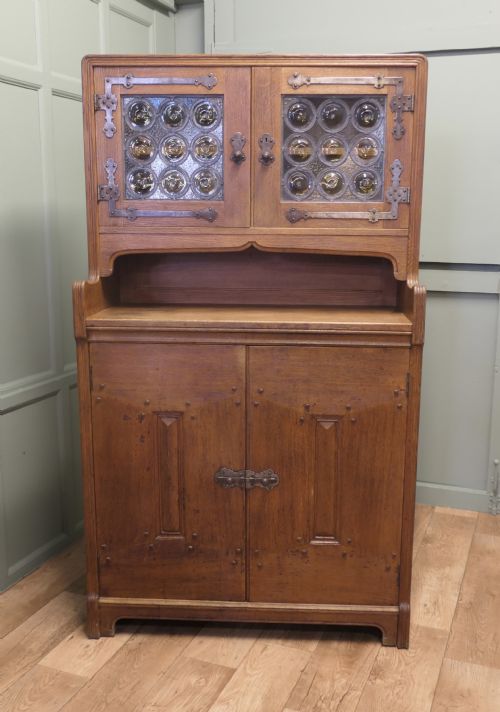
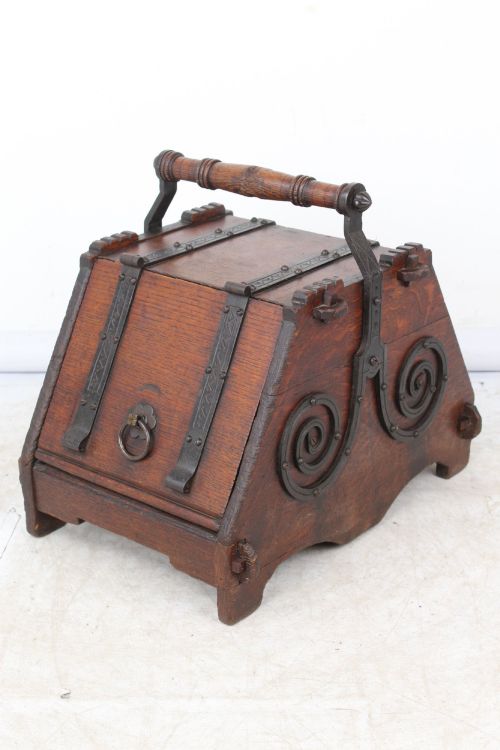
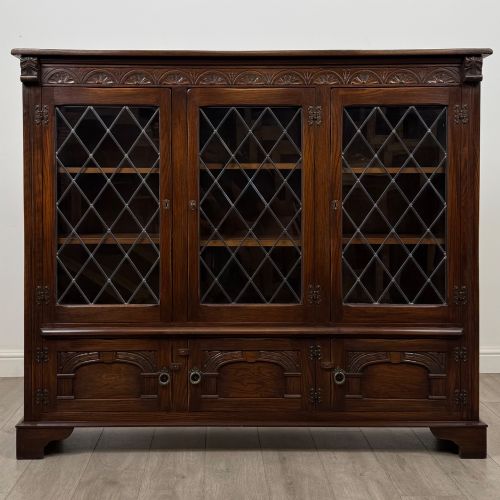
Structural integrity depended on traditional joinery, including mortise and tenon joints secured with wooden pegs. Decorative hardware utilised forged iron, brass, and copper, while glazed sections incorporated leaded or stained glass.
The listings show that oak is overwhelmingly the primary timber used across these pieces, supplemented occasionally by pine, elm, and limewood.
What varies in quality
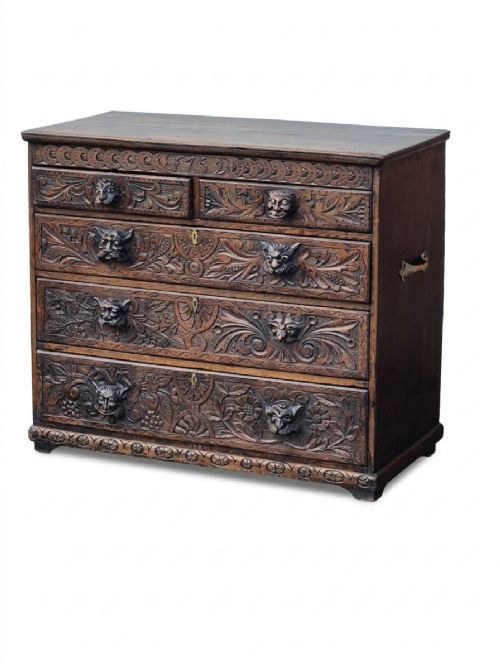
Quality rests in the depth, crispness, and artistic ambition of the carved ornament rather than simple scale. Master carvers undercut foliage and figures to create deep shadows, whereas lower-tier production relies on shallow machine routing or applied composition ornaments.
Proportion and timber selection define the upper range of these pieces. Dense golden oak with balanced architectural proportions separates bespoke designs from standard regional cabinet work.
Christopher Dresser·Leonard Wyburd·John Moyr Smith·Augustus Pugin
The Gothic Revival Dresser Glossary
- Green Man
- A sculptural motif of a human face emerging from or entwined with foliage, symbolising rebirth. This imagery appears frequently on nineteenth-century oak furniture.
- Linenfold
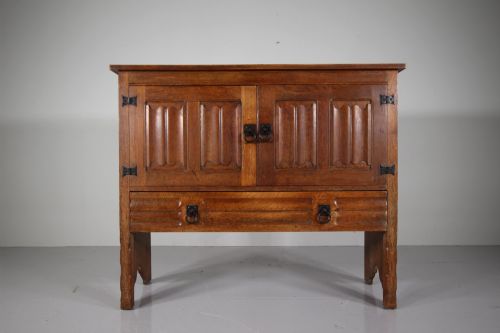
- A style of wood carving that mimics vertical folds of fabric or parchment. It is commonly found on cupboard doors within gothic and revival pieces.
- Strawberry Hill Gothic
- An early, playful phase of gothic revival architecture and design popularised by Horace Walpole. Pieces bearing this descriptor reflect eighteenth-century interpretations of medieval forms.
- Tracery
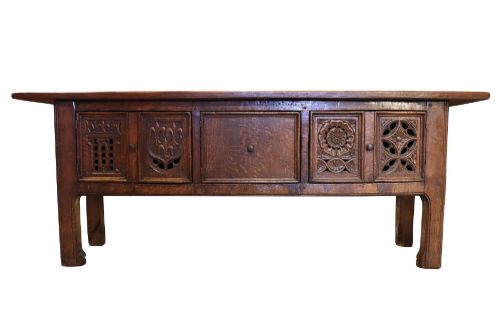
- Architectural stonework elements translated into woodwork, forming openwork patterns in window frames and cabinet doors. It provides the primary geometric rhythm across gothic revival elevations.
- Aesthetic Movement
- A late nineteenth-century design current emphasising visual beauty over narrative meaning. Furniture from this circle often pairs simplified structural forms with artistic metalwork.
Gothic Revival Dresser: Frequently Asked Questions
Where were these dressers used?
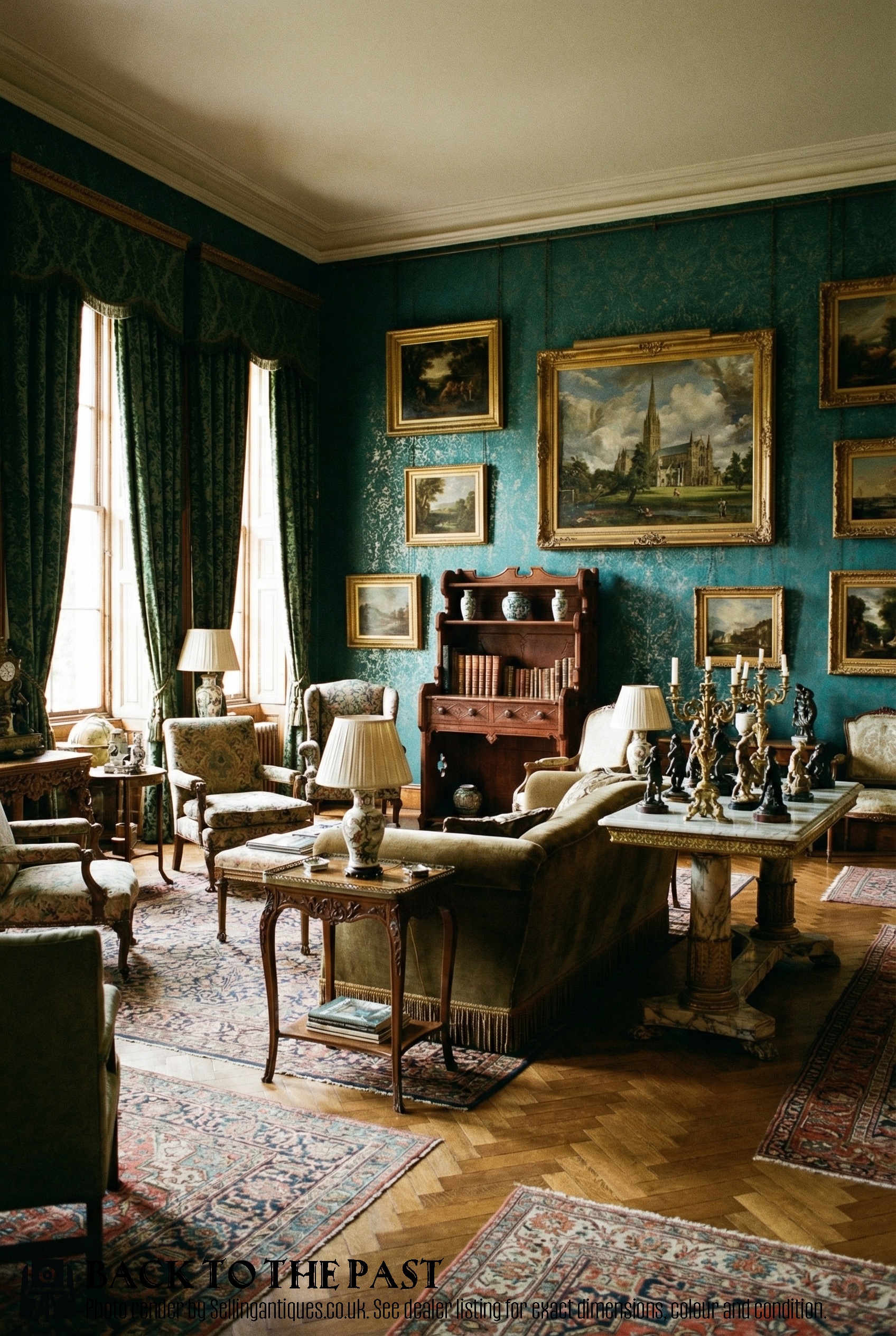
These large storage pieces were primarily placed in Victorian and Edwardian dining rooms, libraries, and entrance halls. They functioned as display surfaces for silver and ceramics while storing household linen or books.
Domestic interiors of the period favoured heavy timber furnishings that established an atmosphere of historical continuity and gravitas. Their robust construction suited spaces dedicated to entertaining and dining.
How do I care for antique oak?
Maintenance requires regular dusting with a dry, soft cloth and occasional application of traditional beeswax to nourish the timber. Avoid placing these heavy pieces near direct heat sources or in fluctuating humidity.
Exposing antique oak to excessive dryness causes the grain to split and historical joinery to loosen over time. Proper environmental control preserves both the finish and the structural joints.
How do I distinguish Victorian from Edwardian pieces?
Victorian examples often feature heavier proportions, denser ornamentation, and dark patinated finishes. Carving tends to be deep and theatrical, incorporating elaborate gothic tracery and figural elements.
Edwardian pieces generally exhibit cleaner lines, lighter golden oak tones, and influences from the Arts and Crafts movement. The decoration becomes more restrained, prioritising the natural grain of the wood.
What is a dresser base?
A dresser base is the lower portion of a traditional kitchen or dining room dresser, configured as a sideboard with cupboards and drawers. These pieces omitted the upper plate rack to serve as independent serving surfaces.
They provided enclosed storage for tableware alongside a broad top surface for food preparation or display. Their lower height made them versatile additions to various reception rooms.