




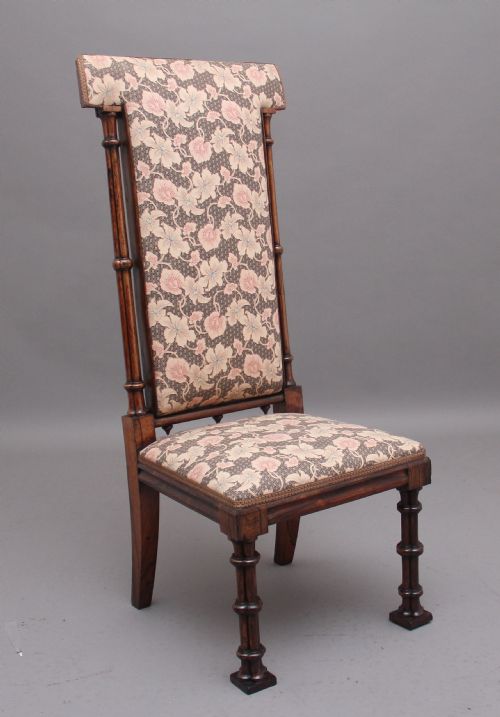


Gothic Revival Dining Furniture
Gothic revival dining furniture brings medieval architectural majesty into the home through robust timbers and pointed arches.
Gothic Revival Dining Furniture
Gothic revival dining furniture encompasses sturdy oak tables, benches, sideboards, and chairs shaped by architectural ideals from the nineteenth century. Buyers searching this phrase encounter substantial seating and dining pieces displaying pointed arches, trefoils, and heavy carved details.
The pieces on this page lean heavily towards Victorian interpretations, alongside Arts and Crafts and Reformed Gothic variants. Oak dominates the selection, appearing across refectory tables, sideboards, and hall chairs built for endurance.
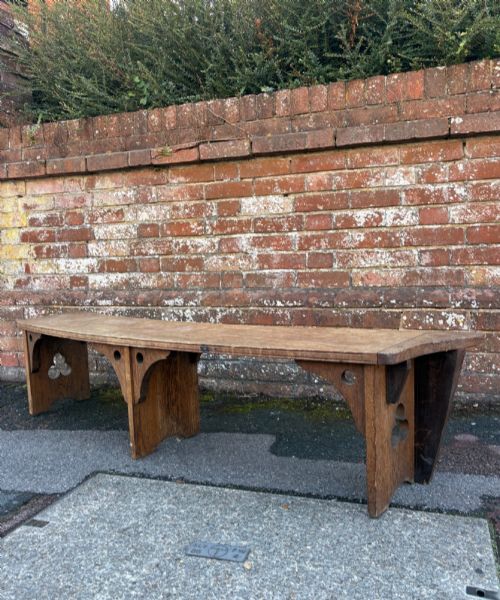
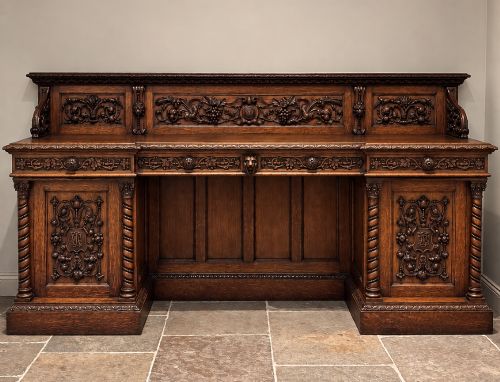
Dining sets and individual benches frequently feature trefoil carved supports or green man motifs reflecting ecclesiastical and medieval design sources. These items range from simple pitch pine pews to elaborate pollard oak mirror-back sideboards dated to the mid-nineteenth century.
Materials and Construction
Makers relied primarily on solid oak, pitch pine, and walnut, often paired with wrought iron brackets, brass hardware, and leather upholstery. Timber selection prioritized heavy grain and structural density, matching the architectural aspirations of the movement.
Hand carving defined the ornamentation, bringing surface depth to sideboard panels, table legs, and chair backs through tracery and botanical motifs. Joinery techniques ensured these large forms remained rigid, utilising pegged mortise and tenon joints across tables and benches.
Listings feature oak as the primary timber, alongside pitch pine, walnut, and rosewood across the nineteenth century.
Assessing Quality and Execution
Superior examples demonstrate crispness in hand-carved details, such as trefoils, linenfold panels, and figurative elements like the green man. Lesser pieces rely on shallow machine routing or simpler applied mouldings that lack three-dimensional depth.
The choice of timber creates a distinct hierarchy, moving from standard pine and pitch pine up to figured pollard oak, walnut, and rosewood. Comprehensive suites with matching tables and benches show greater cohesion than assembled sets of individual hall chairs.
Liberty & Co·Sir Robert Lorimer
The Gothic Revival Dining Furniture Glossary
- Trefoil
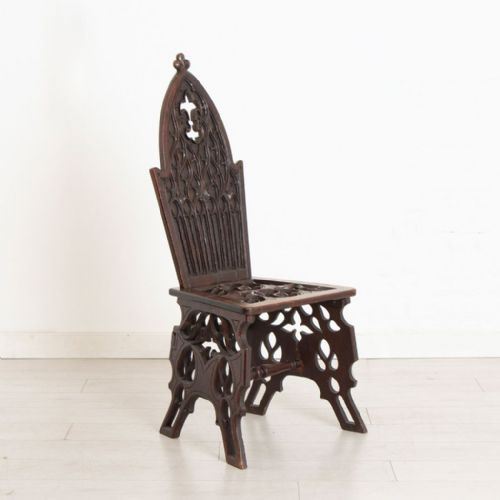
- A three-lobed ornamental design resembling clover leaves, frequently pierced through chair splats and bench supports. It mimics Gothic window tracery found in medieval stonework.
- Refectory table
- A long, narrow dining table traditionally used in monasteries and adapted during the nineteenth century in solid oak. These forms provide substantial seating capacity.
- Reformed Gothic
- A sub-style of the late nineteenth century that rejected excessive ornamentation in favour of rectilinear construction and incised decoration. It emphasises structural honesty over historical pastiche.
- Pollard oak
- Timber taken from trees that were pollarded, resulting in a dense, highly figured grain pattern prized for fine cabinet fronts and mirror backs. It adds considerable visual movement to dark wood furniture.
- Green man
- A sculptural motif representing a human face surrounded by or sprouting from leaves and vines. It symbolises rebirth and appears frequently in carved woodwork.
Gothic Revival Dining Furniture: Frequently Asked Questions
Are these pieces suitable for daily use?
Most pieces were constructed from solid timbers like oak and pitch pine, designed specifically for heavy domestic service. Dining tables and benches remain structurally robust for modern meals.
Care should be taken with leather upholstery and specialised decorative surfaces, but the wooden frames are built to endure daily interaction.
What is Reformed Gothic style?
Reformed Gothic emerged as a reaction against overly ornate revival pieces, focusing instead on flat surfaces, incised lines, and visible construction. It pares back the medieval imagery into simpler geometric formats.
Tables and cabinets from this school feel more restrained, highlighting the natural grain of the oak rather than heavy sculptural relief.
How do I care for antique oak?
Maintain antique oak furniture by dusting regularly with a dry cloth and avoiding silicone-based polishes that build up over time. Natural wax applied sparingly preserves the finish.
Keep pieces away from direct heat sources and drastic humidity changes to prevent timber splitting or warping in large sideboards and refectory tables.