
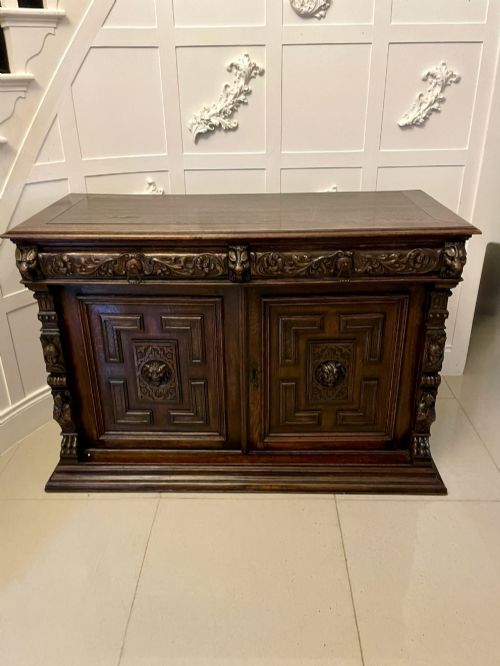
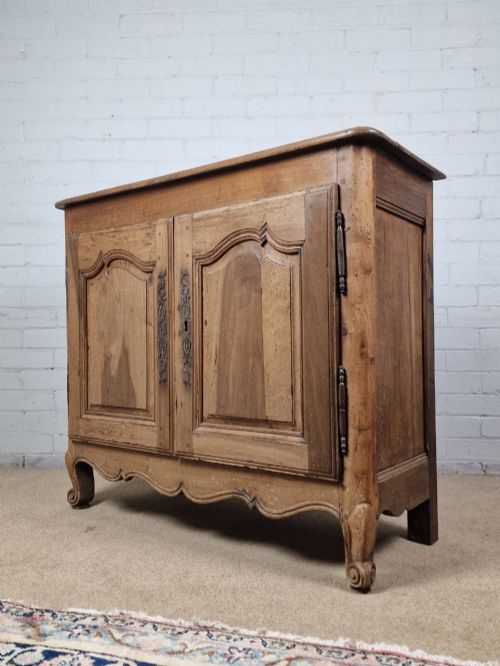
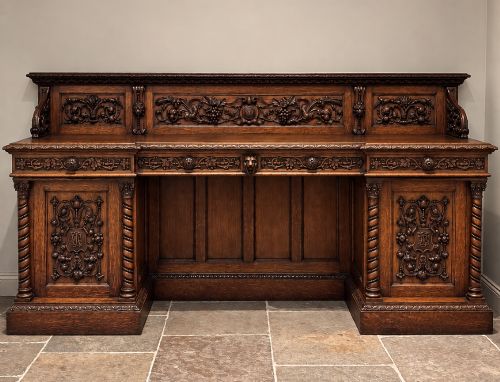
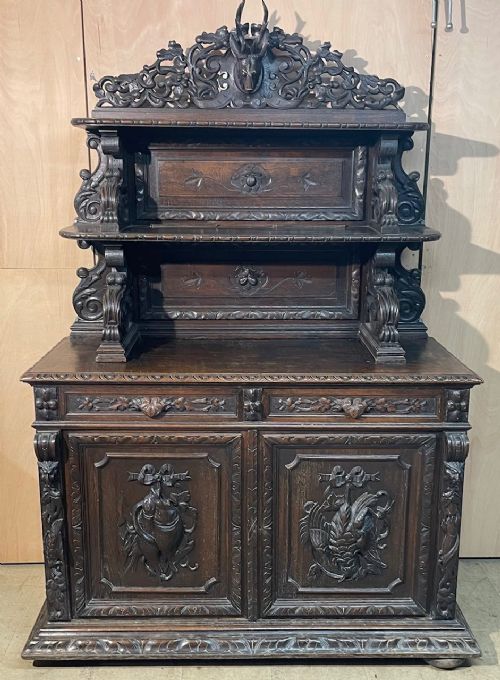

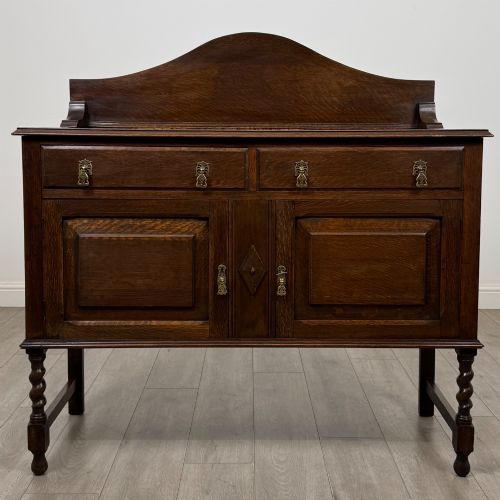
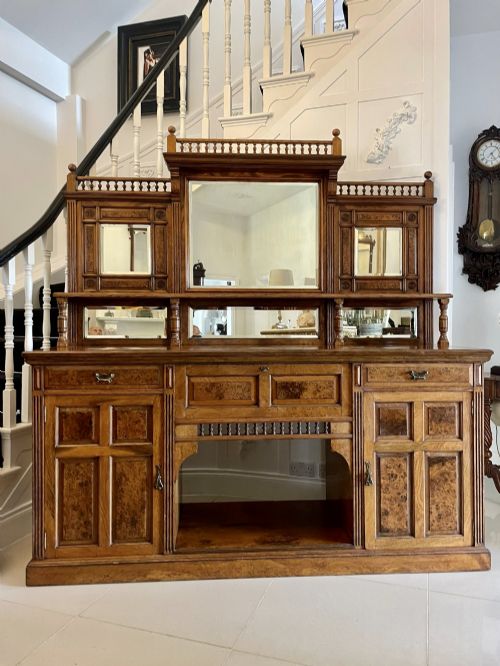
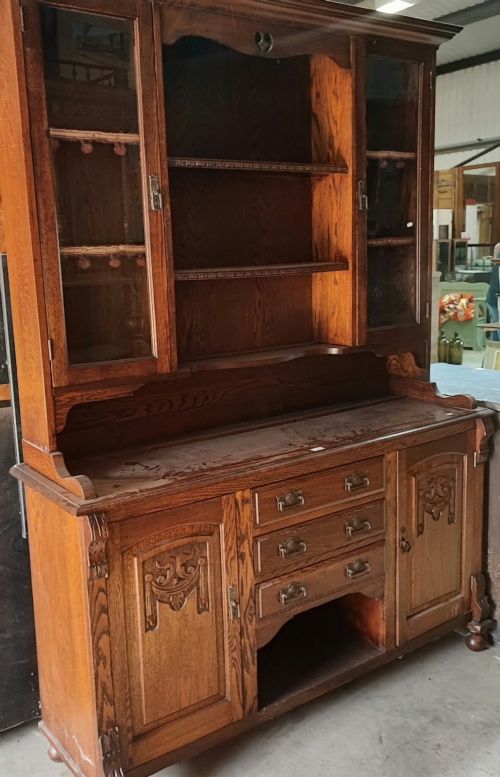
Oak Buffet Sideboard
When you search for an oak buffet sideboard, you enter a world of heavy timber, deep carving and practical dining room storage.
Oak Buffet Sideboard
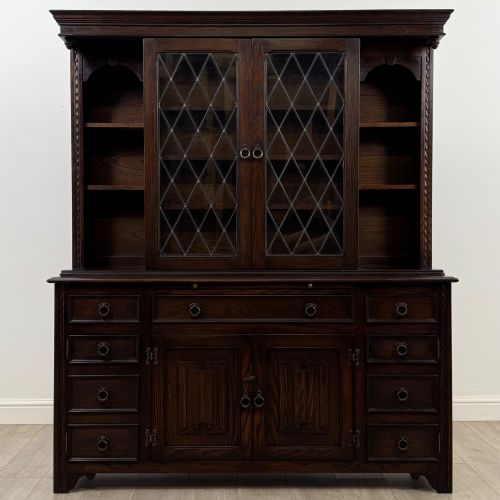
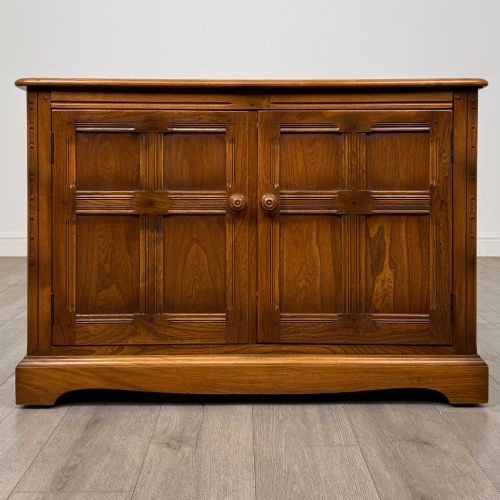
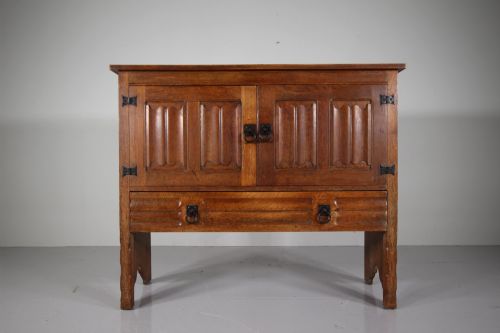
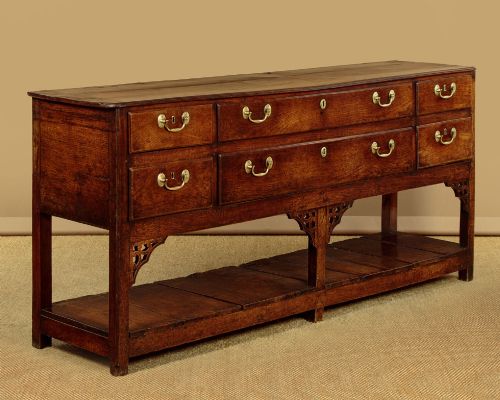
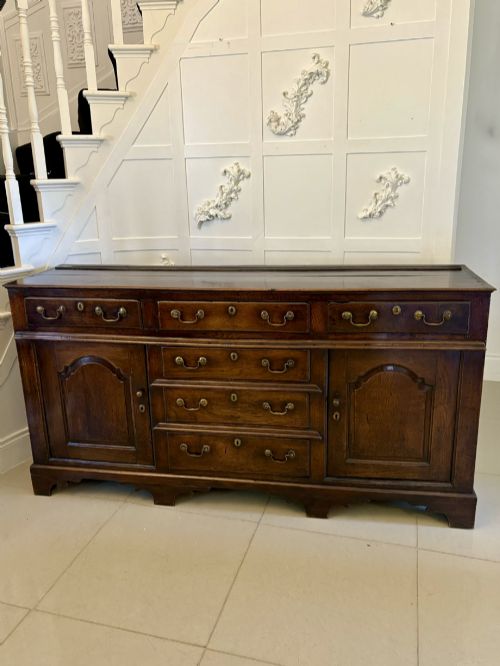
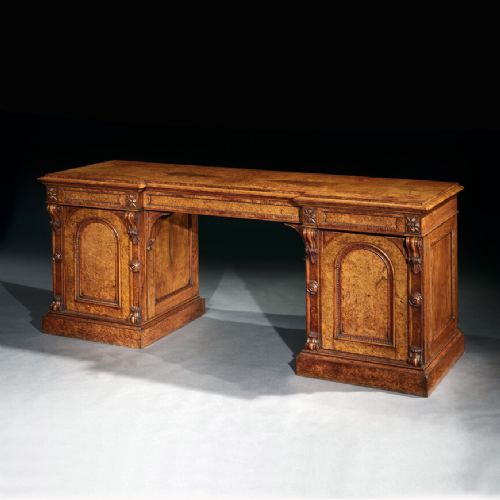
An oak buffet sideboard combines the serving surface of a buffet with the enclosed storage of a sideboard, often taking the form of a dresser base, court cupboard or large server. These pieces span from the seventeenth century through the Georgian and Victorian eras into the Edwardian period and the Arts and Crafts movement.
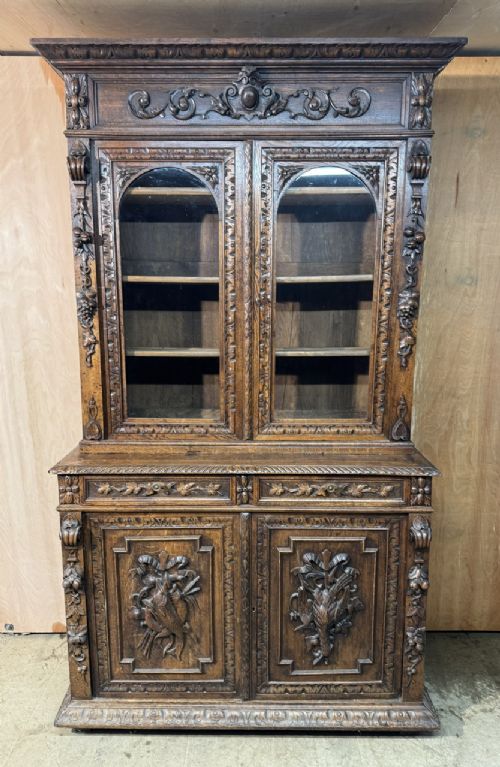
English and French workshops dominate the selection, offering everything from rustic potboard bases to imposing mirror-back cabinets and revival styles like Jacobean and Gothic. Buyers meet substantial dining room furniture built to hold heavy tableware, linens and serving dishes.
The variety includes glazed display cabinets, open-shelf dressers and multi-door enfilades, reflecting how dining habits shifted across three centuries. Golden oak Edwardian pieces sit alongside dark carved Victorian server units and eighteenth-century country furniture.
Materials and construction
Solid oak provides the structural backbone of these cabinets, frequently complemented by specialised timber variants such as pollard oak, tiger oak and bleached oak. Cabinetmakers joined heavy planks using traditional framing techniques, mortise and tenon joints, and sturdy tongue-and-groove construction to support the massive weight.
Decorative surface work relies on hand carving, applied mouldings, barley twist turnings and raised panel doors. Hardware fittings in brass, iron, copper and wrought iron secure doors and drawers, while select later pieces incorporate inset marble tops and glass panels.
Materials appearing across the inventory include solid oak, pollard oak, tiger oak, brass, iron, copper and inset marble slabs.
Craftsmanship and proportion
Quality reveals itself in the crispness of the hand carving, the selection of timber grain and the integrity of the joinery rather than mere ornamentation. Superior examples show thoughtful proportion, balanced door panels and drawers that slide smoothly within their housing.
The distinction between ordinary production and high workshop standard lies in the depth of the timber, the weight of the brass or iron hardware, and the survival of original patination. Maker attribution to notable cabinetmakers further elevates a piece within its period.
Ambrose Heal·Edwards & Roberts·Gillow & Co·Gaston Poisson
The Oak Buffet Sideboard Glossary
- Potboard
- An open slatted lower shelf on a dresser base designed for storing pots and heavy tableware. This practical feature defines many eighteenth-century country pieces.
- Court cupboard
- A heavy enclosed side cabinet featuring an upper tier set back from a larger lower section, often heavily carved with architectural motifs. These early forms provide substantial display and storage space.
- Enfilade
- A long dining room sideboard or cabinet with three or more doors in a continuous line, originating in French interior design. These long servers offer expansive top surfaces.
- Dumbwaiter
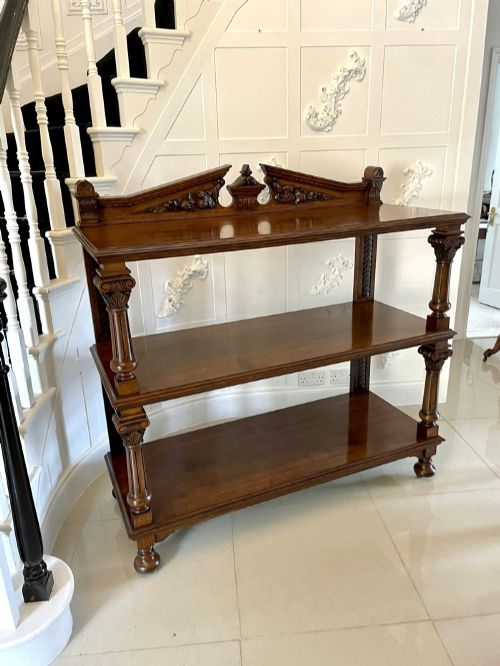
- A multi-tiered serving table or sideboard used for holding dishes near the dining table without requiring servant attendance. They appear as tiered console tables or compact servers.
- Pollard oak
- Timber taken from the pollarded growth of oak trees, yielding dense, highly figured clusters of small knots and swirling grain patterns. Cabinetmakers utilised this material for striking drawer fronts and decorative panels.
Oak Buffet Sideboard: Frequently Asked Questions
What is an oak buffet sideboard?
An oak buffet sideboard is a heavy storage and serving piece designed for the dining room, combining flat surface space for dishes with cupboards and drawers below.
These pieces range from rustic eighteenth-century dresser bases to ornate Victorian and Arts and Crafts servers built from solid timber.
How do I date an oak buffet?
Dating relies on examining construction methods, hardware types, tool marks on the timber interior, and stylistic revival cues such as Jacobean twist turnings or Gothic tracery.
Earlier eighteenth-century pieces display hand-riven boards and pegged joints, while Victorian and Edwardian examples utilise machine-sawn timber and factory-made brass fittings.
How should I care for antique oak?
Antique oak benefits from stable room temperatures away from direct heat sources and strong sunlight, which can dry out and split the timber.
Regular dusting with a dry cloth and occasional application of appropriate beeswax maintain the natural lustre and protect the historic finish.
Where were these sideboards used?
Dining rooms, great halls and large kitchens served as the primary locations for these robust storage cabinets in period homes.
Families used them to stage meals before serving, store heavy ceramics, and display silver or glass behind glazed doors.