



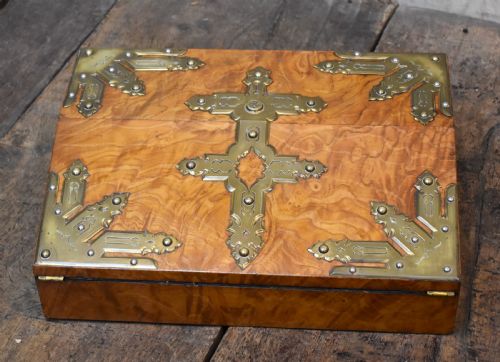
Gothic Revival Desk Box
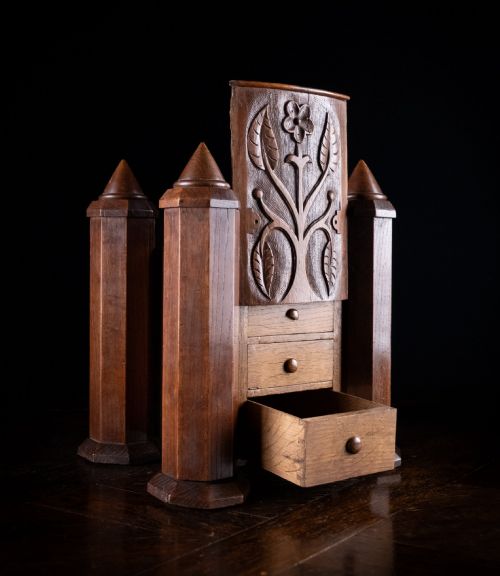
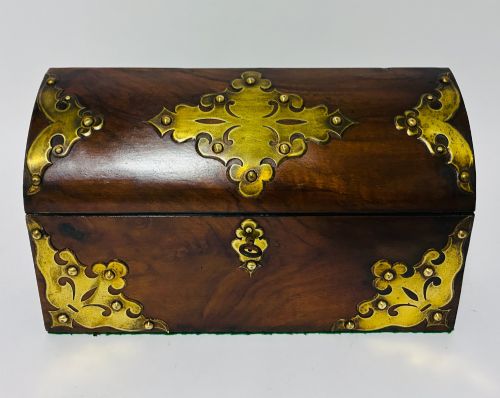
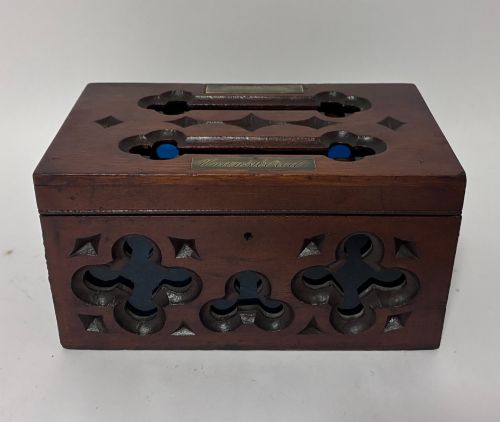
These gothic revival desk box pieces are substantial Victorian containers built to hold writing materials, distinguished by pointed arches and robust metal mounts.
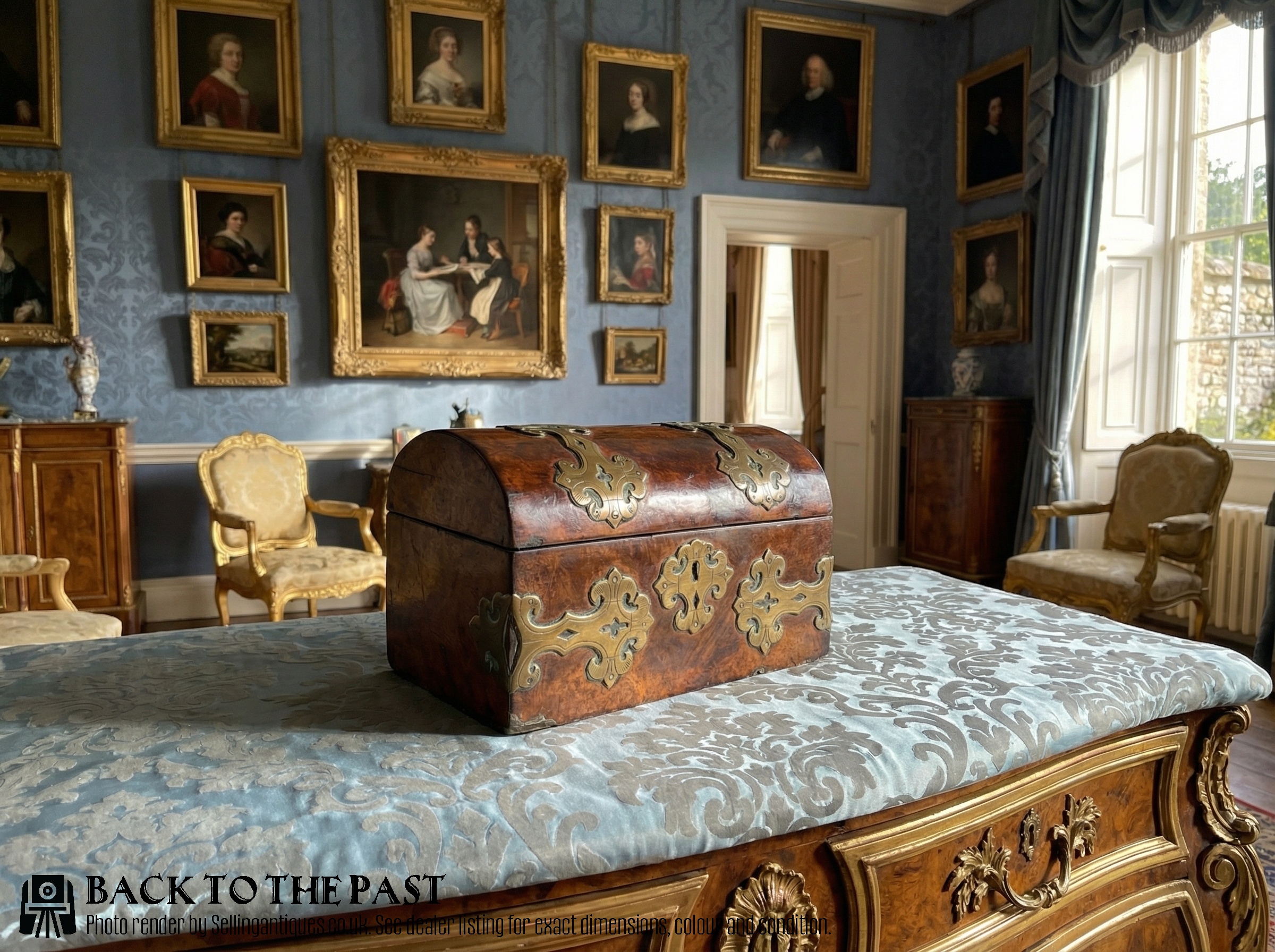
Gothic Revival Desk Box
A gothic revival desk box is a nineteenth-century container designed for correspondence, pens, and paper, appearing most frequently in forms such as stationery boxes, letter caskets, and desk stands. These pieces belong to the Victorian era, spanning decades from eighteen fifty to nineteen hundred.
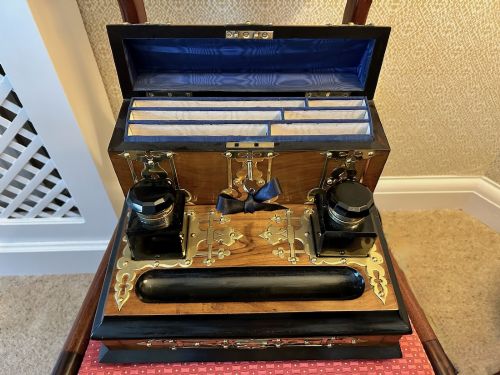
The objects take various shapes, including dome tops, drop fronts, and sloping lids. Many incorporate compartments for inkwells and envelopes, reflecting the rigorous correspondence habits of the period.
Materials and construction
Cabinetmakers utilised dense timbers including coromandel, burr walnut, pollard oak, and amboyna, selecting them for their rich grain patterns and durability. These woods provide a solid structural foundation for the heavy use expected of a desk accessory.
The exterior woodwork is heavily accented with brass, ormolu, and glass cabochons, often secured with visible strapwork and hinges. These metal elements reinforce the architectural aesthetic typical of the gothic revival style.
Gothic Revival Desk Box Retail Price Guide 2026
Typical asking prices for gothic revival desk box among the pieces listed under this phrase on Sellingantiques today, from the lower quarter to the upper quarter. They describe what is for sale here now, not the wider market.
Some nineteenth-century letter boxes feature sloping dome tops designed to shed water, even though they lived safely indoors on mahogany desks.
Distinctions in quality
Quality rests on the selection of timbers and the precision of the metal mounts. Better examples employ expensive exotic woods like coromandel and feature substantial, intricately pierced brasswork rather than thin plating.
Internal complexity also separates standard items from finer pieces. Superior stationery boxes include fitted writing slopes, concealed drawers, and matched glass inkwells with functioning locks and keys.
Briggs 27 Piccadilly London·Rodman and co of Belfast
The Gothic Revival Desk Box Glossary
- Coromandel
- A dense, heavily figured Southeast Asian hardwood prized for its dark stripes and rich brown tone. It served as a premium cabinet timber throughout the Victorian period.
- Ormolu
- Gilded bronze applied to furniture and metalwork to provide durable metallic ornamentation. This technique creates a bright, golden surface that resists tarnishing.
- Stationery box
- A desk accessory designed specifically to hold writing paper, envelopes, and correspondence. These containers often open with a drop front or a pitched lid.
- Cabochon
- A gemstone or piece of glass polished to a convex, rounded shape rather than faceted. They appear inset into metal mounts on mid-nineteenth-century desk sets.
Gothic Revival Desk Box: Frequently Asked Questions
What is a gothic revival desk box used for?
These boxes were built to organise writing paper, envelopes, and correspondence implements on a library or study desk. Interior compartments kept inkstands, pens, and stamps neatly arranged.
Today they function effectively as decorative containers for letters, modern stationery, or small personal items while retaining their traditional desk placement.
How do I date a gothic revival desk box?
Dating relies on identifying the timber choices, mount styles, and construction methods typical of the nineteenth century. Pieces from eighteen fifty to nineteen hundred often combine walnut or coromandel with heavy brass strapwork.
Makers' marks or stamps on locks and hinges can also provide specific attribution to retailers or cabinetmakers operating during the Victorian era.
Are these boxes made of solid wood?
Most nineteenth-century desk boxes utilise substantial timber construction, often employing dense exotic woods like coromandel or burr walnut over sturdy pine or mahogany carcasses. This robust construction prevented warping and supported heavy metal mounts.
Finer examples display continuous grain wrapping across the lid and sides, indicating careful timber selection by the cabinetmaker.
How should I care for a coromandel desk box?
Maintain the timber by keeping the box away from direct sunlight and extreme temperature fluctuations that can cause wood to split. A light application of appropriate furniture wax helps preserve the sheen of the polished surface.
Avoid excessive moisture on both the wood and the brass mounts, wiping the exterior gently with a dry, soft cloth during routine cleaning.