

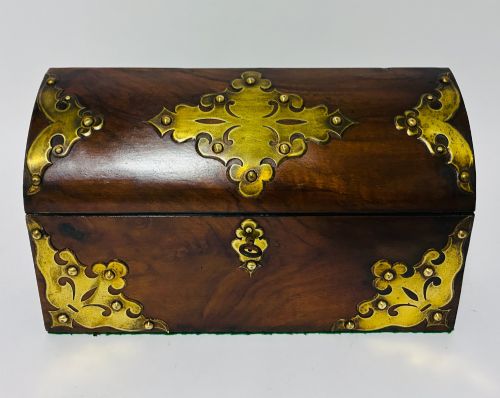
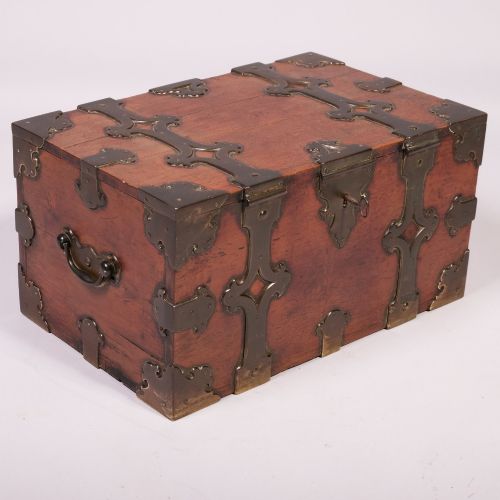
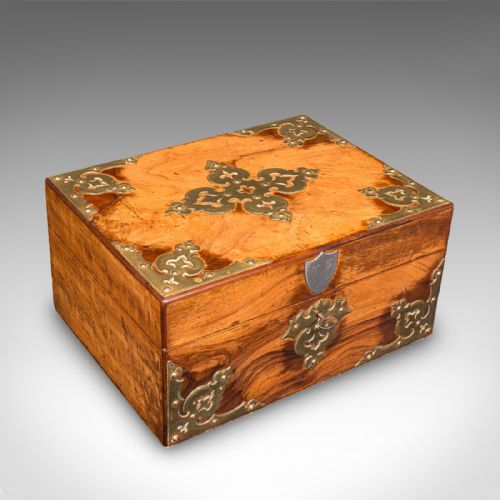

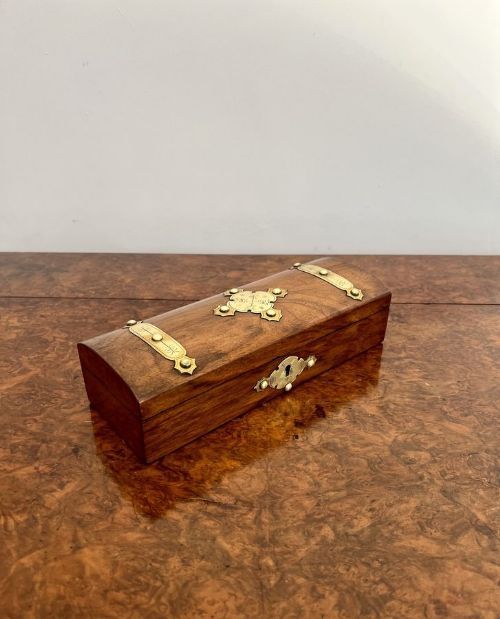
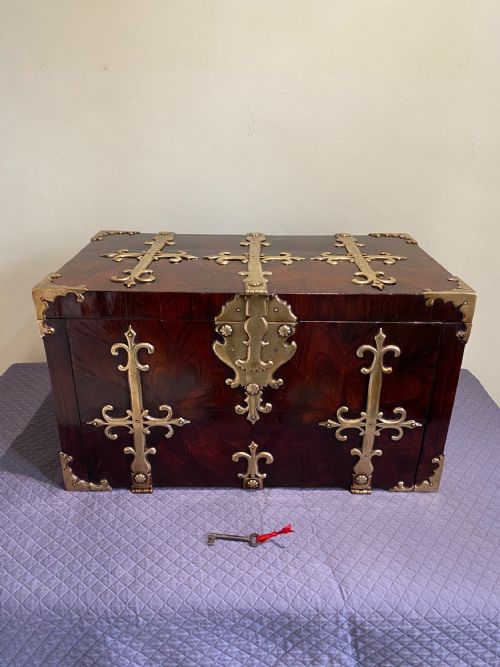


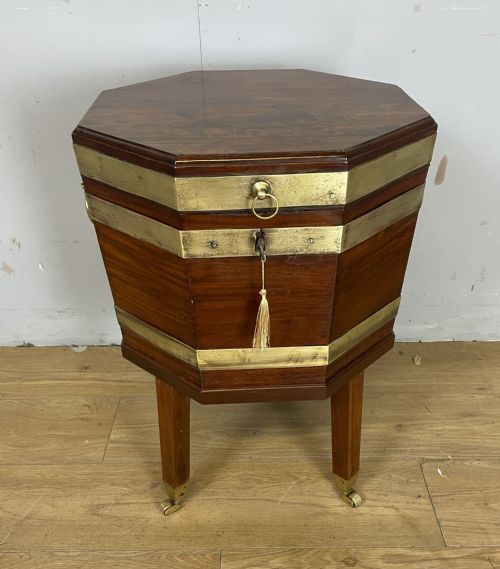


Brass Bound Wooden Casket
These brass bound wooden casket examples combine robust metal mounts with fine timbers, offering secure storage that suits daily desktop use or display.
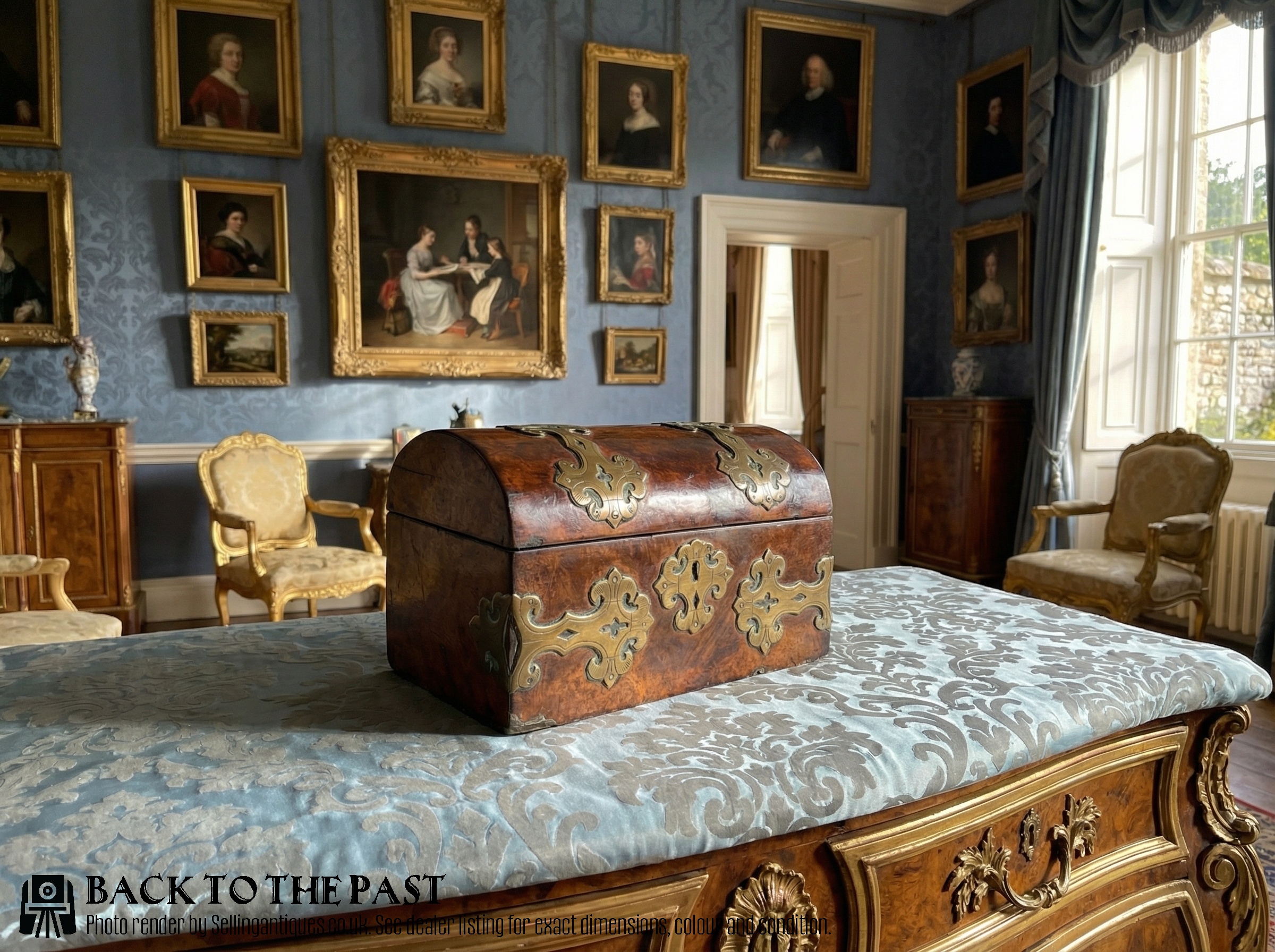
Brass Bound Wooden Casket
A brass bound wooden casket is a sturdy container formed from dense hardwoods and reinforced with metal corners, straps, or banding to protect the edges during travel or heavy daily use. When you search for this phrase, you encounter forms ranging from small stationery boxes and glove boxes to larger cellarettes, document cases, and campaign chests.
The versions met most frequently on this page date from the nineteenth century, including Victorian and Regency examples alongside earlier eighteenth-century iterations. These containers serve various domestic and travel purposes, appearing as fitted jewellery boxes, sewing cases, cigar humidors, and desktop desk sets.
Makers utilised exotic and native timbers such as rosewood, burr walnut, mahogany, oak, and kingwood, often applying decorative veneers or oyster cuts. Metal mounts provide both structural reinforcement and visual contrast against the dark polished grain of the timber.
Materials and construction methods
Caskets feature solid timbers or substantial timber frames faced with decorative veneers including rosewood, burr walnut, kingwood, and amboyna. Artisans joined the carcases using traditional corner joints before applying brass straps, corner brackets, and escutcheons secured with small brass pins.
Interior fittings require precise carpentry, incorporating velvet or leather linings, removable trays, and partitioned sections for jewellery, stationery, or bottles. Metal bound edges protect the vulnerable corners of the wooden box from heavy knocks, particularly on campaign pieces designed for transit.
Brass Bound Wooden Casket Retail Price Guide 2026
Typical asking prices for brass bound wooden casket among the pieces listed under this phrase on Sellingantiques today, from the lower quarter to the upper quarter. They describe what is for sale here now, not the wider market.
Listings span from the seventeenth century through the Victorian era, utilising rosewood, oak, mahogany, and burr walnut.
Assessing quality in construction and finish
Quality reveals itself in the selection of timber veneers and the precision of the brass work inset flush into the wood. Superior pieces display symmetrical grain patterns, such as burr walnut or oyster cut kingwood, combined with heavy gauge brass mounts rather than thin plated alternatives.
Interior organisation and original fitted compartments elevate a piece, especially when lined neatly in leather or silk and accompanied by working locks and keys. The tightness of the mitred joints and the weight of the timber carcass distinguish standard storage boxes from finer cabinet work.
C.G. Hope Hastings
The Brass Bound Wooden Casket Glossary
- Escutcheon
- A protective plate surrounding a keyhole, usually fashioned from brass on these caskets to match the corner straps.
- Cellarette
- A lockable container designed for holding bottles of wine or spirits, often heavily bound in brass for stability.
- Campaign box
- A portable container built with recessed handles and reinforced corners for travel during military or colonial service.
- Oyster veneer
- Timber sliced across the branch or root to produce small, circular rings of grain, popular in seventeenth and eighteenth-century cabinet work.
- Pietra dura
- Inlaid work using small polished stones to create decorative pictorial designs on the lid of a box.
Brass Bound Wooden Casket: Frequently Asked Questions
What were brass bound caskets originally used for?
These containers served multiple purposes in the home and during travel, holding documents, jewellery, stationery, cutlery, or wine bottles securely.
Their robust construction protected valuable personal possessions from moisture, dust, and the rigours of transport.
How do I date a wooden casket?
Dating relies on observing the timber species, the style of the brass mounts, and internal construction techniques.
Earlier eighteenth-century pieces often feature simpler box forms, while Victorian examples display more elaborate veneers and specialised fitted interiors.
Are the brass mounts solid or plated?
Traditional pieces utilise solid brass for corners, straps, hinges, and escutcheons, often secured with small brass screws or pins.
Checking the weight and the depth of the metal reveals the substantial nature of the hardware used by period cabinet makers.
Can I use these boxes for modern storage?
Many buyers utilise these caskets on desks or dressing tables for storing letters, modern jewellery, or trinkets.
Their sturdy timber construction and compartmentalised interiors remain practical for organising small household items today.