




Gothic Revival Coffer
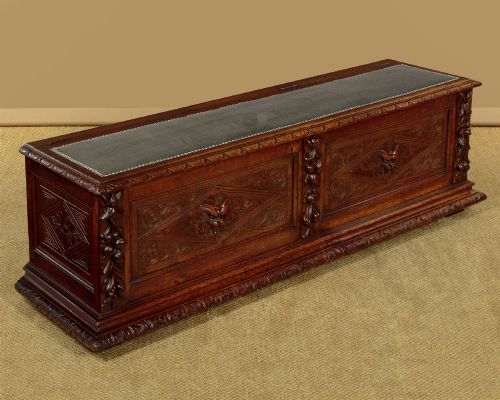
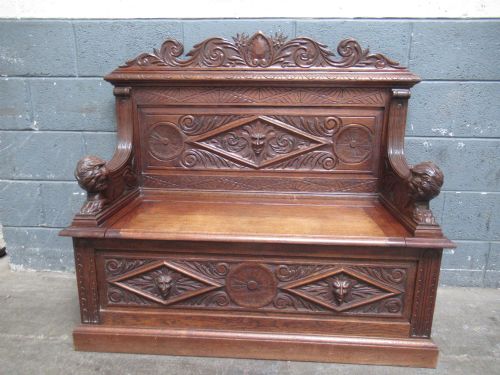
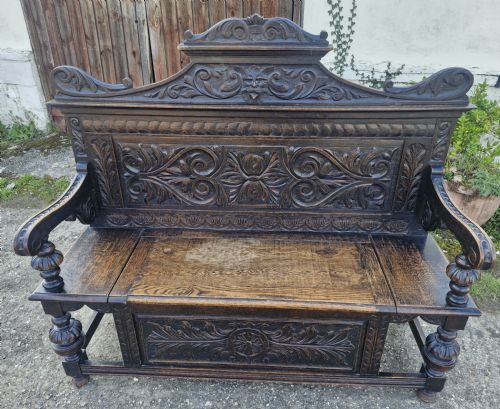
These gothic revival coffer pieces bring medieval architectural drama into domestic spaces through heavy carved oak and sturdy timber construction.
Gothic Revival Coffer
A gothic revival coffer is a storage chest or seating piece rooted in architectural motifs from the medieval era, rendered in solid oak and other timbers. These items span periods from the nineteenth century into the twentieth century, carrying styles from Victorian Gothic to Arts and Crafts.
The most common formats on this page are hall benches, settles, monks benches, and blanket chests featuring carved panels and lift-up seats. Many examples show the heavy influence of Victorian baronial design alongside simpler arts and crafts iterations.
How they were made
Makers utilised solid oak, mahogany, walnut, and pollard oak as primary woods, often joining panels with traditional construction methods suited to heavy furniture. Iron, brass, and cast metal provided structural hinges, mounts, and decorative bindings.
Carving serves as the principal decorative technique, ranging from foliate tracery and saints to prominent green man motifs. Surfaces were shaped by hand or with period workshop tools to achieve deep relief on chests and benches.
Listings feature periods spanning from the nineteenth century through to the Edwardian era and the twentieth century.
What varies in quality
Quality separates through the depth and crispness of the wood carving, where sharper relief and detailed figural work distinguish superior examples. The selection of timber also dictates standard, with figured burr walnut or pollard oak commanding attention over plain hardwood.
Original hardware such as brass mounts, iron straps, and working hinges contribute to the integrity of a piece. Structural proportion and the weight of the timber determine how successfully a chest or bench holds its presence in a room.
Jack Grimble
The Gothic Revival Coffer Glossary
- Coffer
- A heavy wooden chest traditionally used for storage, often fitted with a hinged lid. Early forms provided secure storage for valuables and documents.
- Monks Bench
- A dual-purpose seating form with a hinged back that folds down to create a table surface. These often incorporate a box seat below.
- Tracery
- Openwork ornamentation resembling Gothic window patterns, carved into wood panels or stone. It defines much of the architectural detailing found on these pieces.
- Green Man
- A sculptural mask carved from foliage or branches, representing a face emerging from vegetation. This motif appears frequently on Victorian oak seating.
- Settle
- A wooden bench with high back and solid arms, designed to block drafts in large hallways and reception rooms.
Gothic Revival Coffer: Frequently Asked Questions
What is a gothic revival coffer?
A gothic revival coffer is a heavy wooden chest or bench decorated with medieval architectural motifs such as tracery and carved panels. They were built primarily during the nineteenth and early twentieth centuries.
These pieces served as practical storage trunks or hallway seating while reflecting a romantic interest in medieval design history.
How were monks benches used?
Monks benches served dual purposes in domestic interiors, functioning as hallway seating with high backs during the day. The backrest could then be tilted forward onto the arms to form a flat table surface.
Beneath the seat, a built-in box provided practical storage for household items or linens.
What woods were used for these chests?
Oak is the predominant timber found in these pieces, valued for its strength and suitability for deep relief carving. Walnut, mahogany, pollard oak, and miscellaneous hardwoods also appear across various cabinet and box forms.
Metal components like brass mounts and iron bands were added for reinforcement and decoration.
How do I date a Victorian hall bench?
Dating relies on observing the combination of wood types, construction methods, and decorative styles recorded in the piece. Victorian examples often feature heavy oak construction with distinct gothic revival or baronial carving.
Comparing the hardware, such as hinges and locks, alongside the specific style of the carved panels helps narrow down the decade.