
Gothic Revival Carved Chair
These gothic revival carved chair examples bring architectural timberwork and deep historical styling directly into modern interiors.
Gothic Revival Carved Chair
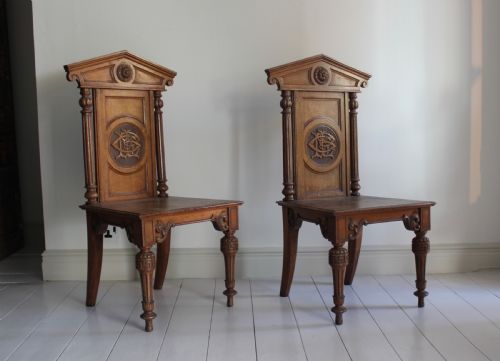
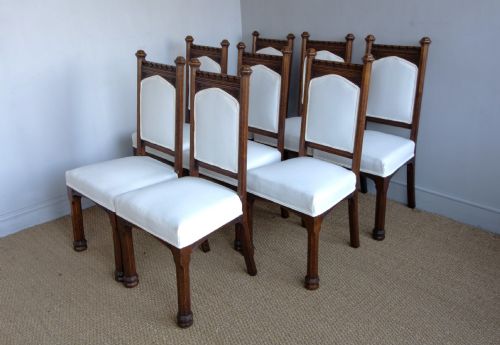
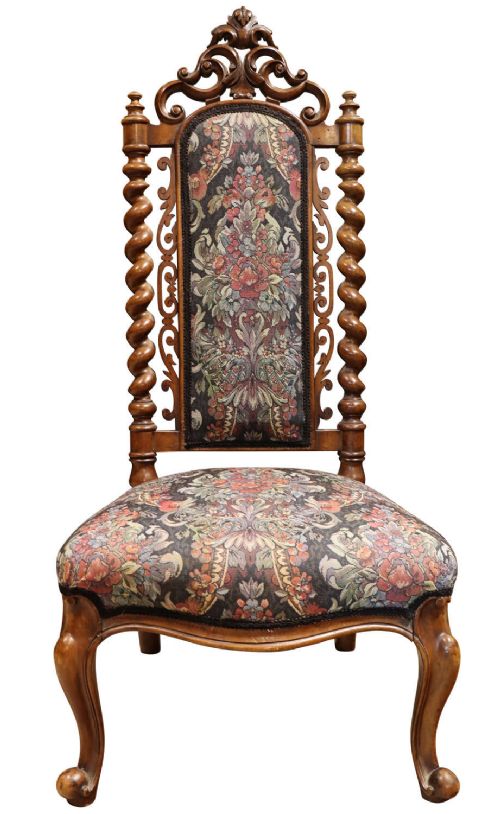
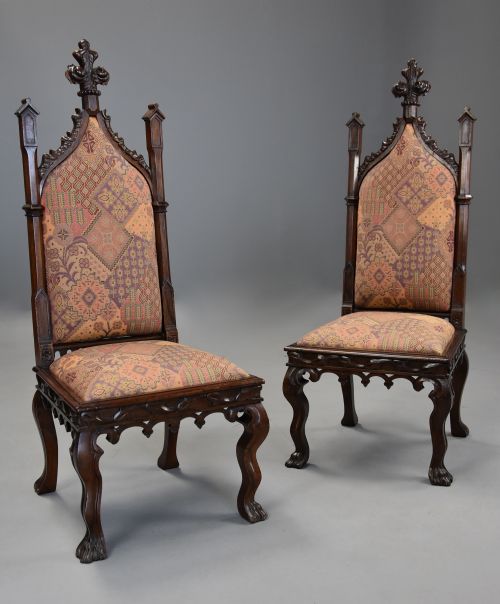
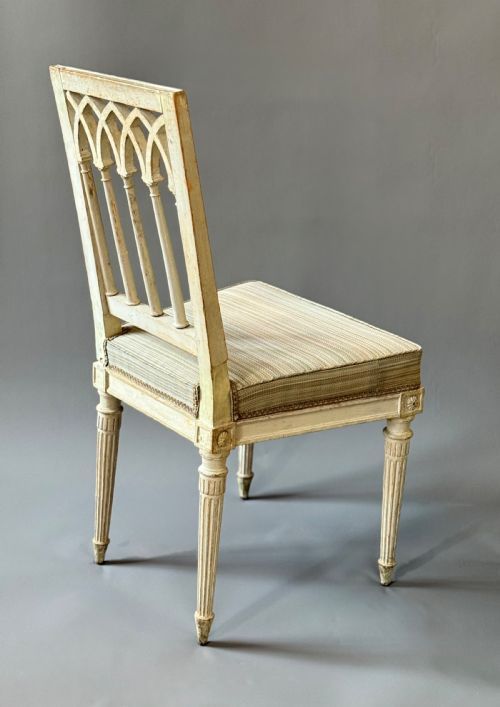
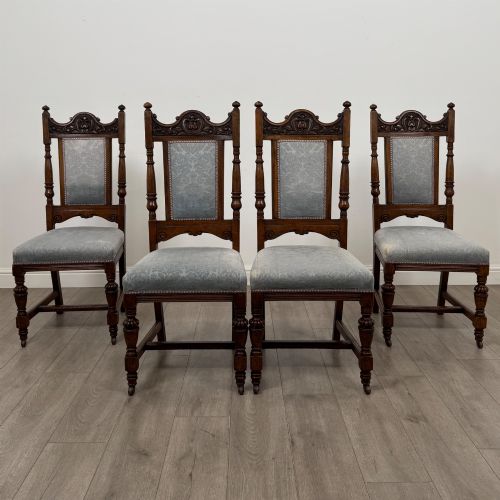
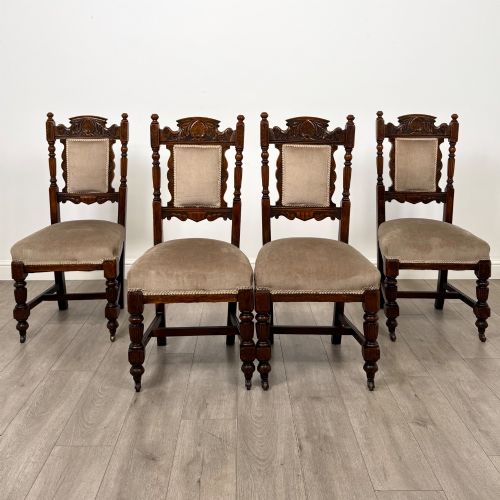
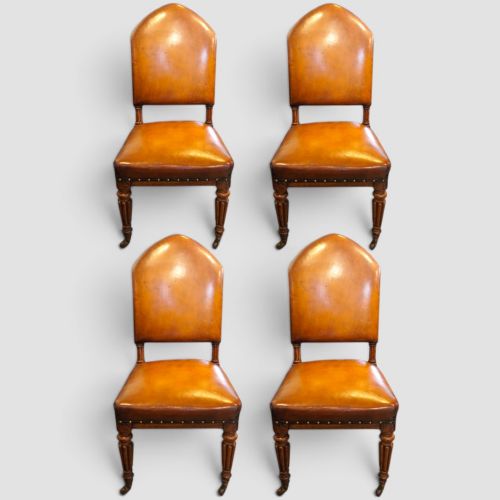
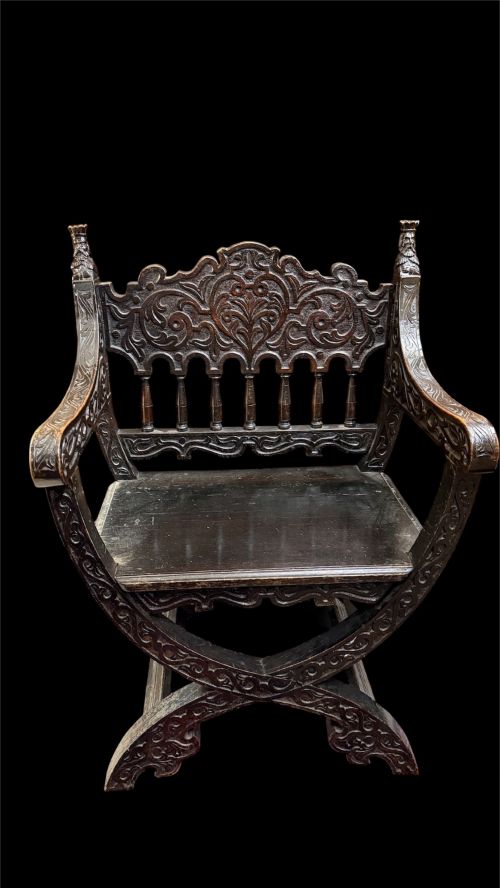
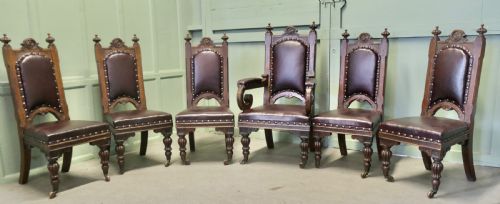
A gothic revival carved chair draws heavily upon medieval ecclesiastical design, translating pointed arches, trefoils and traceried panels into functional domestic seating. The versions met most frequently on this page date from the nineteenth century and Victorian periods, often taking the form of robust oak hall chairs or dining seats.
Makers produced these forms in various configurations, ranging from simple side chairs and benches to substantial throne chairs and revolving desk seats. Oak remains the predominant timber, though examples in walnut, rosewood and pitch pine also appear across the selection.
The style absorbs regional and revivalist influences, touching upon Jacobean, Renaissance and French Gothic tastes. Buyers encounter everything from austere hall seats intended for grand entryways to upholstered library armchairs.
How they were made
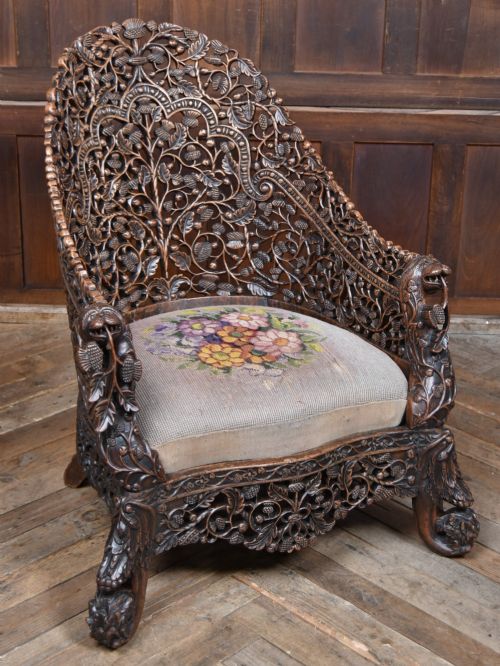
Cabinetmakers constructed these pieces primarily from solid hardwoods like oak, walnut and rosewood, employing traditional joinery such as mortise and tenon frames. Timber surfaces received deep chisel work to render architectural motifs, tracery and linenfold panels.
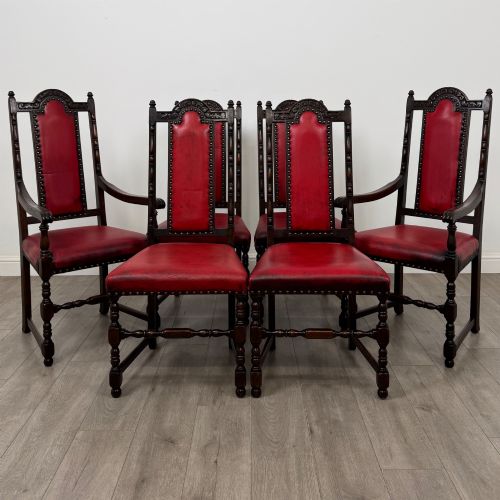
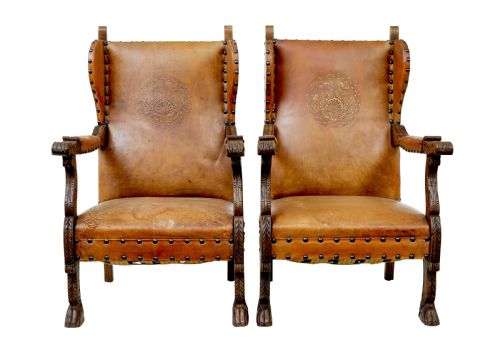
Upholstered variants integrated textiles, tapestry, brass studs and embossed leather secured directly to the wooden framework. Specialised seating types utilised turned members, barley twist supports and occasionally pivoting swivel mechanisms.
Several examples feature hidden trefoils tucked into the woodwork, providing a secret nod to medieval stonemasons.
What varies in quality
The distinction between ordinary and exceptional pieces lies in the crispness and depth of the woodcarving. Superior examples display sharply defined architectural details and balanced proportions, whereas lesser items rely on shallow, mechanised stamping.
Material selection and structural integrity further divide the range, with dense native timbers and original leather or textile upholstery commanding greater regard. Maker attributions and labeled pieces elevate specific examples above standard workshop production.
W A Willcocks·Bruce Talbert·Gillows
The Gothic Revival Carved Chair Glossary
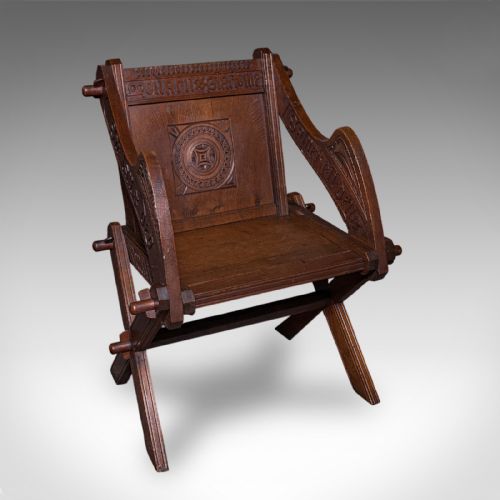
- Glastonbury chair
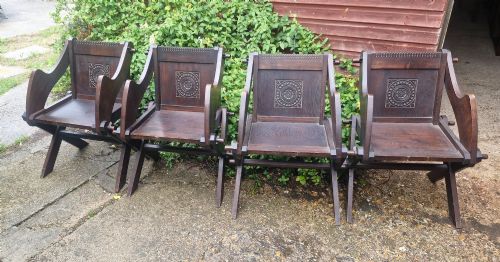
- A type of folding or X-framed wooden armchair with a sloping back and panel seat, frequently associated with nineteenth-century interpretations of medieval designs.
- Trefoil
- A three-lobed ornamental foliation resembling a clover leaf, commonly pierced through the backs of chairs in this style.
- Wainscot chair
- A heavy wooden armchair of seventeenth-century inspiration featuring a paneled back and solid seat.
- Traceried panel
- A decorative openwork or relief pattern in stone or wood resembling gothic window tracery, used extensively on chair backs.
- Barley twist
- A carved wooden furniture leg or stretcher resembling a rope twisted into a helix.
- Linenfold
- A style of woodcarving representing folded linen cloth, often utilised on the lower panels of heavy seats.
Gothic Revival Carved Chair: Frequently Asked Questions
Where should I place a gothic revival chair?
These imposing seats suit high-traffic areas like hallways or landings where their architectural lines can stand against a blank wall. They also function well as striking desk chairs or accent pieces in a study.
Because of their substantial wooden frames, they anchor a room visually and pair effectively with neutral walls that allow the carved details to emerge.
How do I care for leather and oak seats?
Solid oak furniture benefits from occasional application of quality beeswax to nourish the timber and maintain a soft sheen. Avoid placing wooden pieces near direct heat sources or strong sunlight.
For leather seats, use a suitable leather conditioner sparingly to prevent drying while preserving any original embossing or stud work.
How can I tell Victorian pieces apart from later ones?
Nineteenth-century examples often exhibit hand-cut joinery marks, patinated timber surfaces, and specific revival characteristics such as heavy gothic tracery. Later twentieth-century interpretations may show more uniform machine finishing and different internal construction methods.
Examining the underside and joints provides a clearer indication of the manufacturing period.
Were these chairs used for everyday dining?
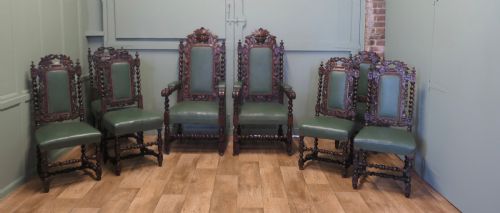
Many sets of dining chairs were produced in this style during the Victorian period for substantial country houses and gothic mansions. While some possess solid wooden seats intended for practical daily use, others featured upholstered leather or tapestry pads for added comfort.
Their sturdy oak frames ensured they withstood regular household service.