

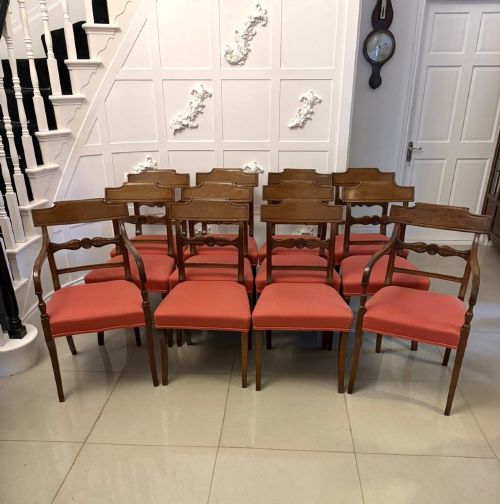
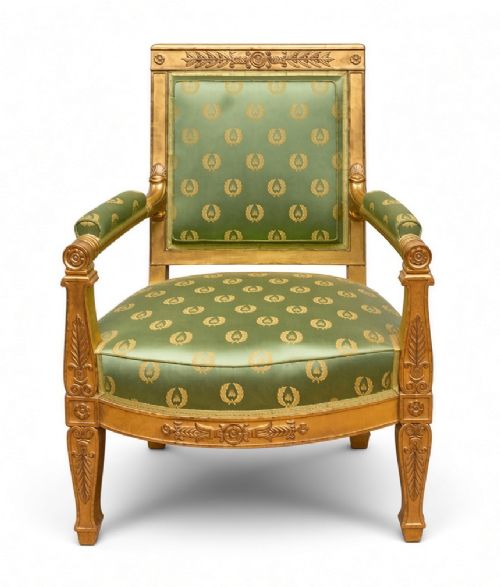
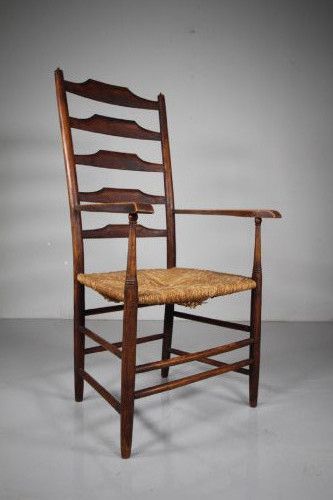

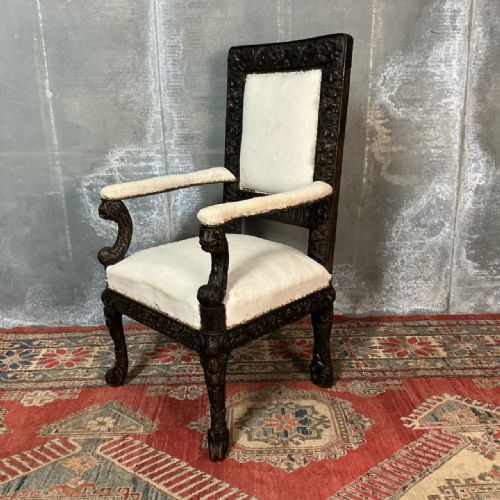




Nineteenth Century Wooden Armchair
A nineteenth century wooden armchair offers tactile warmth and honest utility, grounding a room with centuries of timber character.
Nineteenth Century Wooden Armchair
A nineteenth century wooden armchair brings solid timber construction and practical seating from the 1800s, Victorian era, and Regency periods directly into modern spaces. Buyers searching this phrase seek functional seating with historical presence, ranging from vernacular country styles to formal parlour designs.
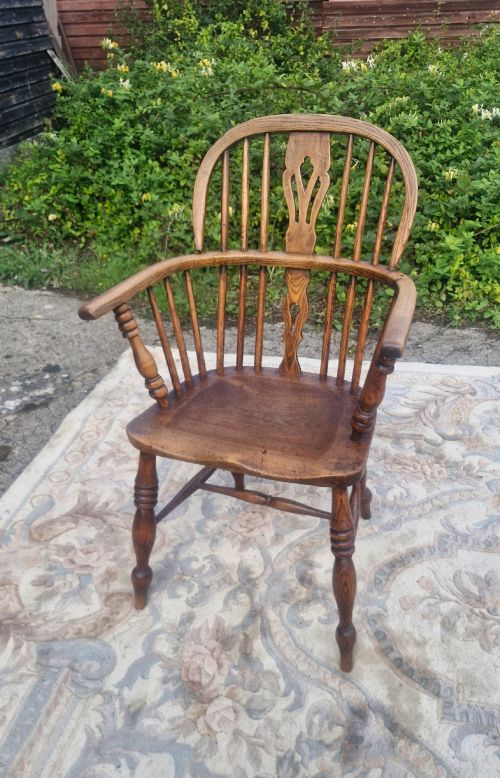
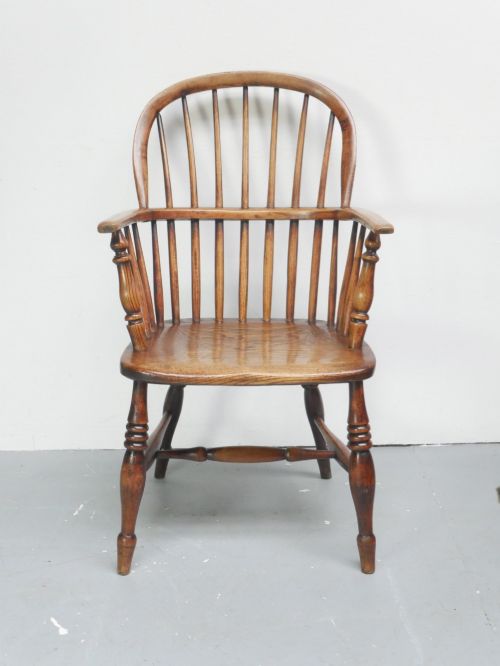
The most common examples on this page are Windsor chairs and related vernacular seating forms. These pieces often pair sturdy elm seats with ash, beech, or fruitwood frames, reflecting the robust standards of English country makers.
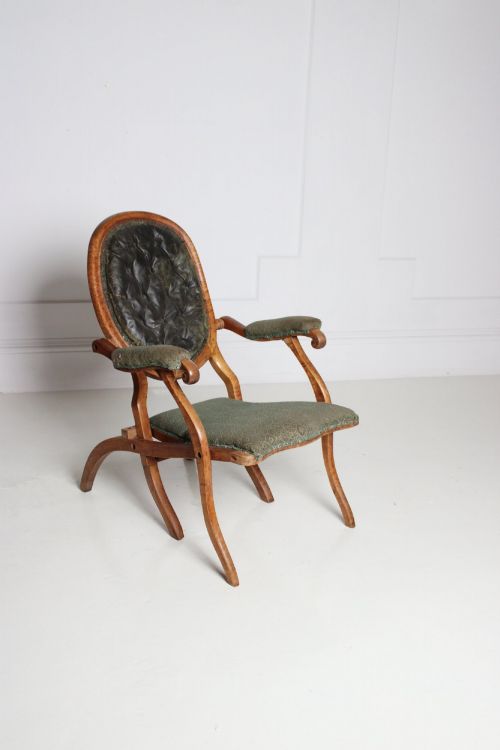
Beyond traditional country Windsors, buyers will encounter specialised forms including desk chairs, captains chairs, and children's seating. These varieties demonstrate how timber seating adapted for offices, libraries, and nurseries throughout the nineteenth century.
Materials and Construction Methods
Makers utilised a combination of native timbers suited to specific structural demands, pairing durable elm for comfortable saddle seats with flexible ash or beech for spindles and steam-bent bows. Yew and mahogany appear in more ambitious regional workshops and formal urban commissions.
Joinery relied on traditional methods such as wedged through-tenons and mortise joints, ensuring frame longevity without metal fasteners. Turning, carving, and steam-bending shaped the components, while rush or upholstered pads provided added comfort on specific chair variants.
Nineteenth Century Wooden Armchair Retail Price Guide 2026
Typical asking prices for nineteenth century wooden armchair among the pieces listed under this phrase on Sellingantiques today, from the lower quarter to the upper quarter. They describe what is for sale here now, not the wider market.
Seating forms on this page range from Windsor armchairs and children's seating to revolving desk chairs and Glastonbury chairs.
Distinctions in Quality
The distinction between standard utility seating and exceptional work lies in the refinement of the turning, the comfort of the sculpted seat, and the survival of original surfaces. Maker attribution and documented regional provenance elevate certain examples well above standard utilitarian workshop output.
Philip Clissett·Jacob Desmalter·E W Godwin·Liberty and Co·Duncan McKellar·Gabbitass of Worksop
The Nineteenth Century Wooden Armchair Glossary
- Windsor chair
- A chair built with a heavy wooden seat into which the legs and back spindles are separately inserted. This vernacular form developed numerous regional variations across Britain during the nineteenth century.
- Smokers bow
- A low-backed Windsor armchair featuring a continuous curved arm rail supported by turned spindles. These sturdy chairs gained popularity in vernacular domestic and commercial settings.
- Vernacular
- Objects designed by local tradesmen for practical everyday use rather than following high-style academic architectural patterns. These pieces rely on traditional regional methods and materials.
Nineteenth Century Wooden Armchair: Frequently Asked Questions
How do I identify a Windsor chair?
A Windsor chair is characterised by its solid carved wooden seat, which acts as the central hub into which the legs, back spindles, and arm posts are tenoned directly. This differs from framed chair construction where legs attach to a separate seat rail.
Look closely at the underside of the seat to inspect the wedged tenon joints. Regional variations in spindle placement and hoop shapes help distinguish English country workshops from one another.
Where were these chairs used?
Nineteenth century wooden armchairs served versatile roles across domestic, agrarian, and commercial environments. Farmhouse kitchens, studies, libraries, and halls all utilised these robust seating forms for daily tasks.
Heavier Windsor and smokers bow designs suited fireside lounging or tavern use, while lighter desk chairs and captains chairs accommodated clerical work and reading.
How do I care for antique timber?
Maintain antique timber by placing chairs away from direct heat sources and dramatic humidity shifts, which cause wood to split. Regular dusting with a soft, dry cloth preserves the patina.
Avoid modern silicone polishes that build up on the surface over time. Occasional application of traditional beeswax feeds the wood and protects historic finishes.
What is a comb back?
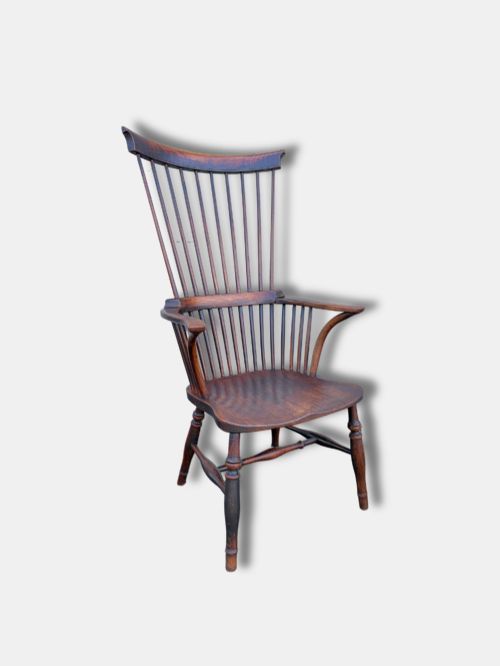
A comb back is a specific Windsor chair design where the upright spindles extend past the arm rail to support a horizontal top piece. This upper element resembles an antique hair comb.
This construction offered taller occupants additional head and neck support while maintaining the light, flexible structural benefits of stick-built joinery.