







Gothic Revival Wooden Throne
A gothic revival wooden throne brings medieval architectural grandeur into a room through monumental scale and heavy timber carving.
Gothic Revival Wooden Throne
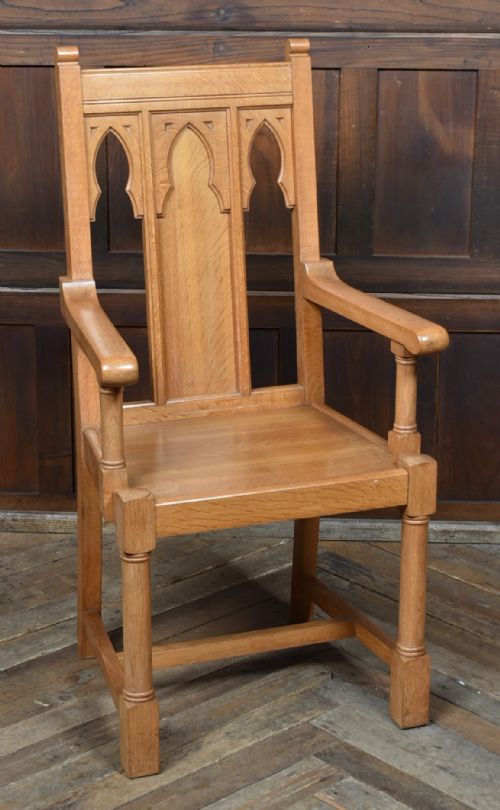
A gothic revival wooden throne is a substantial armchair designed with pointed arch motifs, high backs, and ecclesiastical detailing inspired by medieval church seating. These imposing seats appear frequently from the nineteenth century, drawing heavily on Victorian revivals of gothic and Tudor styles.
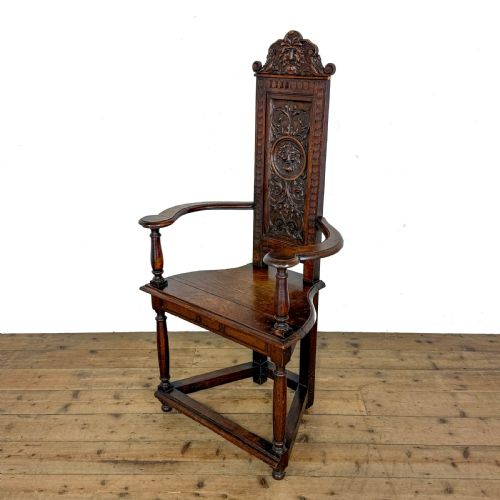
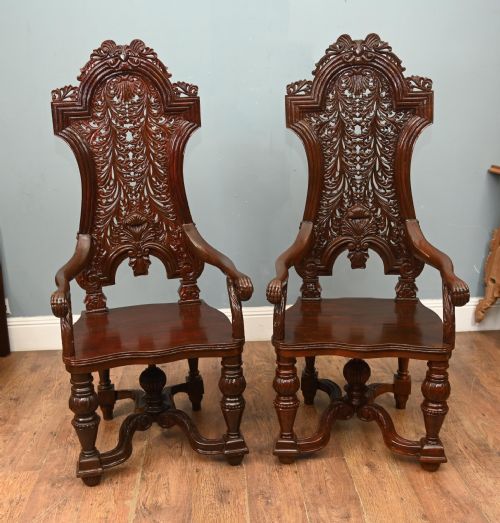
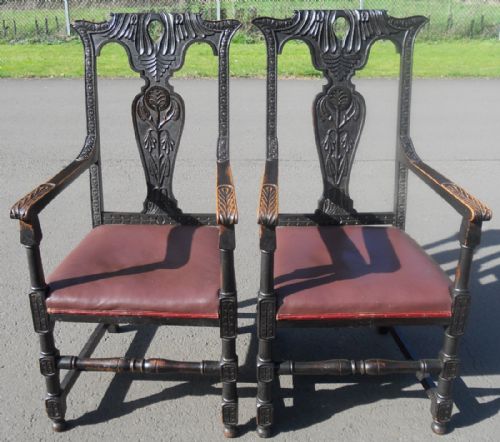
The pieces on this page span several decades of nineteenth-century and early twentieth-century craftsmanship, alongside occasional examples referencing eighteenth-century forms. They range from formal wainscot chairs and Glastonbury designs to large chapel thrones adorned with Green Man carvings or leather panel detailing.
Makers drew on diverse revival vocabularies, blending gothic elements with Jacobean, Renaissance, and Arts and Crafts influences. Most examples serve as commanding focal points in a hallway, study, or principal reception room rather than standard domestic seating.
Materials and construction
Solid oak provides the primary structural timber across the vast majority of these thrones, supplemented by pitch pine, walnut, fruitwood, and beech. Timber selection determined both the weight of the chair and the crispness achievable in deep relief carving.
Joinery relied on traditional mortise and tenon construction to support the heavy loads placed on these large armchairs. Secondary materials such as leather panels, brass detailing, and woven fabric upholstery added texture and colour to the dark wood frames.
Gothic Revival Wooden Throne Retail Price Guide 2026
Typical asking prices for gothic revival wooden throne among the pieces listed under this phrase on Sellingantiques today, from the lower quarter to the upper quarter. They describe what is for sale here now, not the wider market.
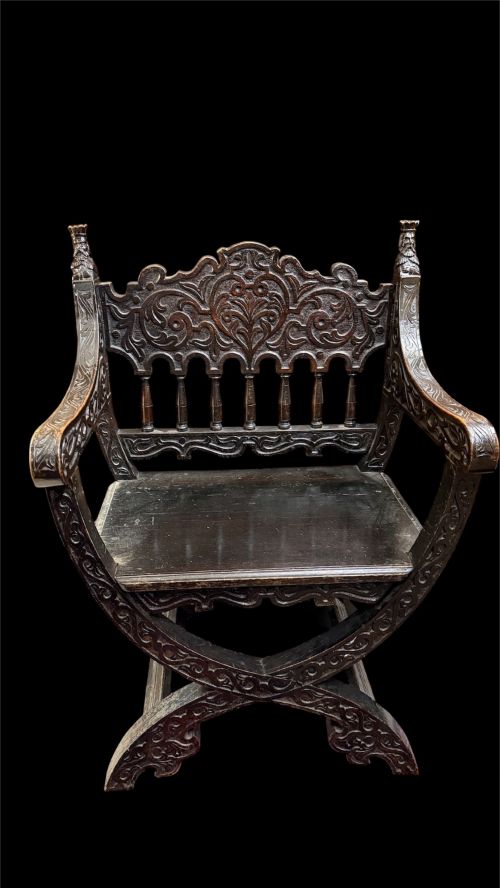
Several pieces feature staring Green Man faces peering out from the foliage.
Distinctions in quality
Depth and ambition in the carving distinguish standard regional pieces from exceptional exhibition works. Master carvers produced intricate tracery, linenfold panels, and naturalistic figures with sharp undercut details rather than shallow surface incisions.
Proportion and structural integrity dictate the success of the design. Superior examples maintain balanced architectural lines across high paneled backs and sturdy arm supports without appearing overly heavy or clumsy.
The Gothic Revival Wooden Throne Glossary
- Wainscot chair
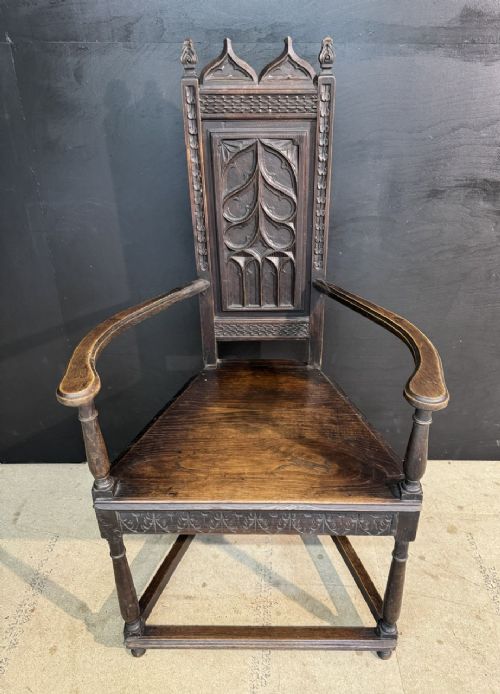
- An early form of wooden armchair constructed with paneled backboards and solid timber armrests. These pieces typically date to the seventeenth century in origin but saw revivals throughout the Victorian era.
- Glastonbury chair
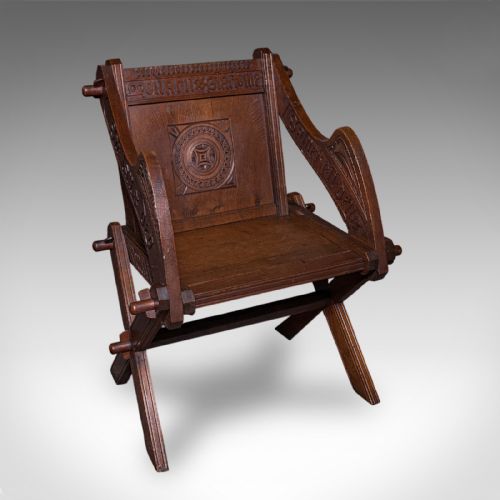
- A distinctive folding armchair design with X-framed legs and a sloping back, popularized during the nineteenth-century gothic revival. They often bear ecclesiastical inscriptions or geometric carvings.
- Turner's chair
- A round-legged chair built from turned wooden spindles assembled in a triangular or square seat plan. Sometimes referred to as an Old Saxon chair, this form dates back to medieval domestic traditions.
- Green Man
- A sculptural motif depicting a human face emerging from or entwined with foliage and vines. It symbolises rebirth and appears frequently in nineteenth-century architectural woodwork.
- Pitch pine
- A resinous softwood utilised in ecclesiastical and domestic furniture during the nineteenth century. It accepts deep staining and exhibits a prominent grain pattern.
Gothic Revival Wooden Throne: Frequently Asked Questions
Where did people use these large chairs?
These imposing seats were traditionally placed at the head of a dining table, in a grand hallway, or within an ecclesiastical setting such as a chapel or vestry.
Domestic owners during the nineteenth century also positioned them in libraries or studies to project authority and historical continuity.
How do I care for the wooden frame?
Maintain the timber by applying a microcrystalline wax polish occasionally to nourish the dry oak or walnut. Avoid placing the chair near direct heat sources or strong sunlight to prevent the timber and leather from splitting.
Dust intricate carvings regularly with a soft bristle brush to prevent buildup in the recessed architectural details.
Are these chairs comfortable for daily seating?
Most gothic revival thrones were built primarily for visual impact and ceremonial posture rather than relaxed lounging. The high wooden backs and upright seating angles encourage an upright posture.
Adding a loose squab cushion in leather or tapestry can improve everyday comfort without altering the historic structure.
How can I tell a Victorian revival piece from an older original?
Examine the tool marks, timber seasoning, and construction methods visible beneath the seat and on the rear panels. Machine-sawn components and standardised fixings generally point to nineteenth-century revival workshops rather than medieval craftsmanship.
Stylistic proportions and the integration of diverse revival vocabularies, such as French Renaissance or Jacobean details, typically confirm a nineteenth-century date of manufacture.