





Gothic Revival Brass Lamps
Gothic revival brass lamps bring ecclesiastical weight and medieval lines into a room, offering heavy cast metals and coloured glass that command attention.
Gothic Revival Brass Lamps
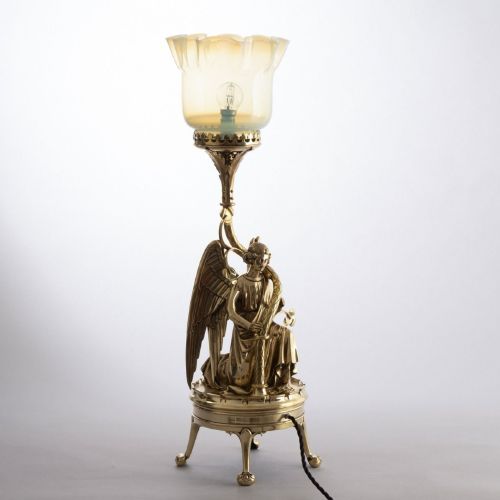
When you search for gothic revival brass lamps, you are looking at heavy metal light fixtures drawing on medieval architecture, church metalwork and Victorian interpretations of the Gothic style. These pieces span table lamps, altar stick conversions, heavy lanterns and multi-branch chandeliers created across the nineteenth and early twentieth centuries.
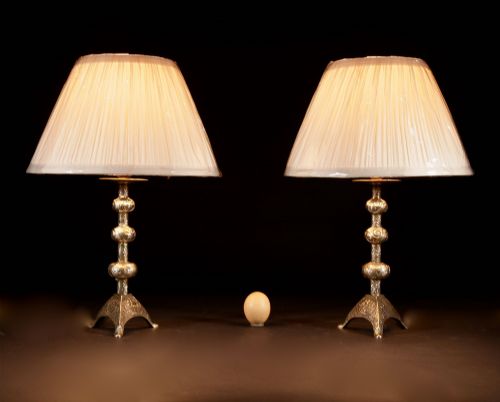
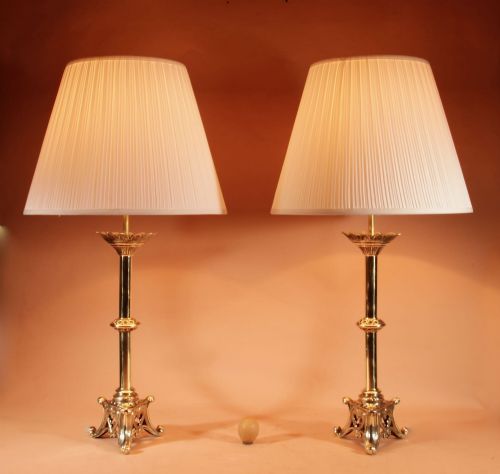
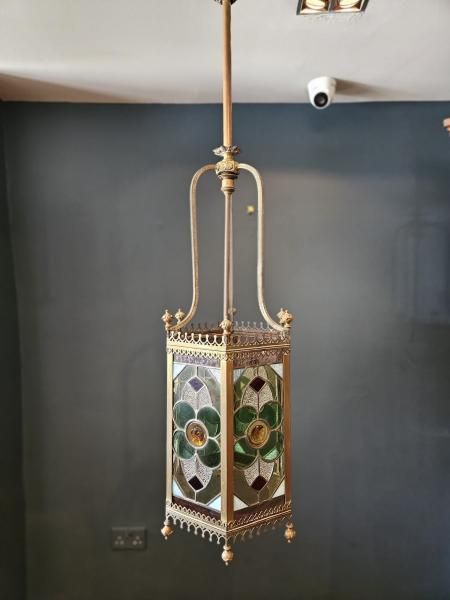
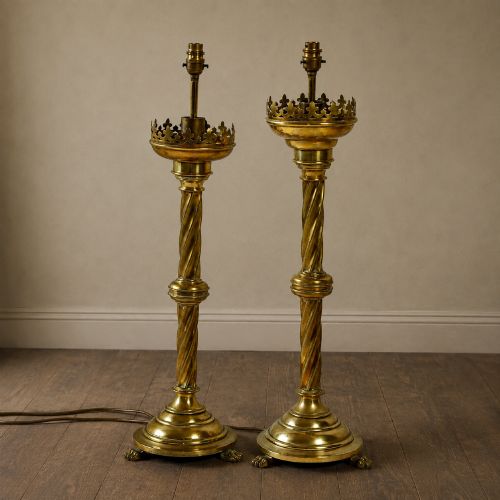
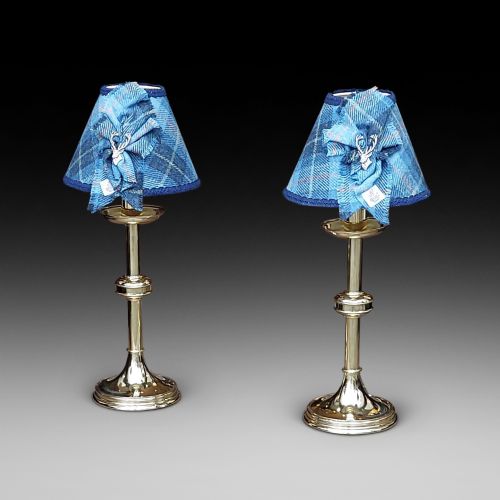
On this page, you are most likely to meet table lamps and converted altar candlesticks in brass, often paired with Vaseline glass, coloured glass or fabric. The selection ranges from severe Victorian church pieces to French nineteenth century examples and Edwardian hanging lights.
Makers and designers of the period looked directly to medieval stonework, ecclesiastical furnishings and architectural ironmongery for their vocabulary. The resulting forms bring pointed arches, tracery and robust cast metals straight into domestic interiors.
How they were made
The construction of these lamps relies heavily on cast brass, gilded brass and wrought iron, forming robust frames designed to hold heavy glass or support extensive branching. Founders used traditional sand casting methods to achieve thick, architectural components with deep relief and sharp surface detail.
Glass elements frequently incorporate Vaseline glass, leaded panels or dimpled coloured glass inserts that catch and refract light through medieval inspired openings. Many pieces began life as altar sticks or oil lamps before later conversion to electricity during the twentieth century.
Form variations across the inventory range from single candlestick table lamps to multi-branch chandeliers and hanging lanterns.
What varies in quality
Quality in these pieces rests upon the crispness of the brass casting and the weight of the metal components used in the structure. Heavier gauges of cast brass and deeply chased surface ornament separate substantial church and architectural lighting from lighter domestic adaptations.
The integration of glass also dictates overall merit, particularly where original Vaseline glass or leaded lanterns are retained without replacement. Proportions that reflect authentic medieval architectural principles rather than generic decoration elevate the standing of any individual lamp.
The Gothic Revival Brass Lamps Glossary
- Altar Candlestick
- A tall, heavy candlestick originally designed for ecclesiastical use on or near an altar. Many surviving examples were later converted into table lamps during the twentieth century.
- Vaseline Glass
- A type of glass produced with uranium dioxide, giving it a distinct yellow-green tint that glows under ultraviolet light. It appears frequently in nineteenth century lighting.
- Romanesque Revival
- An architectural and decorative style drawing on heavy, rounded eleventh and twelfth century medieval forms rather than pointed Gothic arches. It shares a period and aesthetic with Gothic revival metalwork.
- Chandelier
- A branched suspended light fixture designed to hold multiple candles or bulbs. Gothic revival versions often feature heavy brass arms and ecclesiastical motifs.
Gothic Revival Brass Lamps: Frequently Asked Questions
Are these lamps safe to use today?
Most antique lighting requires rewiring to meet modern electrical safety standards before regular domestic use.
A qualified electrician can easily update internal wiring while preserving the original brass structure and exterior appearance.
How do I date a brass lamp?
Dating relies on examining casting techniques, patination, fastening methods and the style of accompanying glass or hardware.
Nineteenth century pieces typically display heavier sand cast brass components and hand-finished surfaces distinct from later mass production.
Can I find matching pairs?
Pairs appear frequently, particularly among converted church altar sticks and table lamp adaptations.
Slight variations in height or casting detail often occur because many ecclesiastical pieces were made by hand in small workshops.
Where should I place a heavy brass lamp?
Their substantial weight and architectural presence suit heavy wooden sideboards, large desk surfaces or central hanging positions.
They anchor a room with strong vertical lines and rich metallic textures that complement traditional or eclectic interiors.