
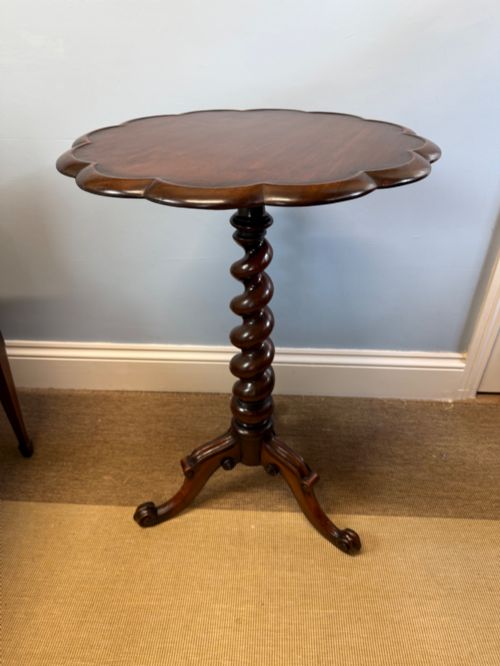
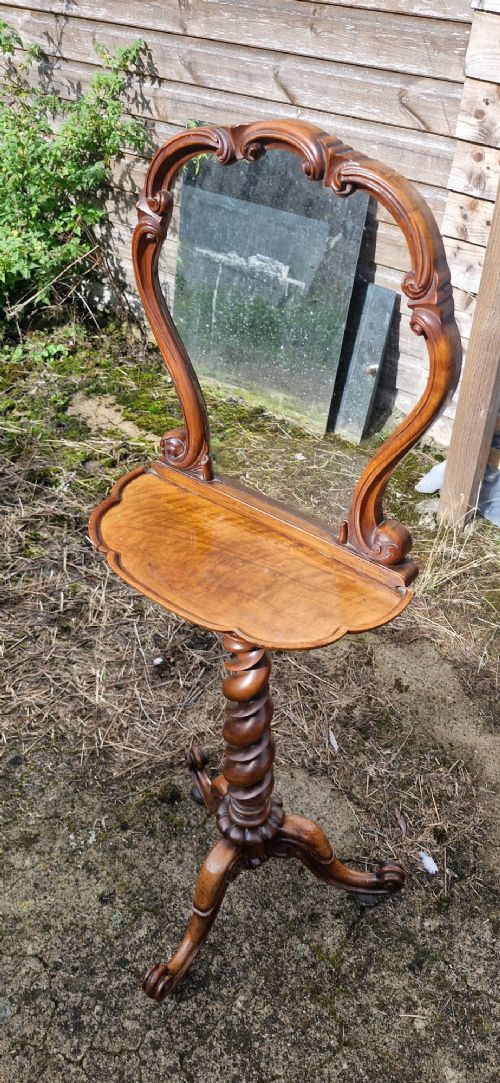
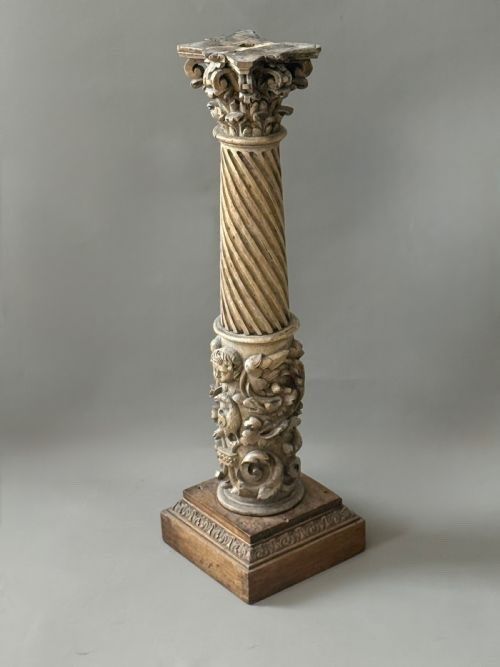


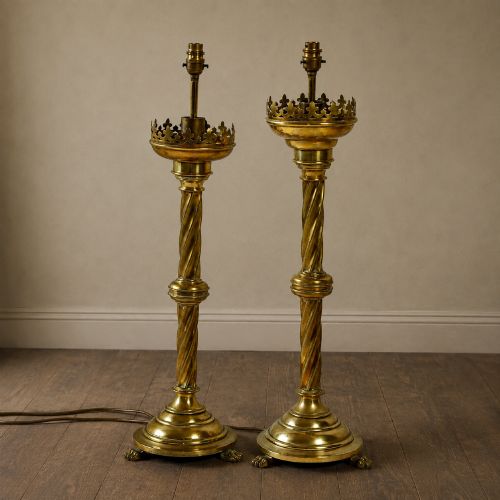


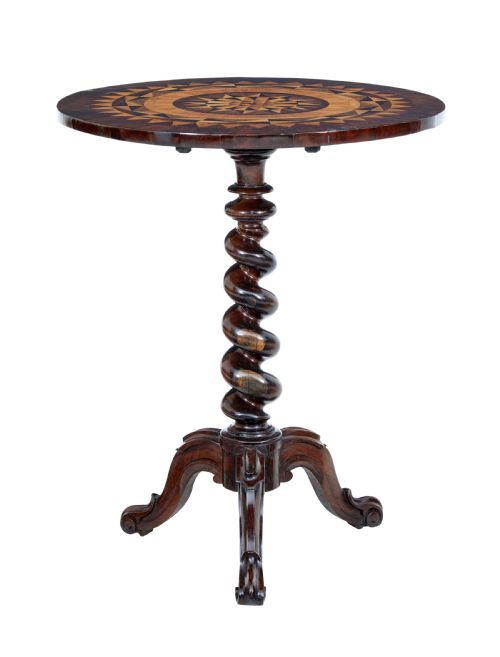

Spiral Column Table Lamps
These spiral column table lamps and converted stands bring rich turned wood and polished brass into a room.
Spiral Column Table Lamps
When you search for spiral column table lamps, you are looking at turned pillars and pedestals shaped from timber or metal, often adapted from earlier occasional tables, torchieres, and altar sticks. The selection brings together nineteenth-century mahogany and walnut pieces alongside grander seventeenth-century continental baroque carved wooden pillars.
You are most likely to meet Victorian brass barley twist designs and nineteenth-century timber pedestals that have been wired for light. These items range from compact occasional tables adapted for illumination to monumental carved wooden lamp bases built with substantial presence.
Makers and adaptors drew upon Georgian revival, regency, and gothic revival styles to shape these columns. The results span small walnut wine tables with glass backs up to heavy ecclesiastical brass altar candlesticks converted for domestic interiors.
How they were made
Craftsmen shaped the wooden columns using lathe-turning techniques to produce the characteristic barley twist and spiral forms seen in mahogany, walnut, and burr elm. Boxwood stringing and gesso detailing were often applied to enrich the timber surfaces.
Metal examples utilise heavy brass casting, creating solid candlestick and pillar forms designed to support the weight of wide shades. Timber pieces frequently incorporate tripod bases or octagonal side table structures to ensure stability beneath the twisted column.
Current listings feature materials ranging from solid mahogany and burr walnut to heavy cast brass and carved wood.
What varies in quality
The distinction between ordinary and exceptional pieces lies in the crispness of the hand-turned twist and the depth of the timber grain. Burr walnut and figured mahogany with rich natural patination elevate a piece far above plain painted or heavily restored timber.
Proportion and structural integrity dictate the overall calibre of each lamp or adapted table. Heavier brass castings and well-balanced tripod bases demonstrate superior weight distribution and careful workshop construction.
The Spiral Column Table Lamps Glossary
- Barley twist
- A spiral carving resembling a stalk of barley, turned on a lathe to create a continuous twisting column. This motif gained particular popularity during the seventeenth century and saw strong revivals in the Victorian era.
- Tripod base
- A three-legged support structure commonly found beneath nineteenth-century occasional tables and lamp stands. It provides reliable balance on uneven floors.
- Gesso
- A plaster-like mixture applied to wood surfaces as a smooth base for gilding or painting. It allows intricate decorative relief work to be formed before finishing.
- Stringing
- A thin inlay of contrasting wood, such as boxwood, set flush into the surface of furniture to create delicate border lines. This technique defines the edges of tabletops and pedestals.
- Tilt top
- A tabletop hinged to its central pedestal so it can be folded vertically when not in use. This mechanism allowed tables to be stored flat against a wall in smaller rooms.
Spiral Column Table Lamps: Frequently Asked Questions
Are these lamps originally made as lighting?
Many items listed under this search were originally functional objects such as occasional tables, altar candlesticks, or architectural pillars. They have been subsequently adapted and wired to serve as table lamps.
This conversion practice preserves older turned woodwork and heavy brass hardware by giving them a practical purpose in modern rooms.
How do I date a spiral column?
Dating relies on examining the wood species, turning style, and construction methods visible in the base or pillar. Seventeenth-century examples display deep, hand-carved baroque details, whereas Victorian interpretations often feature machine-turned regularity.
Secondary woods, fixings, and overall wear patterns further help distinguish between early pieces and later revivals.
What is burr walnut?
Burr walnut is a specialised wood veneer taken from the growth warts or burls of walnut trees. It yields complex, swirling grain patterns that were highly prized by nineteenth-century cabinet makers.
Tables and lamp bases featuring this material offer striking visual texture compared to straight-grained timber.
How do I place a tall lamp base?
Monumental pillars and heavy brass candlesticks require sturdy side tables or chests where their height will not compromise stability. Placing them in corners or on low occasional tables creates a strong vertical accent in a room.
Ensure the shade proportions match the substantial weight of the turned column.