

Gothic Oak Desk
A gothic oak desk brings serious architecture and deep, dark wood into a room, offering a sturdy workspace rooted in centuries of revival design.
Gothic Oak Desk
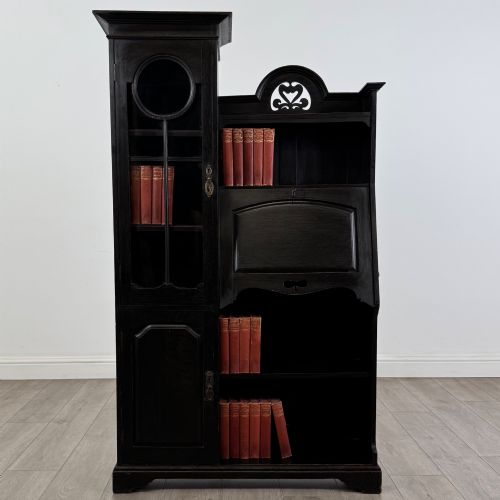
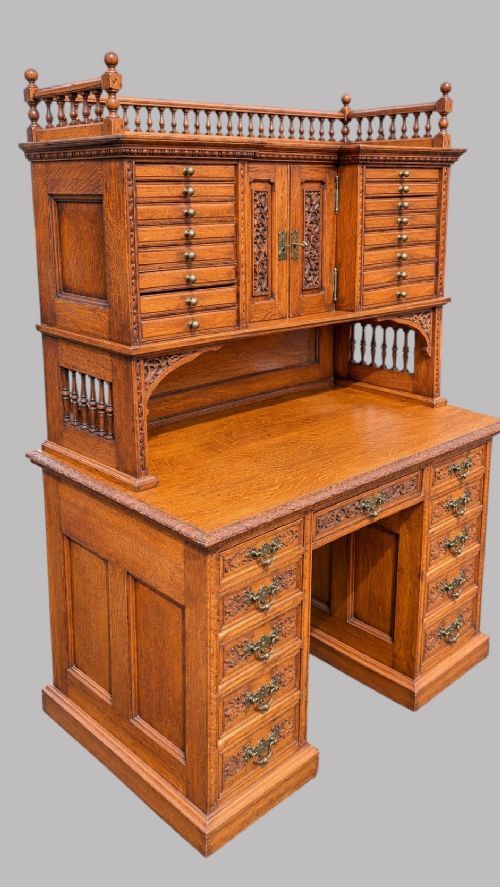
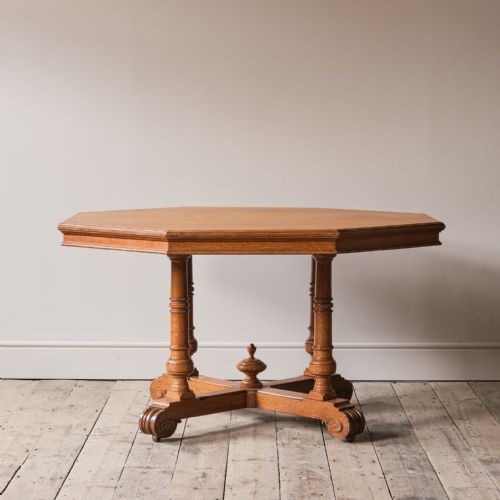
When searching for a gothic oak desk, a buyer encounters pieces primarily spanning the nineteenth century through the early twentieth century, heavily shaped by Victorian and Edwardian revivals. These range from substantial pedestal and partners desks to smaller writing tables and bureaus fitted with drawers or leather writing surfaces.
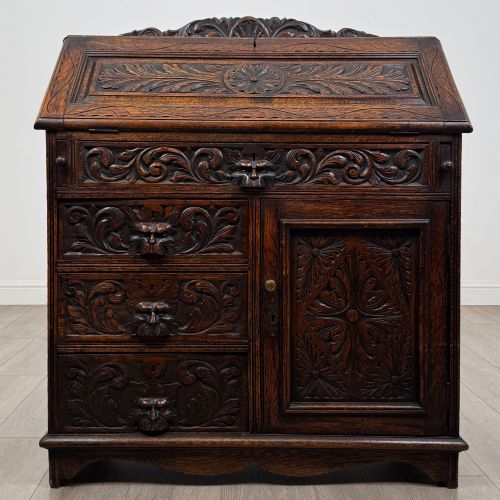
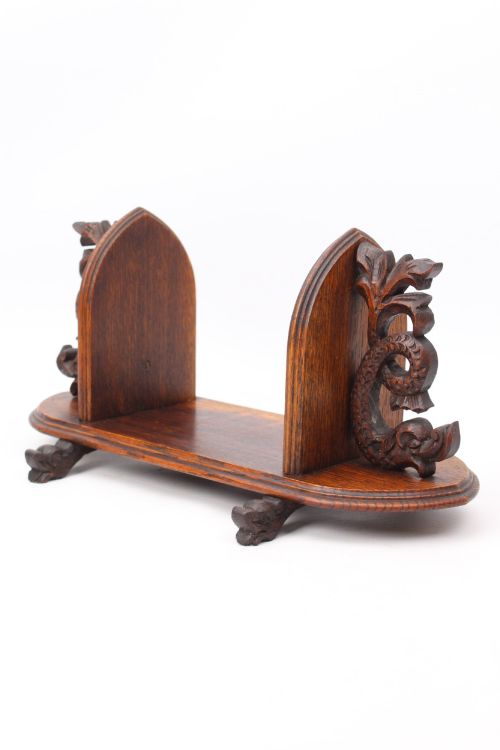
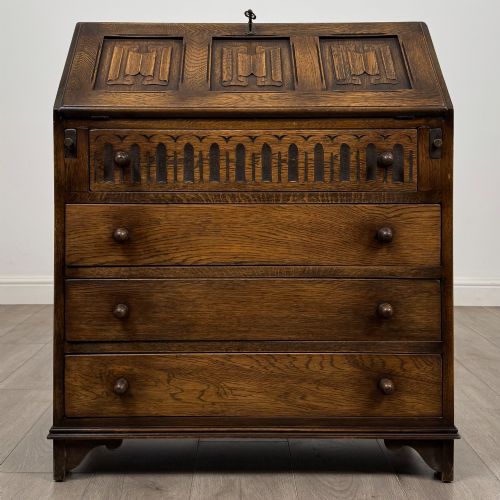
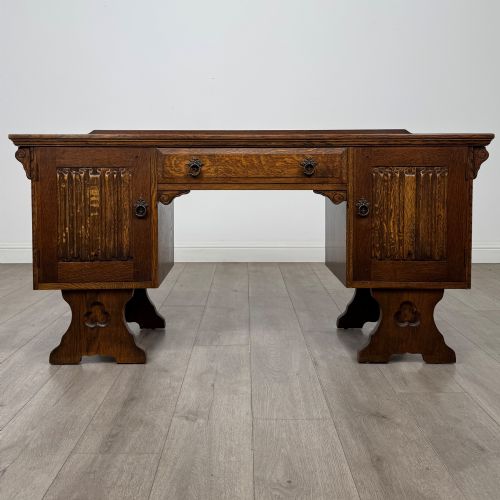
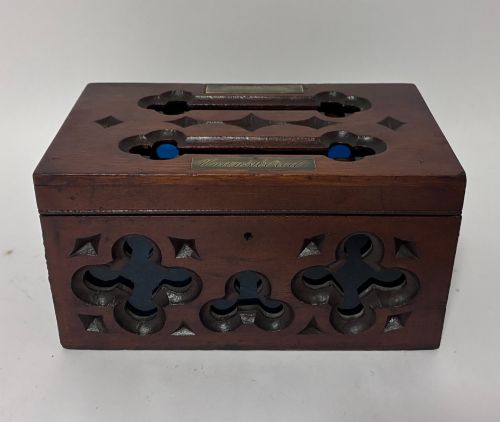
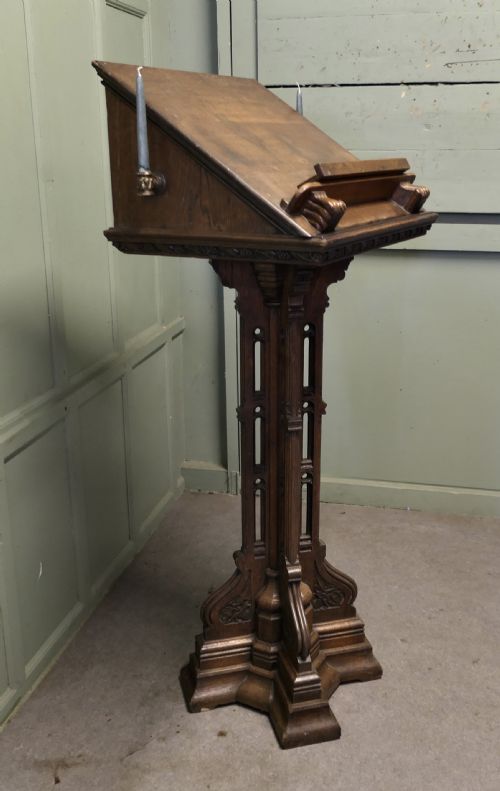
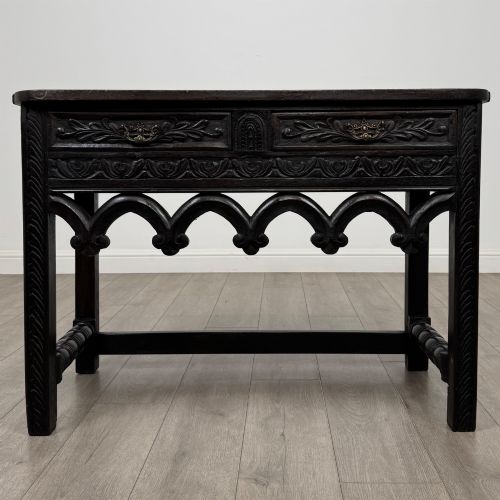
The aesthetic draws direct inspiration from medieval architecture, displaying characteristic structural elements such as pointed arches, linenfold panelling, and carved motifs like green men or lions' heads. Many examples encountered on this page reflect the Gothic Revival and Arts and Crafts movements, translating ecclesiastical and architectural forms into functional domestic furniture.
Materials and construction
Solid timber forms the foundation of these pieces, utilising heavy oak selected for its durability and prominent grain, often complemented by secondary woods for interior drawer linings. Craftsmen employed traditional joinery techniques, such as mortise and tenon frames, to support the substantial weight of large pedestal and partners formats.
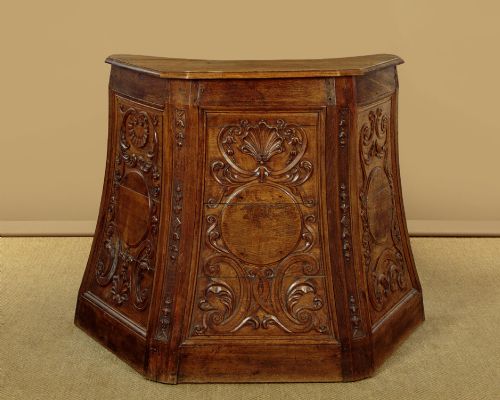
Surface decoration relies heavily upon deep hand-carving executed directly into the solid oak, complemented by utilitarian metal elements including brass handles and iron hinges. Writing surfaces frequently incorporate inset panels of tooled leather, providing a contrasting texture to the carved timber frames.
Listings span from the early nineteenth century through the 1930s, encompassing Victorian, Edwardian, and Arts and Crafts interpretations.
Factors that define quality
The standard of a piece rests largely upon the depth and precision of the hand-carving, where crisp detailing in motifs like linenfold or figurative elements separates superior cabinet work from mechanical production. Master carvers brought architectural elements to life with sharp undercutting and naturalistic flow.
Proportion and structural integrity also dictate worth, as well-balanced proportions in large pedestal forms indicate careful design by skilled makers. Original hardware, intact leather writing surfaces, and well-figured timber grain further elevate an example within the category.
Arthur Simpson of Kendal·Winterhalder·Gillows·Bruce James Talbert·C Wilkinson and Son·John Taylor and Son
The Gothic Oak Desk Glossary
- Gothic Revival
- An architectural and design movement spanning the eighteenth and nineteenth centuries that reinterpreted medieval forms, pointed arches, and ecclesiastical motifs in domestic buildings and furniture. This style informs the structural lines and ornamentation of these desks.
- Partners desk
- A large double-sided desk designed with drawers and cupboards on both faces, allowing two people to work opposite one another. These pieces often feature extensive carving and leather inserts.
- Linenfold
- A style of wood carving used to decorate panels, resembling vertically folded lengths of cloth. It appears frequently on the cabinet doors and sides of Edwardian and Victorian pieces.
- Kneehole desk
- A compact desk featuring a central recessed space for the legs, flanked by pedestals of small drawers. This form provides storage while maintaining a manageable footprint for domestic spaces.
- Prie-dieu
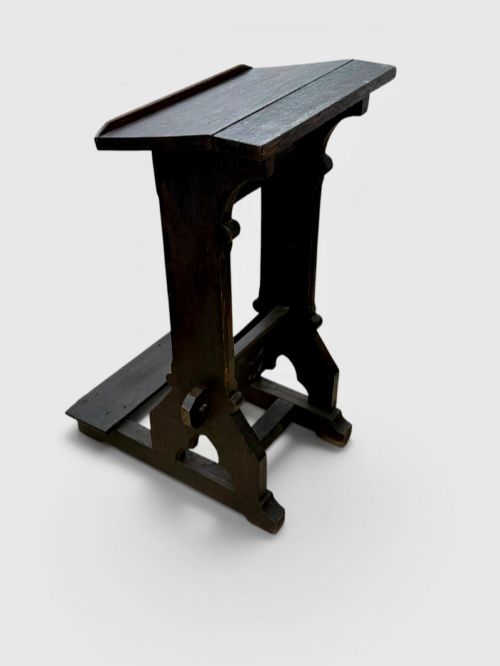
- A devotional desk or kneeling chair fitted with a sloping shelf for books and a padded rail for prayer. These ecclesiastical forms occasionally cross over into domestic study furniture.
Gothic Oak Desk: Frequently Asked Questions
What defines a gothic oak desk?
These pieces combine heavy oak construction with architectural ornamentation derived from medieval buildings, such as pointed arches, trefoil details, and deep relief carvings. They date primarily from the nineteenth and early twentieth centuries.
The form prioritizes solid timber and functional spaces like pedestals or writing drawers, executed through Victorian and Edwardian revivals of historical styles.
How do I care for the leather writing surface?
Leather inserts require gentle dusting and occasional treatment with appropriate conservation balms to prevent the material from drying and cracking over time. Avoid using modern chemical cleaners that might strip the original tone or tooling.
Keeping the room at a stable humidity level also helps protect both the leather top and the surrounding solid oak frame.
Were these desks used in homes or offices?
While larger pedestal and partners formats served institutional libraries, public schools, and grand estate offices, smaller writing tables and bureaus were built for domestic studies. The variety in scale reflects the wide range of settings these desks occupied.
Private residences often utilised compact side tables or kneehole variants for personal correspondence and household administration.
How can I tell the period of the carving?
Nineteenth-century examples often display deep, architectural relief work influenced by high Victorian Gothic tastes, sometimes incorporating figurative elements like green men or heraldic motifs. Edwardian pieces frequently lean towards simpler Arts and Crafts interpretations or crisp linenfold panels.
Examining the construction methods inside the drawers and the tooling on any leather panels provides further context regarding the date of manufacture.