
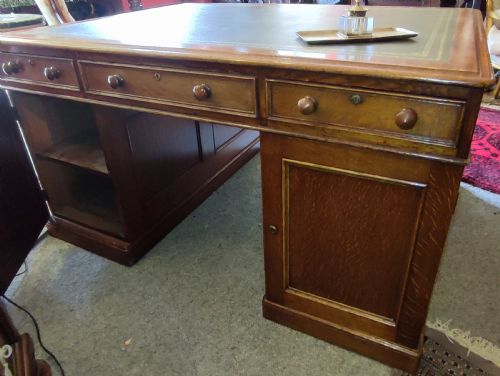


Traditional Oak Library Table
A traditional oak library table is a substantial piece built for serious study, offering generous working surfaces and sturdy construction that anchors a room.
Traditional Oak Library Table
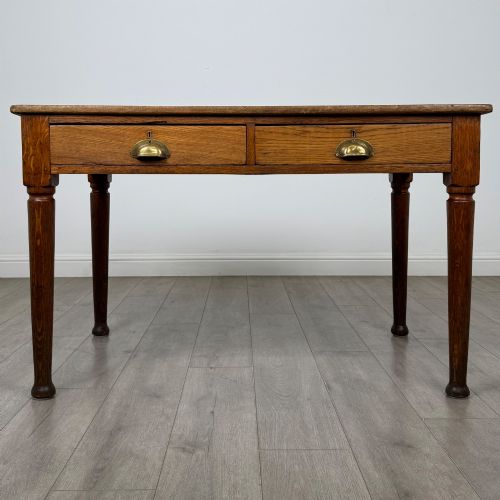
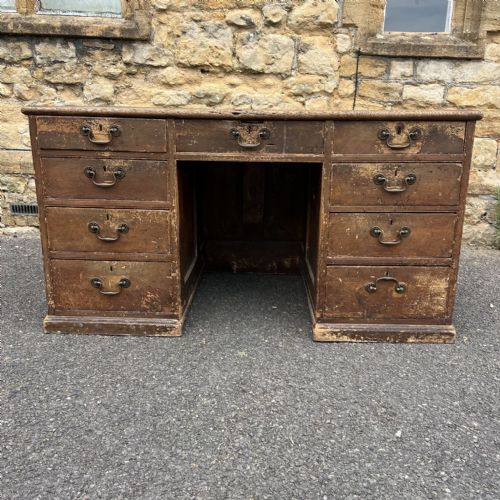
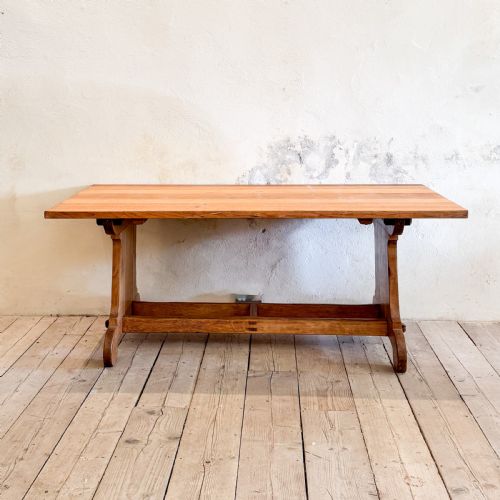
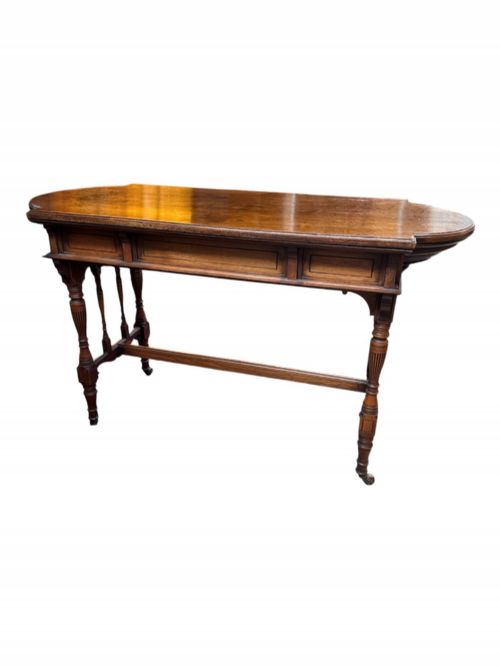
When you search for a traditional oak library table, you encounter robust writing desks, partners desks, and large central tables designed for institutional or domestic study. The pieces appearing here span the Victorian, Edwardian, and early twentieth-century periods, showcasing the enduring utility of solid wood workspace furniture.
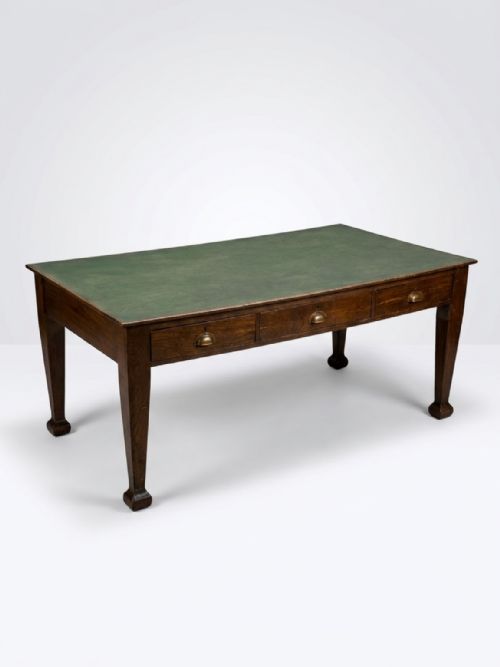
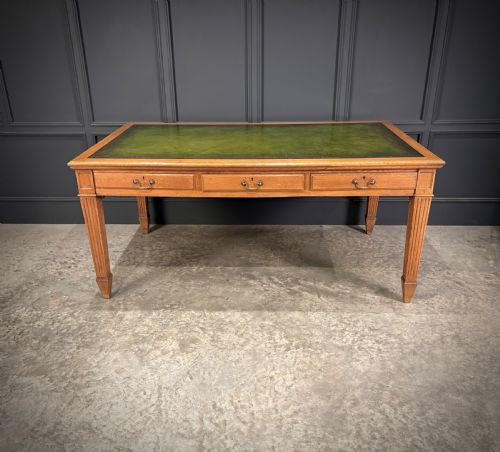
Most examples hail from the nineteenth century or the early decades of the twentieth, displaying functional forms like twin drawers, leather inserts, and pedestal configurations. Alongside standard library tables, the selection includes estate desks, octagonal centre tables, and occasional coffee tables adapted from larger formats.
How they were made
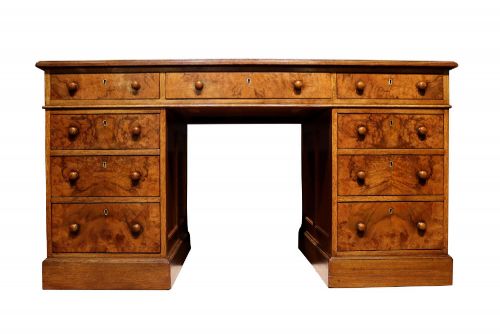
Construction relies heavily on solid oak, frequently paired with inset leather writing surfaces and brass hardware such as drop handles and drawer pulls. Secondary timbers like pine appear in structural framing and drawer linings, whilst decorative veneers like burr walnut add contrast on select pedestal models.
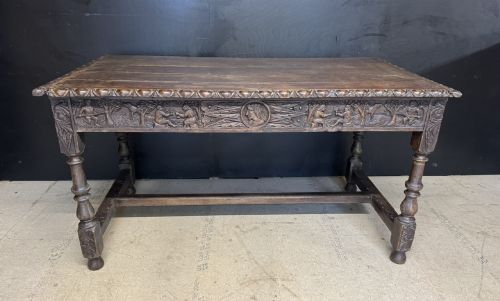
Joinery techniques prioritize durability, employing sturdy framing, dovetailed drawers, and occasionally carved ornamentation typical of Gothic or Renaissance Revival tastes. Tables of broad scale and proportions utilise heavy framing to support large spans of timber without sagging under daily use.
Estate desks often reveal ink stains inside their drawers, left behind by Victorian clerks who hurried through their daily correspondence.
What varies in quality
The distinction between standard utility items and finer examples lies in the selection of timber, the depth of carving, and the sophistication of the hardware. Golden oak surfaces with well-figured grain and original brass fittings demonstrate superior workshop standards compared to plain, utilitarian pieces.
Proportion and scale dictate the success of a design, with broader, well-balanced partner configurations commanding greater presence than narrow single-sided desks. The preservation of original tooled leather tops and clean, unwarped timber panels distinguishes better-kept specimens.
Gillow & Co
The Traditional Oak Library Table Glossary
- Partners desk
- A large double-sided desk designed for two people to work opposite one another, featuring drawers and cupboards accessible from both sides.
- Centre table
- A freestanding piece finished on all sides, intended to stand in the middle of a room rather than against a wall.
- Pedestal desk
- A heavy desk comprising a large top resting on two separate drawer pedestals or banks of drawers.
- Burr walnut
- A highly figured wood veneer derived from the abnormal growth of a walnut tree, utilised for decorative contrast on drawer fronts and panels.
- Arts and Crafts
- A design movement emphasising handcraftsmanship, simple forms, and visible construction methods rather than mass-produced ornamentation.
Traditional Oak Library Table: Frequently Asked Questions
How do I care for an antique oak table top?
Maintain the timber by dusting regularly with a dry cloth and applying natural beeswax sparingly to nourish the grain. Avoid placing items directly onto antique leather or bare wood to prevent staining.
Keep the piece away from direct heat sources and strong sunlight, which can dry out the timber and fade the leather inserts over time.
What is the difference between a library table and a partners desk?
A library table is typically an open-frame table with drawers beneath the top, designed for reading and writing from one side. A partners desk provides enclosed pedestals of drawers on both sides, allowing two people to sit opposite each other.
Partners desks offer significantly more storage capacity and are built with finished panelling on all four sides to stand centrally within a room.
How can I date an oak library table?
Examine the construction methods, timber selection, and hardware style to determine the likely era of manufacture. Pieces from the mid-nineteenth century often display heavier proportions and Gothic revival carving, whilst Edwardian and later examples tend toward lighter golden oak tones.
Drawer construction provides further clues, as machine-cut dovetails indicate a date towards the end of the nineteenth century or later.
Can these tables be used as modern desks?
These tables adapt well to contemporary workspaces, offering ample surface area for laptops, papers, and desk lamps. Their sturdy oak construction easily accommodates modern office requirements whilst adding character to a room.
Check the kneehole clearance height before purchase to ensure comfortable seating, as older tables were occasionally built lower than standard modern desks.