


Gothic Library Cabinet
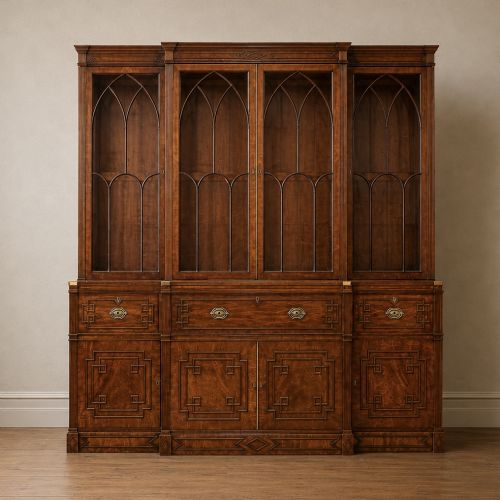
A gothic library cabinet brings serious architectural presence into a room, uniting tall timber proportions with traceried glass and carved panels.
Gothic Library Cabinet
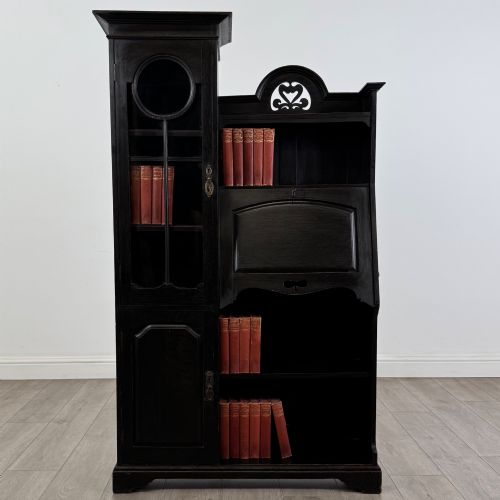
A gothic library cabinet is a tall timber storage piece designed to hold books and papers behind glazed or solid doors. These pieces draw heavily on medieval ecclesiastical design, showing pointed arches, tracery, and crenellated cornices.
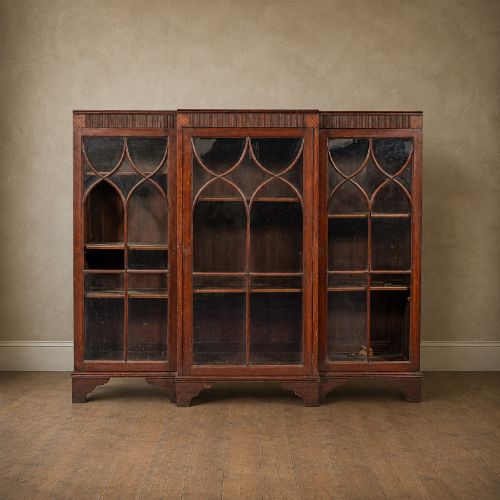
Most examples met here date from the nineteenth century, spanning the Regency, Victorian, and Edwardian periods. They appear in forms ranging from breakfront library bookcases to smaller two-door cupboards and open-fronted shelves.
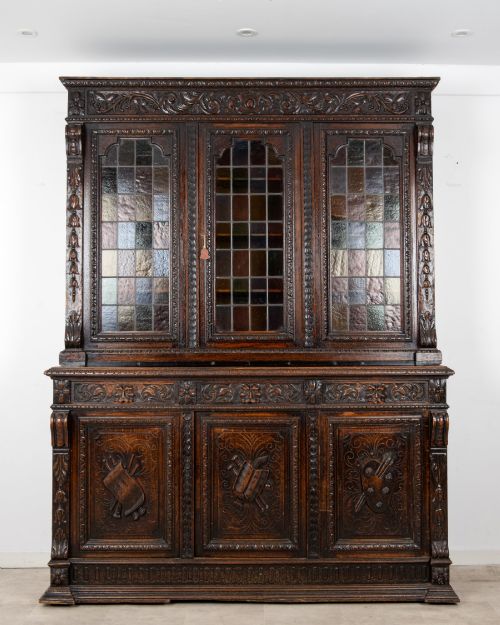
Makers often turned to revival styles, combining Georgian proportions with heavy Gothic ornamentation. Oak and mahogany dominate the selection, frequently enhanced by carved detail and stained glass.
How they were made
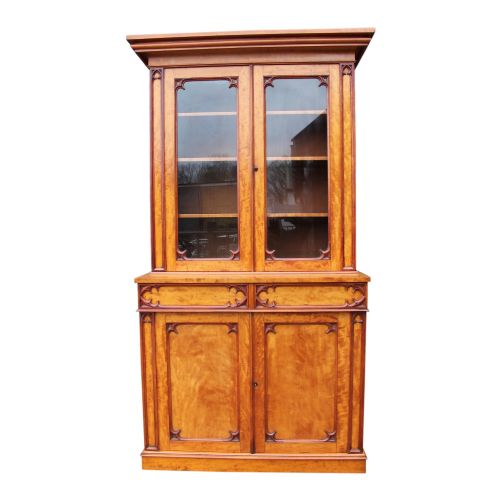
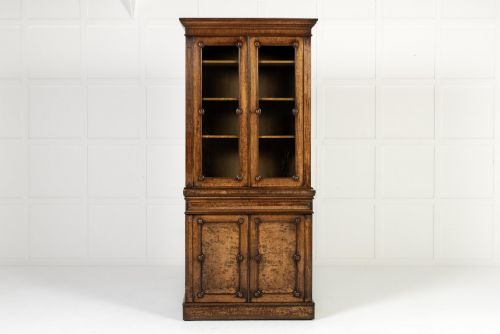
Cabinetmakers built these pieces using solid timbers like oak, walnut, and mahogany, often applying figured veneers such as flame mahogany or pollard oak to large flat surfaces. Frame-and-panel construction kept heavy doors stable over decades of use in substantial libraries.
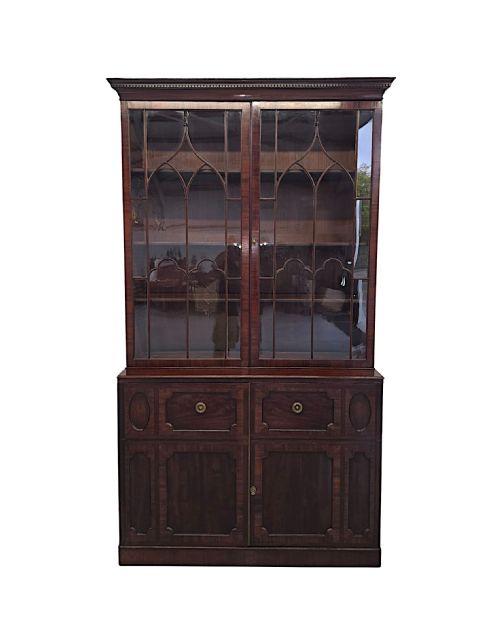
Glazing bars formed complex pointed arches and geometric Gothic tracery, supported by brass hinges and locks. Carved ornamentation, including linenfold panels and foliate corbels, was worked directly into the solid wood by hand.
Listings on this site show gothic library cabinets executed in oak, walnut, and mahogany across the nineteenth and early twentieth centuries.
What varies in quality
The quality of a gothic library cabinet rests on the selection of timber and the ambition of its architectural detailing. Dense, highly figured pollard oak or flame mahogany indicates a commission of higher status than plain deal or secondary softwoods.
Crispness in the woodcarving separates standard production from exceptional work. Hand-carved tracery, undercut foliage, and well-proportioned breakfront cornices show the hand of a skilled workshop rather than mechanical repetition.
James Winter and Sons·Gillows
The Gothic Library Cabinet Glossary
- Breakfront
- A cabinet design where the central section projects forward from the flanking wings. This creates a stronger architectural shadow line across the front of the piece.
- Tracery
- Openwork stonework style translated into woodwork, forming geometric patterns within the glazed upper doors. It defines the Gothic aesthetic on library furniture.
- Crenellated cornice
- A top moulding shaped to resemble battlements on a medieval castle. It adds a fortified silhouette characteristic of Gothic Revival architecture.
- Pollard oak
- Timber taken from trees that were pollarded, producing a clustered, highly figured grain pattern. Cabinetmakers prized this wood for decorative drawer fronts and panels.
- Secretaire
- A desk disguised as a standard cabinet drawer, fitted with a drop-front writing surface and small pigeonholes. It allowed correspondence within the library space.
Gothic Library Cabinet: Frequently Asked Questions
Where should a gothic library cabinet go?
These cabinets suit large rooms with high ceilings where their architectural proportions find balance. Placing them away from direct sunlight and heat sources protects old timber and sensitive book bindings.
Their heavy presence works well against plain walls, allowing carved cornices and tracery doors to stand out.
How do I care for the timber?
Maintain a stable room humidity to prevent the solid oak, mahogany, or walnut panels from splitting. Dust regularly with a dry cloth and apply a quality wax polish sparingly.
Avoid silicon-based sprays, which sink into old finishes and attract dust over time.
Can shelves be adjusted inside?
Many nineteenth-century examples feature fixed wooden shelves supported on fixed wooden bearers or traditional saw-tooth racks. Some later or larger pieces allow shelf height adjustment through wooden pegs.
Check the interior setup before planning to store oversized volumes or folios.
How do I distinguish Victorian from Georgian pieces?
Georgian pieces tend to show restrained classical proportions even when adopting Gothic motifs, relying on clean mahogany surfaces and subtle glazing bars. Victorian examples often push the Gothic Revival style further with heavier oak, bold tracery, and deeper carving.
Examining the secondary woods and construction marks helps confirm the period of manufacture.