

Gothic Fireplace Irons
Gothic fireplace irons bring together heavy metalwork and medieval motifs to anchor a hearth.
Gothic Fireplace Irons
When you search for gothic fireplace irons, you encounter functional hearth furniture that draws on medieval design traditions. The selection spans utilitarian fire irons, companion sets, and robust structural supports designed for open fires.
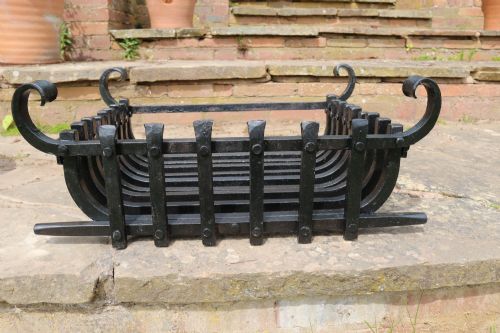
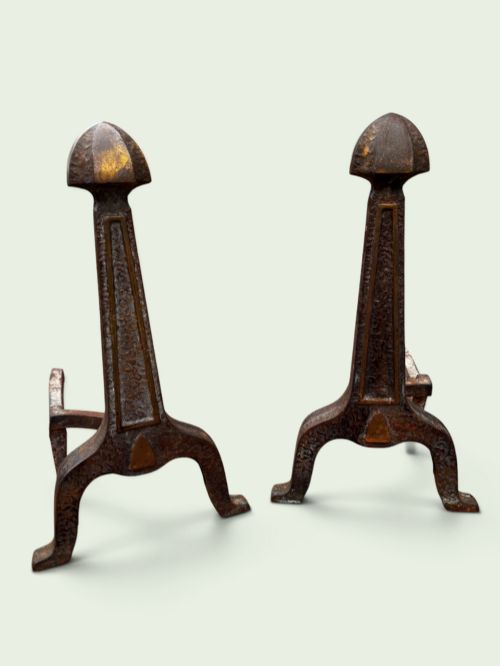
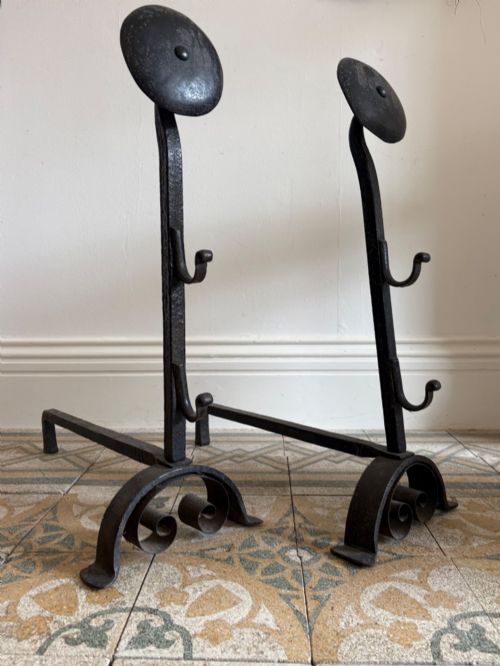
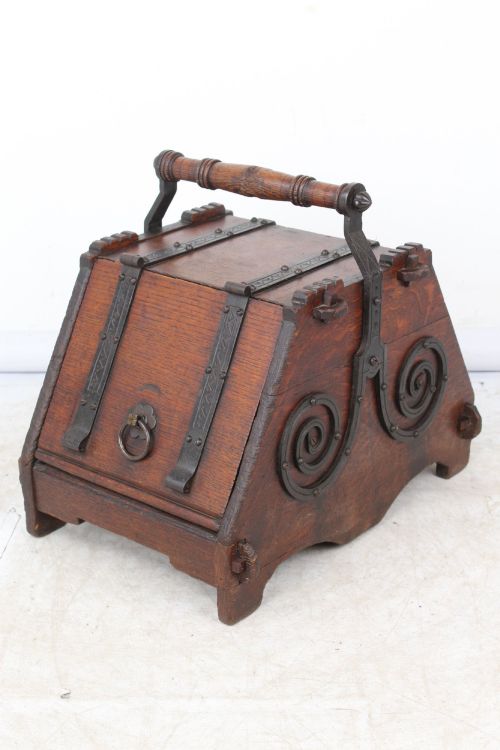
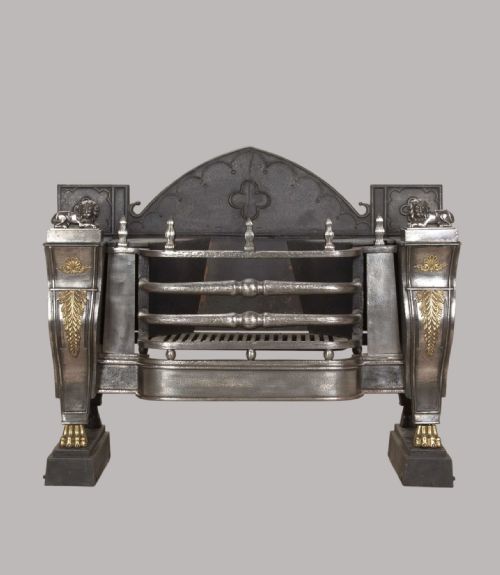
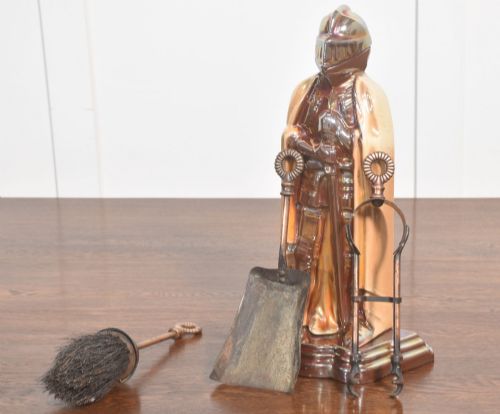
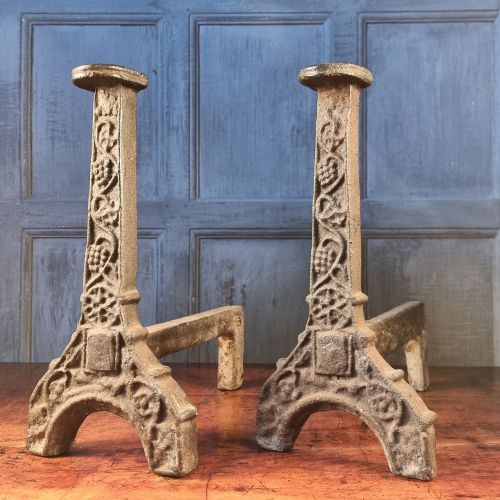
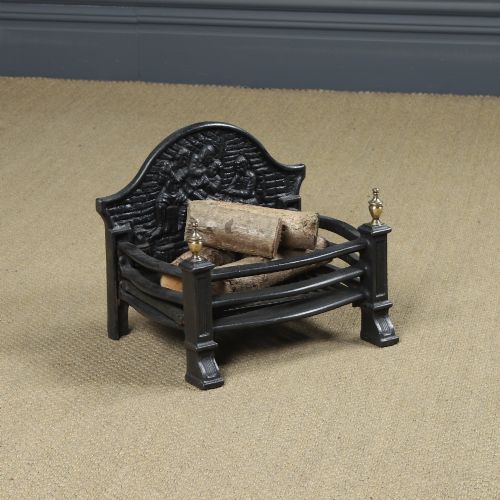
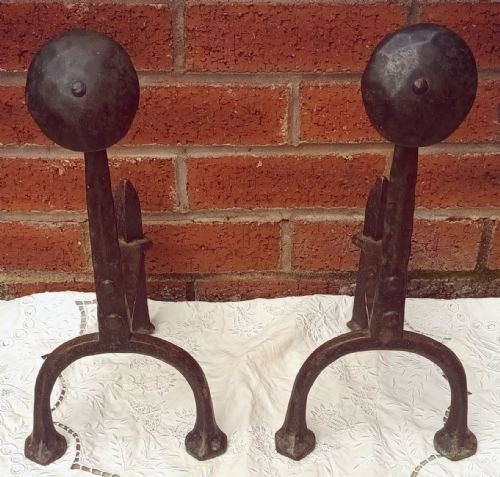
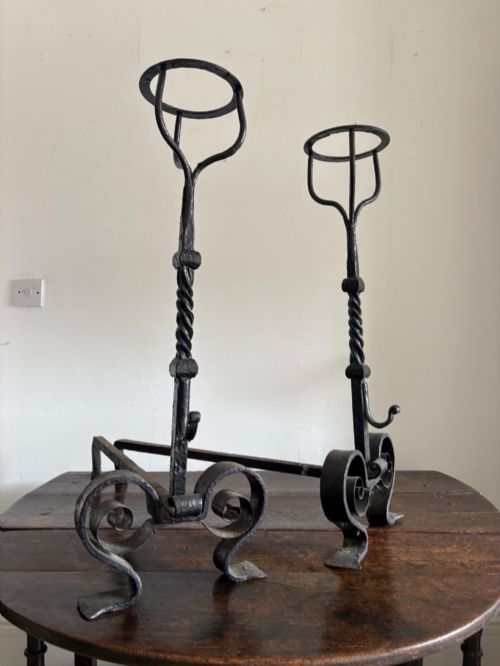
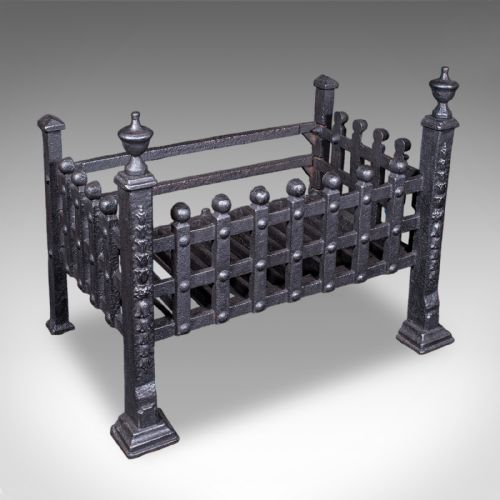
The pieces on this page lean heavily into Victorian Gothic Revival and Arts & Crafts interpretations. You will find andirons, fire baskets, and companion tools rooted in nineteenth and early twentieth-century workshops.
Materials and construction
Makers relied primarily on wrought iron and cast iron for strength against intense hearth heat. Brass, copper, and steel appear alongside these foundational metals to provide decorative contrast and functional resilience.
Craftsmen shaped the metal through hot forging, casting, and riveting, producing sturdy fire dogs, screens, and baskets. Secondary elements like oak timber and gilt surface treatments occasionally supplement the primary metal structures.
Listings feature items spanning the 16th century through the Edwardian period and the 1930s.
Indicators of quality
The distinction between ordinary utility items and superior examples lies in the heft of the metal and the precision of the forging. Heavier gauge iron and cleanly hand-hammered details elevate a piece from standard foundry production.
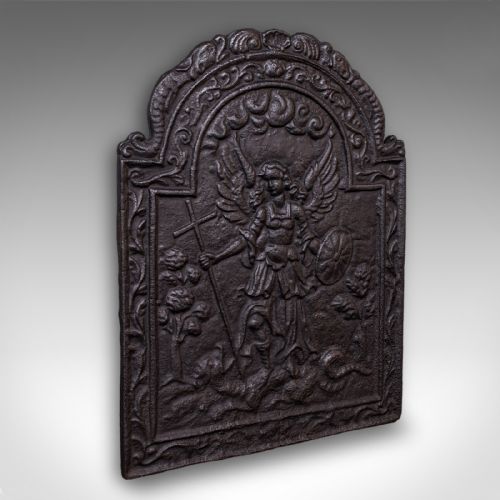
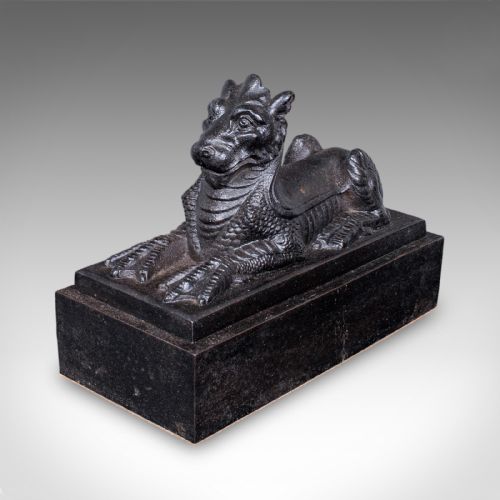
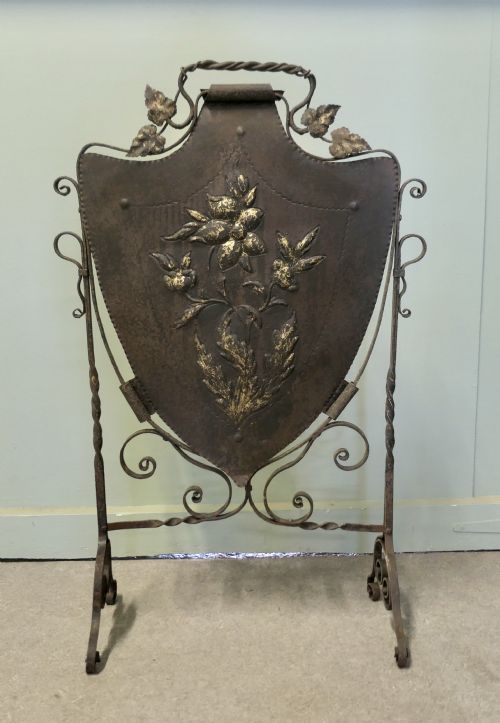
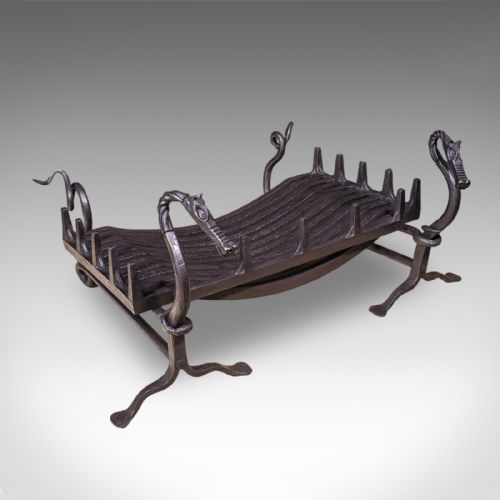
Design execution separates basic hearth accessories from distinctive artistic interpretations. Strong architectural proportions and deliberate stylistic details, such as dragon motifs or heraldic shields, indicate superior craftsmanship.
Christopher Dresser
The Gothic Fireplace Irons Glossary
- Andirons
- Heavy metal supports placed on either side of a hearth to hold logs above the floor. They often feature decorative terminals visible at the front of the fireplace.
- Fire basket
- An open metal basket designed to hold coal or logs within the hearth. These units frequently sit upon or integrate directly with matching andirons.
- Fire screen
- A protective barrier placed before an open fire to catch sparks. Many examples incorporate mesh panels held within heavy wrought iron or brass frames.
- Fire irons
- Implements used to tend a fire, typically comprising pokers, tongs, and shovels. They are often displayed together on a dedicated stand or rest.
- Gothic Revival
- An architectural and decorative style drawing inspiration from medieval forms. This aesthetic influences the pointed arches and heavy geometric motifs seen on hearth furniture.
Gothic Fireplace Irons: Frequently Asked Questions
How do I choose the right size andirons?
Measure the width and depth of your hearth opening before selecting fire dogs or baskets. Ensure the proportions leave adequate clearance around the sides for safety and airflow.
Consider the scale of the fireplace surround when matching heavy monumental irons. Smaller grates suit compact hearths, whilst massive inglenook setups require substantial ironmongery to hold visual weight.
What is the difference between fire dogs and andirons?
The terms are frequently used interchangeably to describe metal hearth supports. Historically, fire dogs often featured decorative upright pillars, whilst andirons specifically held horizontal spit-spits for roasting.
In modern parlance, both refer to the paired vertical irons that support logs in an open hearth. Their primary function remains keeping fuel elevated to improve combustion.
How should I clean wrought iron fire tools?
Remove surface soot and ash using a soft dry brush or cloth. Avoid harsh chemical cleaners that strip the protective dark finish accumulated over decades of use.
Apply a light coating of natural wax or fine oil to protect the metal from moisture. Buff gently to maintain a dull historical sheen rather than a bright polished look.
Can these antique irons be used in a modern fireplace?
Many sturdy cast and wrought iron pieces remain entirely functional for burning wood or coal. Verify that the dimensions and weight suit your specific hearth installation before lighting a fire.
Delicate decorative screens or pieces with fragile brass elements are better suited for display. Assess the structural integrity of joints and legs to ensure safe everyday usage.