



Twisted Iron Fire Irons
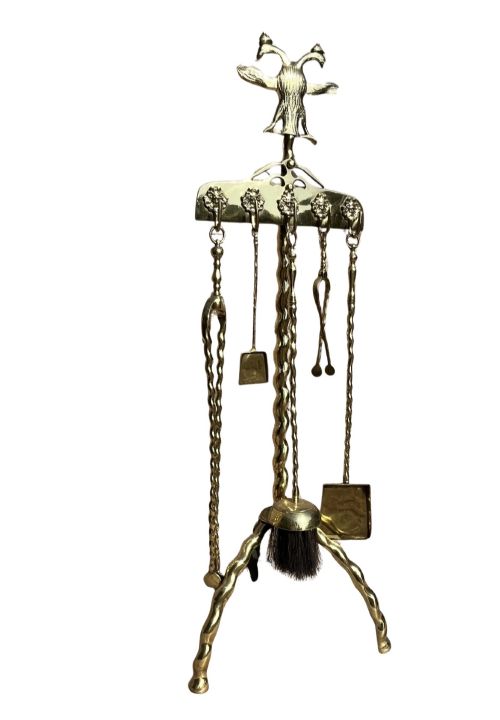
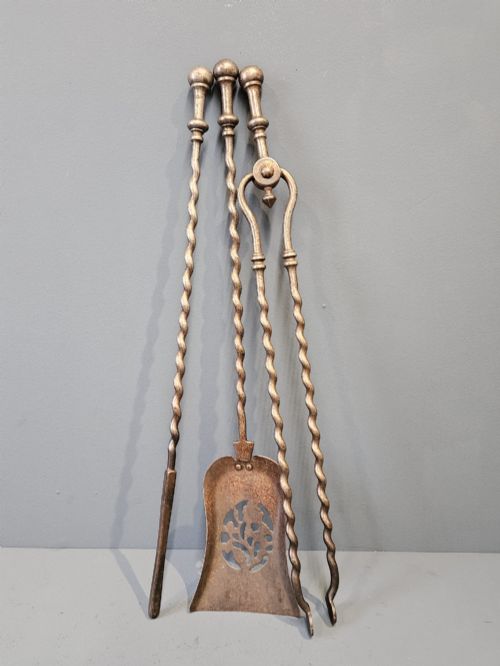
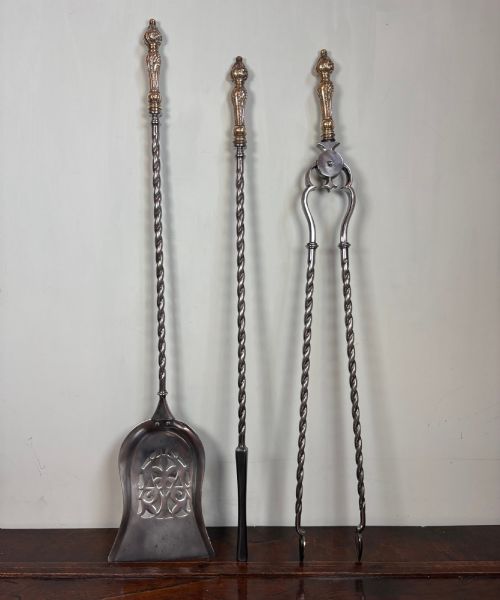
Twisted iron fire irons are hearth implements built to tend a coal or wood fire, combining functional wrought iron, steel, and brass.
Twisted Iron Fire Irons
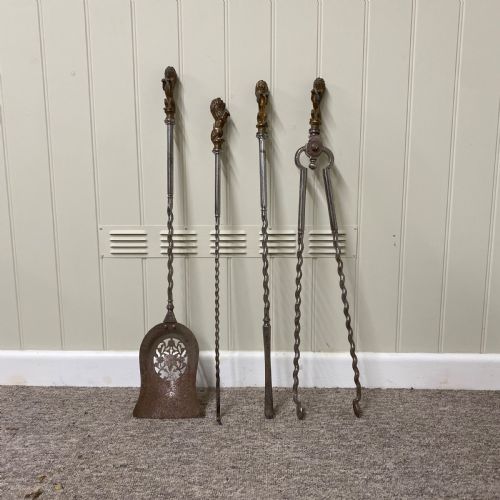
Twisted iron fire irons encompass hearth implements designed for tending domestic fires, appearing in sets that typically include pokers, tongs, and shovels. These tools emerge from periods ranging through the Georgian, Regency, and Victorian eras up to the Edwardian years.
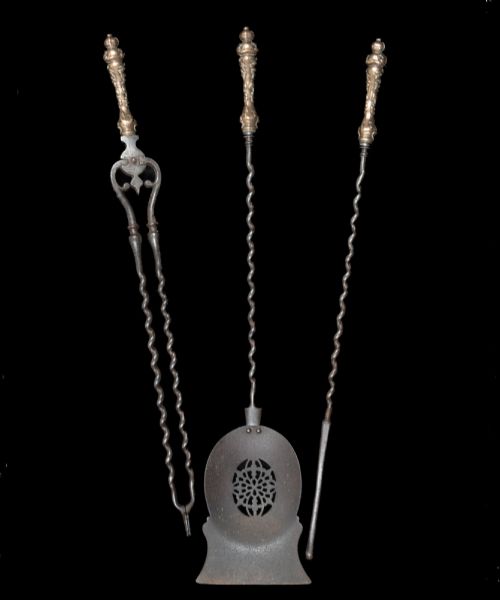
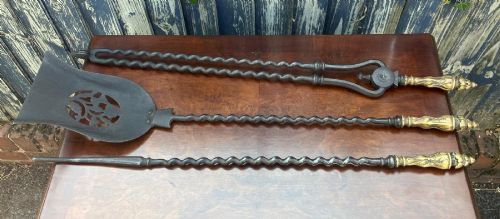
The versions most commonly met on this page combine wrought iron or steel bodies with brass details, occasionally featuring rope twist handles. Makers from the nineteenth century produced these accessories to serve both practical fireplace duties and decorative interior requirements.
How they were made
Blacksmiths and metalworkers shaped these fire irons using iron, wrought iron, and steel, applying heat and manual force to twist the metal shafts. Polished steel and burnished steel finishes required careful abrasion to achieve a smooth surface texture.
Makers integrated brass components, such as handles and fittings, into the iron and steel structures, sometimes combining copper elements in related hearth accessories like fenders.
Twisted Iron Fire Irons Retail Price Guide 2026
Typical asking prices for twisted iron fire irons among the pieces listed under this phrase on Sellingantiques today, from the lower quarter to the upper quarter. They describe what is for sale here now, not the wider market.
Listings feature materials including brass, steel, iron, polished steel, wrought iron, burnished steel, and copper across the nineteenth and early twentieth centuries.
What varies in quality
The distinction between standard utility items and finer pieces lies in the precision of the metalworking and the execution of details like rope twist handles. Material selection also defines the tier, with polished and burnished steel variants demonstrating superior surface finishing compared to basic iron.
Coherence of the set influences overall character, as matched groupings of steel and brass display deliberate design intent rather than assembled utility.
The Twisted Iron Fire Irons Glossary
- Fire irons
- Implements used for tending a hearth fire, usually comprising a poker, tongs, and a shovel. These tools stand beside the fireplace or rest within a fender.
- Rope twist
- A decorative spiral pattern resembling twisted cord, often formed into metal handles. This detail appears on brass and iron shafts.
- Wrought iron
- Iron that has been heated and hammered into shape by hand. It possesses a fibrous texture visible in older hearth implements.
- Burnished steel
- Steel that has been polished to a bright, reflective finish. This treatment protects the metal while enhancing its decorative appearance.
Twisted Iron Fire Irons: Frequently Asked Questions
What do twisted iron fire irons include?
These sets typically comprise essential hearth tools such as pokers, shovels, and tongs designed for managing solid fuel fires. They often incorporate matching handles or mounts.
Materials range from basic iron and wrought iron to polished steel and brass, reflecting the manufacturing standards of their respective periods.
How do I date these fire irons?
Dating relies on stylistic indicators spanning the Georgian, Regency, Victorian, and Edwardian periods. Design shifts in handles and metal finishing help place the pieces.
Earlier sets frequently showcase hand-forged wrought iron or burnished steel, while later Victorian and Edwardian examples often feature standardised brass elements and rope twist grips.
Were these tools meant for daily use?
Hearth implements served a dual purpose of practical fire tending and decorative display in period sitting rooms. Sturdy iron and steel construction ensured durability.
Finer sets with polished steel and brass details often remained near formal fireplaces where appearance mattered as much as utility.
How do steel and brass sets differ?
Steel and polished steel sets offer a bright, reflective metallic finish suited to specific interior schemes. Iron versions provide a darker, heavier appearance.
Sets combining brass and steel bring contrasting golden and silver tones to the fireside, a combination popular across the nineteenth century.