

Gothic Display Cabinet
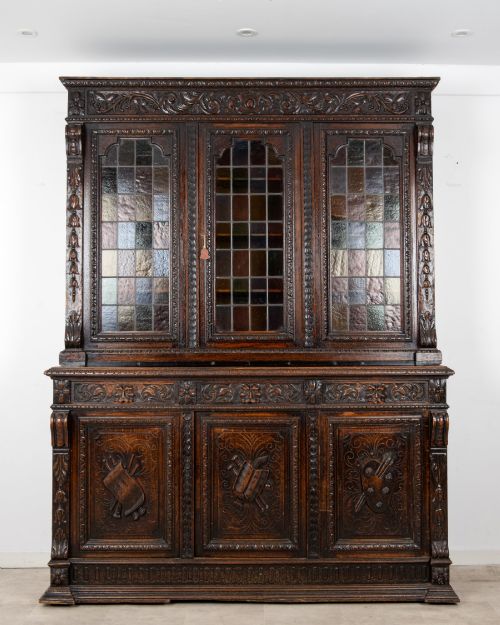
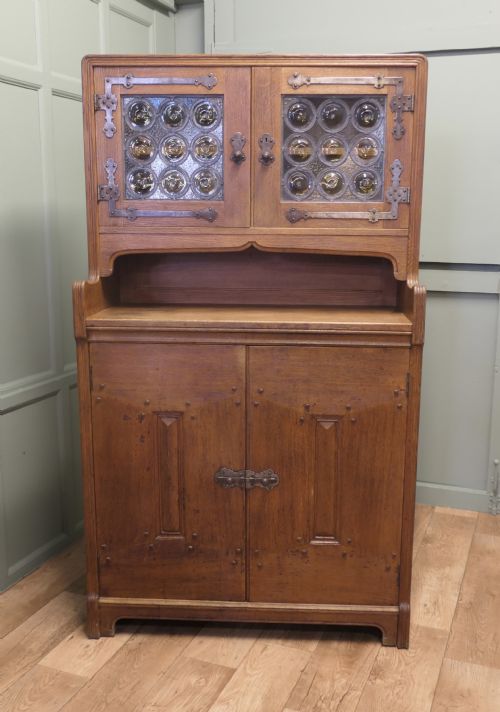
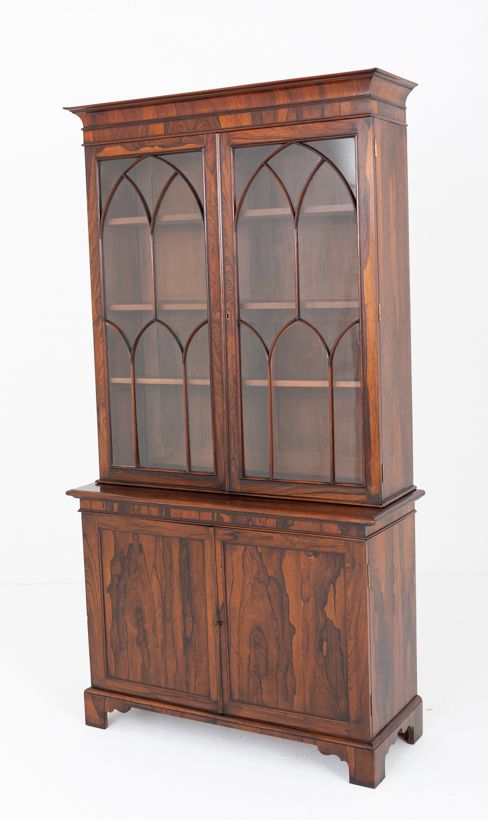
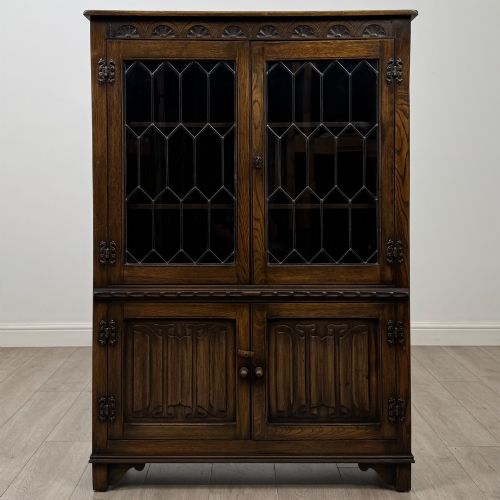
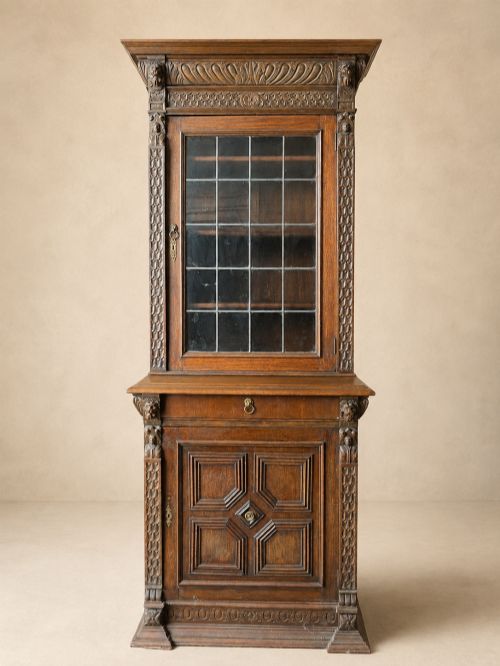
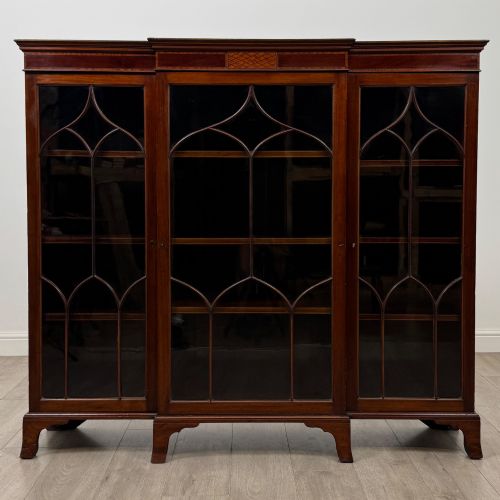
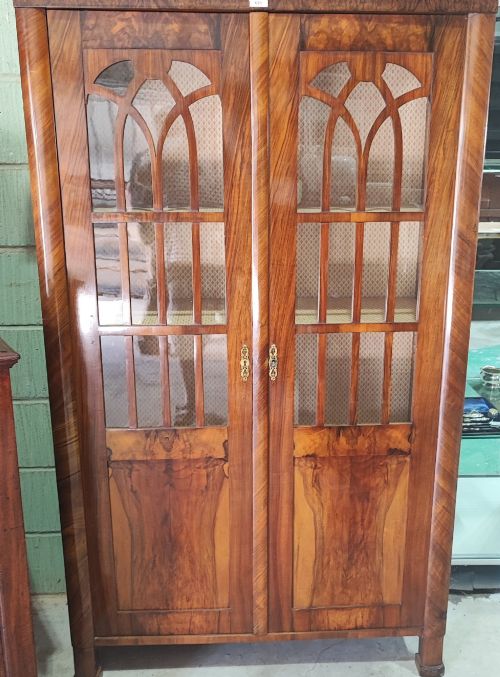
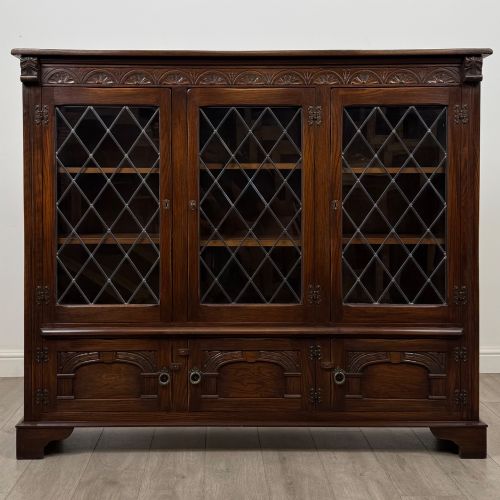
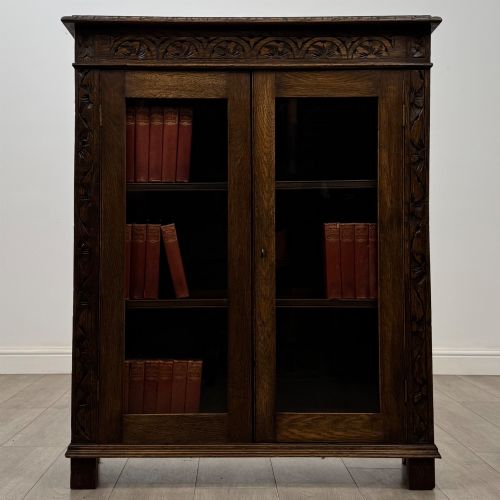
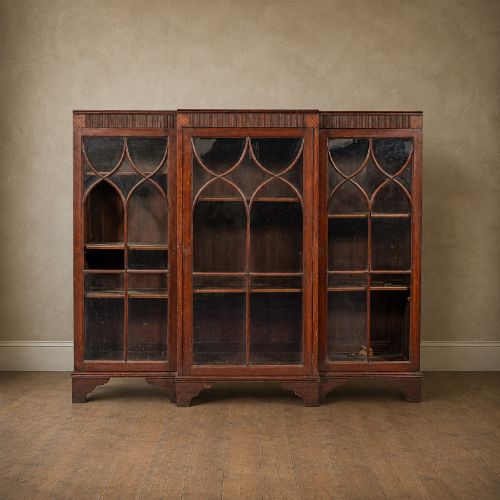
A gothic display cabinet brings architectural drama and glass-fronted storage to a room, prized for pointed arches and rich timber.
Gothic Display Cabinet
When you search for a gothic display cabinet, you are looking at substantial timber furniture designed to showcase collections behind glass while anchoring a room with medieval-inspired architecture.
The versions you are most likely to meet on this page date from the nineteenth century, including Victorian Gothic Revival pieces alongside Edwardian oak interpretations.
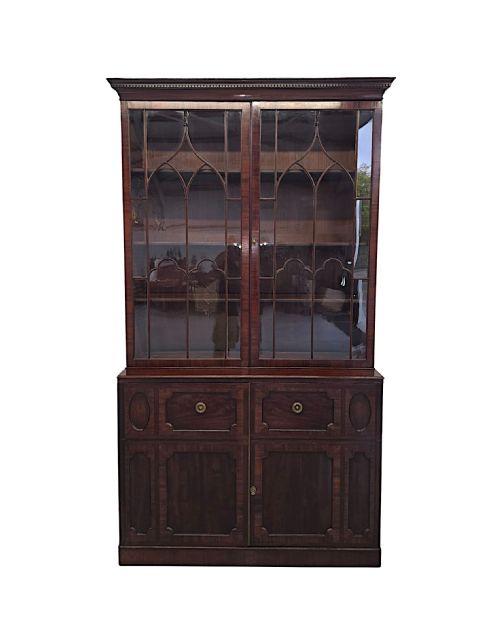
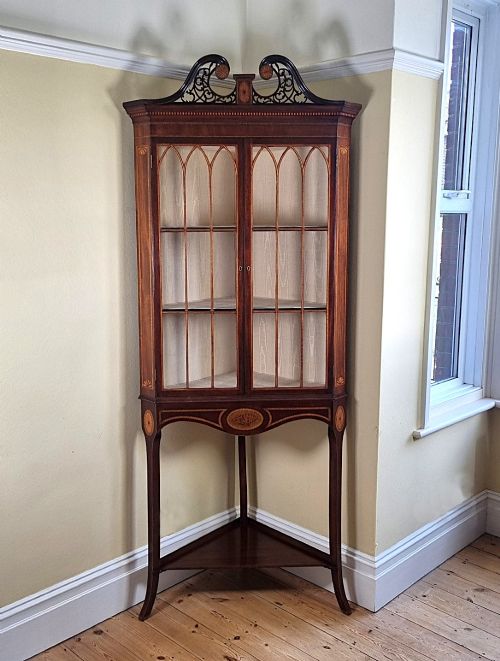
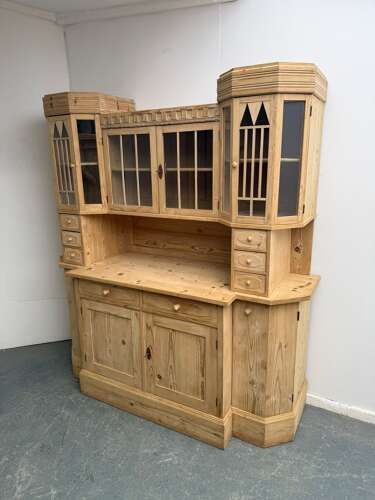
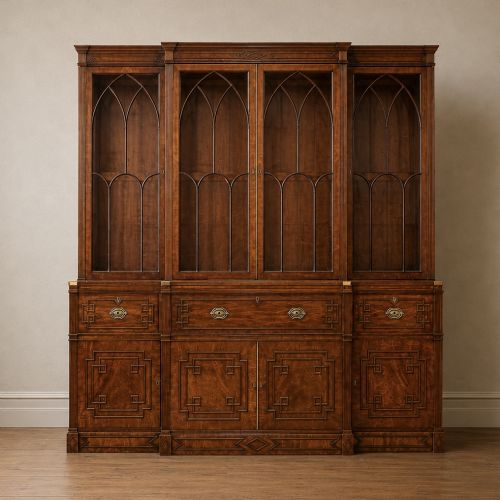
Forms range from tall breakfront bookcases and corner cabinets to smaller wall-hung units, often combining open shelving with glazed doors.
Materials and construction
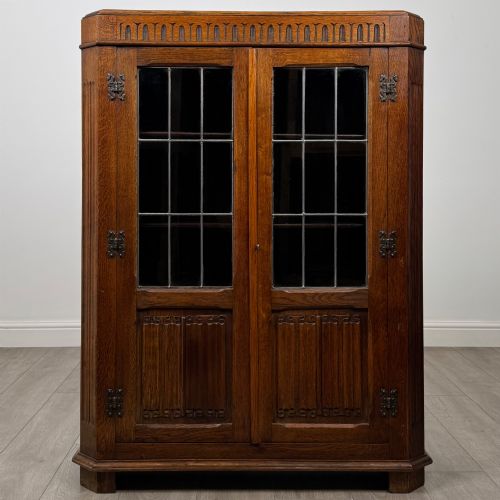
Cabinet makers relied heavily on oak and mahogany, often carving the dense timber with deep linenfold panels, tracery, and architectural motifs.
Glass panels were secured with lead or wooden glazing bars, whilst brass fittings and iron hinges provided robust functional detail to heavy doors.
Listings feature pieces spanning the Georgian, Regency, Victorian, and Edwardian periods, constructed primarily in oak, mahogany, satinwood, and walnut with glass and brass.
Judging quality
The distinction between standard output and the finest examples lies in the crispness of the hand-carved woodwork and the selection of figured timbers like pollard oak or satinwood.
Proportion and architectural fidelity separate superior pieces from simpler utilitarian cabinets, particularly in how glazing bars and tracery are integrated into the overall facade.
Jas Shoolbred·Liberty·George Edmund Street·John Moyr Smith
The Gothic Display Cabinet Glossary
- Glazing
- The glass panes fitted into the doors and sides of a cabinet. These are held in place by wooden bars or lead cames.
- Tracery
- Openwork stonework style translated into woodwork on doors and panels. It defines the gothic aesthetic with geometric and pointed curves.
- Breakfront
- A cabinet facade where the central section projects forward from the side sections. This creates depth and architectural presence.
- Linenfold
- A style of wood carving that imitates folded parchment or linen. It is frequently seen on Tudor and Gothic Revival panels.
Gothic Display Cabinet: Frequently Asked Questions
How do I date a gothic display cabinet?
Dating relies on timber choice, construction methods, and stylistic cues. Nineteenth-century examples often display heavy Victorian Gothic Revival carvings, whilst Edwardian pieces tend to use lighter oak.
Secondary woods and backboards also offer clues. Machine-sawn timbers generally point towards the later nineteenth century and beyond, whereas hand-tool marks suggest earlier Georgian or Regency origins.
Are these cabinets suitable for modern homes?
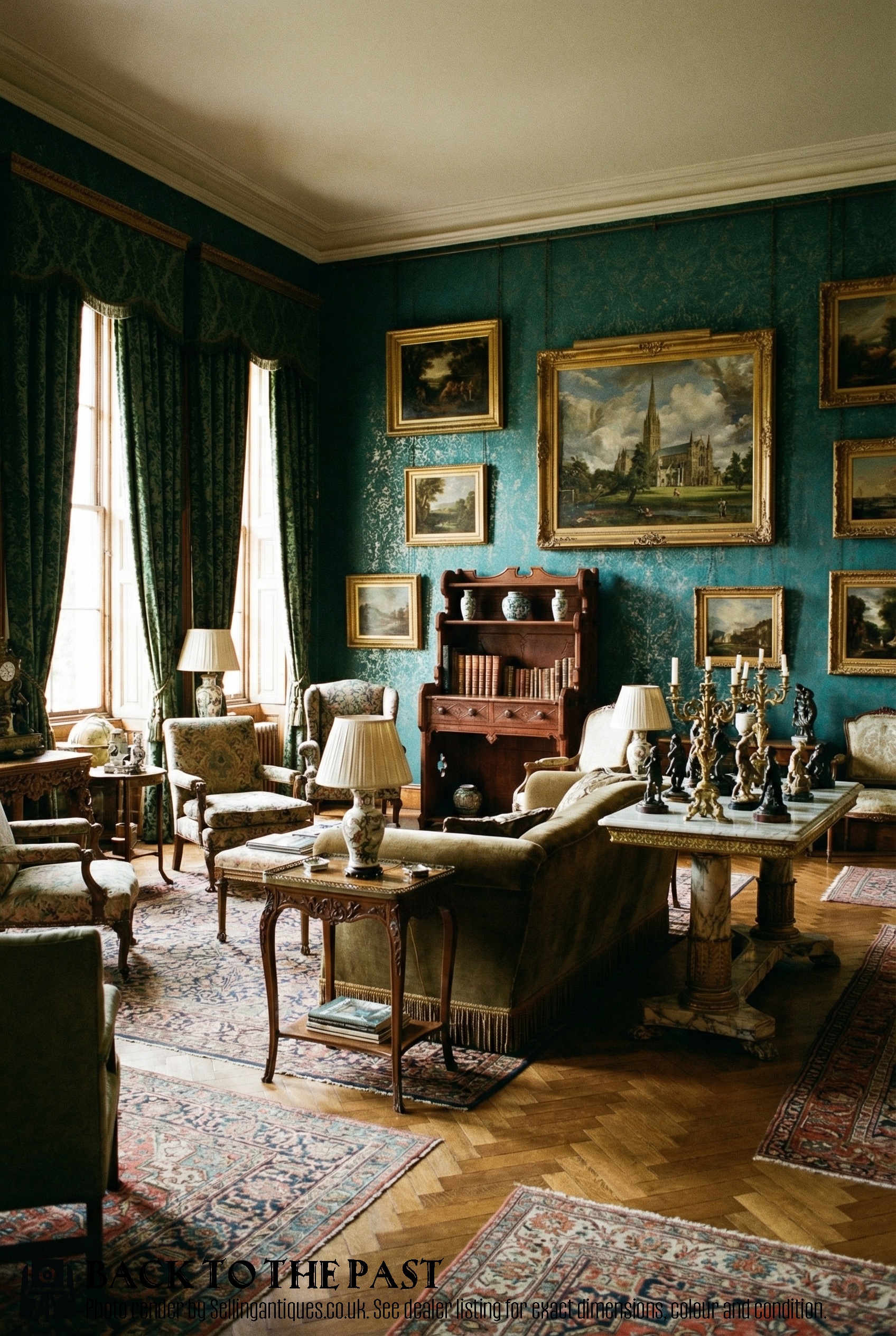
Their substantial presence makes them ideal statement pieces for living rooms, dining rooms, or libraries. The glass doors allow for the safe display of books or collections while keeping dust away.
Consider ceiling height and floor space before purchase, as breakfront models and large oak bookcases require generous clearance to look balanced in a room.
What is the difference between a bookcase and a display cabinet?
While the terms often overlap in listings, display cabinets typically feature glass on the sides as well as the doors to let light in from multiple angles. Bookcases usually focus on front-facing shelves.
Many period pieces combine both functions with glazed upper sections for display and enclosed wooden cupboards below for concealed storage.
How should I care for antique oak and mahogany?
Keep timber furniture away from direct sunlight and heat sources to prevent the wood from splitting or warping. Dust regularly with a soft, dry cloth.
Feed the polished surface occasionally with a traditional beeswax to maintain the moisture and lustre of the wood without building up synthetic residues.