


Gothic Carved Oak Credenza
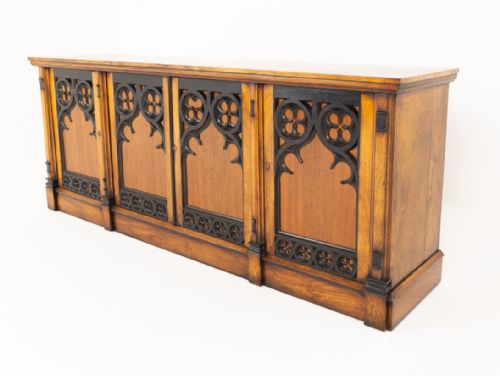
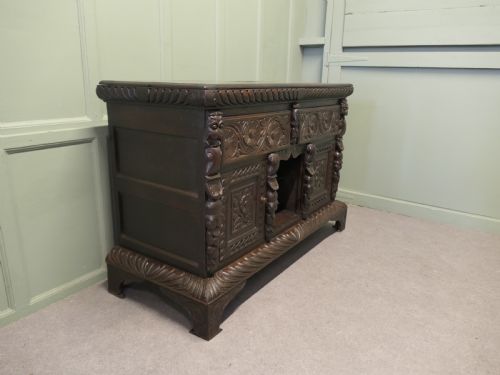
A gothic carved oak credenza brings centuries of architectural tradition indoors, offering robust storage shaped by medieval ecclesiastical design.
Gothic Carved Oak Credenza
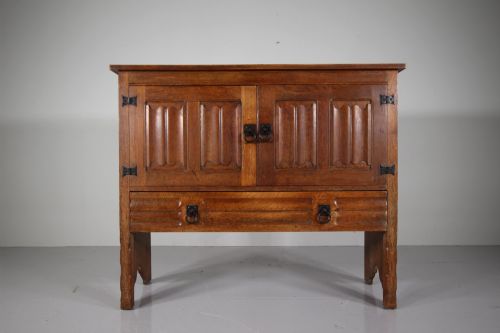
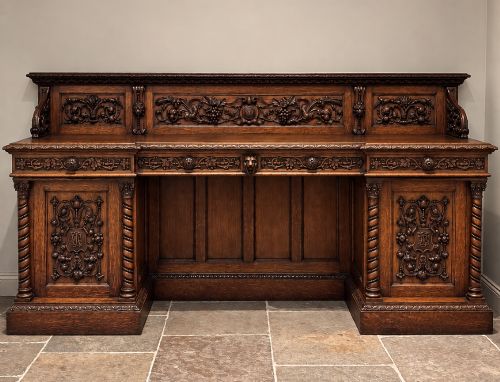
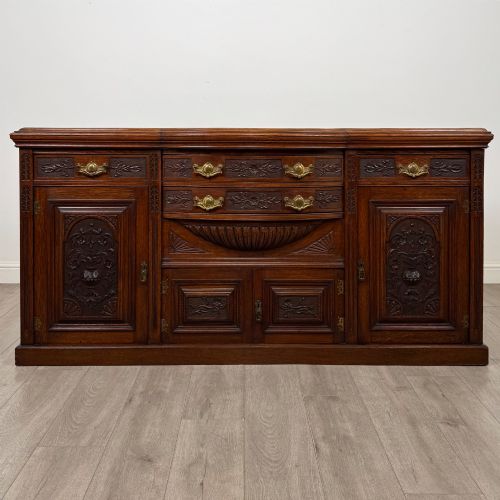
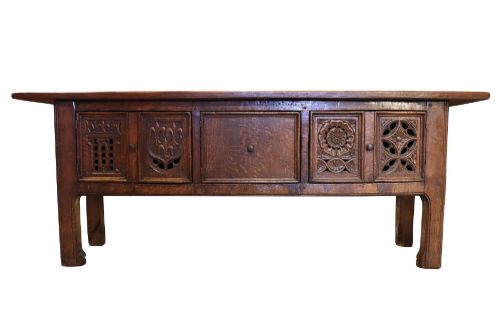
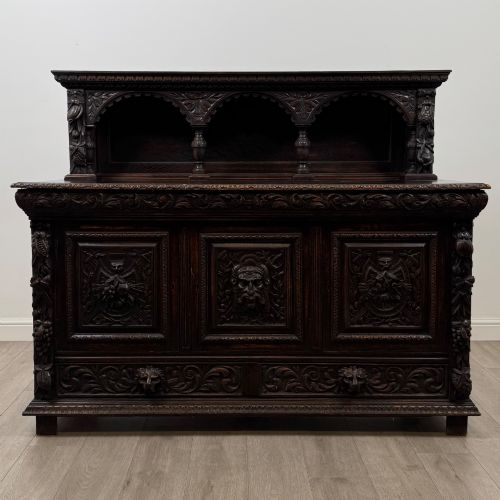
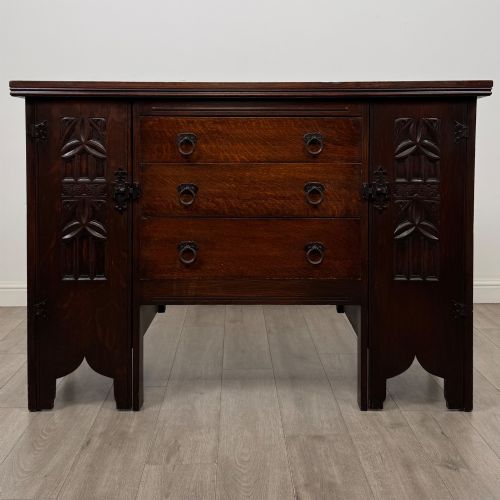
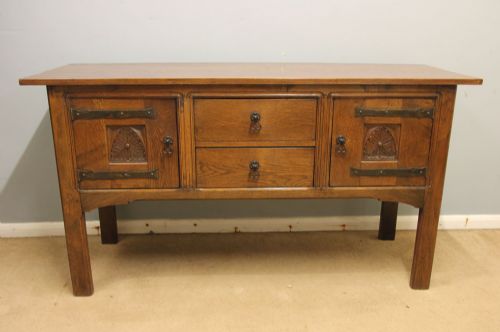
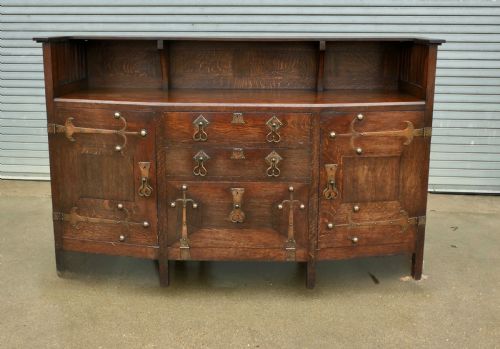
A gothic carved oak credenza draws on heavy architectural forms, presenting itself primarily through sideboards, dressers, and large cabinets that echo medieval and ecclesiastical structures. These pieces serve as substantial storage furniture for dining rooms and grand halls, providing deep cupboards and wide surfaces.
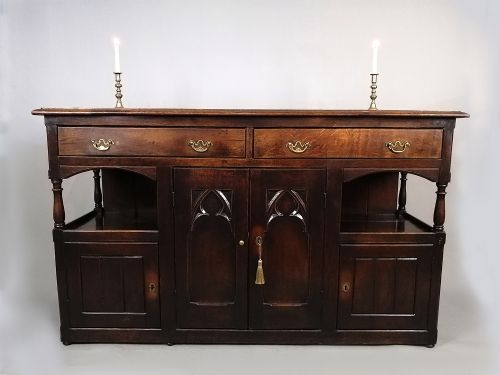
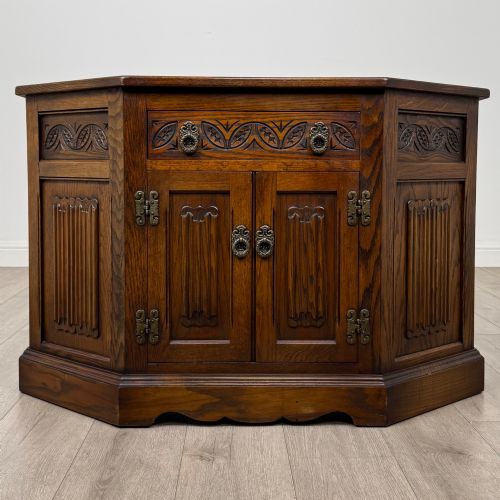
Most examples appearing in this category belong to the Victorian era and the broader nineteenth century, reflecting a strong nineteenth-century revival of medieval aesthetics. Makers utilised older design motifs such as linenfold panels and pointed arches to recreate sixteenth-century styles within nineteenth-century domestic interiors.
Materials and Construction
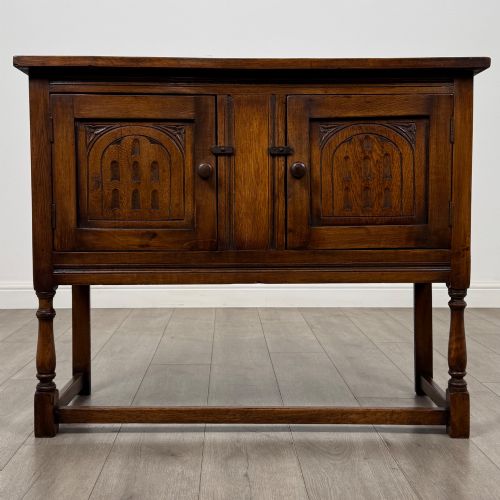
The primary material across these pieces is solid oak, selected for its density and suitability for deep relief carving. Artisans combined this timber with brass and iron hardware, such as hinges and locks, to reinforce the heavy structural framework.
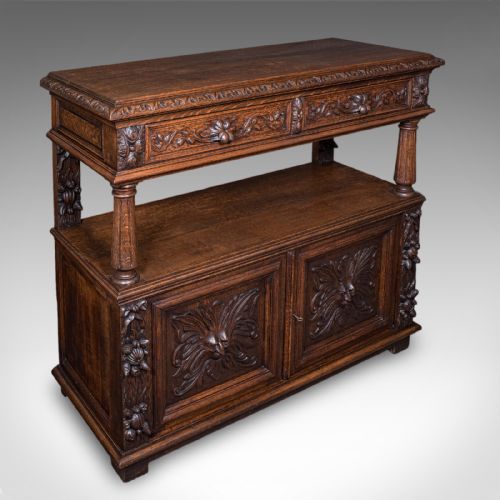
Joinery techniques relied on traditional panel construction to accommodate seasonal movement in timber, while decorative elements included applied mouldings, linenfold carvings, and figural details like Green Man motifs.
The documented periods span from the sixteenth century through the nineteenth century, with strong representation from Victorian Gothic Revival and Edwardian periods.
Distinctions in Quality
Quality rests in the depth and sharpness of the hand-carved detail, distinguishing crisply rendered tracery and figures from shallow, machine-cut decoration. The selection of timber grain and the integrity of original joinery also separate standard production items from bespoke pieces designed by specific firms.
Proportion and scale dictate the success of the form, with narrower sideboard bases and balanced cabinet-on-stand constructions demonstrating more thoughtful design than purely utilitarian storage units.
Leonard Wyburd
The Gothic Carved Oak Credenza Glossary
- Credenza
- A sideboard or cabinet used for storing and displaying dining ware. Originally an Italian term, it translates to modern British usage for heavy storage furniture.
- Linenfold
- A carved wooden panel motif imitating folded cloth. This decorative technique appears frequently on sixteenth-century and later revival cupboards.
- Gothic Revival
- An architectural and decorative movement reviving medieval forms. It dominates nineteenth-century furniture design through pointed arches and ecclesiastical motifs.
- Green Man
- A sculptural architectural ornament depicting a human face emerging from foliage. This motif symbolises rebirth and decorates many nineteenth-century carved panels.
Gothic Carved Oak Credenza: Frequently Asked Questions
What is a gothic carved oak credenza?
A gothic carved oak credenza is a heavy storage cabinet or sideboard decorated with medieval architectural motifs such as pointed arches and tracery. These pieces draw heavily on nineteenth-century revival styles.
They function primarily as focal storage units in large rooms, offering deep cupboards and broad surfaces made predominantly from solid oak timber.
How do I date a gothic credenza?
Dating relies on examining the construction methods, hardware materials, and specific revival style present in the woodwork. Nineteenth-century examples often combine older sixteenth-century motifs with Victorian manufacturing techniques.
Changes in hinge types, lock mechanisms, and secondary timbers help distinguish pieces made around eighteen-eighty from earlier nineteenth-century items.
Where were these pieces used?
These large storage units originally served grand dining rooms, entrance halls, and libraries in Victorian and Edwardian homes. Their robust construction suited spaces requiring substantial furniture.
They held dining silver, linens, and serving dishes while projecting an architectural presence inspired by medieval churches and manor houses.
How do I care for antique oak?
Antique oak benefits from stable indoor humidity levels and protection from direct sunlight to prevent the timber from splitting. Regular dusting with a dry cloth maintains the surface finish.
Avoid modern silicone polishes, using traditional beeswax sparingly instead to nourish the historic wood grain without building up residue.