
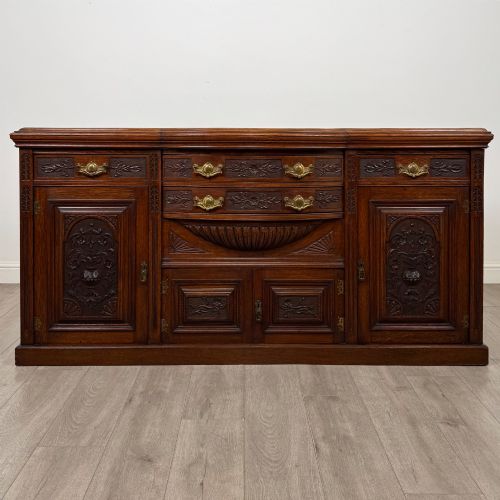
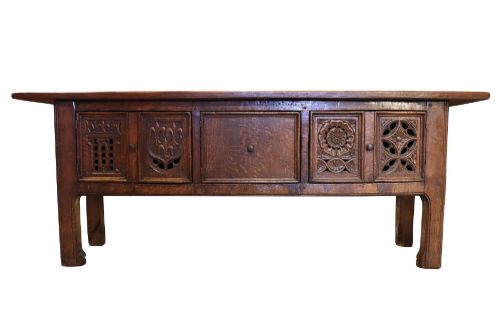
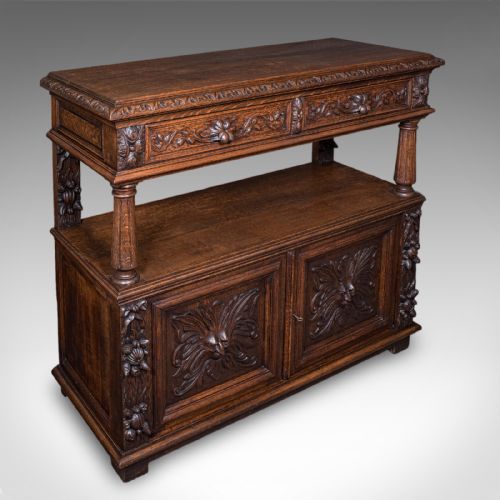
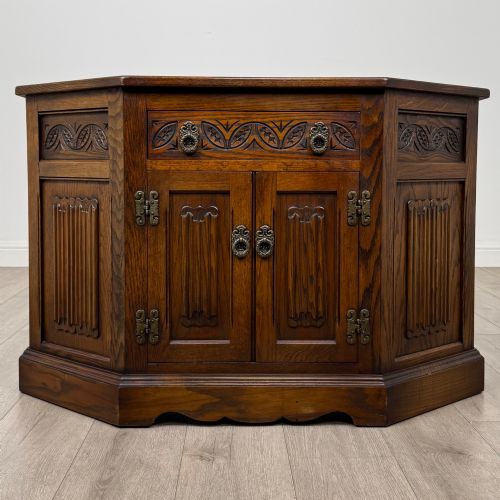
Gothic Carved Credenza
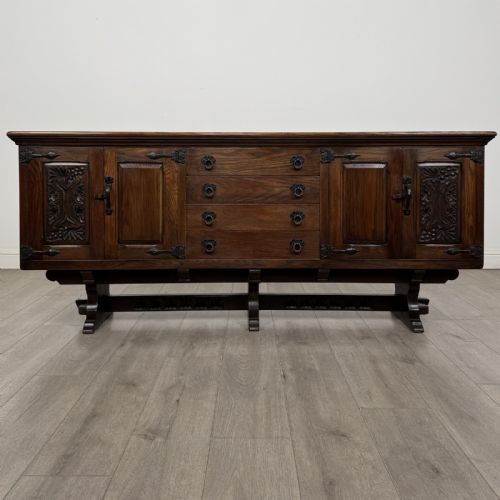
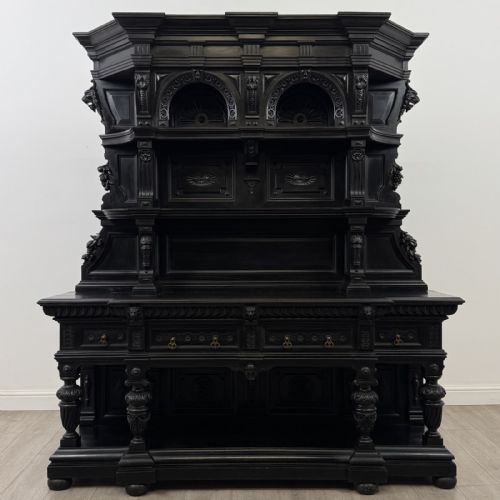
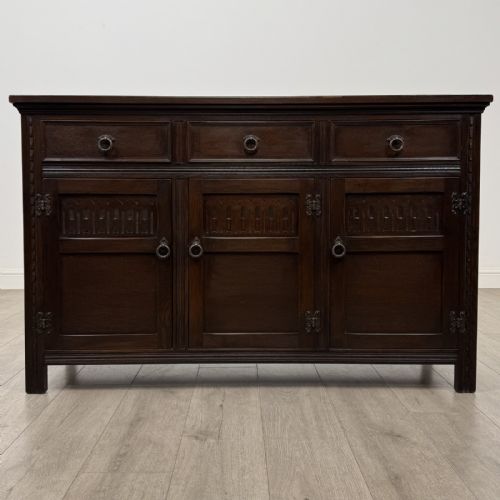
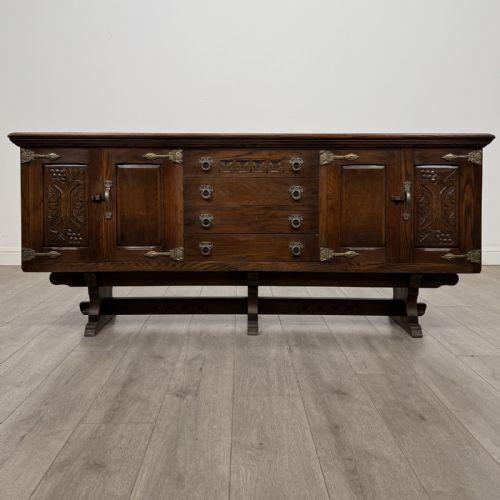
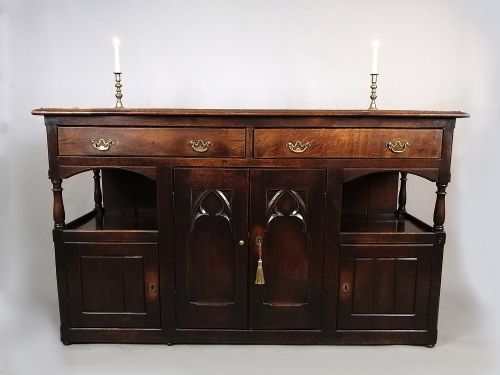
A gothic carved credenza brings heavy architectural timber and pointed arches into a room, serving as a striking storage piece with serious historical presence.
Gothic Carved Credenza
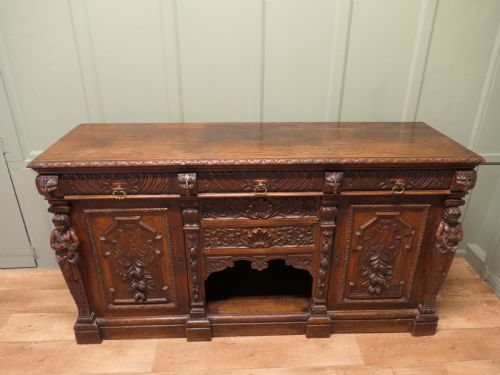
A gothic carved credenza encompasses substantial sideboards, cupboards, and dresser bases shaped by nineteenth-century revivals and earlier design traditions. You will most frequently encounter Victorian oak examples alongside pieces bearing Jacobean and Tudor revival influences.
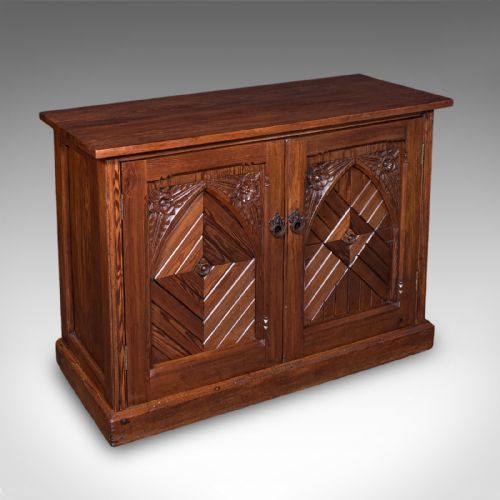
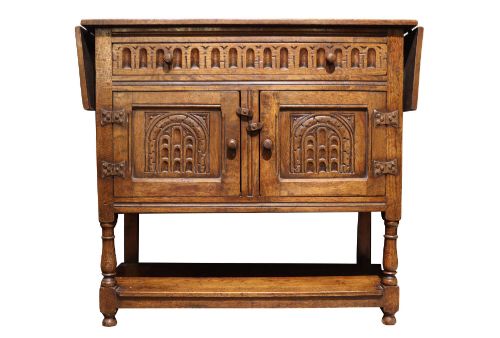
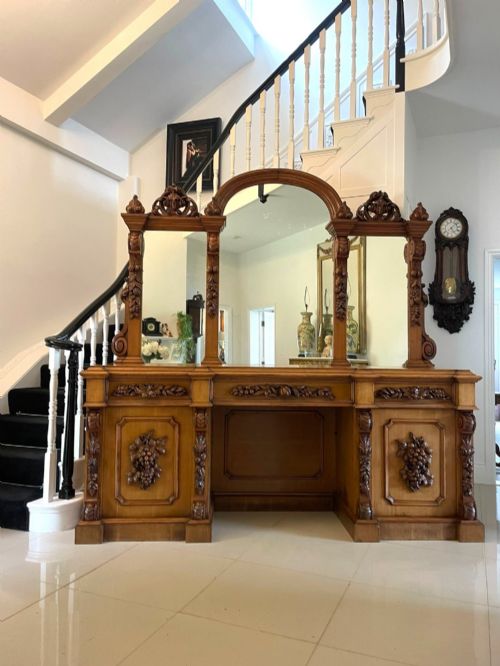
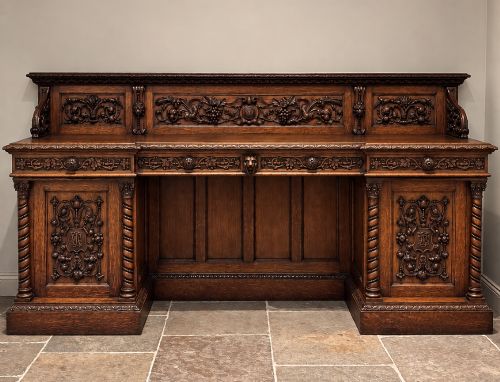
These forms range from narrow dresser bases and mirror-backed sideboards to two-door cupboards and cabinets on stands. Their origins span English and French workshops, utilising robust proportions and heavy timber carcasses designed for grand domestic interiors.
Materials and Construction
Oak dominates the construction, selected for its strength and deep grain, complemented by occasional walnut, mahogany, and padouk. Cabinetmakers utilised traditional joinery to build heavy frames capable of supporting deep relief carvings and architectural mouldings.
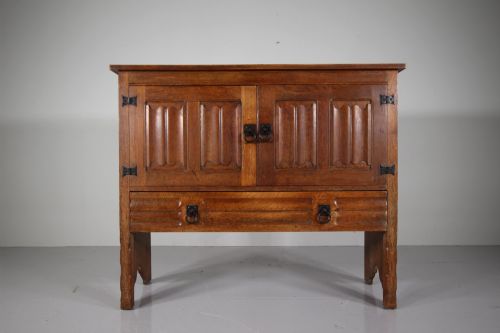
Metalwork details in brass, copper, iron, and wrought iron appear on hinges, handles, and escutcheons. Glass is also incorporated into display cabinets and mirrored backs, adding reflective depth to the dark timber surfaces.
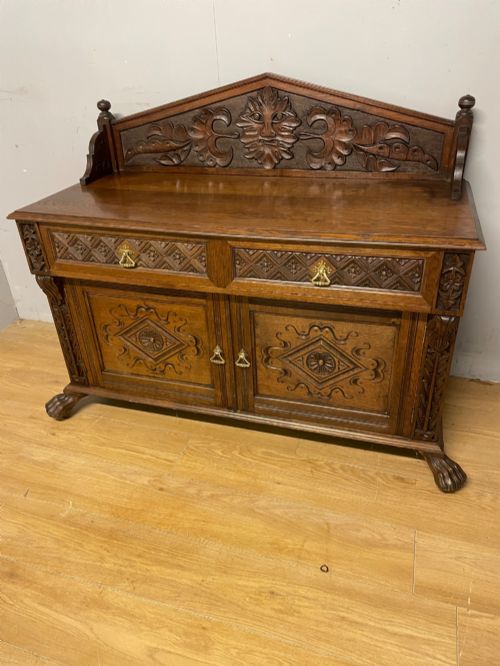
Several pieces feature carved wooden Green Man faces peering out from the foliage to watch over the dining room.
Craftsmanship and Proportion
The distinction between standard output and finer work lies in the depth and clarity of the carving, particularly on figural motifs like Green Man masks or intricate linenfold panels. Superior examples display crisp architectural details such as pointed arches and tracery executed with precise hand tools.
Proportion and timber selection dictate overall merit, with better pieces maintaining balanced scales despite their heavy elements. The quality of the grain, the integration of original ironmongery, and the stability of large carcasses separate ordinary utility furniture from exceptional cabinetwork.
Leonard Wyburd
The Gothic Carved Credenza Glossary
- Credenza
- A sideboard or cabinet originally used for displaying plate and serving food. In revival pieces, it denotes a low storage unit with heavy architectural decoration.
- Green Man
- A sculptural motif showing a human face emerging from or entwined with foliage. It appears frequently in nineteenth-century carved woodwork.
- Linenfold
- A style of woodcarving that imitates vertical folds of cloth. This technique is common on cupboard doors and panels.
- Tracery
- Openwork stonework patterns translated into wooden furniture panels. It defines the Gothic aesthetic through pointed arches and geometric curves.
Gothic Carved Credenza: Frequently Asked Questions
What is a gothic carved credenza?
A gothic carved credenza is a heavy wooden storage cabinet or sideboard decorated with architectural motifs from medieval design. These pieces adapt historical church and castle architecture for domestic use.
Most examples date from the nineteenth century during the Gothic Revival period, constructed primarily in solid oak. They function as both decorative focal points and practical sideboards.
How were these cabinets used?
Historically, these large cabinets served to store dining silver, linens, and provisions while providing a surface to display precious items. In modern homes, they function as substantial sideboards or media credenzas.
The deep cupboards and sturdy tops make them practical for everyday storage needs while adding strong historical character to a room.
How do I style a heavy oak sideboard?
Pair a dark oak sideboard with neutral walls to let the deep timber tones and intricate carvings stand out. Keep decorative objects minimal and proportional to the heavy scale of the base.
Avoid overcrowding the top surface, allowing the architectural details and hardware to remain visible as the primary visual feature.
How can I tell the period of the carving?
Nineteenth-century revival pieces often combine Gothic arches with Victorian proportions and machine-assisted joinery alongside hand-carving. Examining the backboards, interior timber, and fastener types helps confirm the era of manufacture.
Earlier nineteenth-century pieces tend to feature heavier proportions and darker patination compared to later Edwardian or twentieth-century interpretations.