

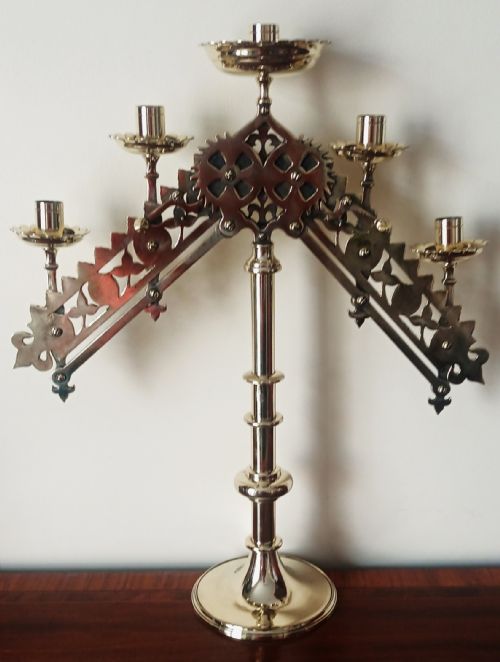
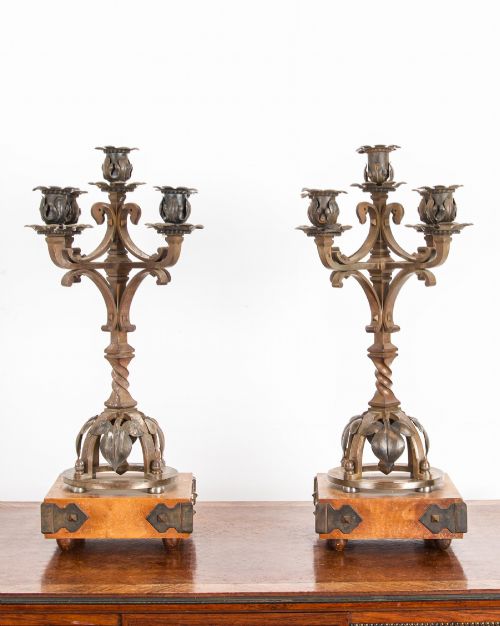


Gothic Brass Candle Holders
Gothic brass candle holders bring heavy ecclesiastical presence and architectural metalwork into domestic spaces through nineteenth- and early twentieth-century design.
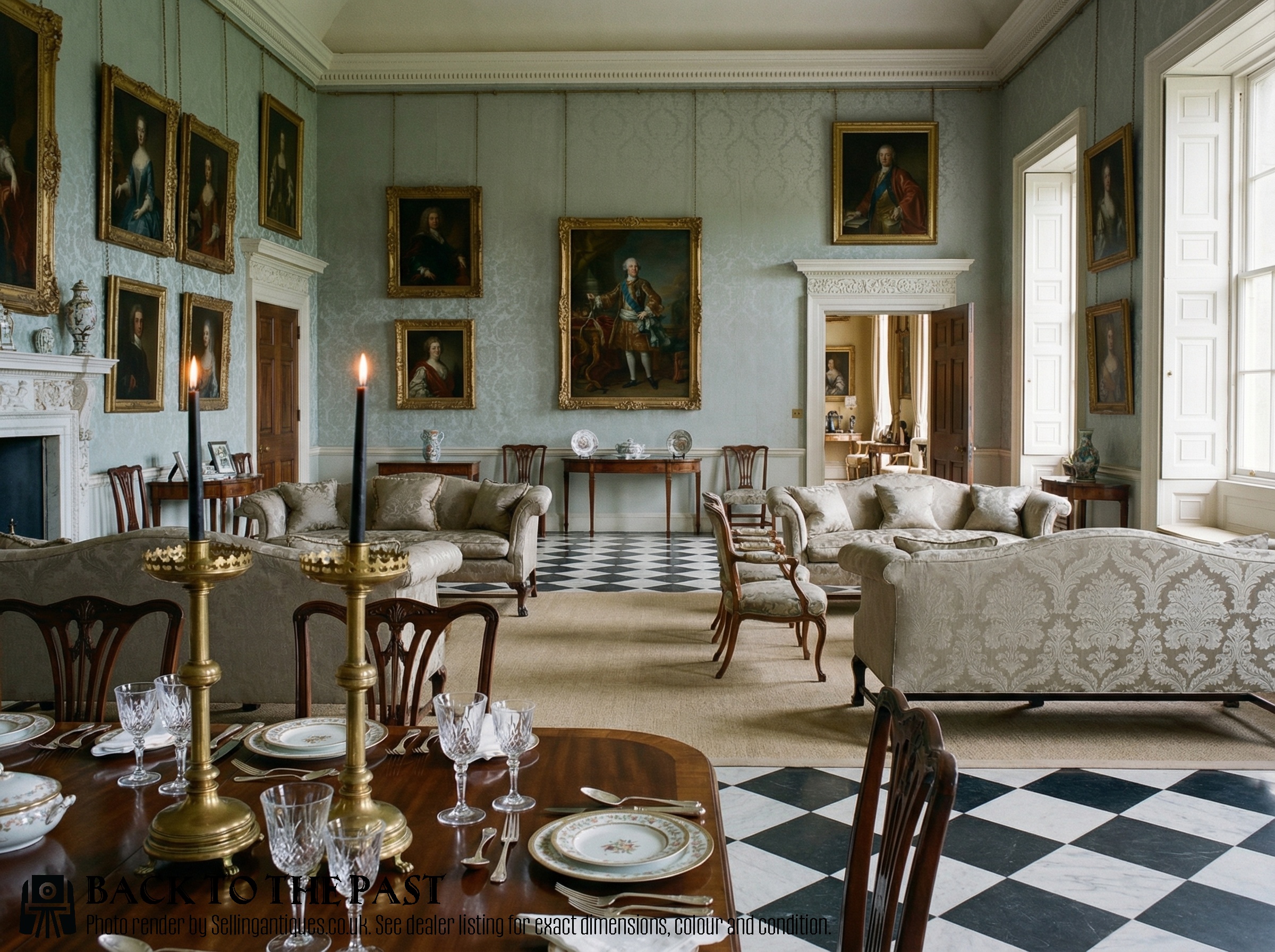
Gothic Brass Candle Holders
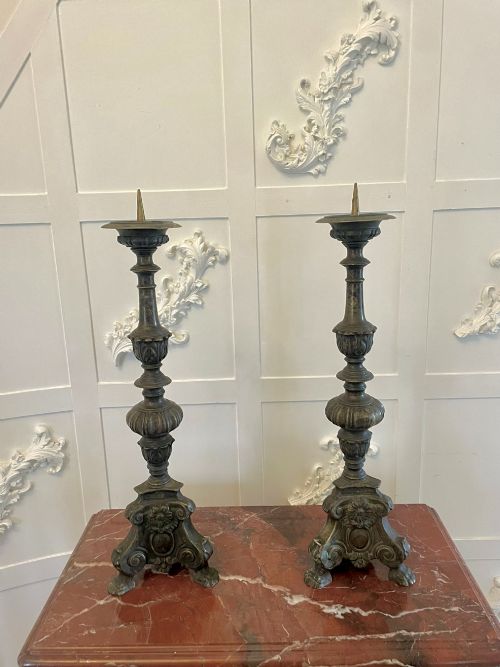
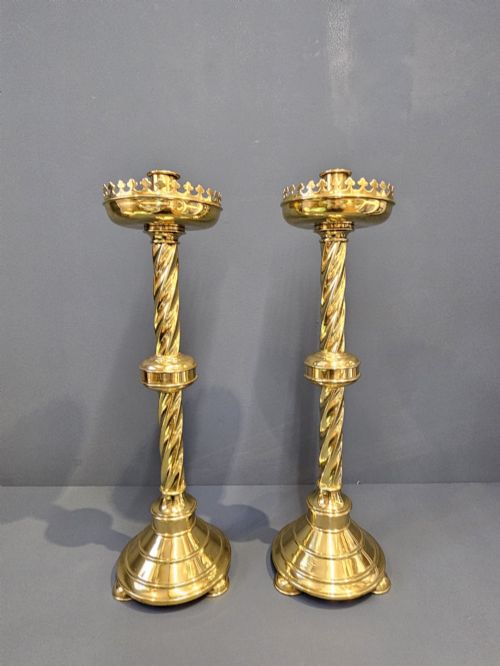
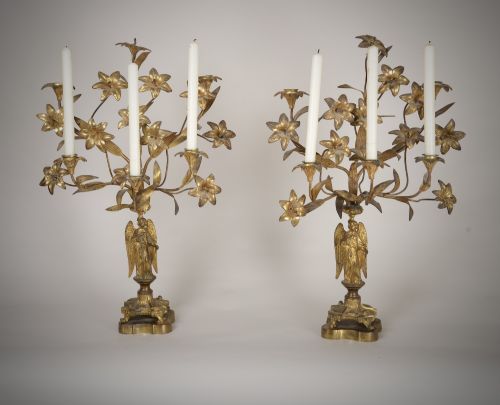
When you search for gothic brass candle holders, you encounter heavy church metalwork, altar pieces, and domestic interpretations spanning the Victorian era through the early twentieth century. The selection leans heavily toward pairs of large ecclesiastical candlesticks, multi-branched candelabra, and pricket designs originally forged for altars.
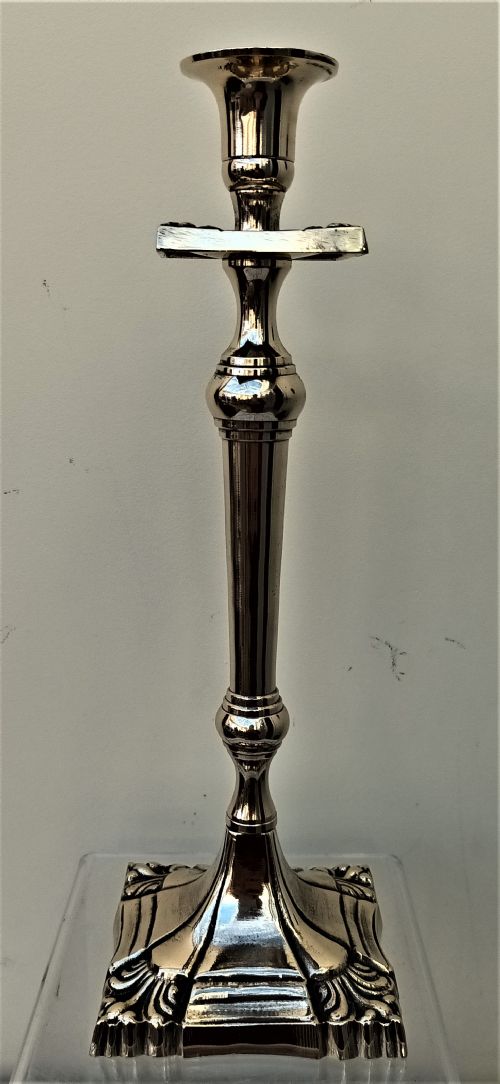
You will frequently find church candlesticks featuring tall stems, knops, and wide drip pans alongside domestic Arts and Crafts and Gothic Revival pieces. Forms range from simple chamber sticks to towering floor-standing candle holders and articulated branch arrangements.
The origins trace through English Victorian workshops, continental Dutch schools, and ecclesiastical supply houses. These objects translate medieval architectural motifs like arches, tracery, and heraldry into functional metal furnishings.
How they were made
The primary metalwork relies on cast brass, often combined with bronze, wrought iron, and copper elements to achieve substantial weight and rigid structure. Workshops utilised sand casting for heavy components like bases and bobeches, finishing the surfaces with turning and hand-polishing.
Gilt brass and ormolu treatments appear on specific decorative items, applying a gold-coloured surface layer over the base metal. Some examples incorporate contrasting materials such as wood and treen to create varied textural accents along the stem.
Some heavy church candlesticks stand tall enough to double as floor lamps, proving Victorians loved their lighting monumental.
What varies in quality
The distinction between ordinary production and superior work lies in the crispness of the cast detailing and the integrity of the joins. Heavier gauge metal and deeply chased ornamentation indicate a higher grade of manufacture, particularly on ecclesiastical commissions.
Proportion and balance separate standard items from exceptional pairs, especially in multi-branched candelabra where arm symmetry matters. Maker attribution through stamped marks or documented designs elevates the standing of specific pieces.
Wm. Tonks & Sons·Dr Christopher Dresser·T Thomason & Co
The Gothic Brass Candle Holders Glossary
- Pricket
- A sharp metal spike on a candlestick designed to skewer and hold the base of a wax candle. This form predominates on church altars and historical ecclesiastical metalwork.
- Ecclesiastical
- Relating to the Christian Church or its clergy, describing items originally manufactured for use in chapels, cathedrals, and abbeys. Such pieces typically display formal Gothic architectural detailing.
- Bobeche
- A collar or pan fitted below the candle nozzle to catch dripping wax and protect the stem. These components can be removable or cast integrally with the holder.
- Knop
- A decorative knob or bulging node on the stem of a candlestick that provides a secure grip for lifting. This feature derives from medieval chalice design.
- Ormolu
- Finely ground high-carat gold-mercury amalgam applied to a bronze base, creating a brilliant golden finish. The technique requires immense skill and appears on high-status revival pieces.
Gothic Brass Candle Holders: Frequently Asked Questions
What is a pricket candlestick?
A pricket candlestick uses an upright spike instead of a socket to hold the candle in place. This form was standard for large church candles.
Such designs require candles with a pre-drilled base or a soft underside to mount securely onto the metal point.
How do I date these items?
Dating relies on stylistic markers from Gothic Revival, Arts and Crafts, and Aesthetic movements combined with construction methods. Cast seams and patination offer further clues.
Makers' marks or registration stamps stamped into the brass base can also pinpoint the exact manufacturing decade.
Were these made for churches?
Many listings originate from ecclesiastical settings, including cathedrals, chapels, and parish churches. These pieces were built heavier to withstand ceremonial use.
Other examples were created for domestic Victorian interiors adopting medieval and Gothic architectural styles.
How do I clean antique brass?
Antique brass generally retains character through its dark, aged patination rather than a bright polished shine. Dusting with a dry cloth keeps the surface safe.
Avoid harsh chemical polishes that strip away historical oxidation and diminish the visual depth of the metal.