


Gothic Arch Table Clock
A gothic arch table clock brings distinctive pointed lines and architectural casework into a room, offering both reliable timekeeping and period character.
Gothic Arch Table Clock
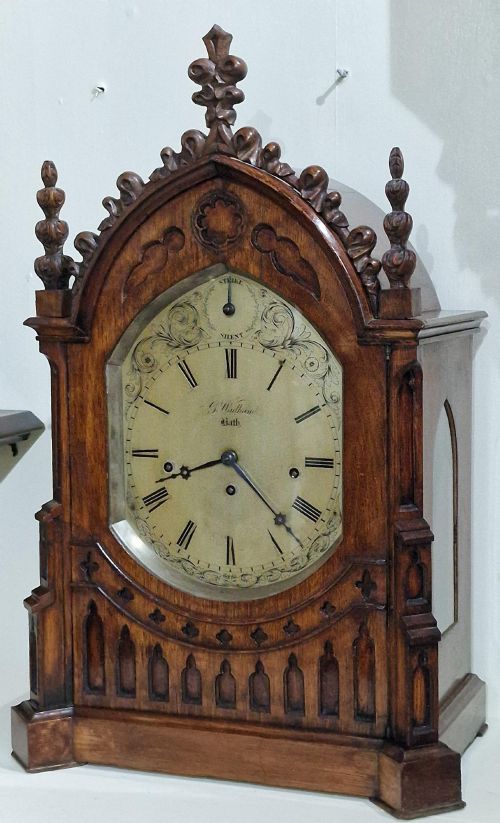
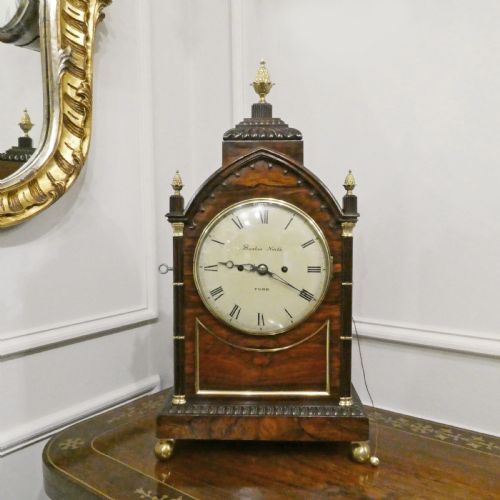
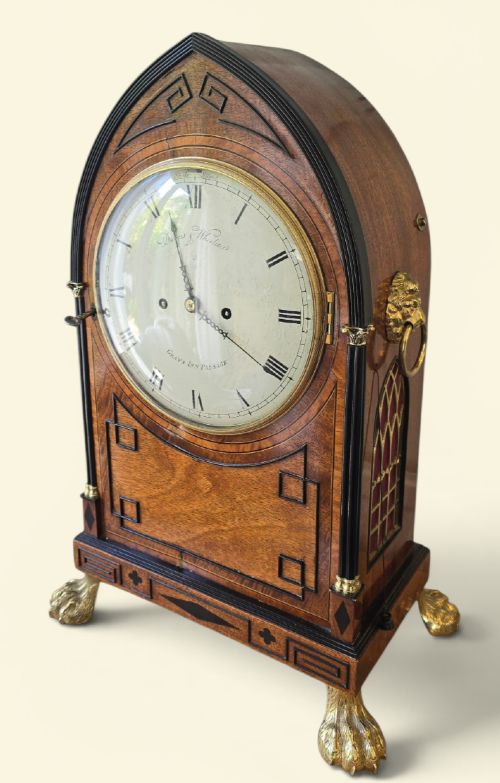
When you search for a gothic arch table clock, you encounter architectural mantel clocks, bracket clocks, and lancet-top designs rooted in the Gothic Revival, Regency, and Victorian periods. These pieces bring pointed architectural silhouettes into domestic spaces, drawing on cathedral designs translated into tabletop timepieces.
The versions most commonly met on this page span the 19th century, including Regency, Victorian, and Edwardian interpretations. Makers constructed these architectural timepieces primarily in mahogany, rosewood, oak, and ebony, frequently housing them in traditional bracket clock formats or lancet-top cases.
Materials and construction
Clockmakers utilised dense timbers such as mahogany, rosewood, and oak for the architectural cases, often enhancing the surfaces with brass inlay or bronze mounts. These materials provided the structural stability required for heavy brass movements and delicate glass bezels protecting white enamel dials.
Movements within these architectural housings ranged from single and double fusee mechanisms to triple fusee configurations striking bells. The combination of precision metal mechanics with finely joined timber cases defined the standard practice of period clockmaking.
Gothic Arch Table Clock Retail Price Guide 2026
Typical asking prices for gothic arch table clock among the pieces listed under this phrase on Sellingantiques today, from the lower quarter to the upper quarter. They describe what is for sale here now, not the wider market.
Some timepieces tucked away inside wooden lancet arches possess enough bells to turn an ordinary Tuesday afternoon into a cathedral chime session.
Factors of quality
Quality in these architectural timepieces rests upon the precision of the case joinery, the crispness of the Gothic detailing, and the complexity of the internal movement. Clocks featuring intricate brass inlay, bronze mounts, or multi-train fusee mechanisms represent higher tiers of craftsmanship.
The refinement of the painted enamel dial and the original condition of the timber case further distinguish finer examples. Maker attribution also influences standing, as documented workshop signatures on movements or dials elevate a piece above unmarked alternatives.
George Wadham Bath·Barber And North·Desbois And Wheeler·Cording Of London·Wilkinson Leicester·Ganthony Of London·Edwards Of London·Mitchell And Russell
The Gothic Arch Table Clock Glossary
- Fusee
- A conical pulley used in spring-driven clocks to ensure even power delivery as the mainspring unwinds. This mechanical addition helps maintain consistent timekeeping accuracy across the power reserve.
- Bracket clock
- A portable tabletop clock originally designed to sit upon a matching wall bracket. These pieces typically feature sturdy wooden cases with carrying handles and glazed access doors.
- Lancet top
- A pointed architectural case shape resembling a lancet window from Gothic ecclesiastical architecture. This silhouette forms the defining profile for numerous Regency and Victorian mantel clocks.
Gothic Arch Table Clock: Frequently Asked Questions
Where should I place a bracket clock?
These clocks suit solid mantelpieces, sideboards, or dedicated wooden brackets where their architectural silhouettes remain visible. Positioning them away from direct sunlight and drafts preserves the timber case and enamel dial.
Ensure the surface is completely level so the pendulum or balance wheel maintains an even beat. A stable foundation also prevents accidental tipping of heavier rosewood and mahogany housings.
How do fusee movements work?
A fusee movement uses a conical drum paired with a chain or cord to regulate the pull of the mainspring. When fully wound, the spring pulls on the narrowest part of the cone, moving to the wider base as tension decreases.
This clever mechanical compensation delivers constant torque to the escapement throughout the running cycle. It represents a hallmark of traditional British clockmaking standard in better period bracket clocks.
What defines the Gothic Revival style?
The Gothic Revival style draws inspiration from medieval architecture, translating pointed arches, lancet windows, and structural buttresses into furniture and decor. In clock design, this appears as soaring pointed cases and ecclesiastical motifs.
Regency and Victorian cabinetmakers embraced these medieval elements to create formal timepieces with dramatic vertical emphasis. The aesthetic contrasts sharply with the curved symmetry typical of earlier Georgian pieces.