
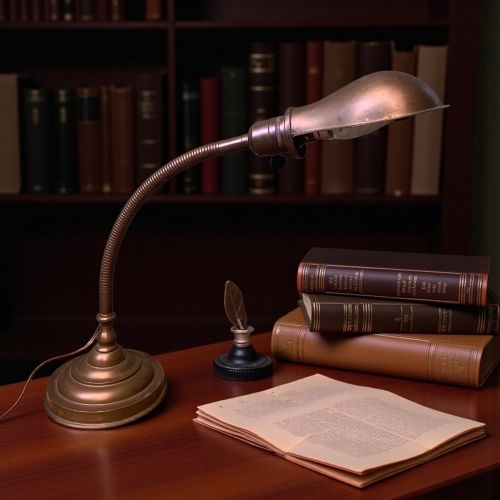


Gooseneck Desk Light
A gooseneck desk light directs task illumination right where you need it, combining metal arms and weighted bases for practical workspace use.
Gooseneck Desk Light
A gooseneck desk light serves as functional task lighting for work surfaces, drawing on forms from the nineteenth century through the mid-twentieth century. The selection on this page centres on adjustable reading lamps, student lamps and flexible desk lamps originating from periods such as the Edwardian era, the nineteen-twenties and nineteen-thirties.
Buyers encounter variations including French industrial designs, Art Nouveau bronze figures and Art Deco models with shell-shaped bases. Materials span cast iron, brass, bronze and copper, often paired with glass shades in cranberry or etched finishes.
The most frequent survivors on this page are Edwardian adjustable brass lamps and swan neck variants designed for direct table placement.
How they were made
Metalworking techniques dictate the construction of these task lamps, utilising cast iron, spun brass and sculpted bronze for rigid frames and articulated arms. Flexible tubing or mechanical joints permit directional movement of the light source.
Shades are formed from blown glass, etched glass, porcelain or shaped fabric, occasionally mounted on original fabric flex wiring systems.
Listings span brass, bronze, cast iron and copper, with styles ranging from French industrial to Art Nouveau.
What varies in quality
Quality rests upon the weight of the base, the rigidity of the adjustable joints and the retention of original components like shades and wiring. Superior examples maintain balance through heavy cast metal foundations while permitting smooth articulation along the neck.
Material finish also separates standard productions from finer pieces, particularly where hand-chased bronze or heavy-gauge brass shows crisp detail without undue wear.
Hawkins
The Gooseneck Desk Light Glossary
- Swan neck
- A curved upper arm resembling a bird's neck that allows downward projection of light. This shape provides both reach and stability on a desk.
- Anglepoise
- A mechanical arm system utilising springs and levers to hold a lamp in position. It offers balanced movement across a work surface.
- Student lamp
- A traditional reading lamp with a single burner or bulb extended over the work area. These often feature weighted bases to counterbalance extended arms.
- Art Nouveau
- A decorative style characterised by flowing, organic lines and natural motifs. It appears frequently on metal bases from the turn of the twentieth century.
- Art Deco
- A geometric style emphasising streamlined forms and symmetrical patterns. It emerges in lamp bases dating from the nineteen-thirties.
Gooseneck Desk Light: Frequently Asked Questions
How do I use a gooseneck desk light safely today?
Many vintage lamps require rewiring or PAT testing to meet modern electrical standards before plugging them into a mains socket.
Check the internal wiring condition and consult a qualified electrician if the fabric flex or bulb holder appears degraded.
What is the difference between an Edwardian and a nineteen-thirties lamp?
Edwardian desk lights tend to feature polished brass, ornate casting and traditional swan neck profiles intended for formal studies.
Nineteen-thirties models often adopt industrial flexibility, streamlined Art Deco geometry, or shell-shaped shades suited for utilitarian workspaces.
Are original glass shades common on these lamps?
Original shades do survive on certain pieces, particularly moulded glass, cranberry glass or porcelain variants recorded in the listings.
Matching an antique base with a period-appropriate replacement shade is common practice when the original has been lost over time.
How do adjustable joints stay upright?
Adjustable mechanisms rely on tension joints, counterweights, or flexible metal tubing designed to hold a chosen angle without sagging.
Over decades of use, these joints may require careful adjustment by a specialist to restore their original rigidity.