


Copper Desk Lamp
A copper desk lamp brings a warm metallic lustre to a workspace, combining practical task lighting with distinct period character.
Copper Desk Lamp
A copper desk lamp serves as a functional workspace accessory, frequently appearing in forms that span the late nineteenth century through to the art deco and modernist decades. These pieces bridge the gap between industrial utility and domestic interior design, utilising metalwork to direct illumination precisely where it is required on a writing surface or table.
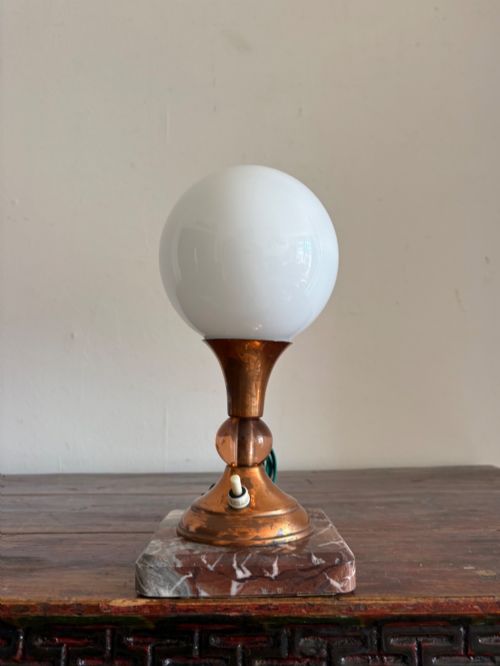
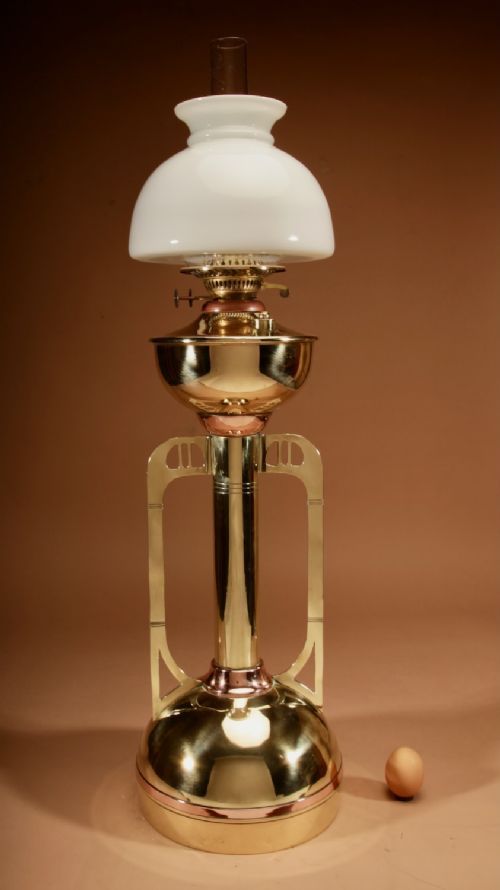
The versions most commonly met on this page range from early nineteenth-century revival styles and oil lamp conversions to streamlined art deco designs from the nineteen-twenties and nineteen-thirties. Many incorporate brass accents, marble bases, or coloured glass shades, reflecting the aesthetic shifts of their respective periods of origin.
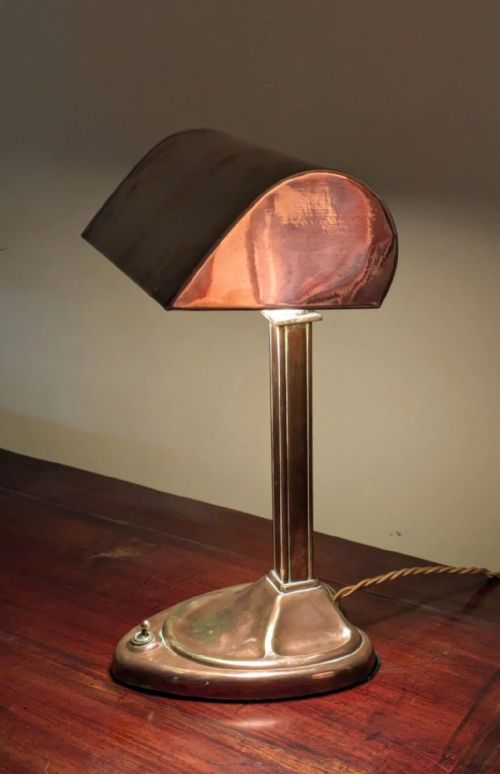
Makers and designers from various European movements utilised copper for its malleability and rich tone, resulting in table lamps, banker's lamps, and adjustable desk fittings. These objects demonstrate how utilitarian lighting evolved to incorporate artistic expression without sacrificing mechanical purpose.
How They Were Made
Makers constructed these lamps using sheet copper, patinated copper, or coppered brass, often combining these metals with solid brass fittings, bronze, or gunmetal for structural integrity. Bases frequently incorporated heavier materials such as marble or iron to stabilise the adjustable arms and shades.
Shades were shaped from opaline glass, frosted glass, or vaseline glass, and occasionally supplemented by fabric or rattan elements in later iterations. Metal components were spun, hammered, or cast, achieving finishes that ranged from high-polish surfaces to deep, aged patinations.
Materials recorded across the inventory include copper, patinated copper, brass, bronze, gunmetal, marble, opaline glass, and vaseline glass.
What Varies in Quality
The standard of a copper desk lamp is determined by the integrity of its construction, the weight of its base, and the precision of its adjustable joints. Superior examples employ heavier gauges of metal and maintain balanced proportions that support the weight of the shade without sagging.
Distinction also lies in the finish of the materials, where original patination, hand-hammered detailing, or the quality of the associated glass shade elevate an industrial object into a considered decorative piece.
Gustave Serrurier Bovy·Jan Eisenlöffel·WMF
The Copper Desk Lamp Glossary
- Patinated copper
- Copper that has undergone a chemical or natural oxidation process to darken its surface tone. This treatment alters the appearance from bright metallic orange to deep brown or verdigris shades.
- Opaline glass
- A type of semi-translucent glass that diffuses light evenly across a workspace. It appears frequently in shades mounted on period desk lighting.
- Amsterdam School
- An architectural and design movement from the early twentieth century characterised by expressive brickwork and organic metal forms. Pieces from this origin display sculptural qualities.
- Secessionist
- A stylistic approach emerging from Central European art movements that rejected historicism in favour of geometric abstraction and clean lines. Objects from this period often use contrasting metals.
- Vaseline glass
- A pale yellow-green glass containing uranium dioxide that glows under ultraviolet light. It provides a distinctive decorative element on early twentieth-century lamp assemblies.
Copper Desk Lamp: Frequently Asked Questions
How do I date a copper desk lamp?
Dating relies upon stylistic markers such as art deco geometric lines, art nouveau organic curves, or heavy Victorian brass and copper casting techniques.
Examining the toggle switches, flex types, and method of shade attachment also helps establish the era of manufacture.
Were these lamps originally for electricity?
Many examples from the nineteenth century started life as paraffin or oil lamps before undergoing conversion to electricity in later decades.
Later twentieth-century iterations were built specifically for electrical bulbs, frequently featuring adjustable arms or weighted marble bases.
What glass shades belong on these pieces?
Original configurations often feature opaline, frosted, vaseline, or green glass shades designed to soften the glare of the bulb.
Matching the glass type to the period style ensures the lamp retains its intended aesthetic balance.
How do I care for patinated copper?
Patinated surfaces require gentle dusting with a dry cloth to preserve the aged coloration built up over decades of handling.
Avoiding abrasive metal cleaners prevents the removal of the original finish.