
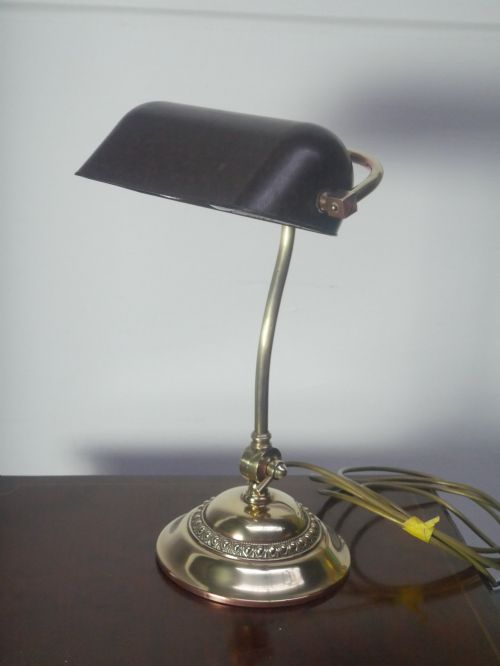


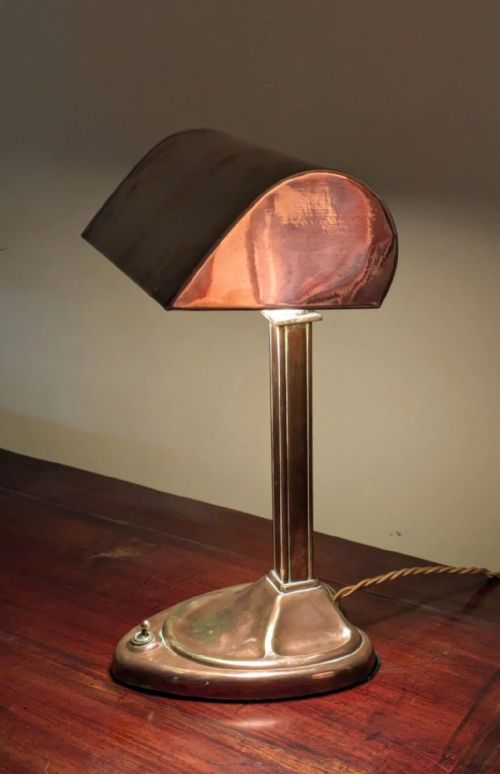


Antique Banker Desk Lamp
An antique banker desk lamp brings focused light and heavy metal substance to a workspace, built to last through decades of paper shuffling.
Antique Banker Desk Lamp
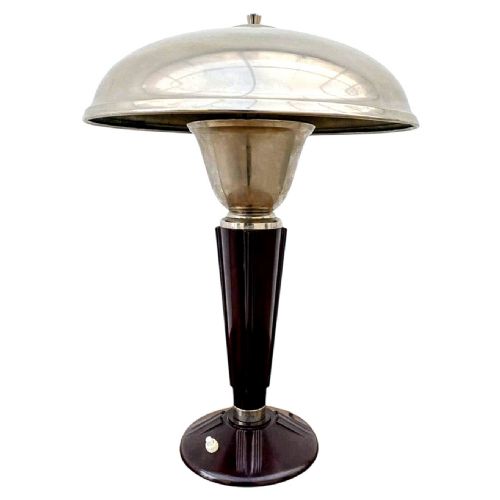
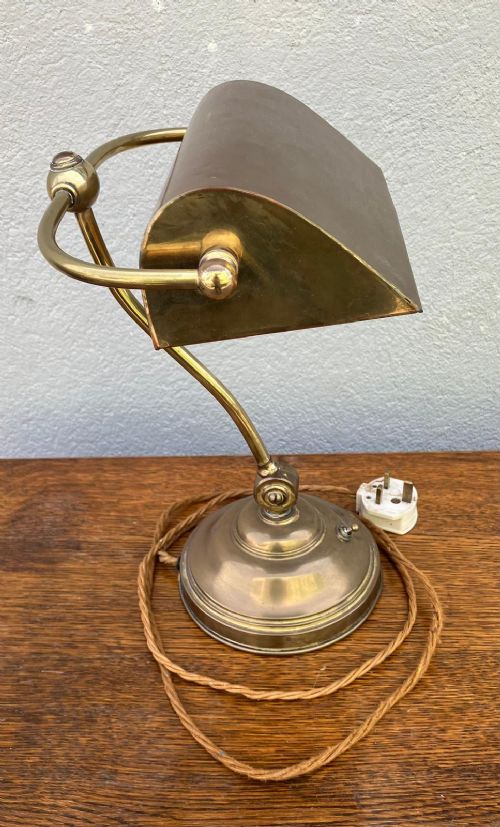
An antique banker desk lamp is a task light designed for prolonged reading and writing at a desk or counter. The pieces appearing here span from the nineteenth century into the Art Deco era, encompassing standard desk lamps, notary lamps, and adjustable reading fixtures.
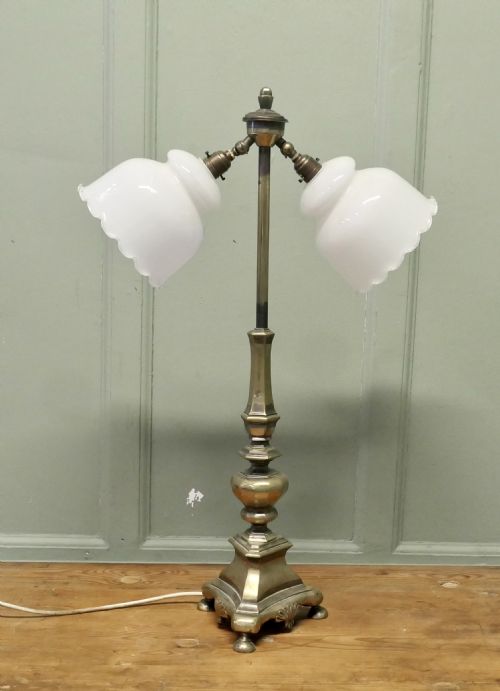
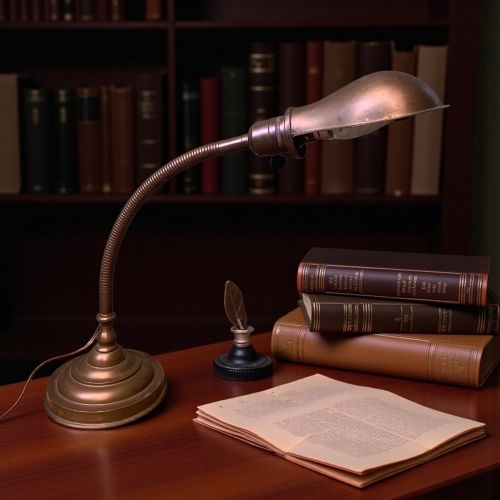
Brass dominates the selection, frequently paired with glass, bronze, or copper. Forms range from simple swan neck designs to articulated frames and double burners converted from earlier oil lamps, showing influences from Edwardian, Arts and Crafts, and Art Nouveau styles.
Materials and construction methods
Maker workshops built these lamps primarily from cast and spun brass, bronze, and copper, incorporating heavy metal bases to support adjustable arms. Components such as brass tubing, pivoting knuckles, and weighted footings allowed users to direct light precisely where needed.
Shades utilise glass, frosted glass, opaline, toleware, and fabricated metal. Electrical wiring and sockets were integrated into original oil lamp conversions or built directly into modernist machine age pieces using bakelite and chrome elements.
Some heavy metal reading lamps doubling as reception station greeters managed to illuminate office paperwork while standing guard over entire rooms.
Distinctions in quality
Quality rests in the weight of the metal casting and the precision of mechanical joints. Superior examples feature heavy bronze or thick brass with intact patination, robust articulation screws, and solid weighted bases that prevent tipping.
Details such as original shades in green glass, opaline, or frosted glass elevate a piece above standard utility lighting. The integration of maker design choices, from Art Deco lines to Jugendstil cast motifs, separates basic commercial lighting from high workshop production.
Eileen Grey
The Antique Banker Desk Lamp Glossary
- Art Deco
- A design style emerging in the early twentieth century characterised by streamlined geometric forms and modernist machine age materials. It appears frequently in desk lamps dated around the nineteen thirties.
- Swan neck
- A curved upper arm on a lamp that resembles the neck of a swan, allowing the light source to arch downward over a desk surface. This profile is common in Edwardian brass task lighting.
- Toleware
- Painted or lacquered sheet metal used to form decorative lamp shades and bodies, often seen in green or dark finishes on nineteenth century and French pieces.
- Opaline
- A type of semi-translucent white or tinted glass that diffuses light softly, utilised in nineteenth and early twentieth century lamp shades.
- Articulated
- Built with adjustable joints or pivoting sections that let the user alter the height and angle of the lamp arm.
Antique Banker Desk Lamp: Frequently Asked Questions
What is an antique banker desk lamp?
An antique banker desk lamp is a task light originally designed for offices, banks, and legal desks, providing focused illumination for paperwork.
These pieces use heavy metals like brass and bronze alongside glass shades to ensure stability and directed light during long working hours.
How do I date an antique banker lamp?
Dating relies on stylistic markers, materials, and construction methods. Pieces from the nineteenth century often feature heavy cast bronze, oil lamp conversions, or toleware.
Examples from the nineteen twenties and thirties shift toward Art Deco geometry, bakelite switches, chrome plating, and articulated brass tubing.
Are these lamps safe for daily use?
Many older lamps retain their original brass frames and shades but require modern electrical rewiring to meet current safety standards.
Buyers should consult a qualified electrician to inspect vintage wiring and internal sockets before plugging the lamp into a mains supply.
What materials were used?
Construction primarily involves brass, bronze, and copper for the structural arms and weighted bases. Shades were manufactured from clear, frosted, opaline, or green glass, as well as painted metal toleware.
Later twentieth century designs incorporate bakelite and chrome to reflect industrial and machine age aesthetics.