
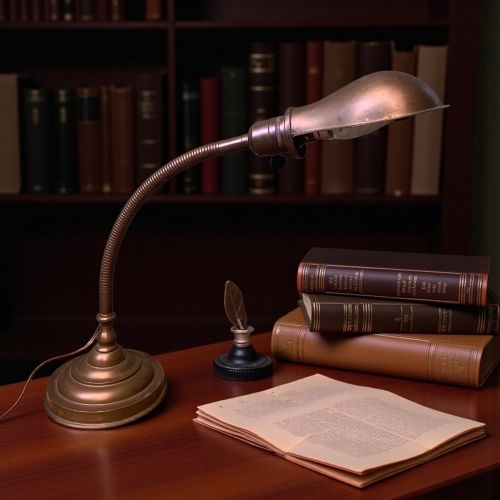


Brass Gooseneck Table Lamp
A brass gooseneck table lamp brings adjustable, focused light and unmistakable period character to a desk.
Brass Gooseneck Table Lamp
A brass gooseneck table lamp offers practical task lighting through flexible arms, swan necks, or adjustable angles designed for reading and writing. When you search for a brass gooseneck table lamp, you encounter items intended for practical use on desks, noters' tables, and reading surfaces.
The selections span from the late nineteenth century through the Edwardian era into the Art Deco and 1930s periods. Forms range from simple student reading lamps to sculptural French desk lights featuring cranberry glass, shell-shaped bases, or porcelain accents.
Edwardian adjustable brass lamps dominate the offerings, frequently incorporating flexible tubing, heavy weighted bases, and swan neck profiles. Alongside these are heavier bronze notary lamps and occasional French industrial examples that prioritise utilitarian metalwork.
How they were made
Construction relies heavily on cast and spun brass, solid bronze, and occasional cast iron for stability at the base. Flexible tubing or articulated joints allow the neck to bend and hold position without slipping.
Glass elements such as etched shades or cranberry glass inserts are mouth-blown and shaped to fit specific fittings, while fabric flex wiring provides modern safety compliance without compromising period aesthetics.
Several lamps include cast iron weighted bases designed to stop zealous notaries from knocking over their inkwells.
What varies in quality
The weight and gauge of the metal define the durability of the piece, with heavier cast bronze and thick brass outperforming lighter stamped alternatives. A well-engineered adjustable joint moves smoothly and maintains tension securely.
Integration of original components like cranberry glass shades, shell-shaped bases, or period porcelain details elevates the integrity of the lamp. Finishes left with natural patination show genuine age compared to over-polished surfaces.
The Brass Gooseneck Table Lamp Glossary
- Swan neck
- A curved tubular metal arm resembling the neck of a swan, allowing directional adjustment of the light source. This profile appears frequently on Edwardian desk and reading lamps.
- Cranberry glass
- A rich red-pink glass created by adding gold chloride to the molten batch. It is often found paired with brass frames on turn-of-the-century student lamps.
- Notary lamp
- A heavy-based desk lamp designed for legal or clerical work, usually constructed from bronze or brass with an adjustable arm. These pieces often feature weighted bases to prevent tipping.
- Fabric flex
- Twisted silk or fabric-covered electrical cord used in rewiring vintage lamps. It respects historical appearance while ensuring modern electrical safety.
Brass Gooseneck Table Lamp: Frequently Asked Questions
How do I clean a brass lamp?
Gentle dusting with a soft dry cloth preserves the natural patination built up over decades of use. Avoid harsh metal polishes that strip away the historical character of the brass.
If the metal requires more attention, use a mild, non-abrasive cleaner specifically formulated for vintage metals.
What is the difference between a swan neck and a gooseneck?
A swan neck typically describes a solid, gracefully curved rigid metal arm that sets the shade at a fixed angle. A gooseneck usually refers to flexible metal tubing that can be repeatedly bent into different positions.
Both styles serve the same practical purpose of directing task lighting precisely where needed.
Can I replace the glass shade if it breaks?
Finding an exact period replacement for specialised shades like cranberry glass or etched glass can prove challenging. Most replacements require matching the exact fitter size of the original collar.
When buying, inspect the shade carefully to ensure it fits the period and style of the brass base.