
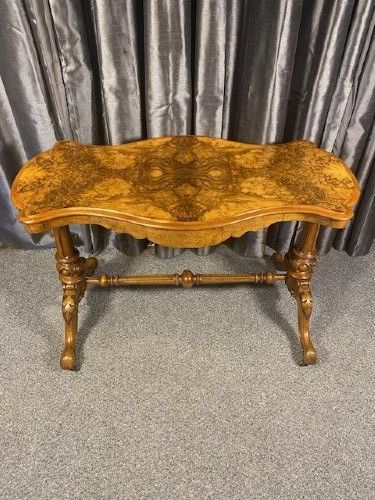
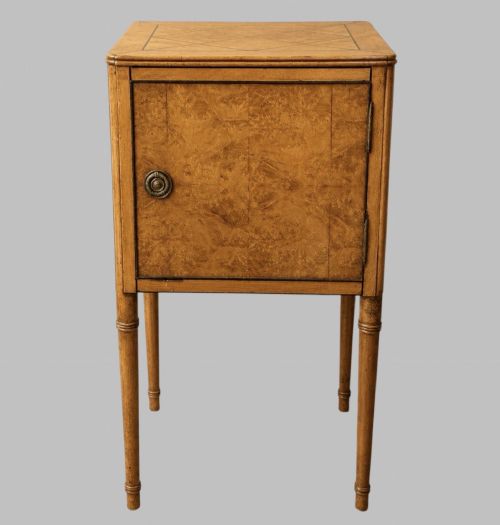
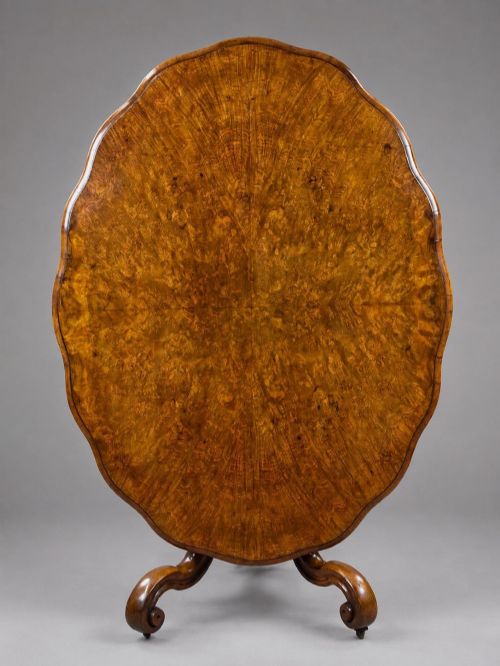

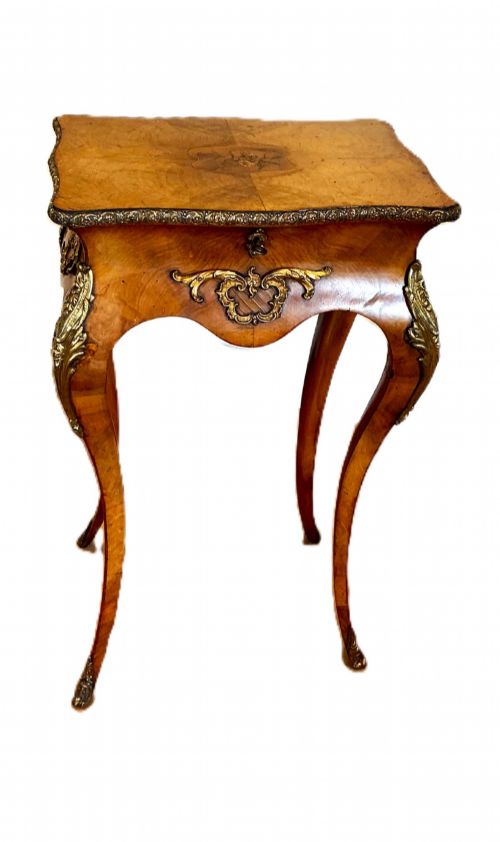




Golden Walnut Side Table
A golden walnut side table brings warmth and rich grain to a room, offering practical surface space through centuries of design.
Golden Walnut Side Table
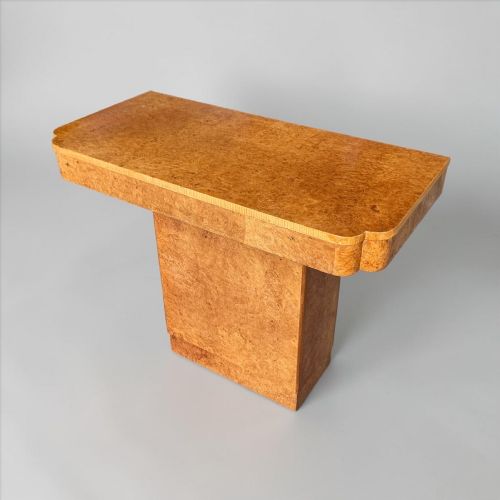
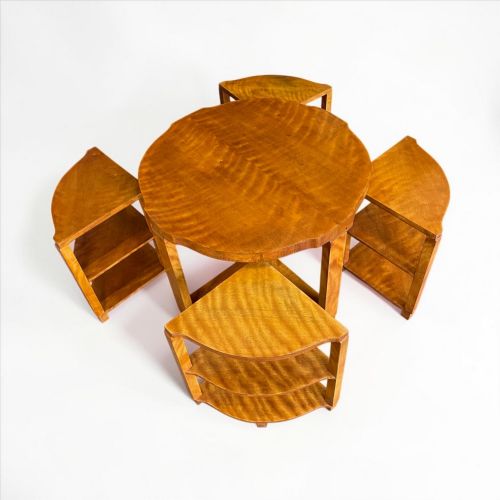
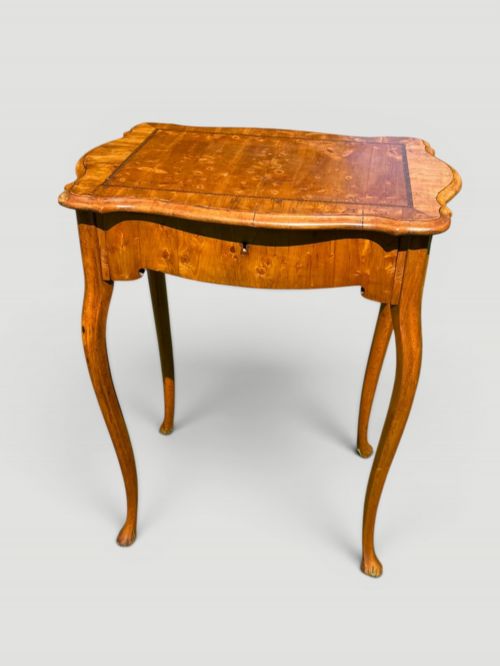
A golden walnut side table encompasses various small support surfaces, from Victorian occasional pieces to Art Deco console tables. These items serve everyday functions beside seating, beds, or in hallways, utilising compact footprints.
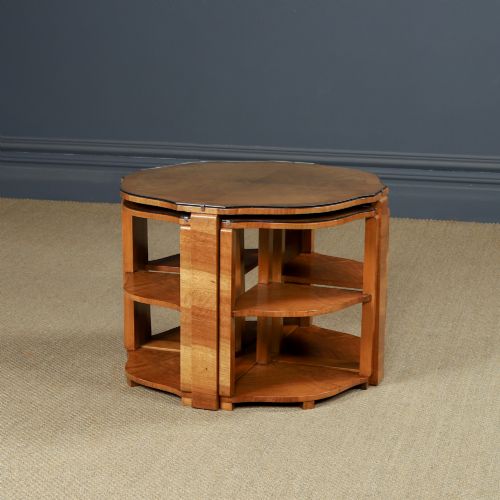
The pieces appearing here span the Victorian era, the Edwardian period, and the 1930s. Buyers frequently encounter forms such as nests of tables, lamp tables, and card tables alongside standard side tables.
Origins stretch from English workshops to French ateliers, showing regional variations in Revival styles and modernist lines. Walnut remains the unifying thread across these disparate decades.
Quality factors
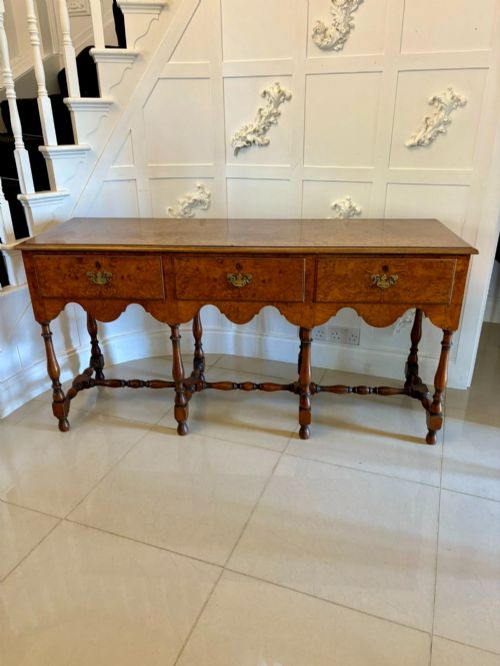
Excellence in these tables rests upon the selection of the timber and the skill of the veneer matching. Highly figured burr walnut with symmetrical grain patterns distinguishes finer commissions from plain utility items.
Joinery stability and the crispness of carved or inlaid details dictate the standing of a piece. Maker attribution, such as work originating from established firms, separates standard domestic furniture from high-end production.
Listings feature items spanning from the mid-nineteenth century through the Edwardian era up to the 1930s Art Deco period.
Walter Carter Harrods·Hille·Harry And Lou Epstein
The Golden Walnut Side Table Glossary
- Burr walnut
- A thin slice of wood taken from a growth on a walnut tree, yielding swirling, knotty grain patterns. This material was favoured for prominent furniture surfaces.
- Veneer
- A thin layer of superior wood applied to a base timber to give a decorative appearance. It prevents warping while displaying expensive grain.
- Marquetry
- The art of applying pieces of veneer to a structure to form decorative patterns or pictures. Floral motifs frequently appear on Victorian examples.
- Serpentine
- A shape involving a wavy line of convex and concave curves. This contour is often seen on the front edges of Victorian tables.
- Tripod table
- A small freestanding table supported by a central pillar and three legs. These versatile pieces became popular for serving tea or holding lamps.
Golden Walnut Side Table: Frequently Asked Questions
How do I style a side table?
Place the table beside a sofa or armchair to hold lamps, books, or decorative objects. Their compact nature allows them to fit into hallways and bedrooms without dominating the floor space.
Balance the visual weight of the rich walnut grain by pairing the table with neutral walls or minimalist surrounding furniture. Layering items of varying heights on the surface enhances the display.
What is burr walnut?
Burr walnut comes from a tree growth that produces intricate, swirling patterns in the grain. This figured wood was highly prized by cabinet makers for tabletops and drawer fronts.
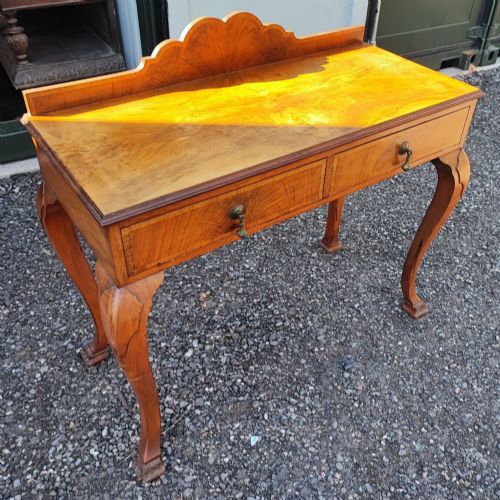
Because the grain grows in multiple directions, it catches the light differently from straight-grained timber. This creates the characteristic golden glow seen on antique examples.
How do I tell Victorian from Art Deco?
Victorian tables often feature ornate carving, turned legs, and floral marquetry inlay. They lean towards heavy, curved silhouettes influenced by Revival styles.
Art Deco pieces, by contrast, favour clean geometric lines, smooth surfaces, and streamlined symmetry. These twentieth-century designs rely on the natural grain of the walnut rather than surface carving for visual impact.
How do I care for walnut furniture?
Keep wooden surfaces away from direct sunlight and heat sources to prevent the timber from drying out. Use coasters and placemats to protect the polished finish from moisture.
Dust the table regularly with a soft, dry cloth. Avoid harsh chemical cleaners that can strip the traditional wax or polish.