
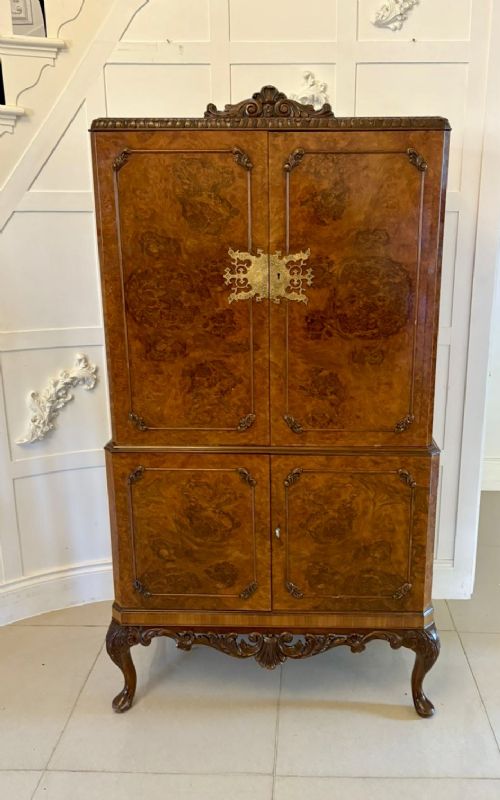
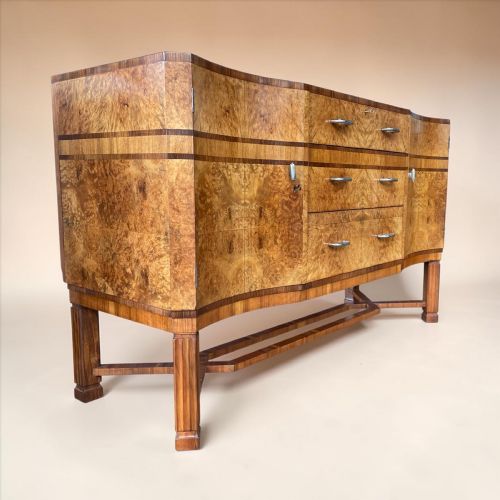


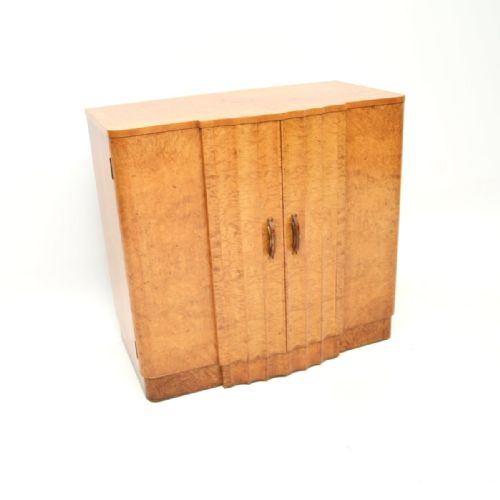
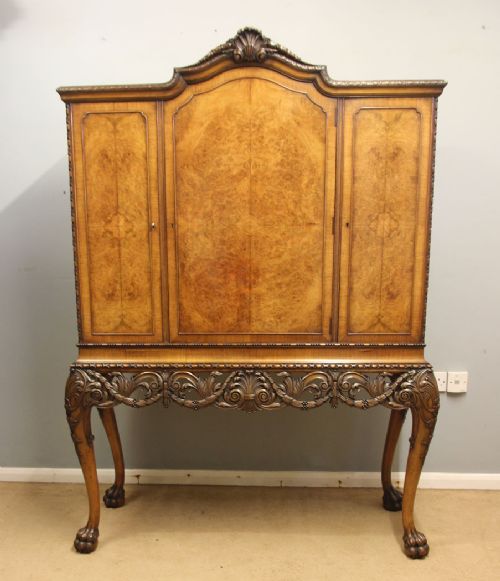
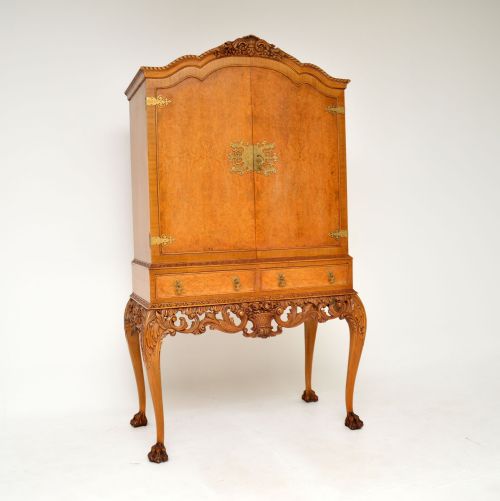
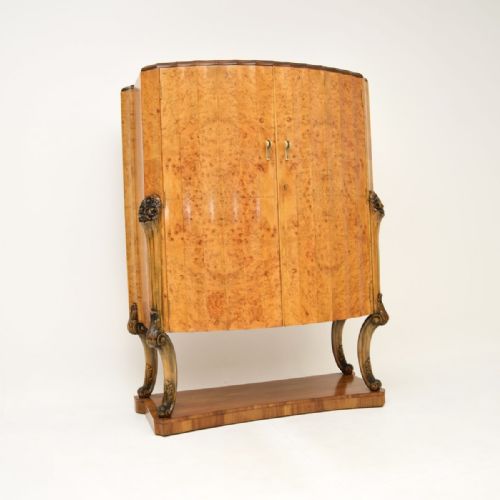


Golden Walnut Cocktail Cabinet
A golden walnut cocktail cabinet brings striking figure-grained timber and fitted internal bar storage into a room.
Golden Walnut Cocktail Cabinet
When searching for a golden walnut cocktail cabinet, collectors encounter refined drinks storage pieces originating from the Edwardian era, the 1920s and the 1930s. The selection on this page centres primarily on Art Deco items alongside Queen Anne revival and early twentieth-century examples.
Forms span dedicated cocktail cabinets, drinks cabinets, and sideboards that incorporate internal bottle and glassware storage. These pieces combine decorative timber surfaces with functional hospitality compartments designed for entertaining.
Origins represented in the inventory include British workshops as well as Italian makers, with specific pieces taking the form of sideboards and side cabinets adapted for serving beverages.
How they were made
Maker workshops construct these items using solid wood framing combined with burr walnut veneer and general walnut veneer to display rich grain patterns across the exterior surfaces. Cabinet makers apply these fine veneers carefully to curved and flat panels alike to create shimmering visual depth.
Hardware details feature cast brass mounts and handles that complement the warm tones of the timber. Interior compartments often integrate glass shelves and specialised holders alongside contrasting woods.
Bakelite components appear in certain fittings, reflecting the modern industrial materials adopted during the interwar period.
Listings span the Edwardian period, the 1920s, and 1930, utilising burr walnut veneer, brass, and Bakelite across Art Deco and Queen Anne styles.
What varies in quality
Quality differences rest largely upon the selection and matching of the burr walnut veneer across the main facade. Cabinets displaying symmetrical, highly figured grain patterns throughout command greater attention than those with plain or interrupted timber.
The attribution to notable makers significantly influences the standing of a piece within the range. Workshop execution in the internal fittings, such as mirrored backings, pull-out slides, and specialised glass compartments, marks the division between standard production and top-tier items.
Harry and Lou Epstein·Epstein
The Golden Walnut Cocktail Cabinet Glossary
- Burr walnut
- A wood veneer harvested from the wart-like growths on walnut trees, yielding highly ornamental swirling patterns. This timber provides the characteristic golden figure seen across the best interwar cabinet doors.
- Art Deco
- A design style emerging in the interwar period, characterised by sleek geometric lines and streamlined forms. Pieces from this movement often feature rounded corners and dramatic waterfall edges.
- Queen Anne Revival
- A style drawing inspiration from early eighteenth-century English furniture forms, marked by cabriole legs and pad feet. Cabinets in this revival style blend traditional silhouettes with golden walnut veneers.
- Demi-lune
- A half-moon shape applied to the footprint of side cabinets and console tables. This curved profile allows the furniture to sit flush against a wall while offering internal storage.
Golden Walnut Cocktail Cabinet: Frequently Asked Questions
What is a golden walnut cocktail cabinet?
A golden walnut cocktail cabinet is a specialised drinks storage unit surfaced in figured walnut veneer, typically dating from the Edwardian period through to the 1930s.
These pieces feature fitted interiors designed to house bottles, glassware, and mixing accessories behind panelled or mirrored doors.
How do you date an Art Deco cocktail cabinet?
Dating relies on stylistic markers such as geometric silhouettes, waterfall edges, and the presence of specific hardware materials like Bakelite.
Most examples on this page cluster around the 1920s and 1930s, reflecting the peak of interwar design.
Where were these drinks cabinets made?
The pieces originate primarily from British workshops, though Italian makers also contributed large sideboard forms during the interwar period.
Maker attribution often points to prominent London cabinet makers active during the Art Deco era.
What is the difference between a sideboard and a cocktail cabinet?
A sideboard is primarily designed for dining room service with general storage cupboards and drawers, whereas a cocktail cabinet is specifically arranged for serving drinks.
Certain items in the inventory combine both functions as sideboards adapted with dedicated internal bar compartments.