
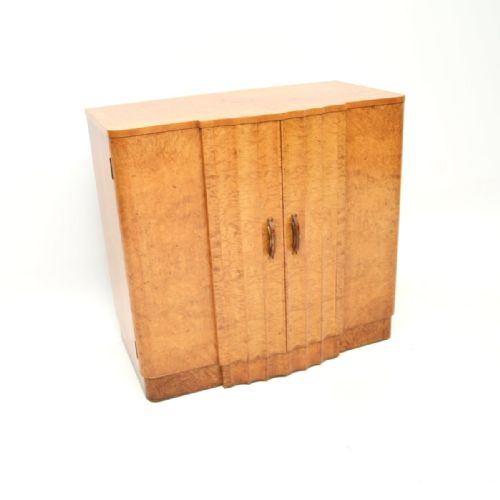
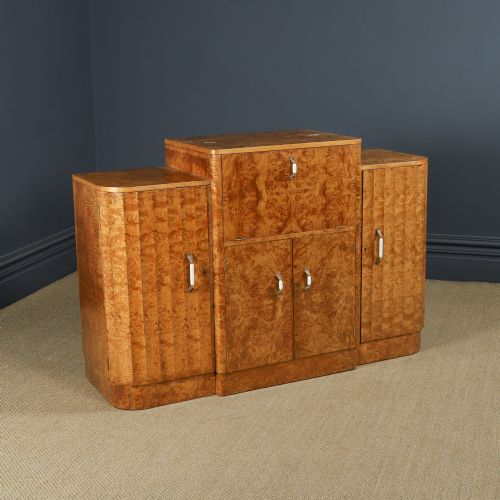


Harry and Lou Epstein Cabinet
A harry and lou epstein cabinet brings bold Art Deco design and striking burr walnut veneer directly into a room.
Harry and Lou Epstein Cabinet
When you search for a harry and lou epstein cabinet, you are looking at modernist British cabinet-making from the 1930s. The forms span cocktail cabinets, sideboards, wardrobes, and bedside cabinets.
The version you are most likely to meet on this page is the cocktail cabinet or sideboard in burr walnut. These pieces reflect the dominant Art Deco style of their period.
How they were made
Workshops constructed these pieces using wood veneer over a sturdy timber core, applying burr walnut to create dramatic grain patterns on the exterior surfaces. Cabinet-makers paired the polished wood with contrasting metal and glass elements.
Makers integrated functional details such as brass handles and bakelite fittings into the design. The construction relied on precise veneering techniques typical of 1930s British furniture production.
The listings on this site show pieces from the 1930 period exclusively, utilising burr walnut, walnut veneer, and satinwood.
What varies in quality
The distinction between pieces rests on the choice of wood veneer and the complexity of the cabinet form. Highly figured burr walnut grain patterns across large surfaces elevate a piece above simpler designs.
The integration of fitted interior compartments, electric lighting elements, and original hardware distinguishes the finer examples. Overall proportion and the preservation of the original polished finish determine the standing of each cabinet.
Harry and Lou Epstein
The Harry and Lou Epstein Cabinet Glossary
- Burr Walnut
- A wood veneer taken from the growth deformity on a walnut tree, producing swirling, highly decorative grain patterns. It forms the primary decorative surface for many Art Deco cabinets.
- Art Deco
- The dominant design style of the 1930s characterised by geometric forms, streamlined silhouettes, and modern materials. This aesthetic defines the entire range of these cabinets.
- Cocktail Cabinet
- A specialised storage piece designed for the preparation and serving of drinks, often featuring mirrored interiors and glass shelving. These items represent some of the most elaborate forms found in this maker's output.
- Bakelite
- An early synthetic plastic used for handles, knobs, and electrical fittings during the 1930s. Its durability and distinct finish make it a hallmark of the period.
- Veneer
- A thin layer of decorative wood applied over a base timber to create patterned exterior surfaces. This technique allowed makers to display dramatic wood grains across large panels.
Harry and Lou Epstein Cabinet: Frequently Asked Questions
What rooms suit a harry and lou epstein cabinet?
These cabinets suit dining rooms, living spaces, and hallways where their distinctive 1930s presence can anchor the room. Cocktail cabinets and sideboards function well as focal points for entertaining or display.
Smaller pieces like bedside cabinets fit into bedrooms while maintaining the same Art Deco aesthetic through their burr walnut construction.
How do I care for burr walnut veneer?
Keep the wood away from direct sunlight and heat sources to prevent the veneer from drying out or splitting. Dust the surface regularly with a dry cloth and avoid harsh chemical cleaners.
Occasional application of a suitable furniture wax helps maintain the lustre of the polished wood finish.
Were all these cabinets made in the 1930s?
The recorded pieces date predominantly from around 1930, reflecting the height of the Art Deco period in Britain. The maker's output aligns with this specific decade.
Individual pieces demonstrate stylistic consistency across wardrobes, sideboards, and cocktail cabinets from this era.