

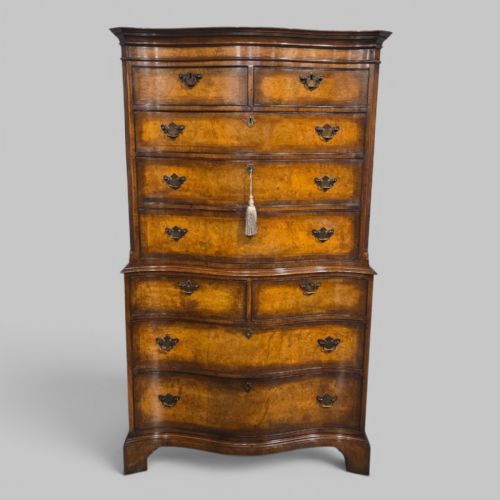


Golden Walnut Chest Drawers
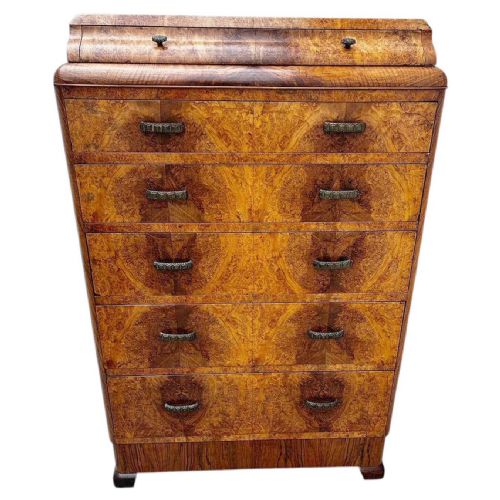
These golden walnut chest drawers bring rich timber grain and warm tone to a room, spanning periods from the seventeenth century to Art Deco.
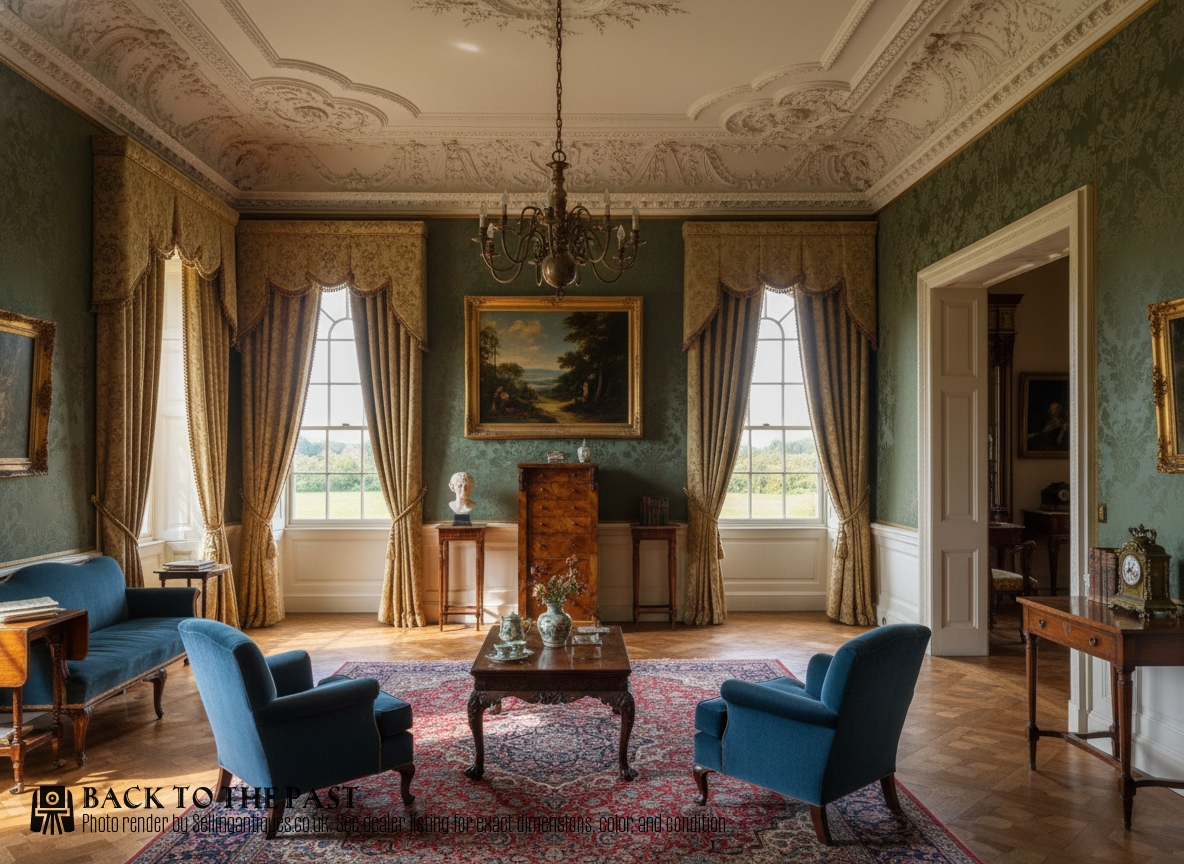
Golden Walnut Chest Drawers
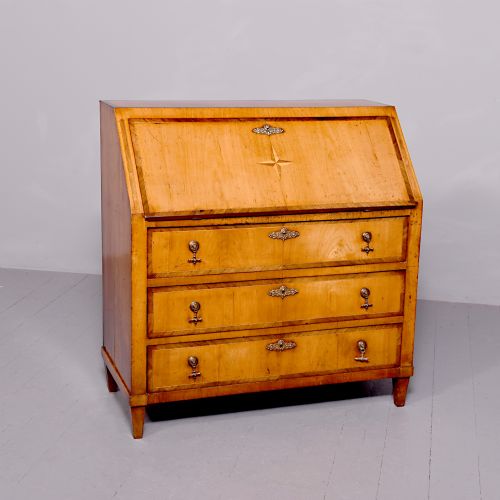
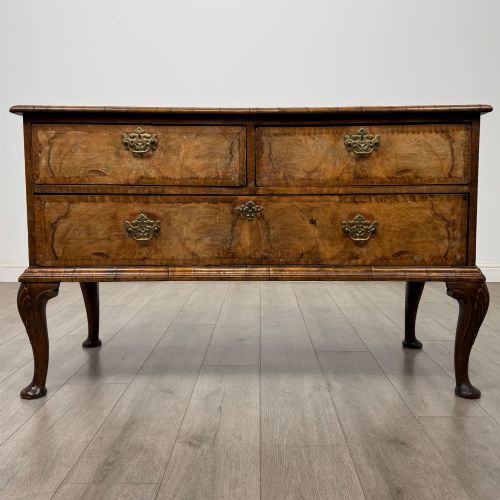
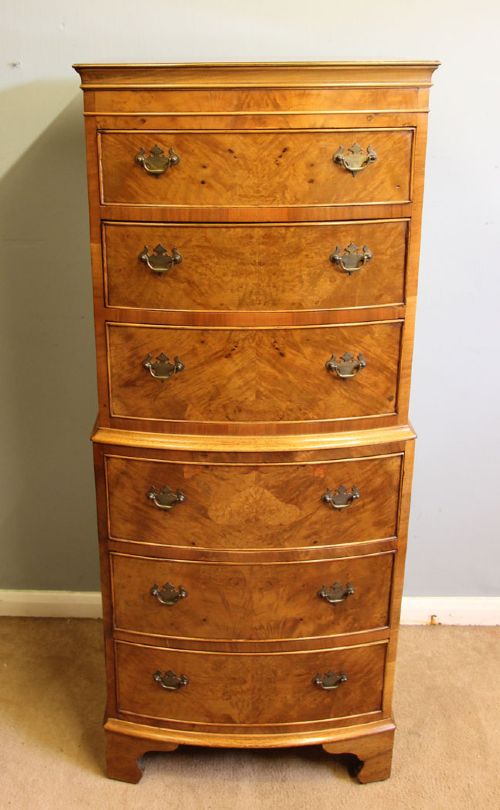
When you search for golden walnut chest drawers, you encounter timber storage furniture built across several centuries, from early Georgian examples to Art Deco pieces. The selection includes tall forms like chest on chest designs alongside compact bedside cabinets and serpentine commodes.
The most frequent pieces on this page combine walnut and burr walnut timbers, often showing rich figuring across the drawer fronts. Continental items such as Swedish and South German commodes sit alongside English pieces from the Georgian and Edwardian eras.
How they were made
Cabinetmakers utilised solid walnut and decorative walnut veneer over secondary woods like oak or pine to construct these drawer units. Selected sections of burr walnut timber provided dramatic grain patterns, often arranged in symmetrical matches across the drawer faces.
Hardware typically includes brass handles and escutcheons, ranging from simple drop handles on early pieces to streamlined pulls on Art Deco designs. Secondary timbers such as birch and fruitwood appear inside drawer linings and internal compartments.
Object forms span standard chests of drawers, secretaire bureaux, kneehole desks, and compact bedside cabinets.
What varies in quality
The sophistication of the timber veneer work defines the upper tier of these pieces, particularly where burr walnut figures are carefully balanced across multiple drawers. Untouched surface patination and crispness in the shaping of serpentine fronts distinguish finer workshops from simpler production.
Proportion and structural integrity separate standard items from exceptional examples, especially in pieces featuring complex forms like chests on stand or kneehole desks. The precision of the dovetail joinery in the drawers and the retention of original brass fittings influence the standing of each piece.
Heals
The Golden Walnut Chest Drawers Glossary
- Burr walnut
- A prized timber harvested from growth excrescences on walnut trees, yielding intricate, swirling grain patterns. Cabinetmakers sliced this wood into thin veneers for decorative drawer fronts.
- Serpentine
- A front profile characterised by a gentle convex curve flanked by two concave curves, popular in eighteenth and nineteenth-century commodes. This shape requires skilled timber bending and carving.
- Commode
- A low chest of drawers originating in France, often featuring decorative mounts and serpentine drawer fronts. The term appears frequently among continental walnut pieces.
- Chest on chest
- A tall storage unit formed by stacking a smaller chest of drawers directly on top of a larger base section. This form maximises vertical storage while displaying continuous timber grain.
Golden Walnut Chest Drawers: Frequently Asked Questions
How do I care for walnut furniture?
Keep walnut furniture away from direct sunlight and steady heat sources to prevent the timber veneer from drying out or splitting. Dust regularly with a soft, dry cloth and apply occasional specialist wax to nourish the grain.
Avoid using silicone polishes or abrasive cleaners, which can damage the historic polish and lift delicate veneers from the carcase.
Where were these chests made?
The pieces originate from various regions, encompassing English workshops alongside Continental centres such as Sweden, Germany, and France. Each region developed distinct proportions, hardware styles, and timber selection preferences.
English pieces often favour straightforward Georgian lines, while continental examples frequently showcase dramatic serpentine curves and striking burr walnut figures.
How do I identify an eighteenth-century piece?
Examine the construction methods inside the drawers, looking for hand-cut dovetails and solid timber linings rather than modern plywood or machine-made joints. The patination of the walnut should show deep, mellow tones acquired through generations of handling.
Check the timber backing boards and internal framing, which should display tool marks and ageing consistent with early workshop practices.
Can I mix walnut with other woods?
Walnut pairs easily with oak, mahogany, and lighter satinwood pieces due to its warm, adaptable brown and golden tones. The rich figuring provides a natural focal point in a room without clashing with neighbouring furnishings.
Balance the deep grain patterns of burr walnut with simpler, plain-timber pieces to maintain visual harmony in your interior scheme.