
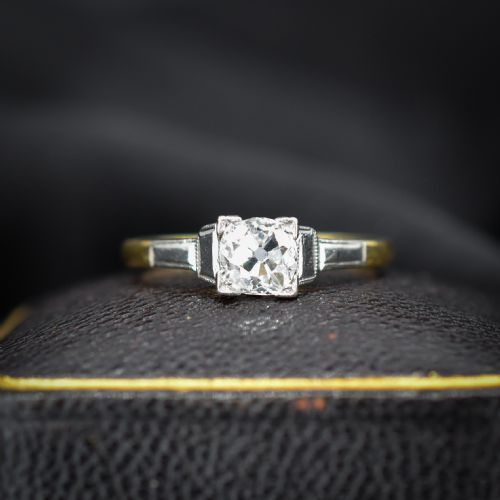
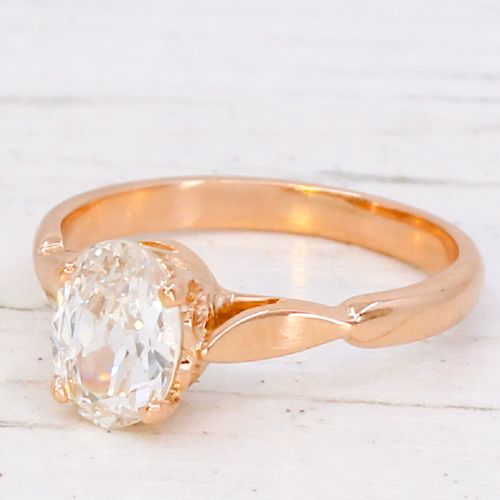
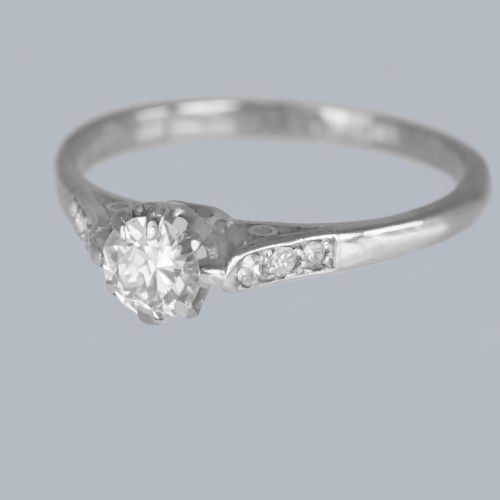
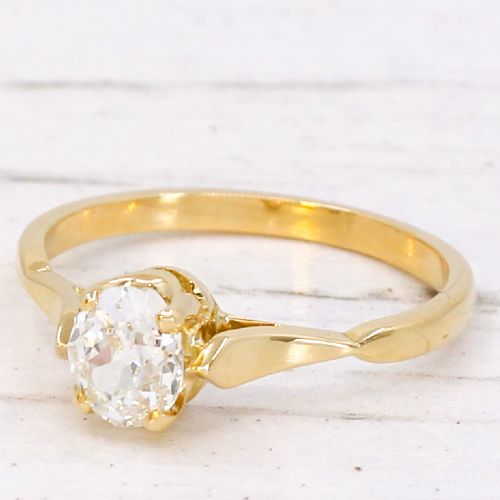
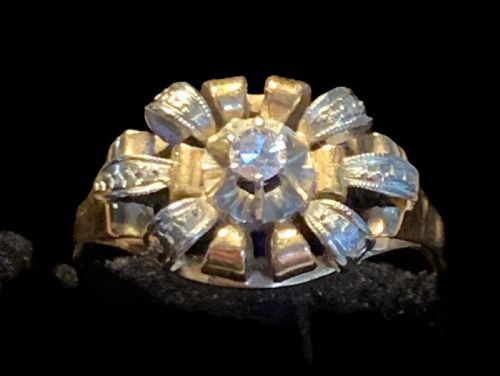
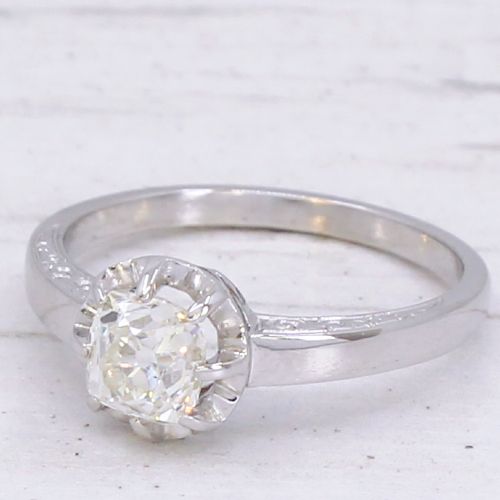
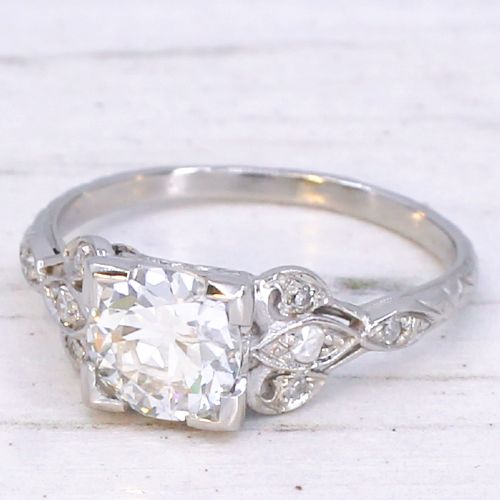
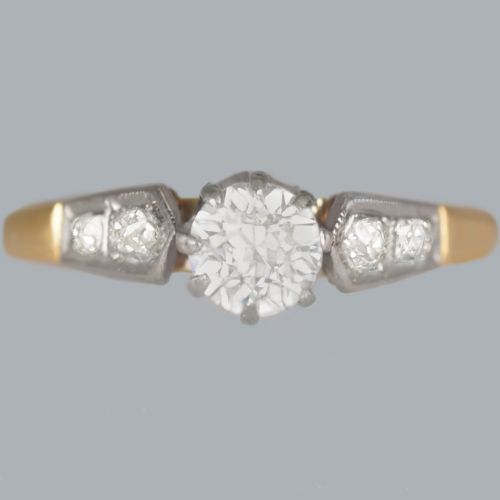
Gold Solitaire Engagement Ring
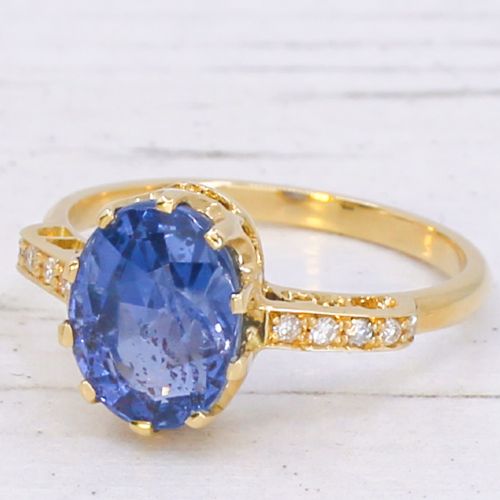
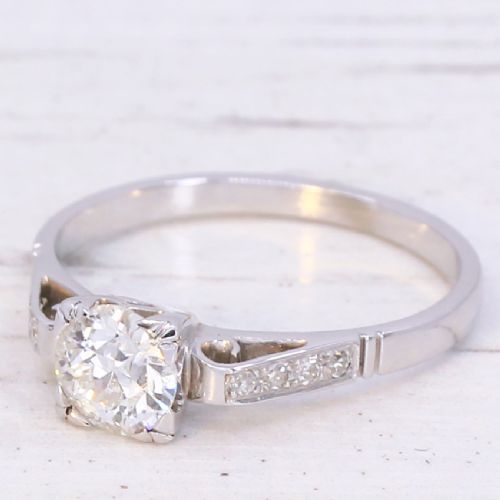
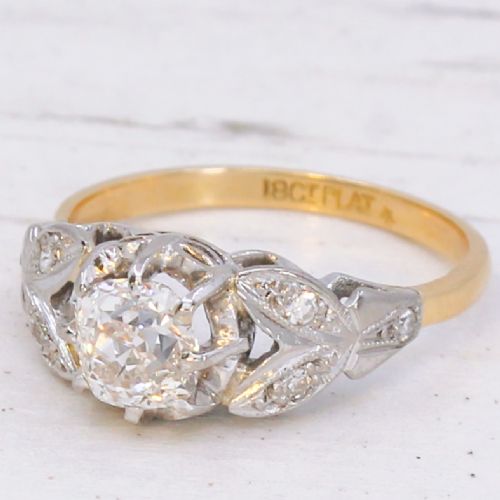
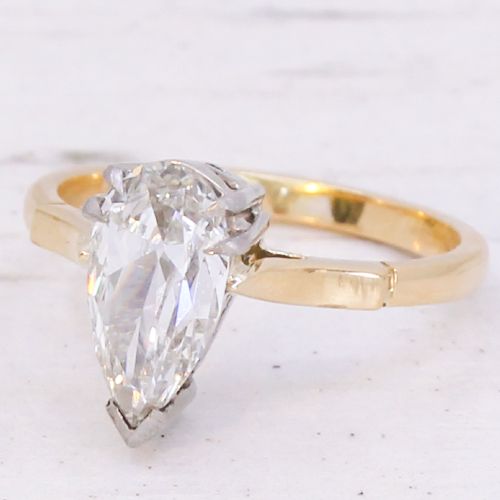
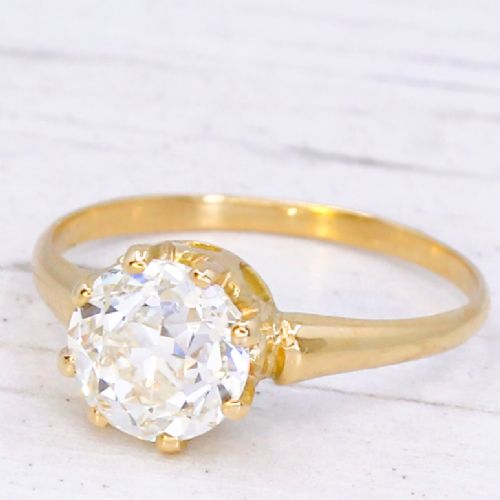
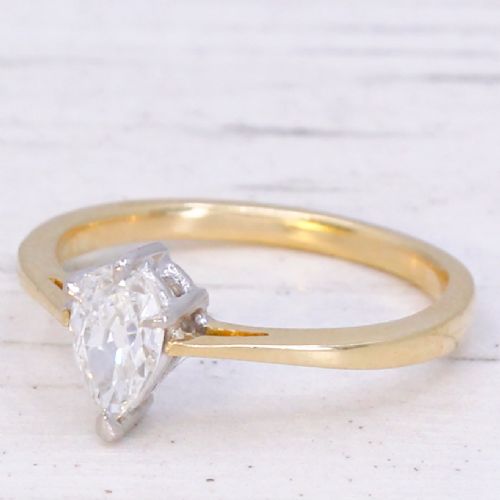
A gold solitaire engagement ring centres on a single stone, bringing together historical periods from the Victorian era to the mid-century.
The gold solitaire engagement ring
A gold solitaire engagement ring centres on a single diamond mounted on a band of precious metal. This page gathers examples spanning the Victorian, Edwardian, Art Deco and Mid-Century Modern periods, offering a clear view of how these single-stone designs evolved over decades.
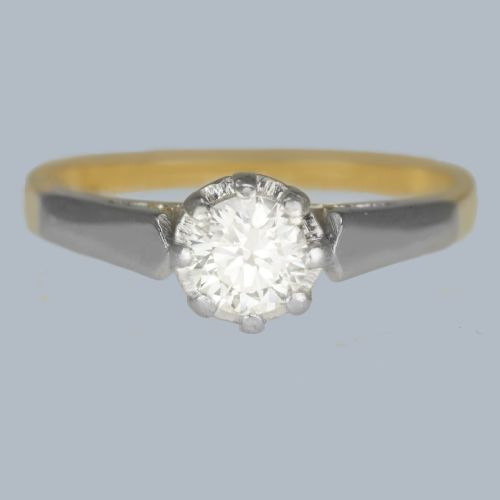
The most common form met here pairs an 18ct yellow or white gold band with a platinum setting that holds the diamond securely. Stones range from subtle old-cut diamonds under a quarter of a carat to substantial stones exceeding one carat.
Pieces from the late nineteenth century sit alongside geometric Art Deco creations and cleaner mid-century lines. Each era brings distinct proportions and shoulder details while keeping the single diamond as the undisputed focus.
Materials and construction
Goldsmiths constructed these bands predominantly in 18. carat gold, utilising both yellow and white varieties alongside platinum for the claw settings. Platinum gained favour during the Edwardian and Art Deco periods for its strength in delicate, minimal settings.
Diamonds found in these pieces display historic cutting styles such as old European cuts, old mine cuts and early round brilliant cuts. These cuts were shaped by hand, giving each stone unique facet patterns that catch candlelight differently than modern machine-cut stones.
Retail Price Guide 2026
Typical UK retail prices for gold solitaire engagement ring, calculated from the Sellingantiques database of over a million retail prices indexed since 2003. This retail price guide relies exclusively on Sellingantiques data; no external sources or auction records are used, so the figures do not describe the wider market.
Old cut diamonds were shaped by eye under lamplight, meaning each stone holds a completely individual sparkle.
Distinctions in quality
Quality rests upon the harmony between the diamond's optical properties and the precision of the metalwork. Higher-tier examples pair exceptional clarity and colour grades with substantial carat weight, certified by grading bodies like the GIA.
The fineness of the setting work separates standard pieces from the exceptional. Master jewellers achieved seamless integration between the platinum claws and the gold shank, ensuring durability without visual bulk.
The Gold Solitaire Engagement Ring Glossary
- Solitaire
- A ring featuring a single prominent gemstone, designed to draw full attention to the centre stone.
- Old European cut
- A predecessor to the modern round brilliant cut, characterised by a small table, high crown and open culet, common in Victorian and Edwardian rings.
- Old mine cut
- An earlier cushion-shaped diamond cut with a near-square girdle and generous facets, typical of nineteenth-century pieces.
- Platinum
- A dense, durable white metal utilised extensively in Edwardian and Art Deco mountings to secure diamonds safely.
- Carat
- The unit of weight used to measure diamonds, directly influencing the physical presence of the stone on the finger.
Frequently Asked Questions
What periods do these rings come from?
The selection includes pieces created during the Victorian, Edwardian, Art Deco and mid-century periods. These eras span from the late nineteenth century through to the middle of the twentieth century.
Each period imparts distinct stylistic traits, from ornate Victorian shoulders to the sharp geometric lines characteristic of Art Deco design.
What metals are used in the bands?
Bands are constructed primarily from 18ct gold, appearing in yellow and white variations. Platinum is frequently combined with gold, particularly in Edwardian and Art Deco examples.
The platinum is typically concentrated around the setting head to provide secure support for the diamond while maintaining a bright white backdrop.
How do old cut diamonds differ from modern ones?
Historic stones feature hand-cut facets that produce a softer, broader pattern of light return compared to precise modern brilliants. These cuts often display smaller tables and noticeable culets at the base.
Such characteristics reflect the hand-working methods of nineteenth and early twentieth-century lapidaries.
How do I care for an antique ring?
Regular gentle cleaning in warm soapy water helps maintain the brilliance of the diamond and clears away daily residues. Avoid harsh chemical dips, particularly with historic settings.
Periodic inspection by a jeweller ensures that the platinum claws holding the stone remain tight and secure.