
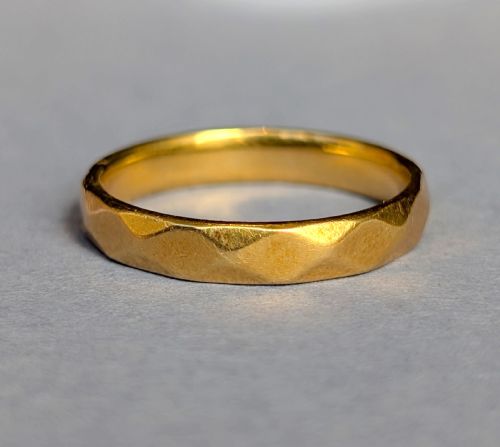



Textured Gold Ring
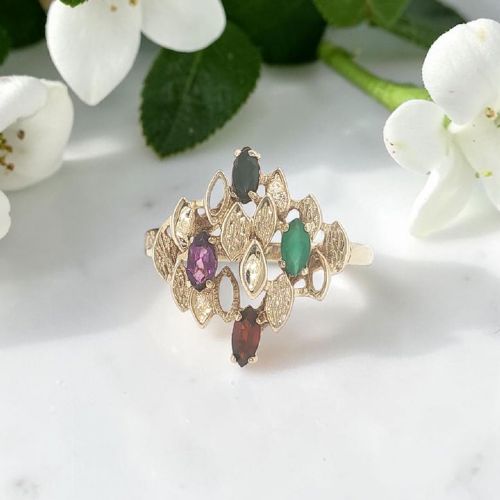
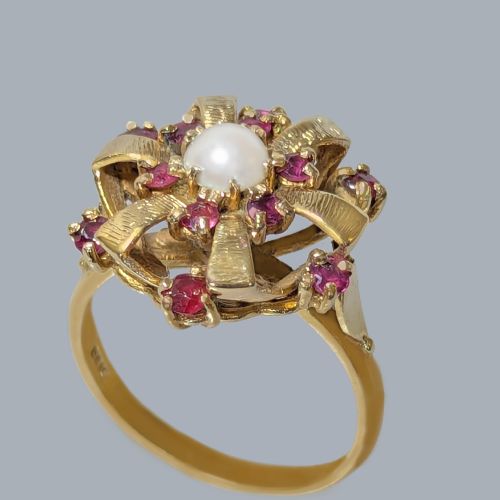
A textured gold ring brings tactile warmth and sculptural depth to the hand, offering distinct character through worked metal.
Understanding the textured gold ring
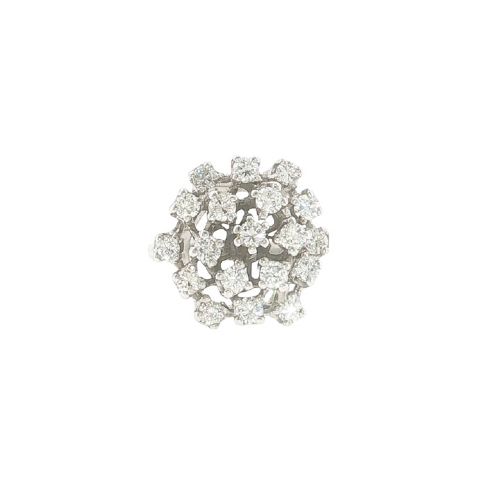
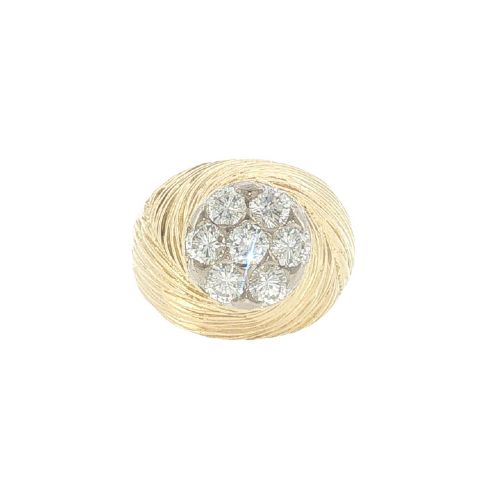
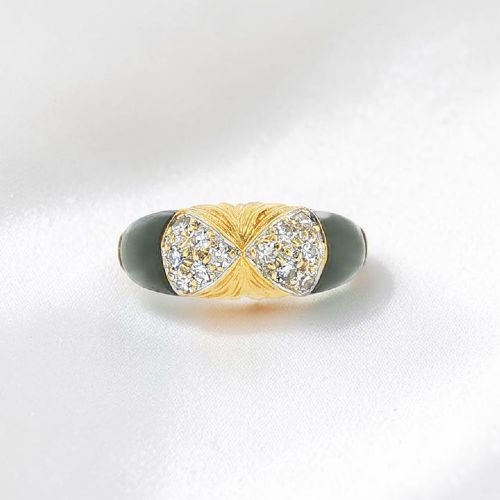
A textured gold ring presents worked surfaces formed into clusters, bombé shapes, solitaire settings, wide bands, and cocktail designs. These pieces span periods from the Edwardian era through the 1950s, 1960s, and 1970s Modernist style, originating from London workshops.
The most likely version to meet on this page is an 18ct gold ring incorporating diamonds, rubies, or emeralds within mid-century forms. The selection moves between sleek modernist bands and prominent cocktail clusters.
Materials and construction
Every piece in the evidence is formed from 18ct gold, shaped into textured surfaces, wide bands, and three-dimensional bombé silhouettes. This metal provides the heavy substance required to support intricate surface manipulation.
Gemstones such as diamonds, rubies, and emeralds are integrated into the gold structures, appearing in cluster arrangements, solitaire settings, and rich cocktail configurations.
Retail Price Guide 2026
Typical UK retail prices for textured gold ring, calculated from the Sellingantiques database of over a million retail prices indexed since 2003. This retail price guide relies exclusively on Sellingantiques data; no external sources or auction records are used, so the figures do not describe the wider market.
Gemstone selections across the records feature diamonds, rubies, and emeralds set within cluster and solitaire forms.
Distinctions in quality
Quality rests in the conviction of the metalwork, where the depth and execution of the texture dictate the visual weight of the design. Masterful hammering or casting creates dynamic play across the gold surface rather than flat uniformity.
The integration of gemstones also separates tiers of work, with secure claw or cluster settings holding diamonds, rubies, or emeralds in balanced proportion to the surrounding 18ct gold.
Kutchinsky
The Textured Gold Ring Glossary
- Bombé ring
- A ring characterised by a strongly domed, bulging profile that rises high from the finger. This rounded volume allows ample space for clustered gemstones and heavy textured gold.
- Cocktail ring
- A large, striking ring designed to draw attention during evening wear. These pieces frequently combine coloured stones and diamonds within prominent mid-century settings.
- Solitaire ring
- A ring featuring a single prominent gemstone, most commonly a diamond. In these examples, the focus remains on the relationship between the central stone and the surrounding gold shank.
- Cluster ring
- A design where multiple smaller gemstones are grouped closely around a central stone. This arrangement maximises surface brilliance and creates a dense floral or geometric motif.
Frequently Asked Questions
How do I wear a cocktail ring?
A cocktail ring is designed to stand alone on the hand due to its prominent volume and commanding presence. Wearing it on the ring finger or middle finger allows the textured gold and gemstone clusters adequate space.
Because these pieces feature substantial domed or wide band constructions, pairing them with minimal additional hand ornaments ensures the design remains the focal point.
What defines a modernist ring?
Modernist rings break away from traditional floral or classical motifs in favour of abstract geometry, sculptural forms, and heavy surface texture. These pieces often utilise 18ct gold to create organic or architectural shapes.
Originating strongly in the mid-century decades, this style prioritises the physical presence of the metal alongside carefully integrated diamonds or coloured stones.
How do I care for 18ct gold?
Eighteen-carat gold possesses a rich hue and sufficient durability for regular wear, though textured surfaces require gentle maintenance. Cleaning should involve warm water, mild soap, and a soft brush to lift debris from recessed grooves without flattening the finish.
Store the ring separately from other jewellery to prevent abrasive contact against softer gemstones like emeralds or delicate gold textures.
What is a cluster setting?
A cluster setting groups several diamonds or coloured gemstones tightly together to create the visual impact of a much larger single stone. This technique maximises light reflection across multiple facets.
In mid-century pieces, these clusters are frequently framed by heavily textured 18ct gold, enhancing the contrast between polished stones and worked metal.