


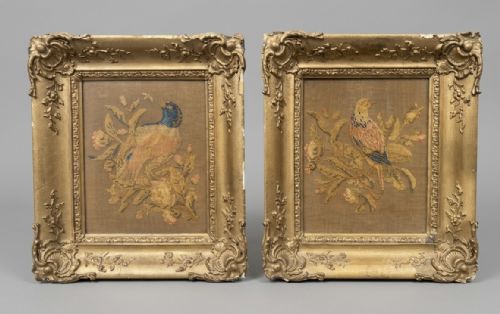


Gold Silk Embroidery
Gold silk embroidery brings centuries of fine needlework, metallic thread and silk together in framed panels and garments.
Gold Silk Embroidery
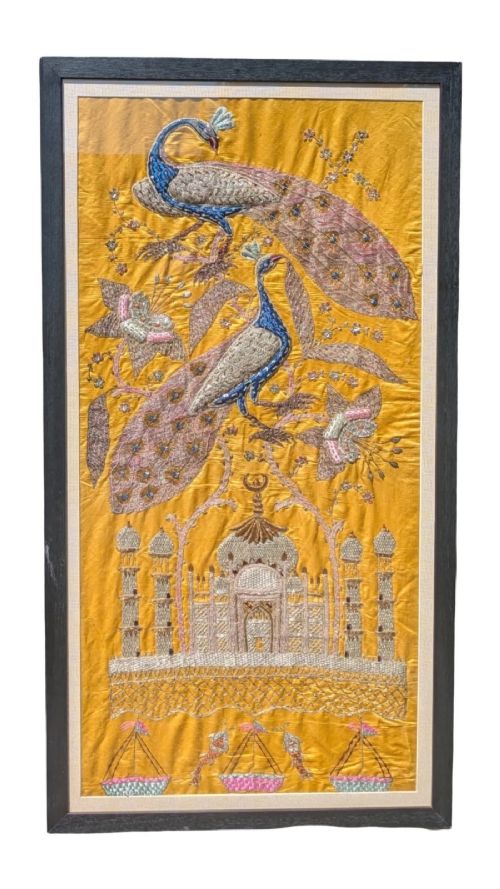
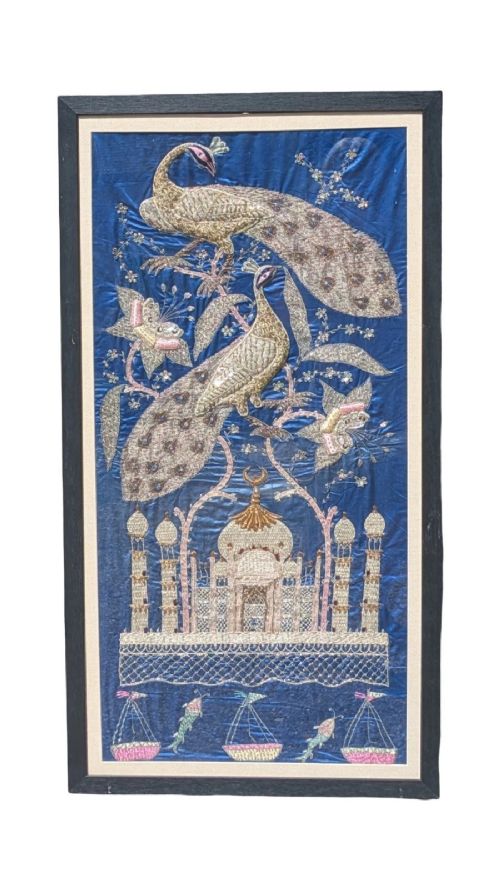
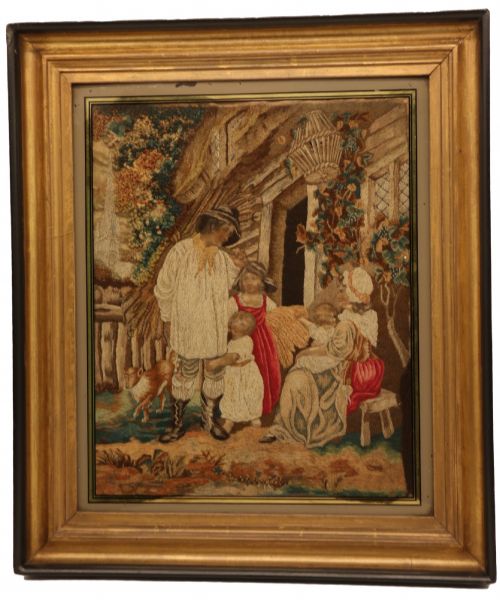
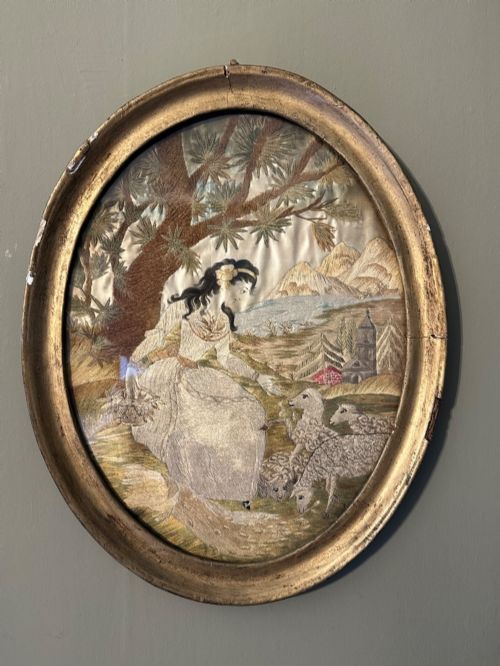
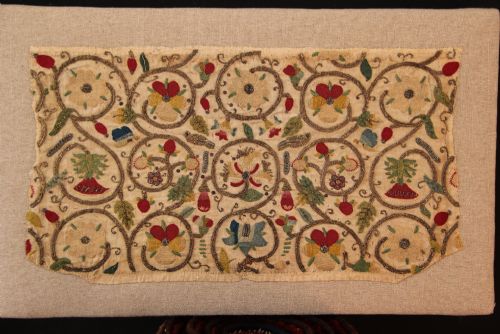
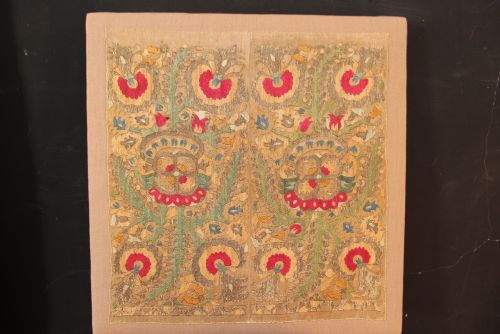
Gold silk embroidery encompasses framed needlework pictures, textile art, panels and historical garments created across multiple centuries. Buyers encounter English, Ottoman, Chinese, Indian and European works spanning the seventeenth century through to the early twentieth century.
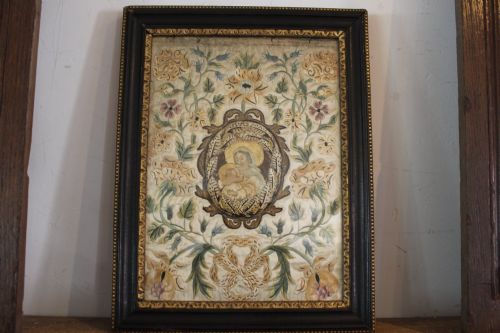
The selection ranges from small framed silk pictures and coifs to large wall art, embroidered robes and panels featuring metallic thread, wool and glass components. Many examples arrive mounted in original giltwood or black glass frames.
English needlework pictures and Regency silk work appear alongside Ottoman fragments, Qing Dynasty pieces and Qajar Dynasty garments, reflecting a global tradition of needlecraft.
How they were made
Maker's materials combine silk grounds and linen foundations with metallic thread, gold-wire and wool yarns. Artisans utilised hand-painting techniques alongside needlework stitches such as long stitch and crewel work.
Surviving pieces often incorporate specialised elements like stumpwork relief, glass accents and watercolor details. Artisans mounted finished textiles into wooden, giltwood or water-gilded frames for preservation and display.
Periods represented span from the seventeenth century through Georgian, Regency and Victorian eras up to nineteen thirty.
What varies in quality
Quality rests upon the preservation of the delicate silk and metallic threads, alongside the crispness of the original needlework. Intricacy of design, such as figurative detail in historical scenes or complexity of metal thread work, separates standard examples from exceptional ones.
The integrity of the mounting matters significantly, as pieces retained in their original period giltwood or black glass frames preserve a more complete historical context.
The Gold Silk Embroidery Glossary
- Metallic Thread
- A thread wrapped in or composed of metal, often gold or silver, used in embroidery to create reflective highlights. It adds rich texture and luminosity to historical textile panels.
- Stumpwork
- A raised embroidery style popular in the seventeenth century that uses padded foundations to create three-dimensional figures. It frequently depicts historical or biblical scenes.
- Giltwood
- Wood that has been coated with a thin layer of gold leaf or gold paint. Frames utilising this finish frequently accompany period needlework pictures.
- Coif
- A close-fitting cap worn in the seventeenth century, often heavily embroidered with silk and metal threads. These items demonstrate domestic needlecraft of the period.
- Long Stitch
- An embroidery technique where stitches span a considerable length to create smooth fills and pictorial effects. It appears frequently in Regency silk work pictures.
Gold Silk Embroidery: Frequently Asked Questions
How do I care for framed silk embroidery?
Keep textile art away from direct sunlight to prevent the silk and metallic threads from fading or degrading over time. Stable indoor humidity and temperature protect the delicate fibres and wooden frames.
Avoid hanging pieces in damp environments like kitchens or bathrooms. Professional conservation framing using UV-filtering glass offers the best protection for older needlework.
What is stumpwork embroidery?
Stumpwork is a raised embroidery style prominent in seventeenth-century England. Artisans used padding, wood moulds or wire foundations to make figures and motifs stand out from the background.
These pieces often depict royalty, animals or botanical elements using silk and metal threads. The technique requires careful handling due to the fragile nature of the raised elements.
How do I identify a Regency silk picture?
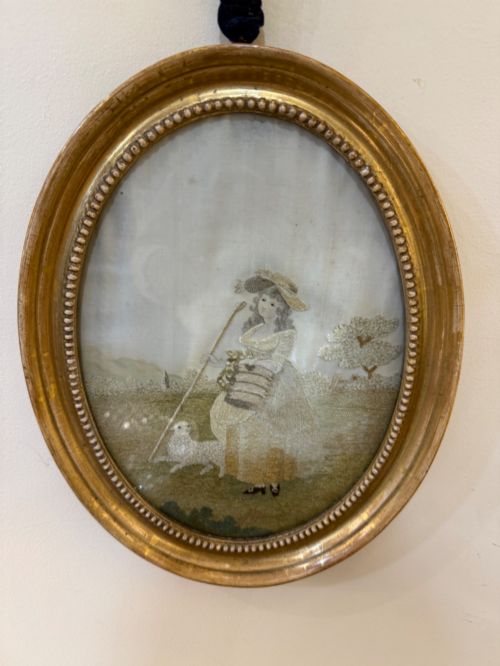
Regency silk pictures typically feature fine long stitch embroidery combined with hand-painted facial details on silk. They often depict pastoral scenes, classical figures or contemporary events.
Many of these works survive in their original black glass and giltwood frames. The stitching style and material composition help distinguish them from later Victorian needlework.
Are these textiles meant to be wall art?
Most pieces catalogued here were created for display, either mounted as framed pictures or constructed as decorative wall hangings. Historical garments and panels were similarly valued for their visual impact.
Framed textile art allows delicate silk and metallic threads to be exhibited safely without direct handling. Proper framing protects the fabric from dust and physical damage.