





Silk Needlepoint Panel
A silk needlepoint panel brings centuries of meticulous textile art and quiet domestic history directly onto a wall.
Silk Needlepoint Panel
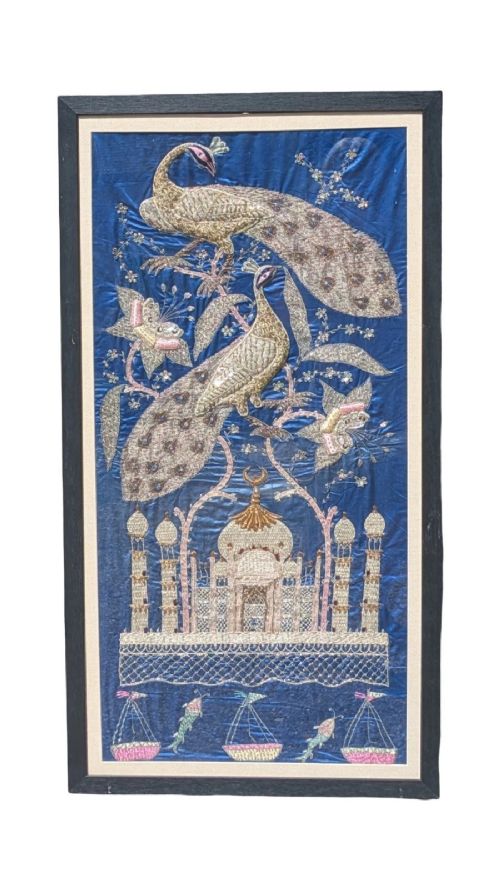
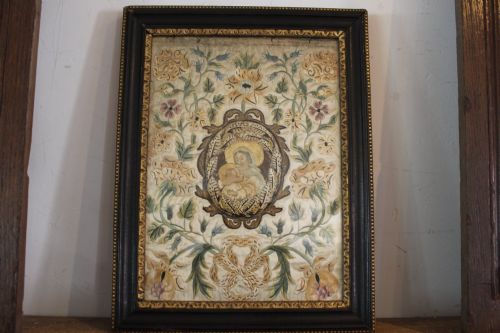
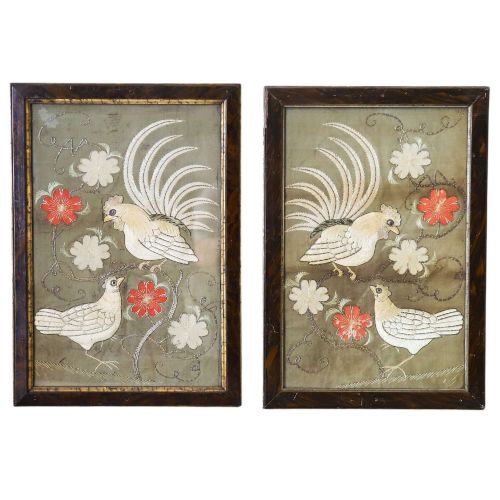
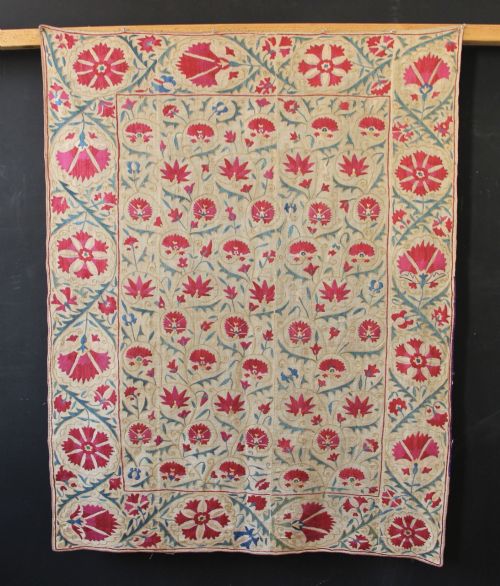
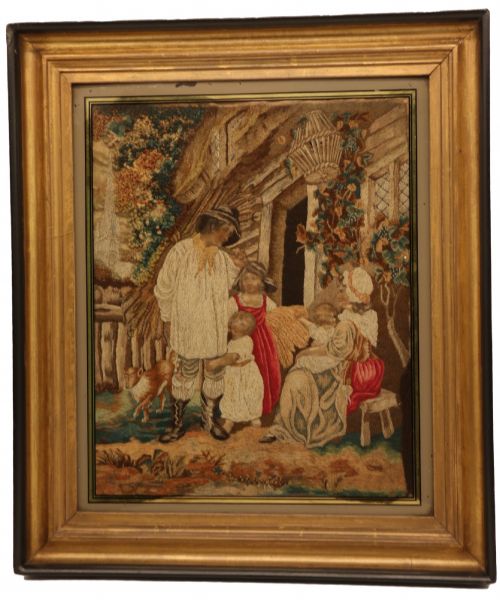
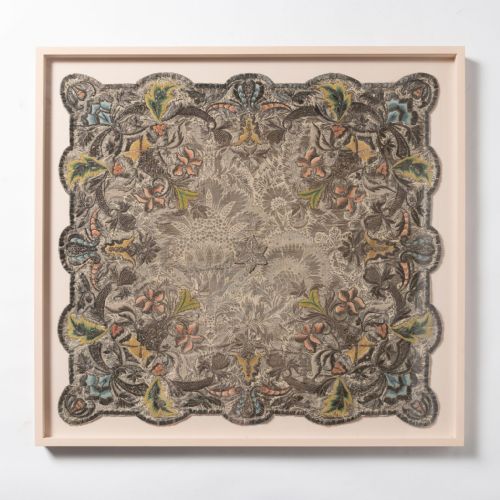
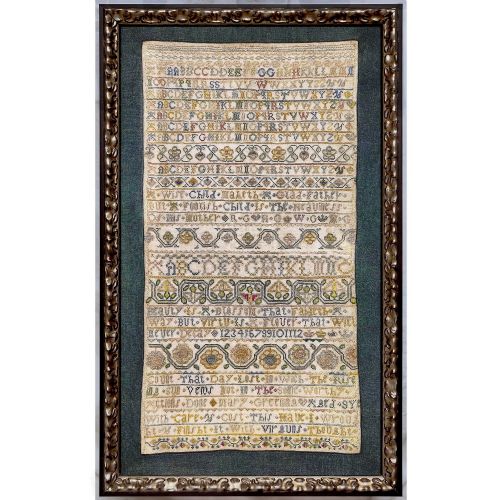
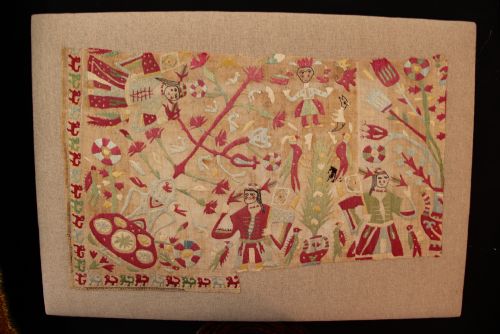
A silk needlepoint panel encompasses framed textile art, pictorial needlework pictures, samplers, and decorative hangings worked in various historical periods. The selection includes everything from early English band samplers and pastoral farming scenes to French cockerels, Chinese garden birds, and Indian embroideries.
Pieces from the seventeenth, eighteenth, and nineteenth centuries dominate the selection, alongside items from the early twentieth century. Buyers encounter framed wall art, cushion covers, coifs, and bedsheet borders originating from England, France, Italy, Greece, China, and India.
How they were made
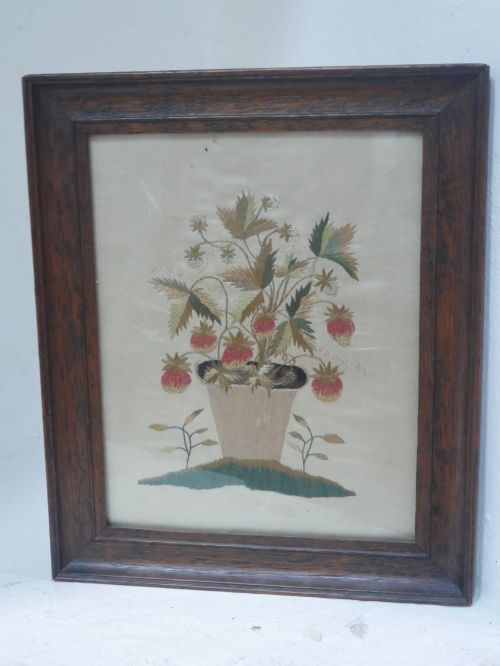
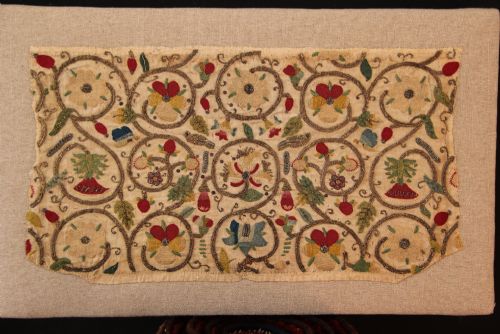
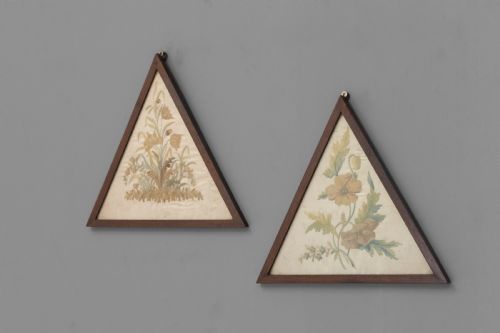
Maker's hands combined silk thread, wool, and metallic thread upon grounds of linen and silk, frequently integrating hand painting and glass elements within wooden or giltwood frames. Artisans utilised silk floss for fine pictorial detail, building pastoral scenes, botanical studies, and figurative compositions stitch by stitch.
Techniques range from counted thread samplers and crewel work to intricate needlework pictures executed in a baroque or classical taste. Many surviving panels retain their original framing or sit behind protective glass, preserving delicate fibres from atmospheric wear.
Materials recorded across the archive include silk floss, wool, linen, glass, wood, giltwood, and gold leaf applied to framed wall art and samplers.
What varies in quality
Quality rests upon the crispness of the stitch work, the preservation of the silk fibres, and the complexity of the pictorial design. Finer examples display intricate shading, sophisticated use of metallic thread, and well-executed facial expressions or botanical accuracy.
The survival of the original ground material and the integrity of the period frame contribute substantially to the standing of a panel. Pieces that retain vibrant colouration in the silk floss and crisp legibility in dated samplers represent the upper echelon of surviving needlework.
Mary Greening·Louiss Elkins·Elizabeth Horn·Mary Mason·Martha Hall·Mary Street
The Silk Needlepoint Panel Glossary
- Band sampler
- A long, narrow piece of linen worked with horizontal rows of varying embroidery patterns and stitches. Young makers practiced and demonstrated their needle skills on these before progressing to complex pictorial works.
- Silk floss
- Unspun silk fibres used for embroidery, prized for a high gloss and smooth texture. It yields delicate tonal gradations in pictorial panels.
- Coif
- A close-fitting cap worn in the sixteenth and seventeenth centuries, frequently decorated with elaborate surface embroidery in silk and metal thread.
Silk Needlepoint Panel: Frequently Asked Questions
How were silk needlework panels displayed historically?
Needlework panels were typically framed behind glass to protect delicate silk and metal threads from dust and light damage. Many functioned as decorative wall art within domestic interiors, while others served practical roles as cushion covers or screen panels.
Over time, owners remounted fragile textiles into period wooden or giltwood frames to ensure their continued survival. This framing tradition preserved the textile art for modern collectors to hang directly upon walls.
How do I identify a seventeenth century sampler?
Seventeenth century examples often feature band samplers with scattered motifs, muted natural dye palettes, and coarse linen grounds. The stitching relies heavily on counted thread techniques executed with wool and early silk threads.
Signatures or initials worked into the linen often provide clues to the young maker or the date of execution. Stylistic markers like stylized flora and fauna align with the Stuart period aesthetic.
What is the difference between a sampler and a pictorial panel?
Samplers primarily record a variety of stitches, alphabets, and practice motifs arranged in horizontal bands or grids. They frequently include the maker's name, age, and date as an exercise in proficiency.
Pictorial panels focus instead on a singular narrative scene, such as a pastoral farming landscape, a literary story, or botanical subjects like a pot of strawberries. These use painterly needlework techniques to create perspective and depth rather than displaying technical stitch exercises.
How should I care for a framed textile?
Protect antique silk needlework from direct sunlight to prevent the fading of natural dyes and silk floss. Keep the panels away from high humidity and fluctuating temperatures to safeguard the fragile organic fibres.
Leave the original framing and backing undisturbed whenever possible, as historical mountings form part of the object's provenance. Professional textile conservators should handle any necessary cleaning or restitching.