


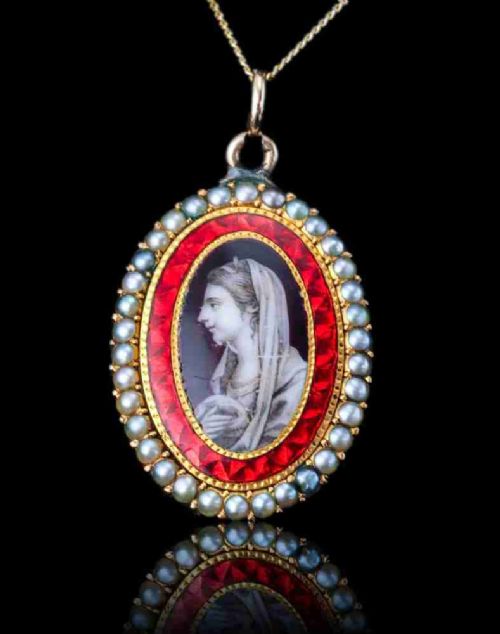


Gold Portrait Miniature Jewellery
Gold portrait miniature jewellery brings hand-painted likenesses and silhouetted profiles close to the heart as wearable keepsakes.
Gold Portrait Miniature Jewellery
Gold portrait miniature jewellery encompasses pendants, lockets, rings, brooches, and stick pins designed to encase intimate likenesses of individuals. When you search for gold portrait miniature jewellery, you encounter pieces from the Georgian, Victorian, and Edwardian eras.
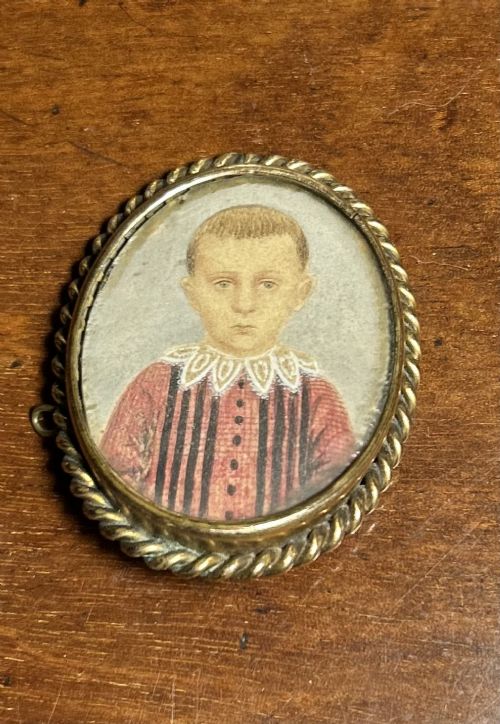
The selections on this page feature hand-painted watercolours, enamels, and glass set within yellow gold frames of various purities alongside copper elements. These wearable artworks capture family members, notable figures, and romantic interests across centuries of craftsmanship.
Materials and Construction
Goldsmiths shaped frames in 9ct, 14ct, 18ct, and 22ct gold, occasionally incorporating gilt bronze or enamel borders to complement the miniature within. Protective glass covers delicate watercolours and pigments, safeguarding the detailed brushwork from dust and moisture.
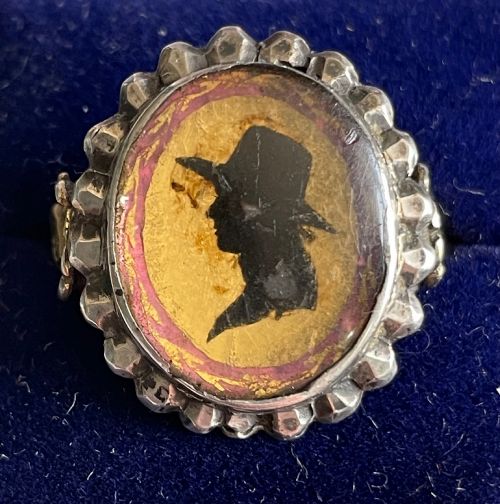
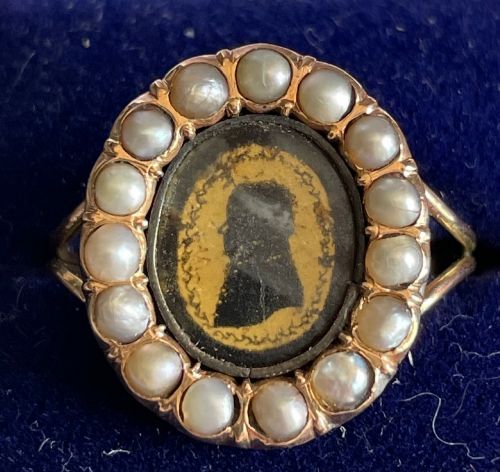
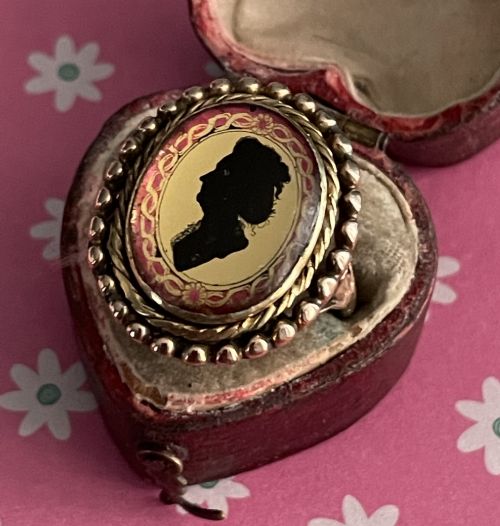
Artists painted likenesses using fine watercolours and pigments on paper or ivory, while silhouette specialists utilised paper cut-outs or reverse-painting techniques like verre eglomise. Enamel work involved fusing powdered glass to metal surfaces under high heat to create permanent, glossy portraits.
Several pieces double as secret hair lockers, preserving locks of a loved one's hair behind the painted portrait.
Assessing Quality and Execution
The finesse of the painted portrait or silhouette dictates the overall standard of the piece, distinguishing master practitioners from provincial artisans. Delicacy in facial expression, proportion, and shading elevates a miniature far beyond a basic likeness.
Mount construction and the weight of the gold frame contribute significantly to the distinction between pieces. Solid gold settings paired with pearls or intricate enamel detailing represent higher tiers of period production.
Henry Bone ARA·John Miers·Christian Friedrich Zincke
The Gold Portrait Miniature Jewellery Glossary
- Verre eglomise
- A technique of applying cold painting and gold leaf to the reverse side of glass. This method creates a reflective, shimmering backdrop often seen in silhouette rings.
- Silhouette
- A solid black profile portrait cut from paper or painted against a pale background. These portrayals offer striking likenesses without relying on polychrome pigments.
- Enamel
- Vitrified glass fused to a metal substrate through firing. It provides durable colour and a glossy finish for miniature portraits.
- Pendant locket
- A hinged casing worn on a chain designed to hold a miniature portrait and sometimes a lock of hair. These items combine ornamental wear with secret personal mementos.
- Stick pin
- A long pin with an ornamental head used to secure cravats or lapels. Miniature portraits on stick pins allowed wearers to display sentiments discreetly.
Gold Portrait Miniature Jewellery: Frequently Asked Questions
How do I date a portrait miniature?
Dating relies on costume, hair styling, and the framing techniques characteristic of periods like the Georgian and Victorian eras.
Examining the metal purity marks and the manner of construction provides further chronological clues.
What is verre eglomise?
Verre eglomise involves painting and applying gold leaf to the reverse of glass panels.
This method protects the delicate pigments underneath while adding a reflective sheen.
How were these pieces worn?
Owners wore them as pendants on necklaces, secured them as brooches on garments, or fitted them onto rings.
Stick pins and lockets also allowed people to keep portraits close throughout the day.
Are these portraits painted on ivory?
Many period miniatures utilise ivory as a painting surface because its translucent quality mimics human skin.
Artists also employed paper and enamel depending on the workshop and the desired finish.