
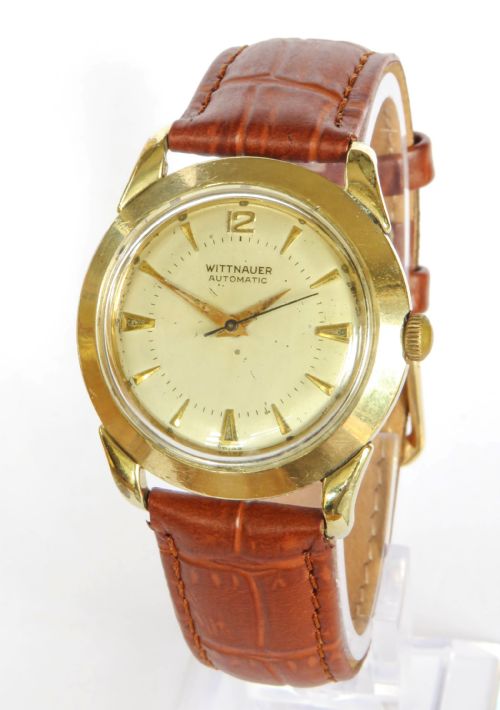
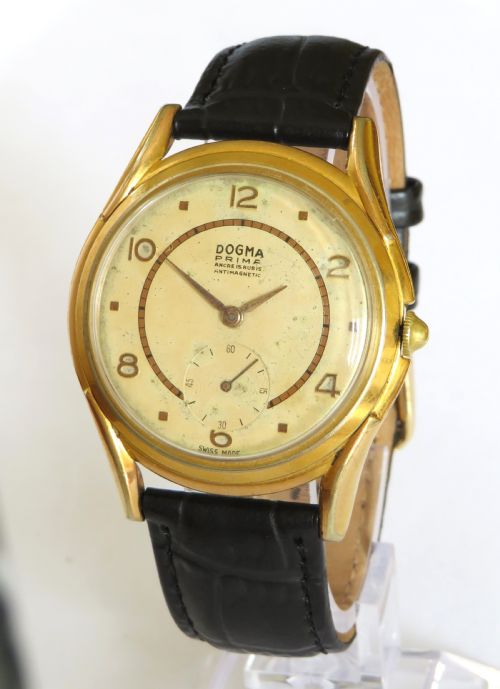
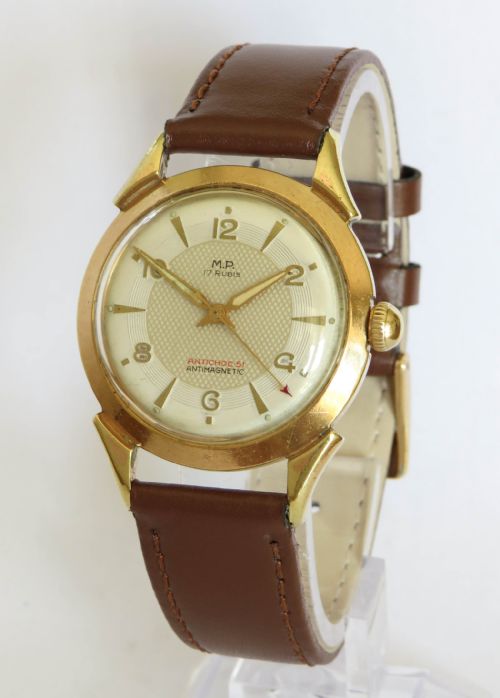
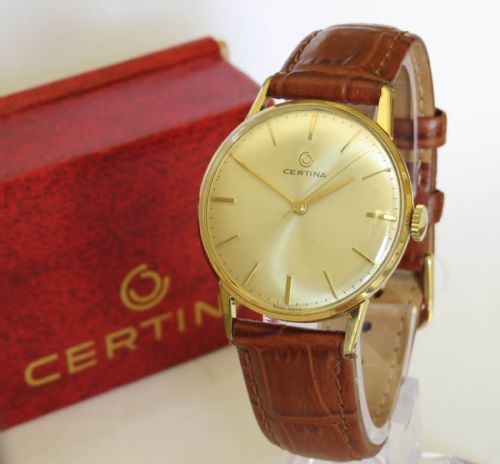
Gold Plated Wrist Watch
A gold plated wrist watch delivers the warmth of precious metal alongside mid-century mechanical charm without the weight of solid gold.
Gold Plated Wrist Watch
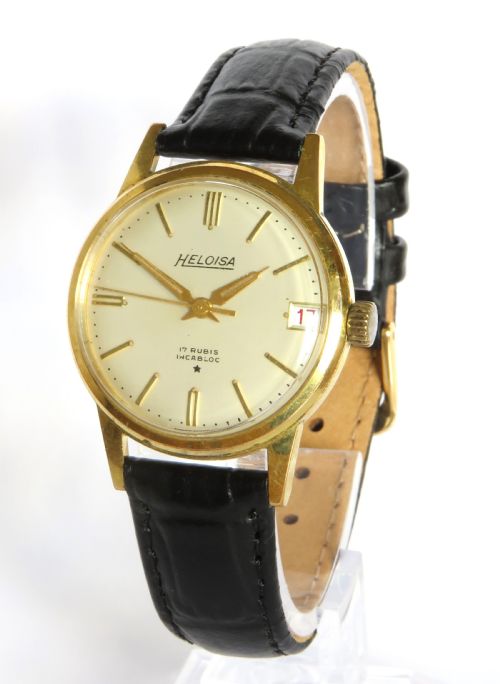
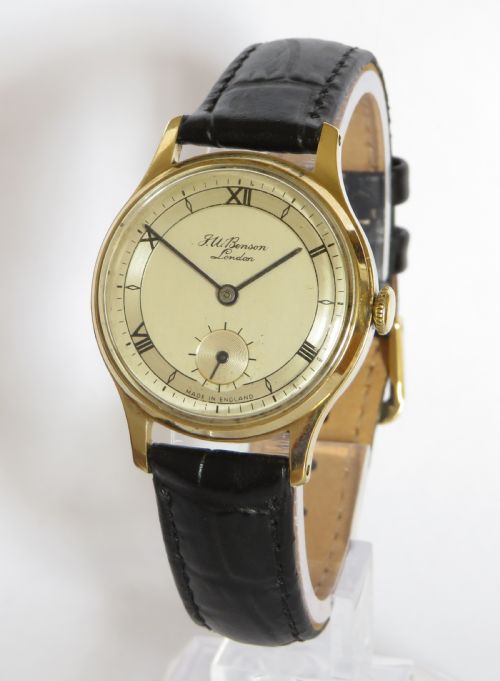
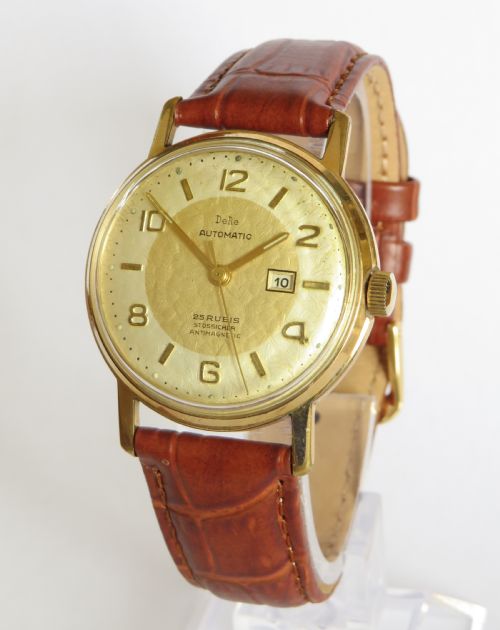
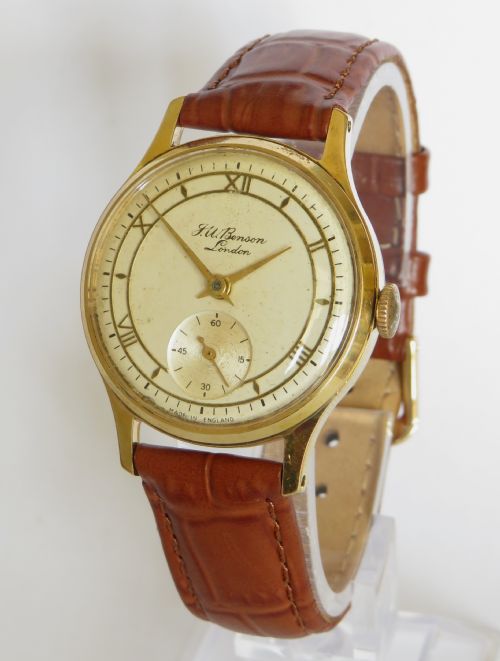
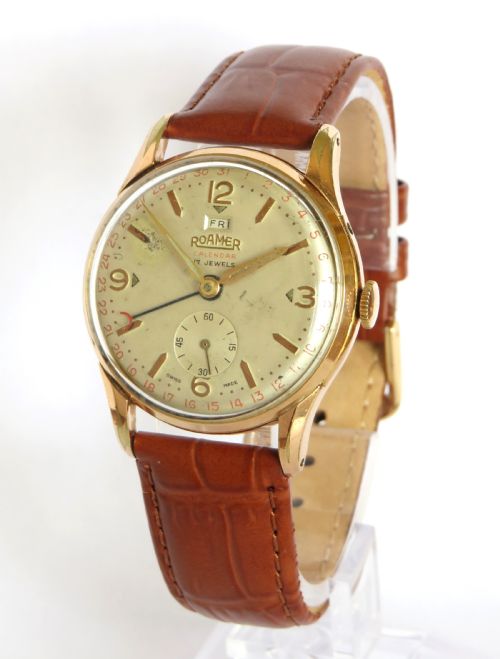
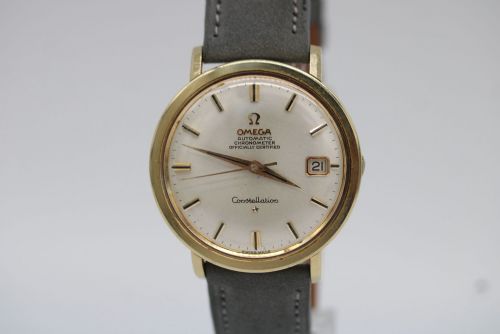
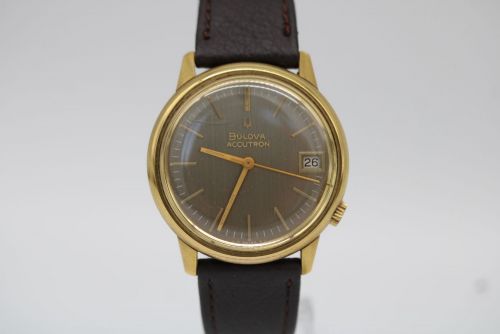
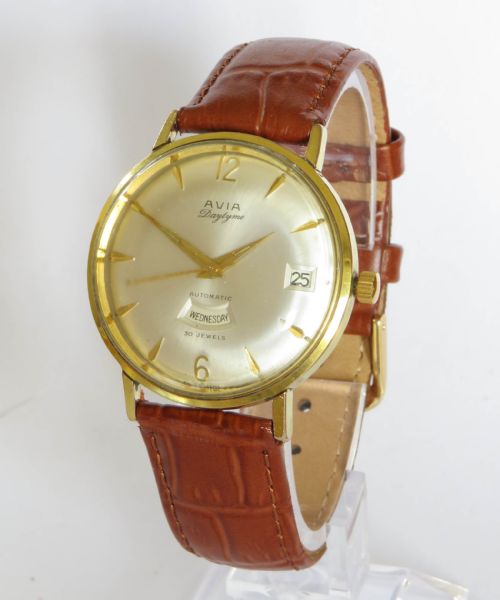
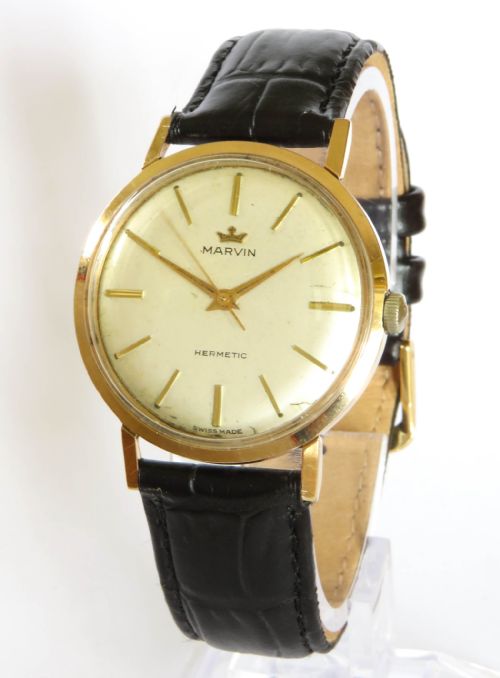
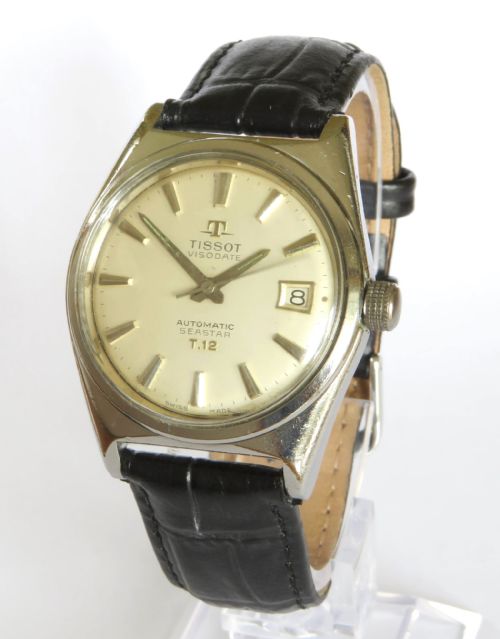
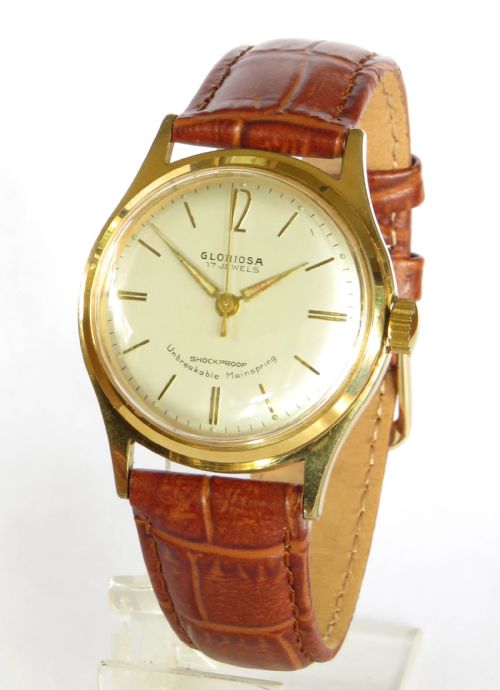
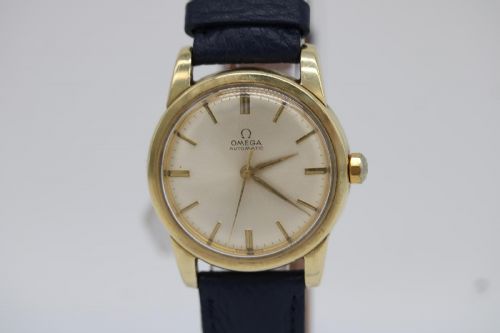
A gold plated wrist watch on this page typically points to gentleman's and lady's timepieces spanning the mid-twentieth century, with strong representation from the 1950s and 1960s. These pieces encompass minimalist dress models as well as functional calendar and chronograph designs from prominent Swiss and international makers.
The dominant forms follow Mid-Century Modern and Art Deco design paths, utilising round, square, and cushion-shaped cases. Most examples pair a gold plated metal exterior with traditional leather straps, though stainless steel casebacks frequently appear on the reverse to protect the movement.
The inventory leans heavily towards gents models produced during a golden era of mechanical watchmaking. Buyers will find both manual wind and automatic movements, often housed in cases measuring between thirty-two and thirty-seven millimetres.
Materials and construction
Construction relies upon a base metal core bonded with a thin layer of gold, providing the appearance of solid precious metal while maintaining structural rigidity. Acrylic glass or acrylic crystal protects the dial, offering a characteristic warm dome that modern synthetic sapphire rarely duplicates.
Dials incorporate applied metal markers, intricate sunburst finishes, and detailed subsidiary dials for chronographs or seconds. Movements inside these gold plated housings depend on precision gear trains, jewelled bearings, and manual or automatic winding mechanisms driven by a mainspring.
Gold Plated Wrist Watch Retail Price Guide 2026
Typical asking prices for gold plated wrist watch among the pieces listed under this phrase on Sellingantiques today, from the lower quarter to the upper quarter. They describe what is for sale here now, not the wider market.
Many of these vintage timepieces still tick faithfully after decades in a drawer, proving that proper mechanical engineering outlives its owners.
Distinguishing quality across examples
Quality differences in a gold plated wrist watch rest largely on the thickness and preservation of the metal layer over the underlying case. Uniformity of the plating, particularly around high-wear edges and lugs, separates well-preserved examples from those showing heavy brassing or wear.
The calibre of the movement within dictates the engineering standard, with high-jewel Swiss automatic or manual wind mechanisms commanding greater regard than standard commercial equivalents. Original dial preservation, legible typography, and matching hands also elevate the standing of any individual piece.
Heloisa·Smiths·Roamer·Omega·Bulova·Avia·Marvin·Tissot·Wittnauer·Dogma Prima·Certina·Zenith·Baume·Ensign·Lanco·Eterna-Matic·Felca·Garrard·Mappin·Technos·Consul·Fludo·Breitling·Longines·Ebana
The Gold Plated Wrist Watch Glossary
- Gold Plate
- A layer of gold mechanically bonded or electroplated onto a base metal substrate. This technique allows for a durable golden exterior while keeping the watch accessible.
- Manual Wind
- A mechanical movement requiring the wearer to turn the crown regularly to tension the mainspring. These movements lack a rotor and often allow for a slimmer case profile.
- Automatic
- A self-winding mechanical movement driven by an internal weighted rotor that moves with the wearer's wrist. This innovation kept the mainspring fully tensioned during daily wear.
- Calibre
- The specific manufacturer's designation for a particular watch movement design. Collectors use this number to identify the exact internal architecture and generation of the mechanism.
- Chronograph
- A watch equipped with a secondary stopwatch function controlled via pushers on the case. These complications require intricate gear assemblies to measure elapsed time independently of the time-of-day display.
Gold Plated Wrist Watch: Frequently Asked Questions
How do I wind a manual watch?
Gently rotate the crown clockwise between your thumb and forefinger until you feel firm resistance. Stop immediately at that point to avoid over-tensioning the internal mainspring.
For daily wear, establish a consistent morning routine to wind the piece before placing it on your wrist. This ensures steady power delivery throughout the day.
What is a calendar watch?
A calendar watch displays the current date alongside the standard hour, minute, and second hands. Some advanced variations incorporate apertures for the day of the week or month.
These functions rely on additional date wheels driven by the primary gear train, requiring manual adjustment during months with fewer than thirty-one days.
How accurate are these vintage movements?
Mechanical watches from the mid-twentieth century typically gain or lose a small number of seconds each day. Regular servicing by a qualified horologist helps maintain optimal timing performance.
Environmental factors such as temperature fluctuations and magnetic fields can also influence the daily rate of a mechanical escapement.