
Gold Pearl Pin
A gold pearl pin brings together precious metal and lustre, forming a compact piece of jewellery that fastens fabric or adorns a lapel.
Gold Pearl Pin
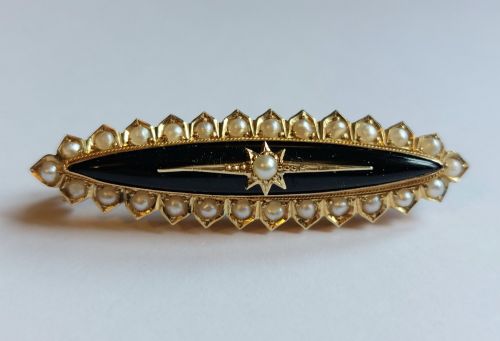
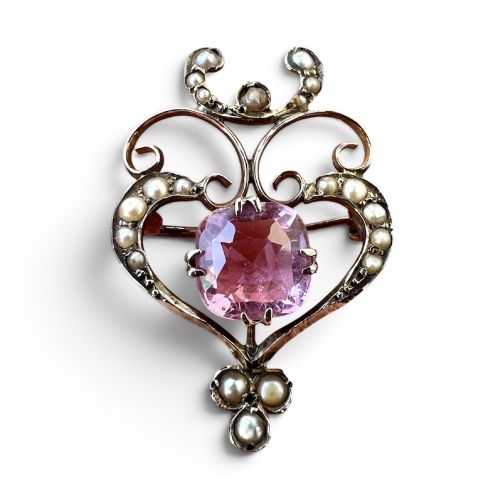
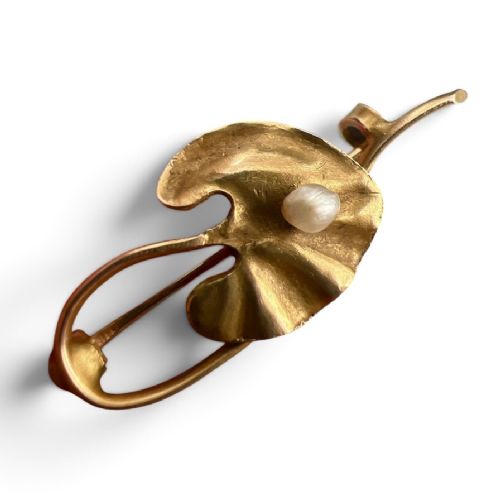
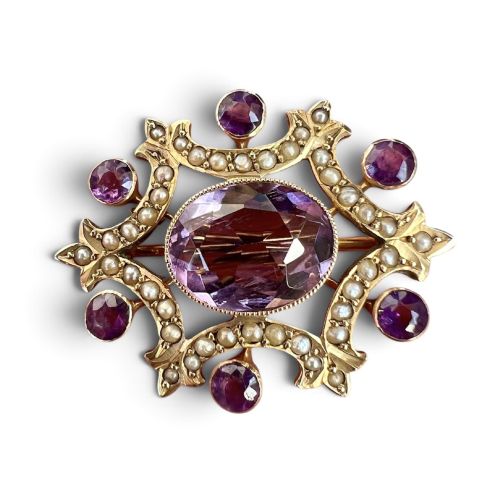
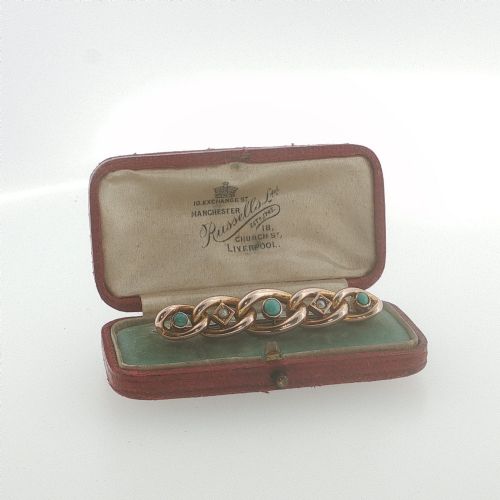
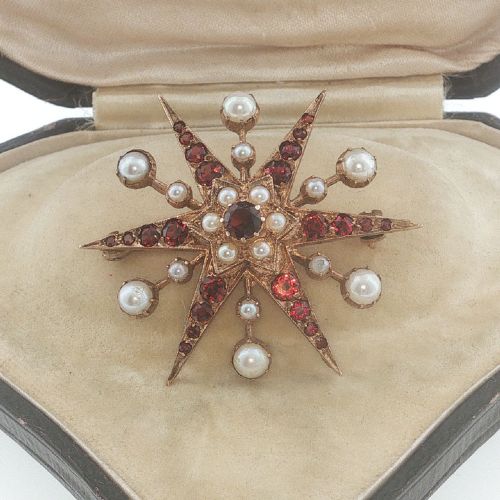
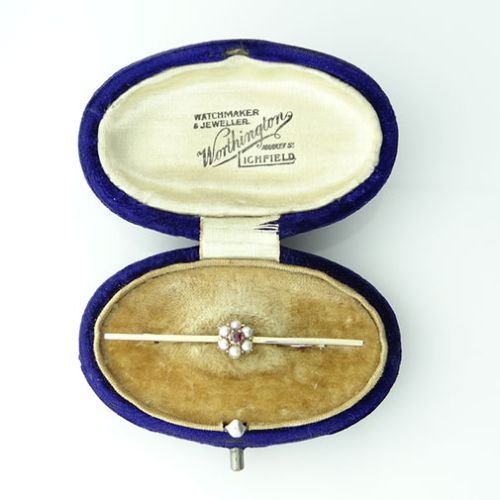
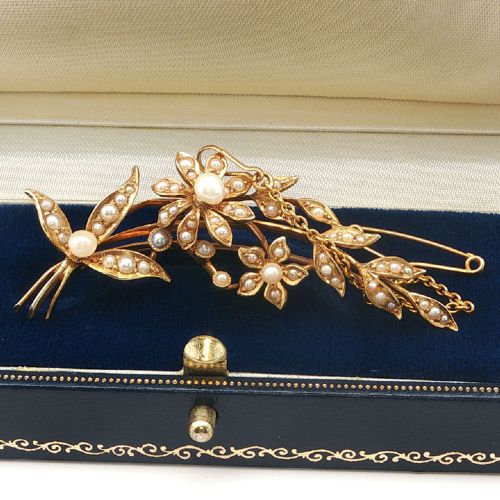
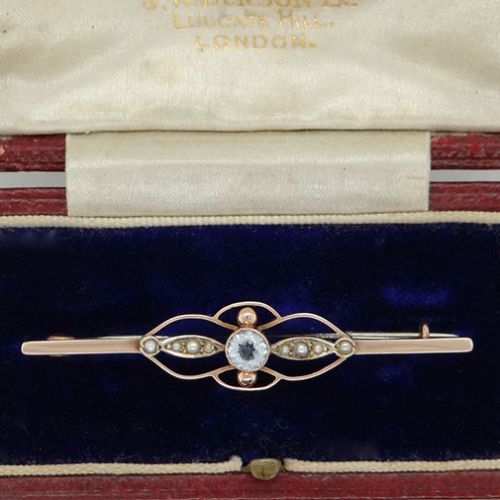
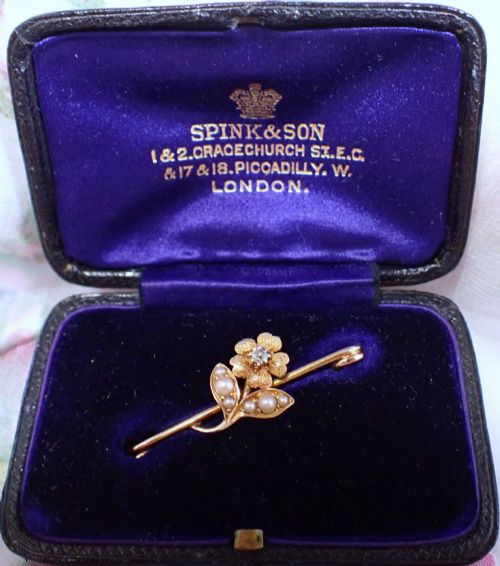
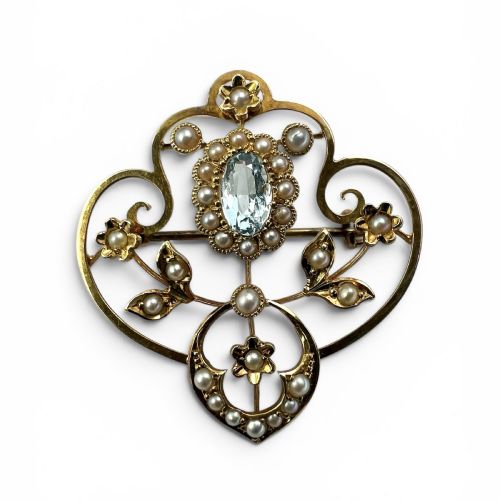
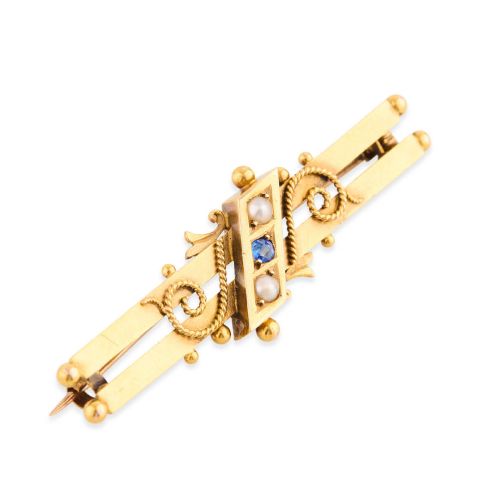
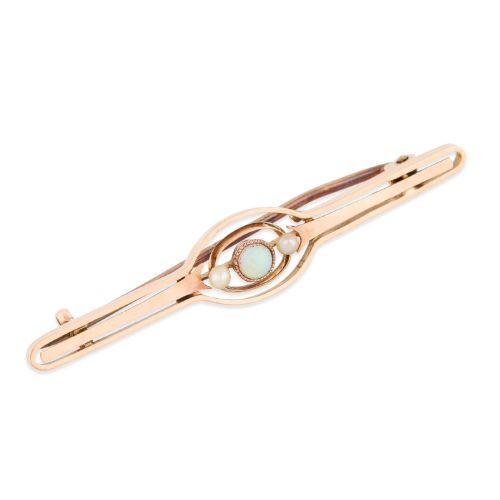
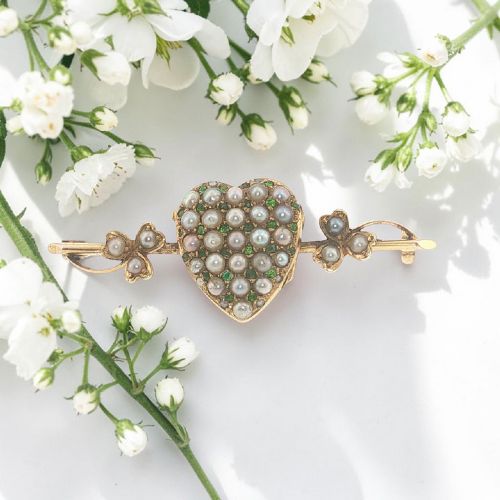
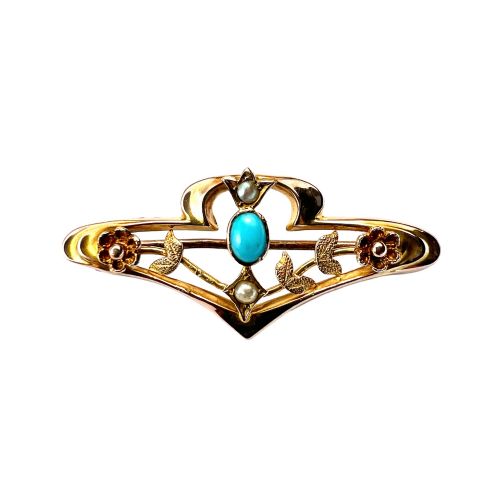
A gold pearl pin usually takes the form of a brooch, bar brooch, stick pin or tie pin, drawing on Victorian and Edwardian designs. These pieces often incorporate motifs such as hearts, stars, crescents, or floral wreaths alongside the central pearl.
The selection ranges across the Victorian and Edwardian eras into the early decades of the twentieth century, including pieces dated around 1900 and 1910. Makers utilised lower and higher karat golds to set these pearls, frequently pairing them with diamonds, coloured gemstones or enamel.
While many survive as individual brooches or stick pins, the wider category encompasses variations linked to specific occasions or badges, such as naval crowns.
Materials and construction
Goldsmiths worked with 9ct, 14ct, 15ct, 18ct, and occasionally 22ct yellow and rose gold to shape the pins, bars, and settings. Pearls were combined with silver mounts or backing in certain Edwardian designs to enhance the brilliance of accompanying diamonds.
Construction techniques involved piercing sheet gold, forming hollow or solid bar brooches, and mounting seed pearls in clusters, halos, or crescent shapes. Stones such as peridot, tourmaline, sapphire, garnet, and diamond were often bezel or collet-set alongside the pearls using traditional hand tools.
Gold Pearl Pin Retail Price Guide 2026
Typical asking prices for gold pearl pin among the pieces listed under this phrase on Sellingantiques today, from the lower quarter to the upper quarter. They describe what is for sale here now, not the wider market.
Listings feature Victorian, Edwardian, and 1930s periods, utilising 9ct, 15ct, and 18ct gold alongside silver, enamel, diamonds, and pearls.
Craftsmanship and materials
Execution of delicate details, such as blue enamel work or precise wirework in heart and star motifs, distinguishes finer workshop production from simpler commercial output. Original elements, including safety chains or fitted boxes, contribute to the integrity of the piece.
Marius Hammer·J W Benson
The Gold Pearl Pin Glossary
- Bar brooch
- A narrow horizontal pin featuring central ornamentation such as a pearl cluster or gemstone.
- Stick pin
- A long pin with a decorative head, originally designed to secure a cravat or lapel fabric.
- Seed pearl
- A very small, naturally formed pearl, often drilled and used in clusters or pavé settings.
- Enamel
- Vitrified glass fused to metal surfaces through heat, producing coloured decorative designs.
- Pierced work
- Metal cut through in intricate patterns to create openwork designs.
Gold Pearl Pin: Frequently Asked Questions
How were gold pearl pins worn?
Victorian and Edwardian wearers fastened these pieces onto collars, lapels, hats, and cravats using the integrated pin mechanism or safety chain.
Stick pins were pushed through neckwear and secured with a small cap or protector at the pointed end.
What is the difference between a brooch and a stick pin?
A brooch typically fastens with a hinged pin and safety catch across a wider surface area of fabric.
A stick pin relies on a long, straight shaft pushed directly through woven material without a traditional clasp.
How can I tell a Victorian pin from an Edwardian one?
Victorian pieces often display heavier gold weights, warmer rose gold tones, and denser cluster or star motifs set with darker gemstones.
Edwardian designs frequently incorporate platinum or silver-topped gold, lighter yellow gold, and airy garland or crescent patterns.
Are pearls in antique pins natural?
Most pearls found in nineteenth and early twentieth-century jewellery predates modern cultured pearl production.
These pieces typically contain natural saltwater or freshwater pearls utilised by period jewellers.