

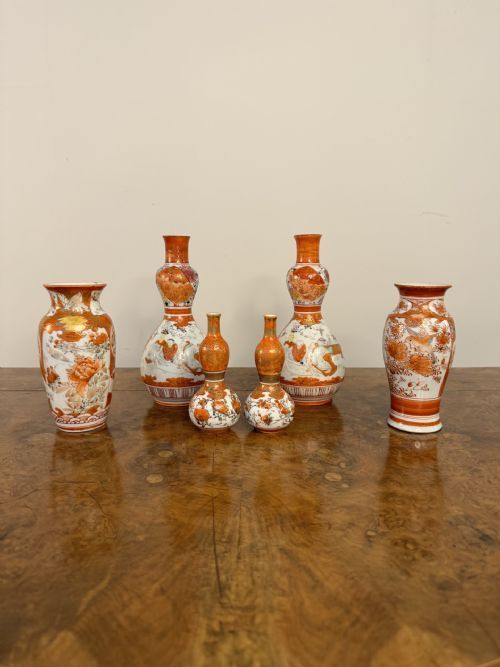


Gold Painted Japanese Vase
A gold painted japanese vase brings intricate Meiji era craftsmanship and rich gilding into a room.
Gold Painted Japanese Vase
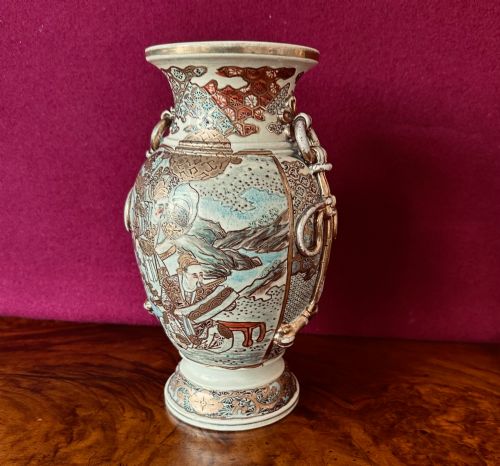
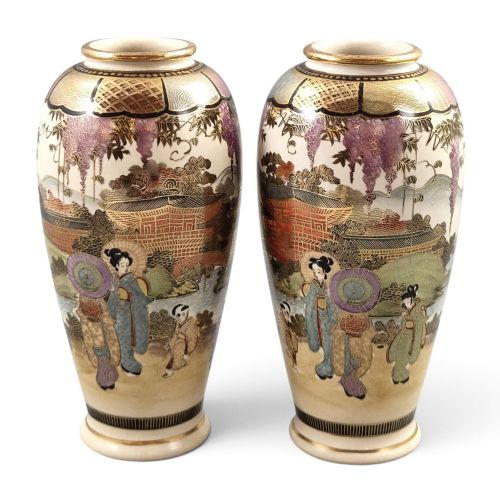
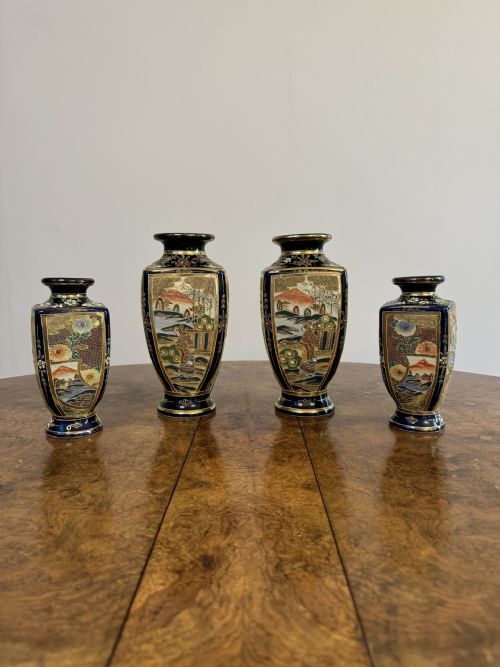
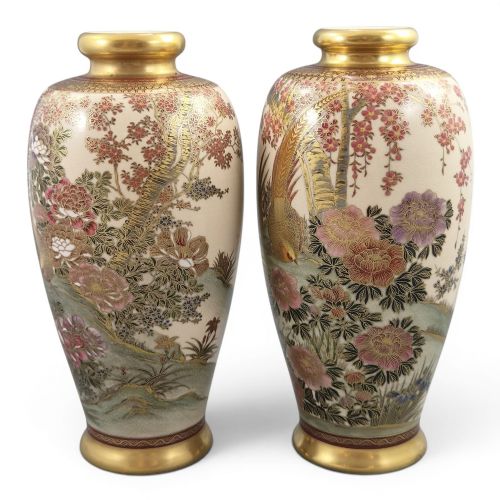
When you search for a gold painted japanese vase, you encounter a selection centred heavily on Satsuma and Kutani wares produced during the Meiji and Showa periods. These vessels range from diminutive miniature vases to monumental garnitures and jardiniere forms, often decorated with figural processions, courtly scenes, and floral motifs.
The objects listed here predominantly originate from late nineteenth and early twentieth century workshops in Kyoto and Kobe. Buyers frequently meet pairs of globular, garlic head, or cylindrical vases featuring detailed hand painting enhanced by heavy gold leaf and enamel highlights.
How They Were Made
Potters shaped earthenware and porcelain bodies into diverse forms including polygonal, flared, and lidded vessels before applying intricate base glazes. Artisans then utilised fine brushwork to paint complex scenes using vibrant enamel pigments alongside extensive gold leaf and gilt details.
Makers layered gold paint and leaf over painted surfaces to create raised decorative effects, particularly on Satsuma earthenware where fine crackle glazes provided a textured ground for figurative compositions.
Listings feature earthenware and porcelain bodies decorated with gold leaf, enamel, and lacquer.
What Varies in Quality
The refinement of the hand painting and the density of the gilding separate standard production pieces from exhibition quality works. Master workshops employed precise brush control for facial expressions and garments, whereas lesser examples display repetitive motifs and heavier, less articulate gold lines.
Signatures from recognised studios and individual artists such as Kinkōzan or Chosei elevate a piece significantly. The crispness of the earthenware or porcelain body and the stability of the enamel glaze further define the tier of the vessel.
Shozan·Manpei·Kinkōzan·Chosei·Hakusan·Hododa·Hattori·Seiko-en Chokei
The Gold Painted Japanese Vase Glossary
- Satsuma Ware
- Earthenware pottery originating from Satsuma Province featuring a characteristic ivory crackle glaze decorated with polychrome enamels and gold. It became immensely popular for export during the Meiji period.
- Kutani
- Japanese porcelain and pottery distinguished by bold pictorial designs, often incorporating rich red and gold palettes alongside detailed figural or nature scenes.
- Meiji Period
- The era in Japanese history spanning from 1868 to 1912, noted for opening trade with the West and producing highly detailed decorative arts for export.
- Garniture
- A set of matching vases or ornamental vessels designed to be displayed together on a mantelpiece or sideboard.
- Jardiniere
- A large ornamental pot or stand designed to hold growing plants or flowers.
Gold Painted Japanese Vase: Frequently Asked Questions
How do I identify Satsuma ware?
Satsuma ware is recognised by its cream coloured earthenware body covered in a fine network of microscopic glaze cracks. Artisans painted detailed scenes over this surface using enamels and gold leaf.
Many pieces bear artist signatures or workshop mon symbols on the base. The texture feels slightly warmer and more porous than standard porcelain.
Where were these vases made?
The majority of these decorative vessels originated in Japanese ceramic centres such as Kyoto and Kobe during the late nineteenth century. Master studios produced them specifically for international export and exhibition.
Specific regional kilns, including Kutani and Satsuma, developed distinct aesthetic traditions in their painting styles and clay bodies.
How should I display them?
Display these vases away from direct sunlight to protect the delicate enamel pigments and gold leaf from fading. Placing them on stable surfaces prevents accidental tipping, especially with taller cylindrical or bulbous forms.
Pair matching vessels symmetrically on sideboards or mantels to highlight their original garniture arrangement.
What does Meiji period mean?
The Meiji period refers to the reign of Emperor Meiji from 1868 to 1912, a time of rapid modernisation and artistic output in Japan. Craftsmen during this era perfected miniature detail and rich gilding for Western collectors.
Pieces from this time often reflect traditional folklore, courtly scenes, and floral motifs rendered with exceptional precision.