




Gold Ormolu Garniture Set
A gold ormolu garniture set brings French period grandeur to a mantelpiece, combining a central clock with matching ornamental urns or candelabras.
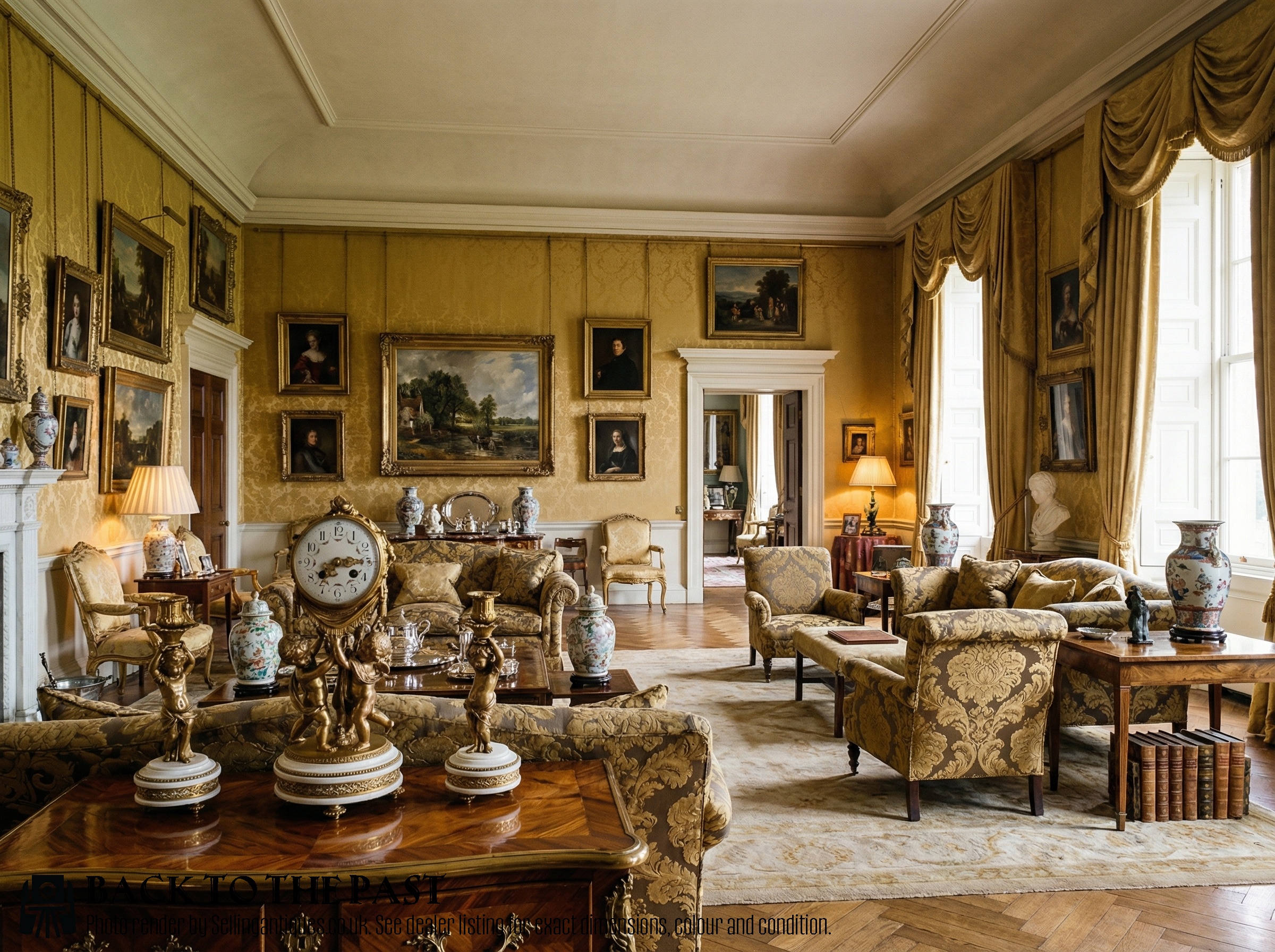
Gold Ormolu Garniture Set
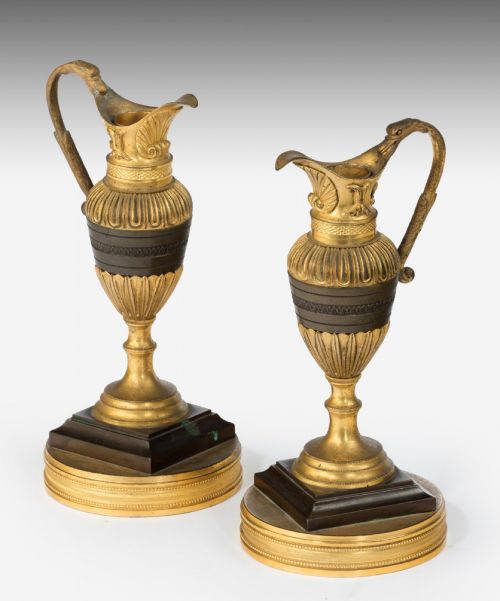
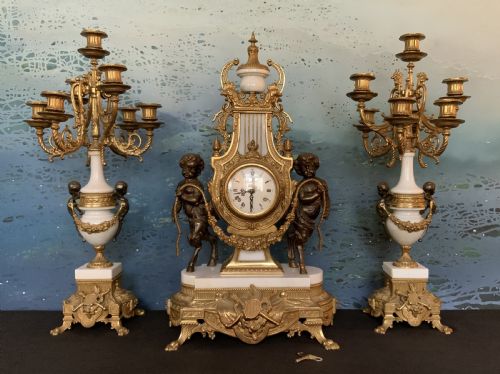
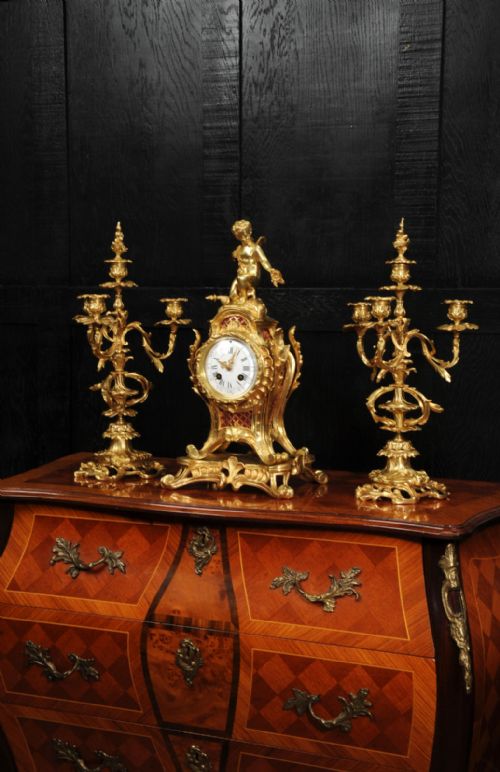
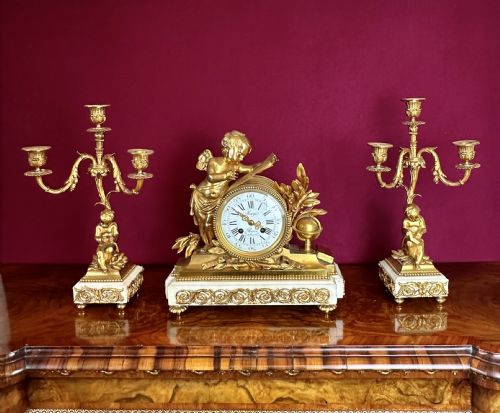
A gold ormolu garniture set comprises a coordinating group of three or more decorative pieces designed to display together on a mantel or sideboard. The central element is typically a striking mantel clock flanked by matching candelabras, urns, or ewers.
These sets span the nineteenth century, with Victorian examples drawing heavily on French Louis XVI and Louis XV revival styles. Neoclassical motifs and ornate rococo flourishes dominate the aesthetic of the period.
Makers utilised rich materials such as white marble, patinated bronze, and enamel dials alongside gilded ormolu. The resulting ensembles offer a cohesive decorative impact that transformed nineteenth-century domestic interiors.
How they were made
Gilt bronze and ormolu elements were cast, chased by hand to sharpen details, and then gilded to achieve a bright, enduring surface. This meticulous metalwork required skilled artisan labour to produce crisp foliage, cherubs, and classical drapery.
Marble components were cut and polished to form solid plinths and column bodies that anchored the heavy metal mounts. Clock movements were precision-engineered by specialist Parisian workshops and fitted with enamel dials.
Several sets feature cheeky bronze cherubs nonchalantly wrestling with clock mechanisms.
What varies in quality
The crispness of the bronze chasing separates ordinary castings from exceptional sculptural work, particularly in the rendering of figures like cherubs or classical foliage. Finer sets retain deep, varied textures and sharp relief rather than smoothed-over details.
The integration of materials dictates the overall success of the piece, with well-fitted marble bases and substantial bronze weight marking out superior craftsmanship. The inclusion of signed clock movements from notable makers elevates the standing of the entire garniture.
Henry Dasson·Raingo Fres Paris·Deniere Paris·A D Mougin·Vincenti·Japy Freres
The Gold Ormolu Garniture Set Glossary
- Ormolu
- Gilded bronze produced by applying a mercury-gilding technique to a brass or bronze base. This process creates a rich, metallic gold surface that characterises nineteenth-century French decorative objects.
- Garniture
- A matching set of ornamental objects designed to be displayed together as a decorative unit. In nineteenth-century interiors, these sets typically centered on a mantel clock flanked by candelabras or urns.
- Candelabra
- A branched candlestick designed to hold multiple tapers. In these sets, they match the architectural style and metalwork of the central clock.
- Ewer
- A large jug with a wide spout, often cast in bronze and ormolu for decorative display. Pairs of ewers occasionally substitute for candelabras in neoclassical garniture sets.
- Enamel
- Vitrified glass fused to metal dials or decorative plaques under high heat. It provides a smooth, durable white surface for painted clock numerals.
Gold Ormolu Garniture Set: Frequently Asked Questions
How do I date these clock sets?
Dating relies on stylistic clues such as the presence of Louis XVI neoclassical symmetry or Louis XV rococo asymmetry. Nineteenth-century pieces often bear maker stamps on the movement backplate or signatures on the bronze mounts.
Materials like white marble and gilt bronze were heavily favored during the Victorian era and the later decades of the eighteen-hundreds.
How were these sets used?
These sets served both a practical purpose in telling time and a purely decorative function on drawing room mantelpieces. They demonstrated the owner's taste and wealth through elaborate craftsmanship and costly materials.
The flanking candelabras could also hold lit tapers during evening gatherings.
How do I care for ormolu?
Ormolu requires gentle dusting with a soft, dry cloth to protect the delicate gilt surface. Avoid using harsh chemical cleaners or metal polishes, which can strip away the historical gilding.
Keeping the pieces away from direct sunlight and damp environments preserves the bronze and marble.