



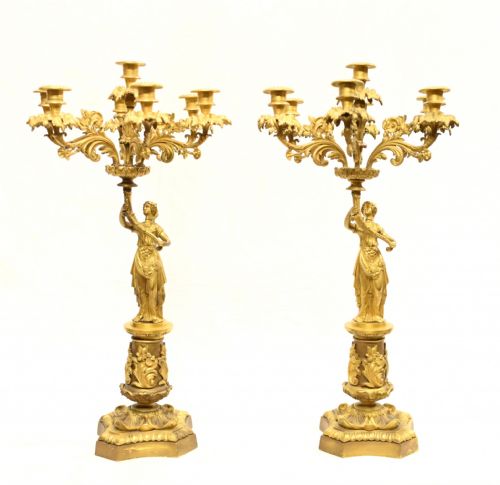


Gold Ormolu Centrepiece
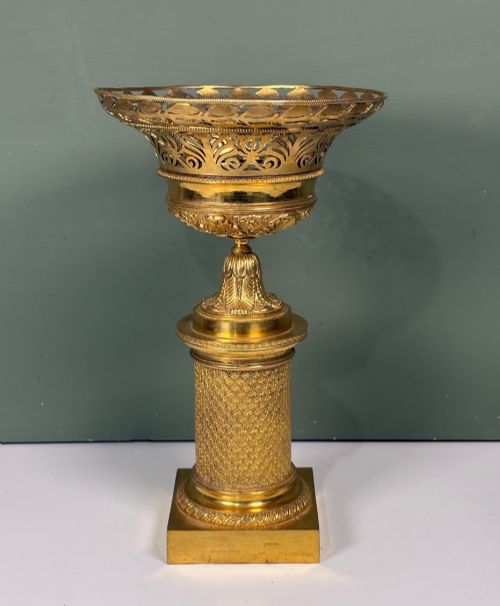
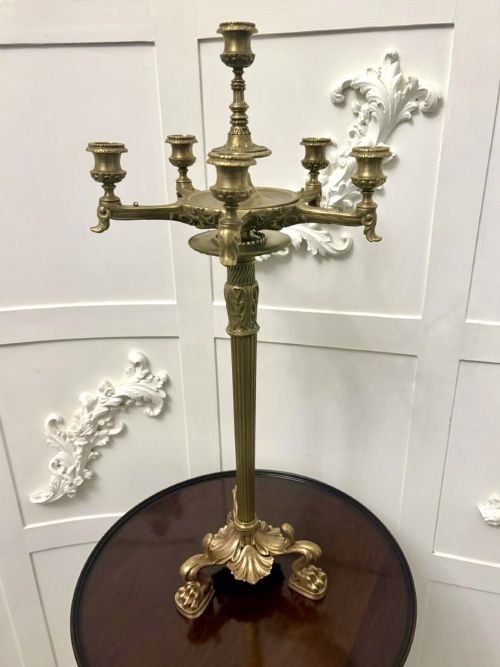
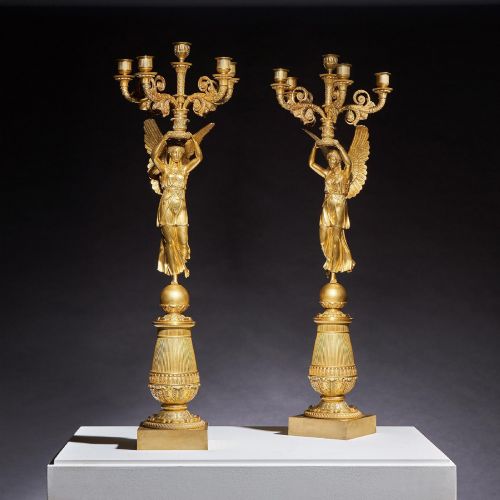
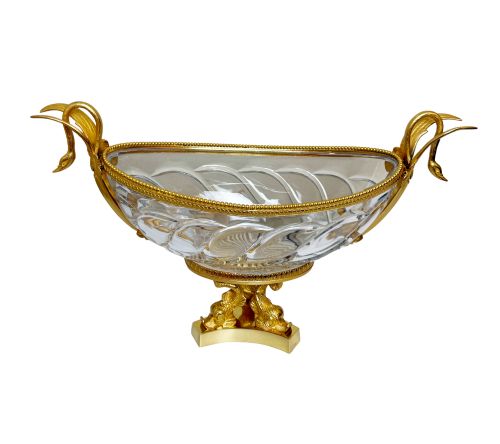
A gold ormolu centrepiece commands the middle of a formal table with cast bronze, crystal, and porcelain.
Gold Ormolu Centrepiece
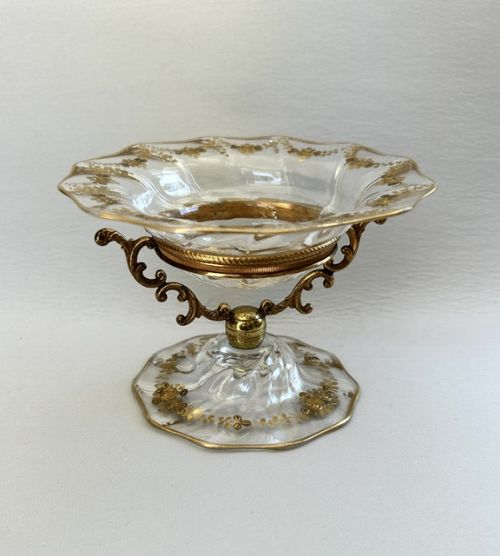
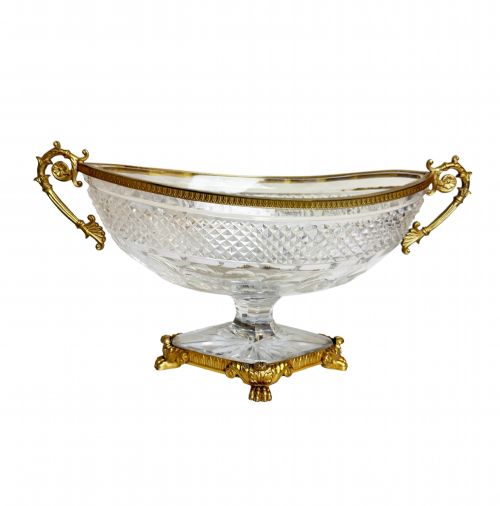
When you search for a gold ormolu centrepiece, you encounter grand table centrepieces, tazzas, and candelabra designed for nineteenth-century dining rooms. The most common examples combine a gilt bronze or ormolu framework with cut crystal glass inserts, porcelain bowls, or marble plinths.
These pieces draw heavily upon French Rococo Revival, French Empire, and Neoclassical styles. Makers frequently incorporated figures such as cherubs, putti, and mermen into the cast bronze mounts that support the central vessel.
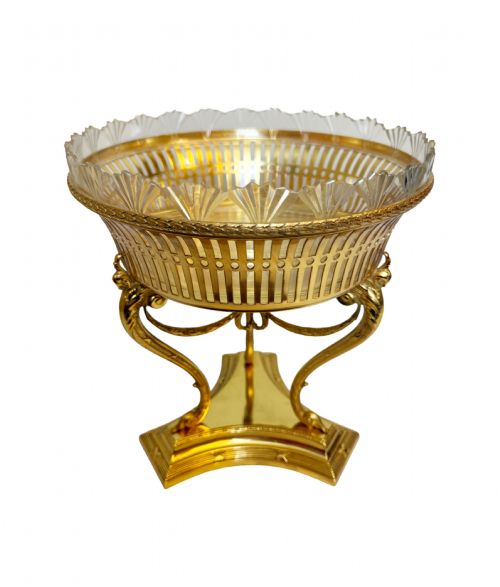
Originating predominantly from French workshops during the nineteenth century, these objects served both decorative and functional purposes at formal dinners. Their forms range from simple glass jardinières on gilt stands to elaborate tiered epergnes and tazzas decorated with malachite or enamel plaques.
Materials and construction
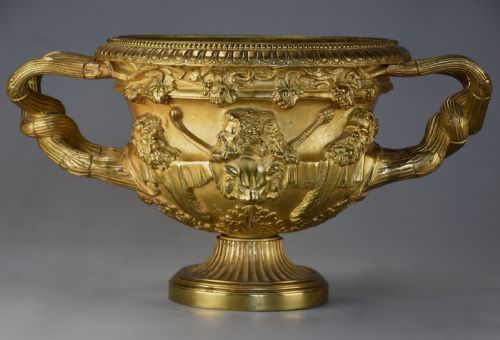
The foundation of these works lies in bronze, cast and then gilded to produce the bright finish known as ormolu. Workshops paired this gilt metal with blown and cut crystal, glass inserts, and panels of Sevres or Samson porcelain.
Casting allowed makers to create intricate sculptural details, from figurative cherubs to foliate scrolls, which were then assembled with threaded fasteners or pins. Stonework such as marble or minerals like Blue John and malachite provided heavy, contrasting bases for the metalwork.
Gold Ormolu Centrepiece Retail Price Guide 2026
Typical asking prices for gold ormolu centrepiece among the pieces listed under this phrase on Sellingantiques today, from the lower quarter to the upper quarter. They describe what is for sale here now, not the wider market.
Several pieces feature earnest little cherubs holding up heavy crystal bowls as if their small bronze arms depend on it.
Judging the work
The integration of materials also defines the standard of the piece. Superior examples feature heavy cut crystal or hand-painted porcelain panels that fit precisely within the bronze mounts rather than resting loosely in the frame.
Pierre Philippe Thomire·Christofle Paris·Samson Porcelain
The Gold Ormolu Centrepiece Glossary
- Ormolu
- Gilded bronze produced by applying a mercury and gold amalgam to a bronze base and heating it. This historic technique creates a rich, matte yellow-gold surface.
- Tazza
- A shallow ornamental cup or bowl raised on a stem and foot. They frequently appear in nineteenth-century dining table arrangements.
- Epergne
- A large table centrepiece with multiple branching arms and baskets for fruit or flowers. These structures combine gilt bronze frames with glass or porcelain dishes.
- Jardiniere
- An ornamental stand or container intended to hold plants or floral arrangements. In this period, they were commonly constructed from gilt bronze and cut glass.
- Champlevé
- An enamelwork technique where recesses are carved into the metal surface and filled with vitreous paste before firing. It appears on nineteenth-century mounts alongside ormolu.
Gold Ormolu Centrepiece: Frequently Asked Questions
What is a gold ormolu centrepiece?
A gold ormolu centrepiece is a nineteenth-century decorative table ornament made from gilt bronze combined with materials like glass, crystal, or porcelain.
These pieces were produced mainly in France during the Regency and Victorian periods, often following French Empire or Rococo Revival designs.
How were these centrepieces used?
Dining hosts placed them in the middle of formal tables to hold fruit, flowers, or sweetmeats during large meals.
Some designs also incorporated candle arms, allowing the centrepiece to double as a source of illumination during evening dining.
How do I clean ormolu?
Ormolu requires gentle dusting with a soft dry brush to prevent damage to the delicate gold surface. Water and chemical cleaners strip the historic gilding and should be avoided entirely.
Glass and crystal inserts can be removed and washed separately in warm soapy water before being dried and replaced in the metal frame.
How do I tell nineteenth century pieces apart?
Nineteenth-century pieces vary by period style, shifting from the clean lines of Regency and Empire to the ornate curves of Rococo Revival and the later elements of Art Nouveau.
Examining the casting quality, the weight of the bronze, and the style of any incorporated porcelain or enamel helps determine the exact decade of manufacture.