


Gold Metal Trinket Box
A gold metal trinket box is a small, precious receptacle designed to hold keepsakes, jewellery and snuff, combining utility with decorative metalwork.
Gold Metal Trinket Box
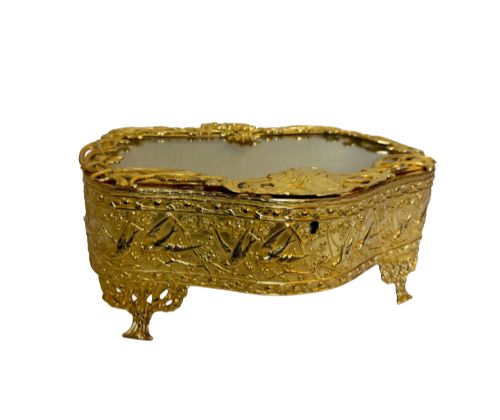
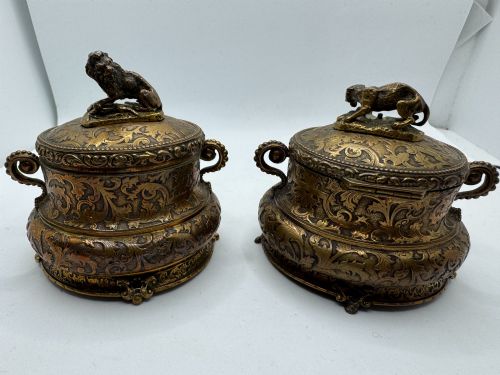
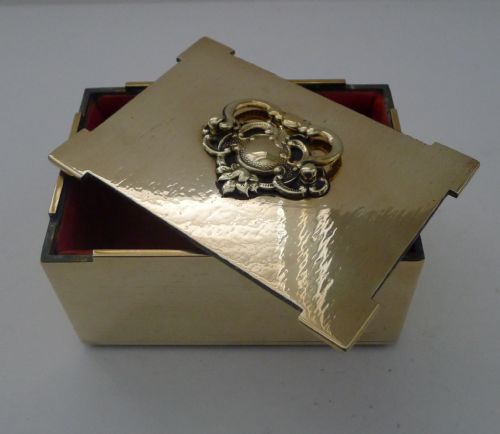
The selection ranges from small, pocket-sized vinaigrettes and snuff boxes to larger jewellery caskets featuring bevelled glass panels and Limoges miniatures. French Napoleon III and Art Nouveau designs sit alongside English brass keepsakes and Japanese mixed-metal vessels.
The most common versions met on this page are nineteenth-century French ormolu and glass caskets, together with Georgian and Victorian gold or gilt-metal snuff boxes.
Materials and construction
Construction relies heavily on cast brass, bronze, copper and ormolu, often treated with fire gilding or electro-forming to achieve a rich gold finish. Some exceptional examples utilise solid eighteen-carat gold or silver gilt.
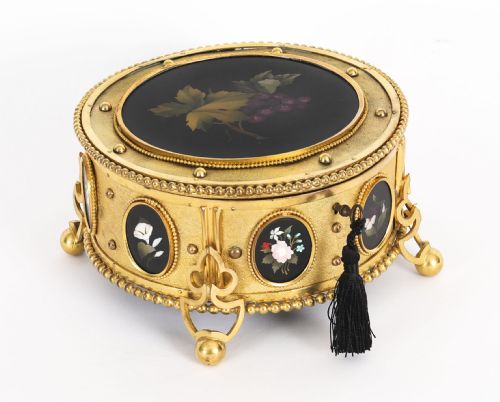
Decorative techniques recorded in the titles include chiselling, engraving, pietra dura inlay, and the incorporation of bevelled glass and Limoges miniatures. Finials and mounts are frequently cast separately and fixed to the main body.
Makers employed hinged lids, secure clasps and fitted interiors lined for the protection of personal valuables and small documents.
Materials recorded across the inventory include brass, gilt metal, ormolu, eighteen-carat gold, silver gilt, glass and bronze.
Assessing quality
Quality rests upon the crispness of the cast metalwork and the precision of any hand-chiselled or engraved detailing. Finer boxes display deeply defined ornamentation rather than soft, flat moulding.
The integration of secondary materials such as pietra dura, hand-painted miniatures and heavy bevelled glass distinguishes superior pieces from standard production. Good alignment of hinges and tightly closing lids indicate careful manufacture.
Giles Loyer·The David McDonald·Alexander James Strachan·Cartier London
The Gold Metal Trinket Box Glossary
- Ormolu
- Gilded bronze or brass, popular in French decorative arts for mounts and small caskets. The technique involves applying an amalgam of gold and mercury to heated bronze.
- Vinaigrette
- A small pocket container holding a perforated grille, beneath which lay a sponge soaked in aromatic vinegar. These were carried during the Georgian and Victorian periods to counter unpleasant odours.
- Pietra dura
- An inlay technique utilising cut and fitted polished coloured stones to create pictorial images. It appears frequently on Italian and French nineteenth-century caskets.
- Snuff box
- A small, tightly sealed container designed to hold powdered tobacco. They were produced in numerous metals, including solid gold and gilt brass.
- Electro-form
- A manufacturing method where metal is deposited onto a mould by electrolytic action. This technique grew common in the later nineteenth century for gilded copper objects.
Gold Metal Trinket Box: Frequently Asked Questions
What were gold metal trinket boxes used for?
These small containers were utilised to hold personal valuables, jewellery, folded keepsakes and dry substances such as snuff or aromatic vinegars.
Their portable nature meant people carried them in pockets or displayed them on dressing tables and writing desks.
How do I date a metal trinket box?
Dating relies on stylistic clues, manufacturing techniques, and occasional hallmarks stamped onto the metal. Georgian and Victorian pieces often display distinct decorative motifs like rococo revival or neoclassical styling.
Materials such as fire-gilded ormolu, electro-formed copper and cast brass help narrow down the period of production.
What is the difference between ormolu and gilt brass?
Ormolu specifically refers to gilded bronze, whereas gilt brass involves a layer of gold applied to a brass base. Both metals achieved a bright gold appearance through different historical plating methods.
On these boxes, ormolu typically denotes heavier, finer nineteenth-century casting work.
How should I care for an antique gilt box?
Gentle dusting with a soft, dry cloth preserves the fragile gold surface. Avoid chemical polishes that can strip away thin gilding or damage delicate glass and stone inlays.
Keeping boxes away from direct moisture protects internal linings and hinges from unnecessary wear.