


Glass Lid Jewellery Box
These glass lid jewellery box examples combine transparent tops with metals, woods and ceramics to keep personal treasures visible.
Glass Lid Jewellery Box
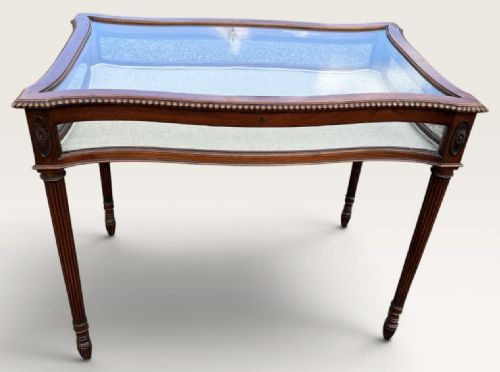
When searching for a glass lid jewellery box, buyers encounter an assortment of small storage containers designed to hold trinkets while displaying contents through a transparent top. The selections range from compact dressing table containers to larger freestanding bijouterie tables intended for drawing rooms.
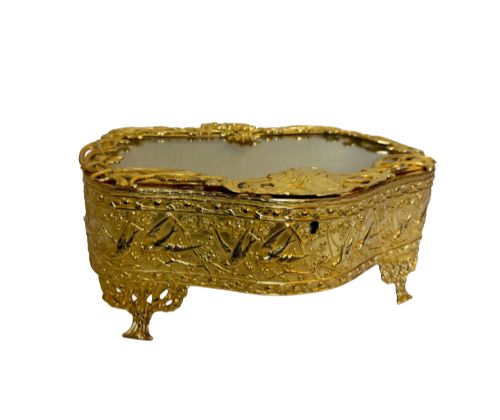
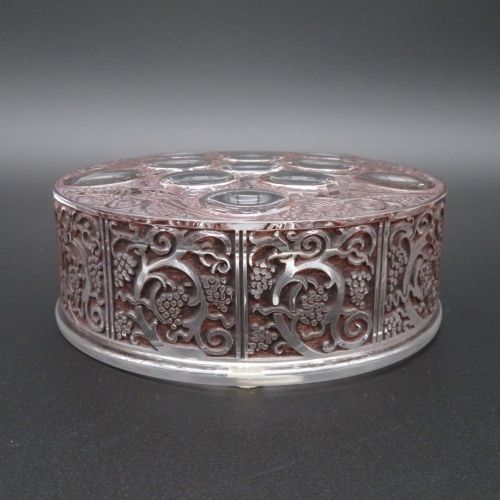
The versions most commonly met on this page span the Victorian, Edwardian and Art Deco periods, encompassing various forms such as heart-shaped receptacles, circular powder boxes and serpentine display tables. These pieces utilise hinged or lift-off covers that allow viewers to inspect the contents without opening the enclosure.
Origins stretch across the nineteenth and twentieth centuries, showing a shift in domestic habits toward organised personal display. Each glass lid jewellery box reflects the design language of its specific decade, from ornate metal mounts to inlaid timber frames.
How they were made
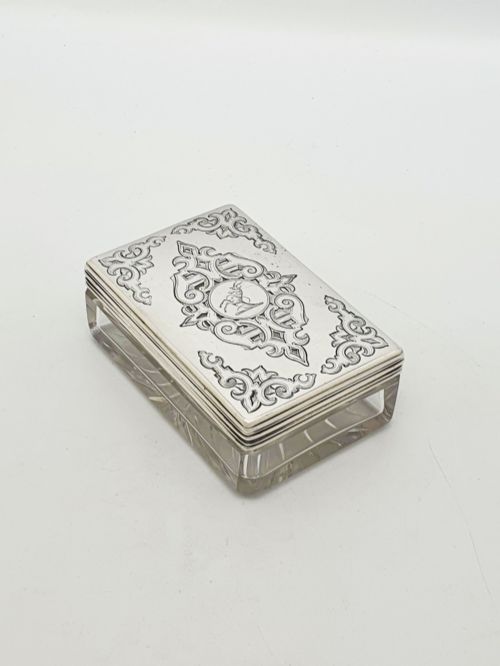
Maker workshops combined heavy cut glass and crystal with sterling silver, gilt bronze and mahogany to construct these enclosures. Glass cutting and moulding techniques created bevelled lids and panelled sides designed to catch the light.
Metal components, including silver mounts and cast bronze frames, were soldered or secured to house the glass securely within the structure. Inlaid mahogany and fabric linings provided supportive interiors for delicate items, while specialised moulding shaped frosted crystal surfaces.
Some Edwardian boxes arrived with heart-shaped glass lids, proving that romantic sentiment found its way even into the geometry of a Monday morning tidy-up.
What varies in quality
The distinction between standard examples and finer specimens rests upon the weight and clarity of the glass, alongside the crispness of metal casting and woodwork. Superior pieces exhibit deeply bevelled or hand-cut crystal lids fitted tightly into substantial silver or bronze mounts.
Construction details such as the snugness of the hinge fit and the precision of mahogany inlay separate workshop standards. The inclusion of speciality materials like tortoiseshell or enamelled porcelain elevates the refinement of the finished container.
Lalique
The Glass Lid Jewellery Box Glossary
- Bijouterie table
- A glass-topped display table designed specifically for showcasing small valuables, medals or curiosities at standing height. These pieces often feature glazed lids and silk-lined interiors.
- Trinket box
- A small lidded container intended for rings, brooches and other personal adornments. They appear in diverse materials including cut glass, silver and porcelain.
- Powder box
- A vanity container traditionally used for face powder, frequently featuring a decorative glass or crystal lid. Art Deco examples often adopt circular geometries.
- Sterling silver
- An alloy containing ninety-two point five percent silver by mass, frequently utilised for the rims, mounts and lids of dressing table boxes.
- Gilt bronze
- Bronze coated with a thin layer of gold, employed in decorative mounts and frames during the nineteenth century to achieve a rich metallic lustre.
Glass Lid Jewellery Box: Frequently Asked Questions
What is a glass lid jewellery box used for?
These containers served historically to hold and display rings, brooches, powder and small personal valuables on dressing tables or salon surfaces. The transparent top allowed owners to view contents without opening the lid.
Today, they continue to function as secure desktop storage while offering an aesthetic display for small collections of modern or antique accessories.
How do I date an Edwardian trinket box?
Dating an Edwardian piece involves examining the hallmarks on any silver mounts, the stylistic lightness of the woodwork and the characteristic floral or ribbon motifs popular between nineteen hundred and nineteen ten. Maker marks and registration numbers stamped into the metal provide precise archival clues.
Additionally, the cut of the glass and the presence of specific fabric linings offer period context that distinguishes these items from earlier Victorian or later Art Deco equivalents.
How do I care for antique glass and silver?
Maintenance requires gentle cleaning with a soft, lint-free cloth to remove dust from delicate glass panels and metal surfaces without causing abrasion. Avoid submerging pieces that feature fabric linings, glued mounts or inlaid wood.
Silver components benefit from occasional treatment with non-abrasive polishes applied carefully to avoid contact with surrounding glass or textiles.
What distinguishes Art Deco boxes from Victorian ones?
Art Deco containers favour geometric precision, streamlined silhouettes and frosted or moulded crystal elements reflecting modernist tastes of the nineteen twenties and thirties. They often abandon the heavy floral ornamentation typical of earlier decades.
Victorian and Edwardian versions lean toward ornate silver mounts, intricate glass cutting and serpentine mahogany frames that emphasise traditional craftsmanship and romantic revival styles.