


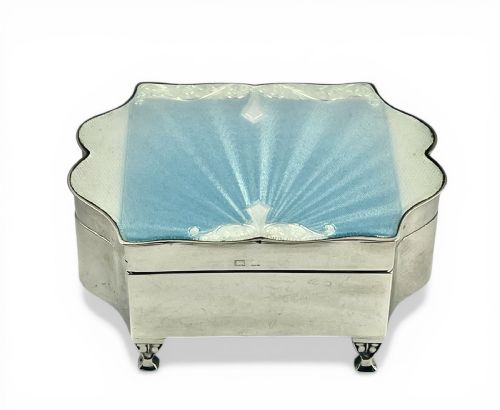


1930s Jewellery Box
A 1930s jewellery box brings Art Deco geometry and period glamour straight to a dressing table.
1930s Jewellery Box
When you search for a 1930s jewellery box, you are looking at small receptacles designed to hold trinkets, rings, and precious pieces during the interwar period. The versions you are most likely to meet on this page span the Art Deco style, featuring distinct geometric lines and period craftsmanship from the 1930 and 1920 periods.
The form appears in various iterations, including traditional trinket boxes, decorative boxes, and specialised powder box jars. Alongside dedicated jewellery boxes, related pieces such as tea caddies and secret safe books demonstrate the era's fondness for decorative container designs.
How they were made
Makers utilised a diverse palette of materials, combining precious metals like sterling silver and rose gold with rich wood veneers such as walnut and mahogany. Enamel, particularly guilloche enamel, added vibrant colour to silver foundations, while bronze and ceramics offered alternative tactile finishes.
Surface ornamentation defined the construction, seen in inlaid sunray wood patterns and detailed figural motifs depicting scenes like a girl and puppy dog. Leather in pig's skin provided a sturdy, textured exterior for utilitarian cases, matching the functional demands of the decade.
1930s Jewellery Box Retail Price Guide 2026
Typical asking prices for 1930s jewellery box among the pieces listed under this phrase on Sellingantiques today, from the lower quarter to the upper quarter. They describe what is for sale here now, not the wider market.
Pieces on this page originate from the 1920 and 1930 periods, predominantly featuring Art Deco design characteristics.
What varies in quality
The standard of a piece rests on the precision of its decorative execution, particularly the crispness of guilloche enamel work and the alignment of inlaid wood veneers. Pieces incorporating precious metals like sterling silver or diamonds display superior baseline materials compared to standard ceramics or basic leather.
Van Cleef & Arpels
The 1930s Jewellery Box Glossary
- Art Deco
- A design style dominant in the 1920s and 1930s characterised by sleek geometric shapes, streamlined forms, and modern industrial motifs. It influences the architecture and ornament of many boxes from this era.
- Guilloche enamel
- A decorative technique where a precise, intricate pattern is mechanically engraved into metal beneath a translucent layer of enamel. This lets light bounce through the colour to create depth.
- Sterling silver
- A silver alloy containing 92.5 percent pure silver and 7.5 percent other metals, usually copper, chosen for durability. It is the standard material for high-grade boxes and trinket cases.
- Tea caddy
- A container originally made to store loose tea leaves securely in a dry place. In the context of the 1930s, these often share the same inlaid wood craftsmanship as decorative boxes.
1930s Jewellery Box: Frequently Asked Questions
What defines a 1930s jewellery box?
These pieces are defined by their interwar origins and distinct Art Deco styling, utilising materials like silver, enamel, and wood veneer.
They serve as decorative containers for personal treasures, reflecting the design sensibilities of the 1920 and 1930 periods.
How do I care for my box?
Living with these items involves keeping them out of direct sunlight to protect vulnerable wood veneers and delicate enamel surfaces.
Gentle dusting and appropriate metal care for silver components will maintain the finish without harming the historic materials.
Were these boxes used daily?
Original owners utilised these containers on dressing tables and desks to hold everyday rings, pins, and small accessories safely.
Their sturdy construction from leather, ceramics, and metals meant they were built for practical daily handling.
How do I identify the period?
Dating relies on stylistic markers such as geometric Art Deco motifs, sunray woodlays, and occasional hallmarks like Birmingham assay stamps.
Materials such as guilloche enamel and specific wood veneers further anchor these items firmly in the interwar decades.