



Gold Metal Table Lamp
A gold metal table lamp brings warm illumination and period character to a room through its polished or patinated metallic surface.
Gold Metal Table Lamp
A gold metal table lamp comprises domestic lighting fixtures fashioned from brass, gilt bronze, or ormolu, often paired with marble, alabaster, or fabric elements. These pieces span from the late nineteenth century through the art deco era, encompassing Victorian and Edwardian examples alongside continental revivals.
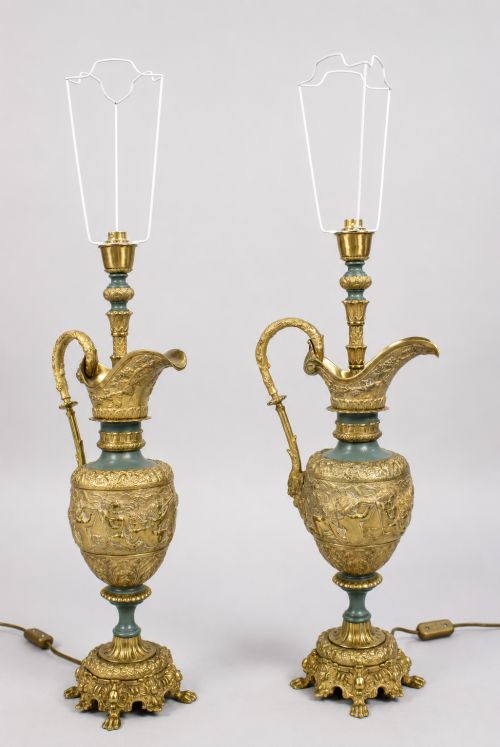
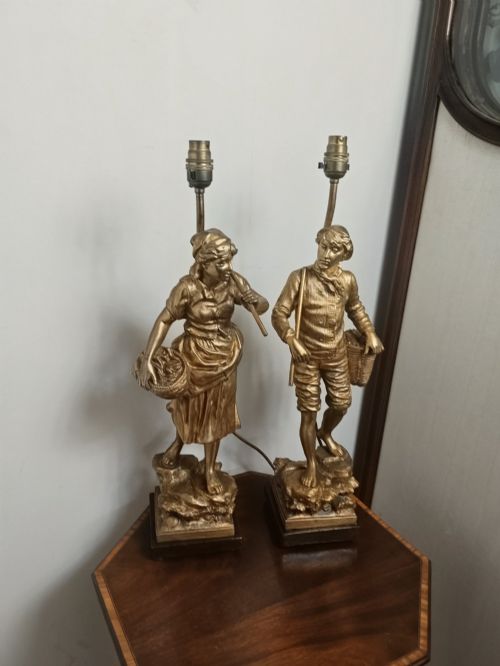
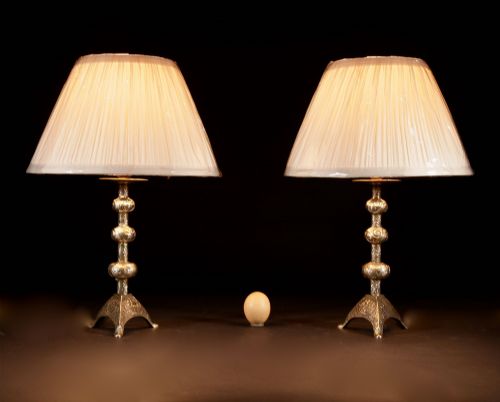
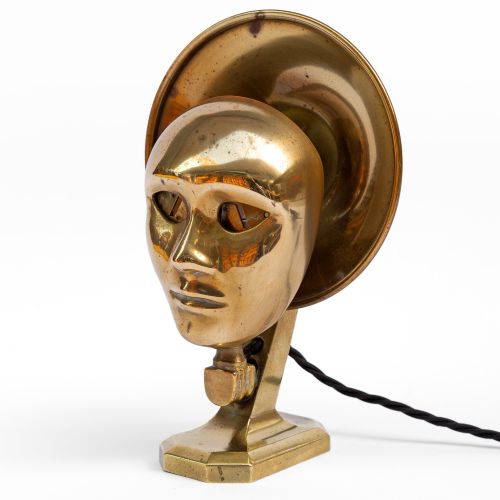
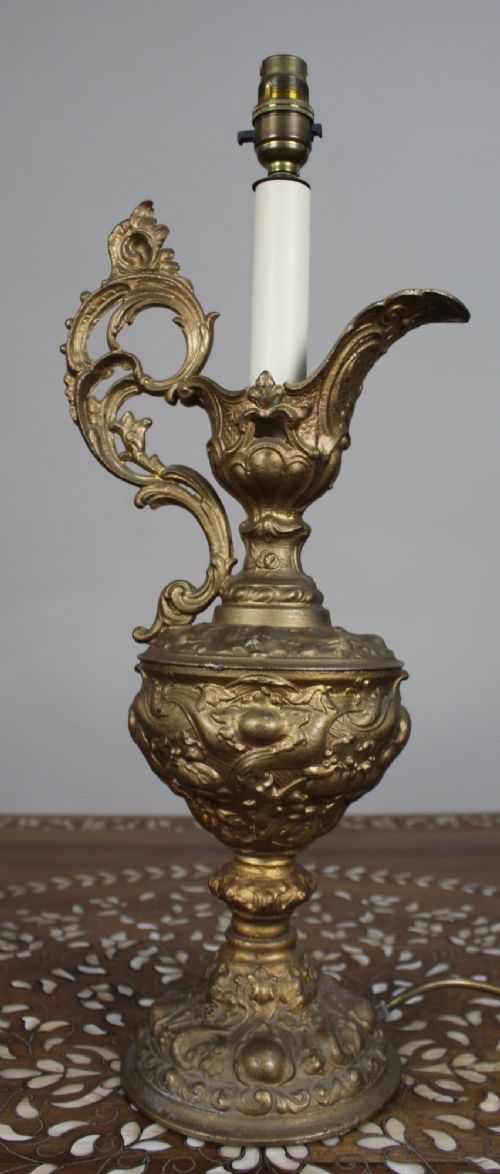
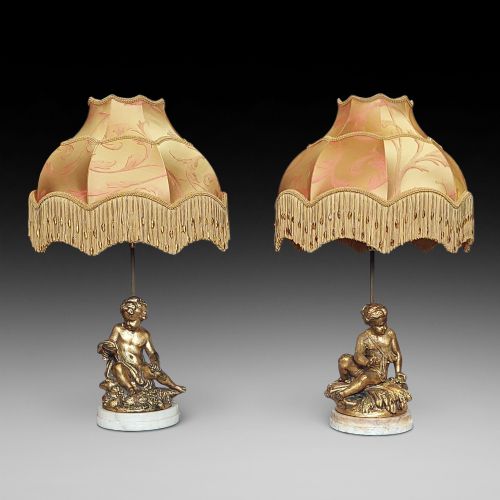
The selections available here range from converted candelabra and classical urns to figural designs incorporating cherubs or stylized twin ladies. Many pieces originate from French and Italian workshops, reflecting neoclassical, rococo, or Hollywood regency aesthetic traditions.
Buyers encounter numerous pairs designed for side tables or desks, alongside single monumental lamp bases and candle lamps. The structural forms frequently adapt historical motifs, ranging from Romanesque styles to art nouveau organic curves.
How they were made
The construction of these lamps relies on cast brass, bronze, and gilt metal, often combined with carved white or green marble and alabaster plinths. Artisans utilised traditional foundry methods, including lost-wax and sand casting, to achieve intricate relief work and figural details.
Surface decoration frequently involves mercury gilding, ormolu finishes, or painted toleware in black and gold lacquer. Hand-chasing completed the cast metal components, sharpening the decorative motifs before electrical wiring was retrofitted into older oil or candle standards.
Recorded periods span from the Victorian era and the late nineteenth century through the Edwardian period, 1920, and 1930.
What varies in quality
The standard of a gold metal table lamp depends significantly on the crispness of the original metal casting and the depth of the subsequent gilding or chasing. Heavier cast bronze and ormolu examples exhibit sharper relief and greater structural integrity than lighter pressed brass or spelter alternatives.
The integration of secondary materials, such as solid slab marble bases, hand-painted porcelain inserts, or fine crystal lustres, distinguishes finer workshop production from standard commercial output. The fidelity of historical revival styles, from French empire to art nouveau, also dictates the distinction between ordinary domestic items and exceptional decorative art.
E Rousseau·L & F Moreau·Peter Ghyczy·Jaeger Le Coultre
The Gold Metal Table Lamp Glossary
- Ormolu
- Gilt bronze, typically produced by applying a finely ground high-carat gold-mercury amalgam to a bronze object before firing. This technique creates a durable, warm metallic finish seen on finer nineteenth-century French pieces.
- Toleware
- Enamelled and painted sheet metal objects, frequently decorated with black and gold lacquer or floral motifs. This material appears on twentieth-century candle lamps and decorative bases.
- Spelter
- A zinc alloy used as a less expensive substitute for bronze in decorative metalwork. It takes patination well but possesses a lighter weight and softer structural strength than cast brass.
- Ewer
- A large jug with a wide spout, historically used for pouring water. Many late nineteenth-century lamp bases adapt this vessel shape into electrical or candle standards.
- Alabaster
- A fine-grained mineral stone used for carving decorative bases and urn bodies. It offers a translucent quality that complements polished gilt metal mounts.
Gold Metal Table Lamp: Frequently Asked Questions
Are these lamps newly wired?
Many older lighting fixtures retain antique wiring components or have been adapted at various points in their history. Buyers should anticipate having vintage electrical items tested and rewired by a qualified professional to meet current safety standards before regular domestic use.
Retaining original brass key switches, candle tubes, or fabric cords is common, but internal cables often require modern replacements to ensure safe operation in a modern home.
How do I clean gilt metal?
Maintaining gilt metal and ormolu requires gentle dusting with a soft, dry cloth to prevent the accumulation of grit in recessed chasing. Avoid abrasive commercial metal cleaners, water, or chemical solvents, which can strip away thin gold leaf or historical patination.
If the surface requires more attention, a specialist conservator should assess the piece to prevent accidental damage to the original nineteenth-century or early twentieth-century finishes.
What period do these lamps come from?
The pieces span from the late Victorian and Edwardian eras through the art deco period of the early twentieth century. Many items reflect earlier aesthetic revivals, adopting neoclassical, rococo, or French empire motifs popular during the nineteenth century.
Stylistic cues such as cast cherubs, heavy marble plinths, and geometric brass frameworks help distinguish between late nineteenth-century productions and subsequent 1920s or 1930s interpretations.
Can I use standard lamp shades?
Most lamp bases accept standard shade carriers or spider fitters, though the appropriate shade size depends on the proportions of the specific metal or marble base. Monumental figural lamps and candelabra conversions often require larger, balanced shades to complement their substantial height.
Checking the fitting type, whether slip-shade, harp, or direct gallery mount, ensures proper compatibility with modern or period-appropriate lampshades.