
Paired Bedside Lamps
Paired antique bedside lamps bring symmetry and period character to a bedroom, combining practical lighting with traditional craftsmanship.
Paired Bedside Lamps
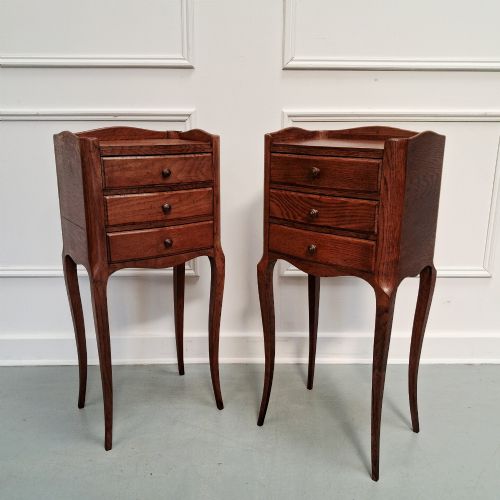
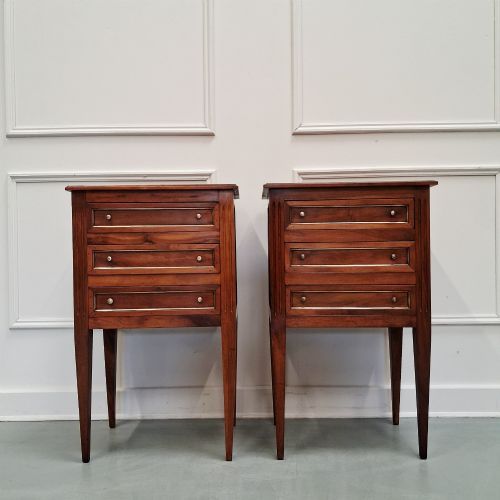
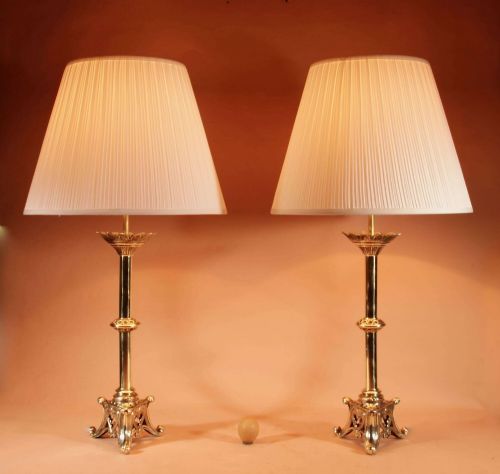
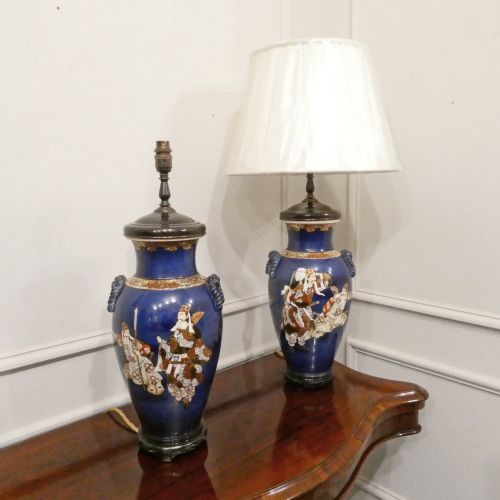
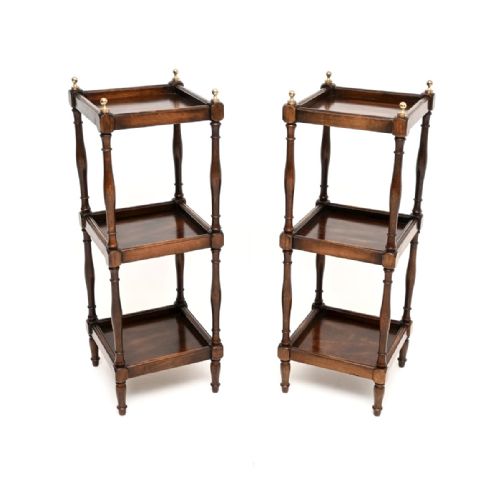
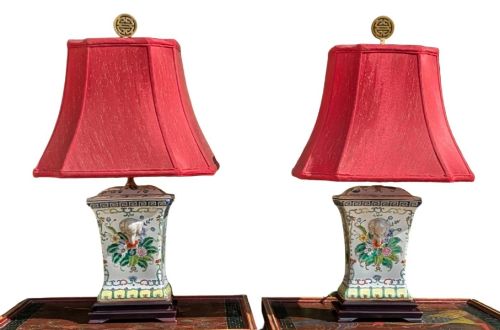
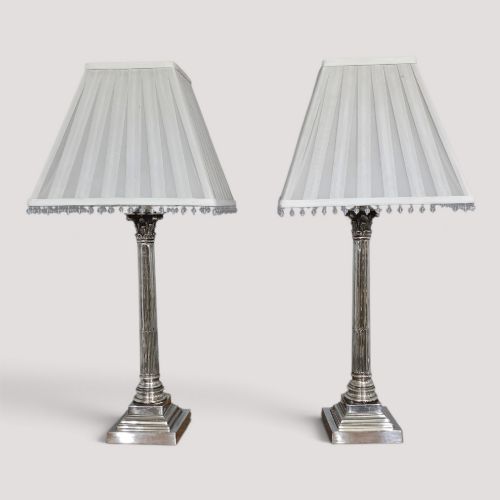
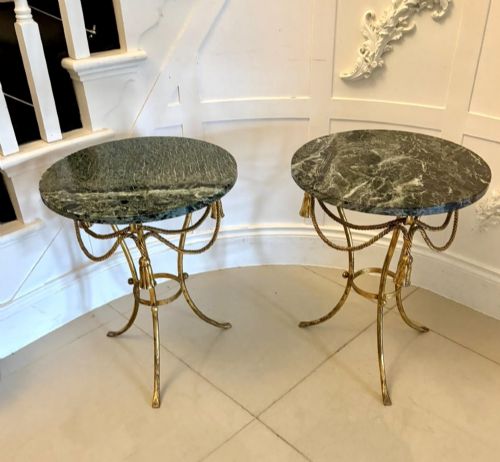
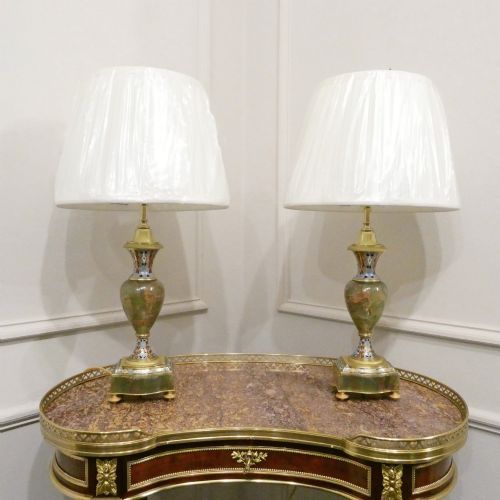
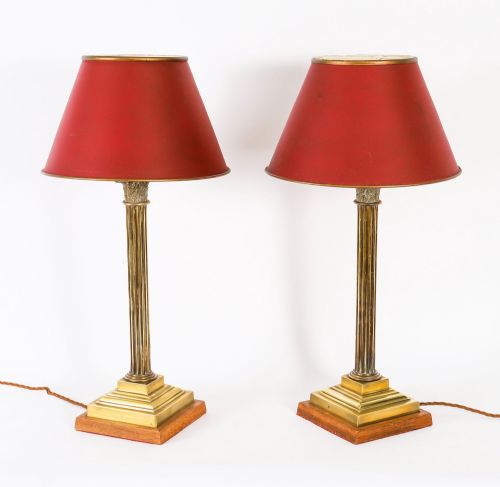
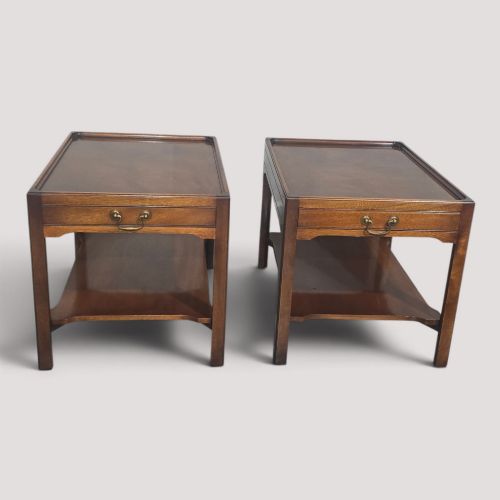
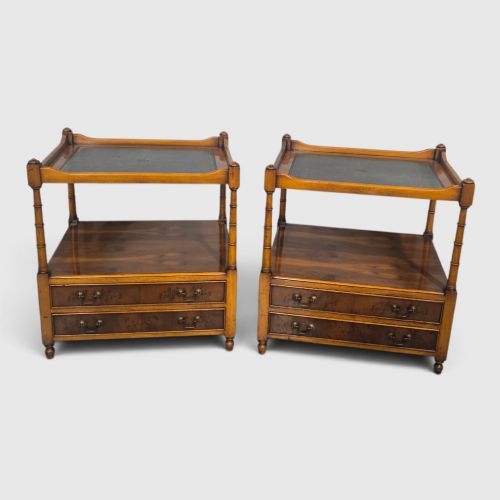
Paired antique bedside lamps encompass matching sets of lighting fixtures and small supporting furniture designed for use beside a bed. When buyers search for paired antique bedside lamps, they encounter items originating from the Georgian period through to the 1930s. The selection includes table lamps converted from earlier candlesticks or vases, alongside dedicated lamp tables and bedside chests.
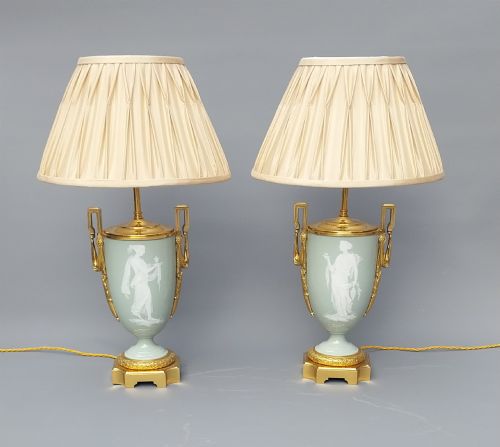
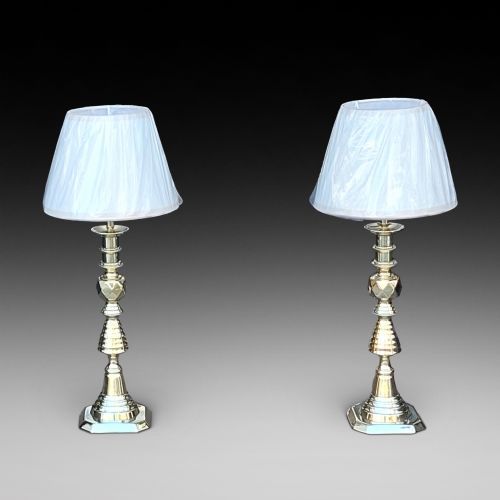
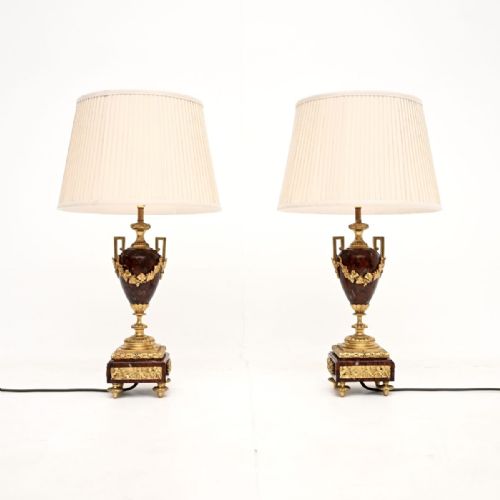
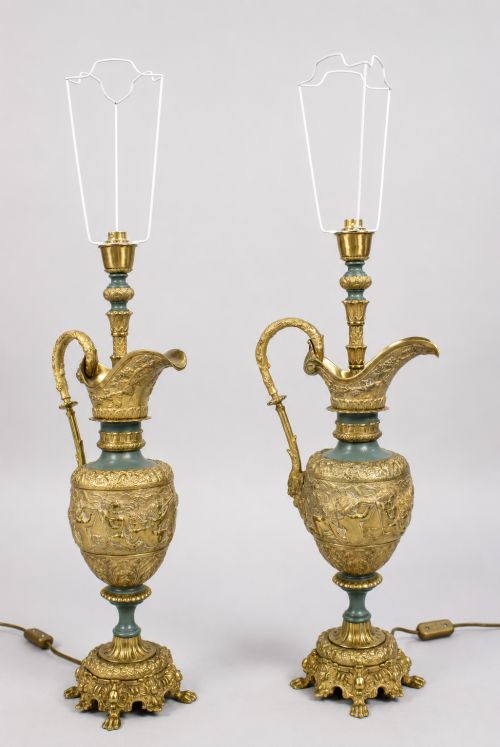
The most frequent examples on this page are matched pairs of table lamps and bedside cabinets constructed from mahogany, brass, or gilt metal. Styles range from Victorian and Edwardian interpretations to Neoclassical and Japanese Meiji period designs. Many pieces combine functional illumination with decorative forms such as Corinthian columns, cherubs, or ewer shapes.
How they were made
Makers utilised solid hardwoods like mahogany, oak, and walnut for furniture bases and small cabinets, often incorporating marquetry inlay, carved giltwood, or drop leaves. Metal lamp bodies rely on cast brass, bronze, silver plating, and gilt metal, sometimes finished with champlevé enamel or combined with white marble and onyx.
Surface decoration and finishing methods demonstrate traditional artisan skills, from hand-painted Kashmiri motifs and Chinoiserie lacquer to detailed bronze casting and stoneware production by potteries such as Royal Doulton. Conversion of earlier vessels, such as Rose Medallion vases or sphinx figures, into lamp bases represents another established workshop practice.
Listings feature items spanning the 18th century, Victorian era, and 1930s, constructed in mahogany, brass, marble, and fabric.
What varies in quality
Quality in these pieces rests upon the crispness of the casting in metalwork and the depth of carving in wooden frames and tables. Superior examples display precise joinery, well-preserved gilding or original silver plating, and harmonious matching between both items in the pair.
The choice of materials also dictates distinction, with finely figured mahogany veneers, genuine marble or onyx components, and intricate hand-applied enamelling or lacquer work marking out the finer productions from standard commercial items.
Royal Doulton·E Rousseau
The Paired Bedside Lamps Glossary
- Champlevé
- An enamelling technique where troughs or cells are carved into the surface of a metal base and filled with vitreous enamel before firing. This method creates colourful decorative patterns on brass and bronze lamp bodies.
- Corinthian column
- A classical architectural column style featuring an ornate capital decorated with acanthus leaves. Many late 19th-century brass table lamps adopt this distinct form.
- Marquetry
- The art of applying pieces of veneer to a structure to form decorative patterns and pictures. It appears frequently on the tabletops and drawer fronts of Edwardian and later bedside chests.
- Ormolu
- Gilt bronze ornamentation applied to furniture and decorative objects, popular in French Neoclassical design. It provides a bright metallic contrast against dark woods and marble.
- Ewer
- A large jug with a wide spout traditionally used for holding water, often adapted in 19th-century metalwork to serve as the body of a table lamp.
Paired Bedside Lamps: Frequently Asked Questions
How do I match antique lamps to modern bedroom decor?
Paired antique bedside lamps introduce textural contrast and historical depth into contemporary rooms through materials like polished brass, carved mahogany, and natural stone.
Selecting pieces with simple classical proportions or restrained ornamentation allows them to sit comfortably alongside modern furniture without dominating the space.
Were these lamps originally made for bedside use?
Many items listed as paired antique bedside lamps started life as table lamps, mantle garnitures, candlesticks, or vases before undergoing later conversion for electrical wiring.
Matching bedside tables and lamp cabinets were built specifically for bedroom placement to hold small lighting fixtures and nighttime essentials.
How can I tell the period of a brass lamp?
Dating relies on examining the manufacturing techniques, mounting methods, and stylistic cues such as Victorian Gothic revival or 1920s Art Deco symmetry.
Cast brass components and wiring access points often provide physical evidence of the era when the piece was manufactured or subsequently adapted.
What is the difference between a lamp table and a bedside chest?
Lamp tables offer an open surface and lower tiers designed primarily to support a lighting fixture and small decorative items within easy reach.
Bedside chests incorporate enclosed storage with drawers or cabinets, providing practical concealment for personal belongings while supporting a lamp on top.