



Neoclassical Urn Table Lamps
Neoclassical urn table lamps bring classical form and warm illumination into a room, drawing on centuries of architectural design.
Neoclassical Urn Table Lamps
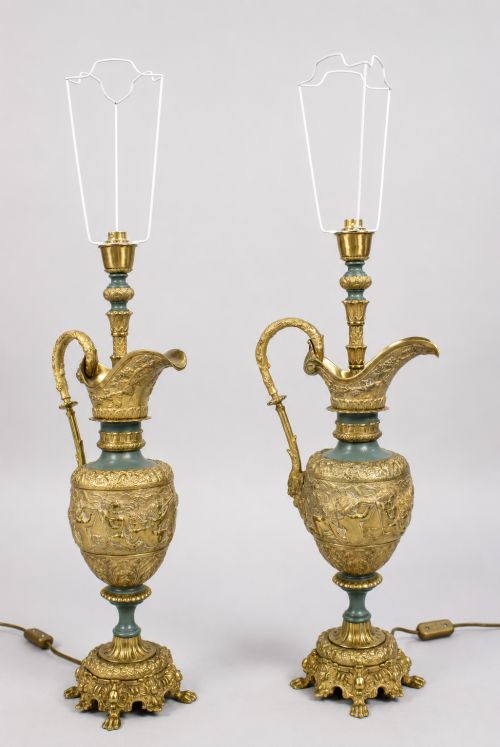
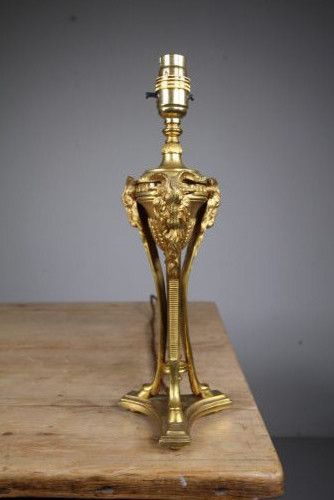
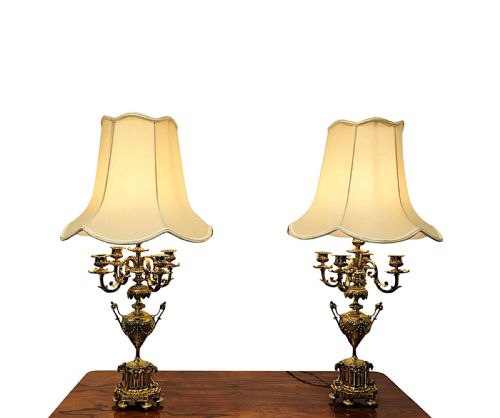
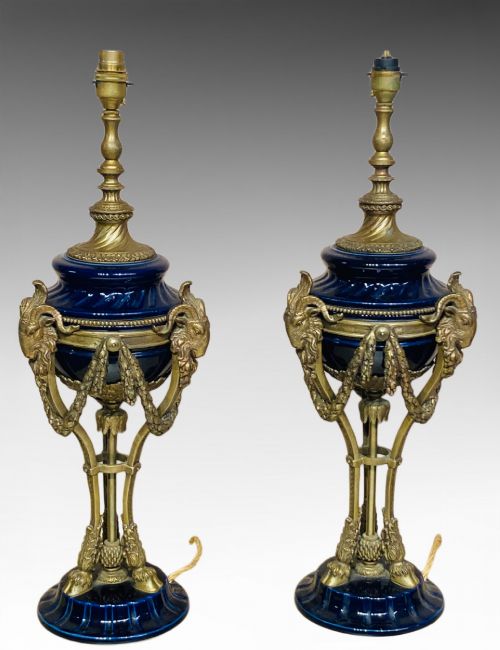
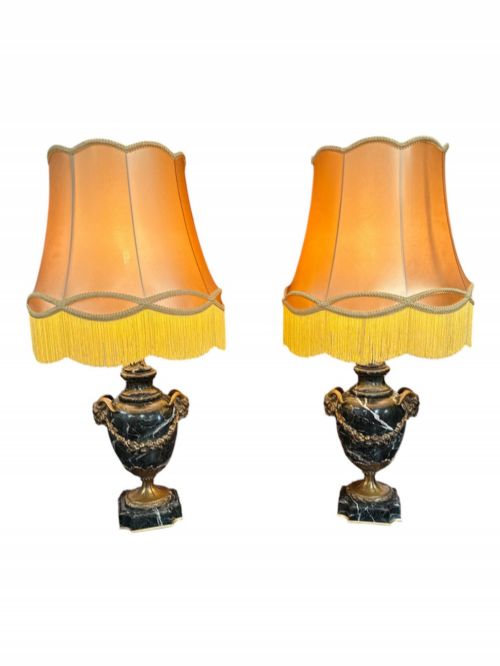
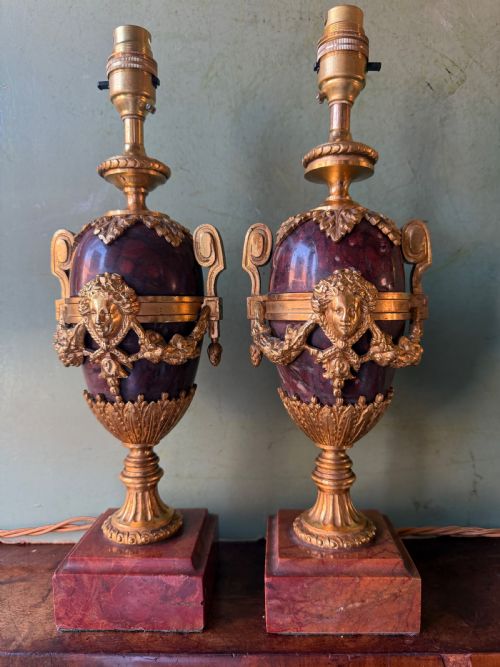
When you examine neoclassical urn table lamps, you are looking at lighting fixtures shaped like classical vessels adapted from oil lamps, vases, and ewers. These pieces draw heavily on antiquity, incorporating motifs such as rams heads, classical masks, and paw feet into domestic lighting.
The versions you are most likely to meet on this page originate primarily from the nineteenth and early twentieth centuries. They frequently arrive as matched pairs, though individual lamps also appear alongside occasional furniture pieces like side tables.
French and Italian workshops dominate the aesthetic, heavily channelling Louis XVI style and general neoclassical revival aesthetics. These designs translate monumental architectural forms into scaled-down lighting suitable for parlours and drawing rooms.
Materials and construction
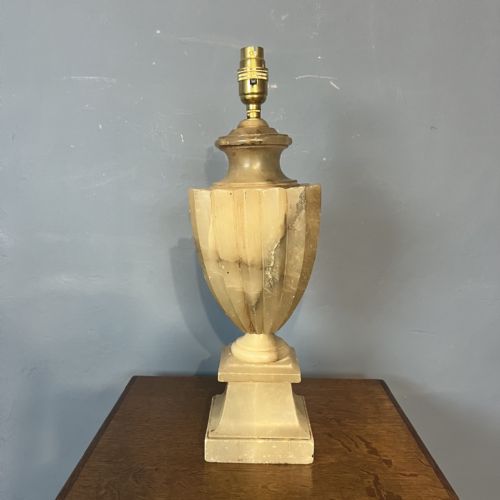
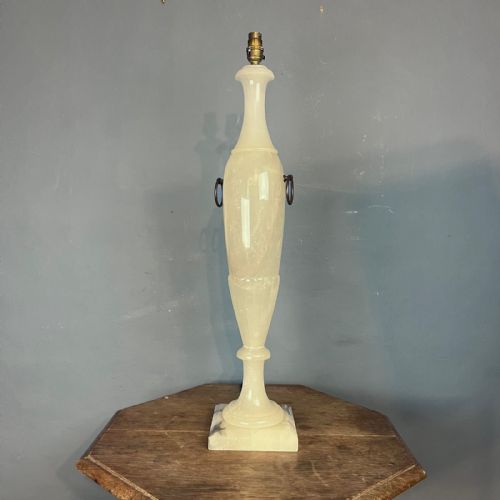
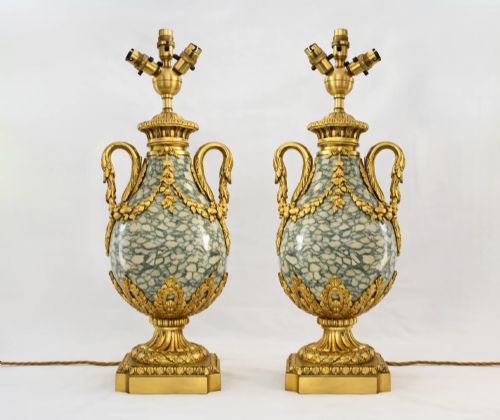
Makers utilised heavy stones such as marble, alabaster, and onyx to carve the primary bodies of these lamps, often pairing them with cast metal mounts. Rouge marble, Siena marble, and white marble provide dense, cool foundations that contrast against warm metallic elements.
Gilt bronze, ormolu, and gilded metal form the decorative mounts, handles, and bezels, cast with crisp classical detailing and fire-gilded to achieve a bright finish. Brass and silver plating also appear on structural elements and bases.
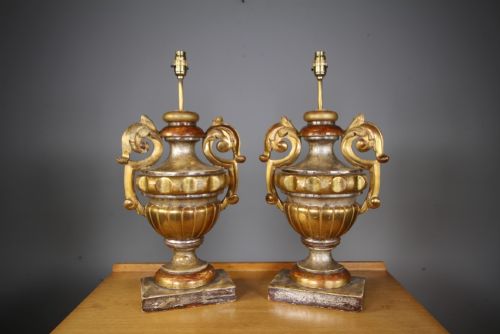
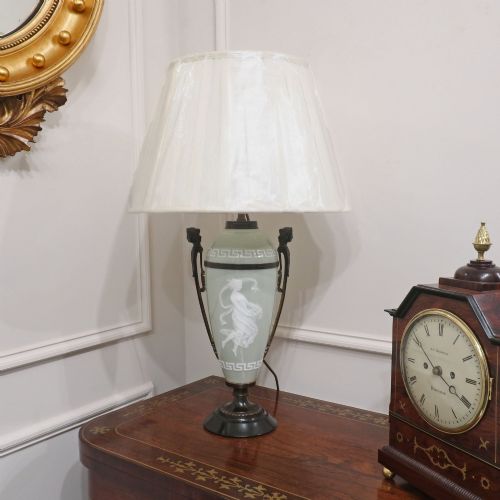
Selected examples incorporate carved pine, giltwood, moulded plaster, or pate sur pate porcelain to achieve specific decorative effects. Many older pieces began life as oil lamps or candelabra before receiving modern electrical conversions.
Several lamps stand firmly on tiny bronze lion paw feet, ready to sprint across the side table at the slightest hint of a dull interior.
Standards of execution
The separation between standard production and the top of the range rests upon the crispness of the metal chasing and the selection of the stone. Superior examples display sharply cast ormolu mounts where every acanthus leaf and classical mask is hand-chased after casting, rather than left dull from the mould.
Material selection dictates much of the visual weight, with dense, richly figured natural marble or unblemished translucent alabaster marking out superior vessels. Inferior pieces rely on painted plaster or simple marble-effect finishes to imitate genuine stone bodies.
Proportion and architectural balance separate distinguished pieces from simpler work. The best examples maintain a harmonious relationship between the urn body, the metal mounts, and the stepped pedestal base, avoiding clumsy transitions.
Harrison Brothers and Howson
The Neoclassical Urn Table Lamps Glossary
- Ormolu
- Gilded bronze produced by applying a mercury-gilding amalgam to cast bronze. This technique creates a durable, deep golden surface characteristic of fine French metalwork.
- Cassolette
- A decorative vase or urn featuring a reversible lid that functions either as a solid vessel or an incense burner. In lighting, this form provides a distinctive silhouette.
- Alabaster
- A fine-grained, translucent stone used extensively for carved lamp bodies. It allows light to diffuse softly through the material when illuminated.
- Ewer
- A large jug with a wide spout and a looped handle, translated in these pieces into a lamp base. The form derives from classical water vessels.
- Pate sur pate
- A ceramic technique where wet white porcelain slip is built up in layers on a contrasting coloured body to create low-relief cameos. This process requires considerable skill from the ceramicist.
Neoclassical Urn Table Lamps: Frequently Asked Questions
What periods do these lamps come from?
The selection spans the nineteenth century through to the early decades of the twentieth century. Many examples date from the Victorian and Edwardian eras, reflecting sustained revivals of classical design.
French and Italian pieces from the late nineteenth century sit alongside items produced around nineteen twenty. These dates show a continuous appetite for classical motifs across successive generations.
Were all of these originally electric?
Many of these pieces began life as oil lamps, candelabra, or decorative cassolettes before being converted to electricity at a later date. This adaptation allowed heavy bronze and marble urns to find a practical home in modern interiors.
Conversions are standard for antique lighting of this scale. The original form is preserved while internal wiring brings the piece up to current safety standards.
How do I identify Louis XVI style?
Louis XVI style pieces display strict symmetry, straight fluted columns, and restrained classical ornamentation such as laurel wreaths and ribbons. This aesthetic contrasts with the more exuberant curves of earlier rococo design.
Look for architectural rigour, urn shapes, and delicate ormolu mounts of rams heads or classical masks. The overall impression is one of ordered classical proportion.
What is the difference between alabaster and marble?
Alabaster is a softer, translucent stone that allows light to pass partially through its surface, creating a warm glow when placed near a bulb. Marble is much harder, denser, and opaque, offering bold natural veining.
Both materials were chosen for their considerable weight and luxurious appearance. Alabaster lamps often rely on the stone's translucency, while marble lamps showcase polished colour variations.