

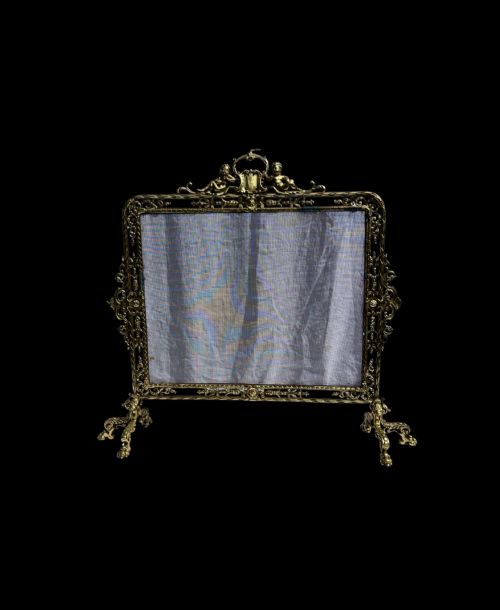
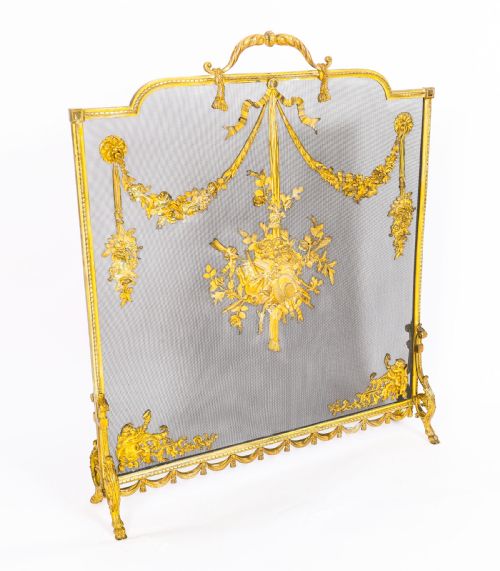
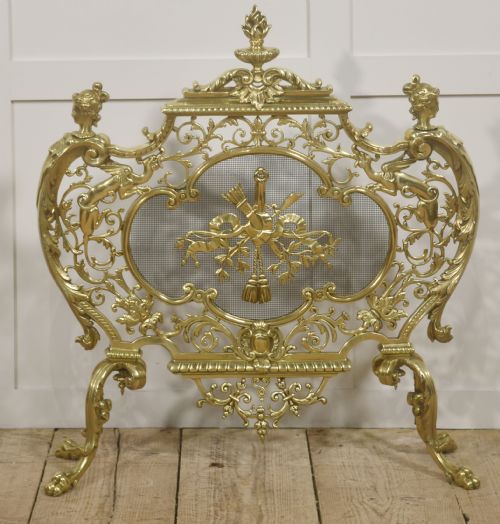


Gold Metal Fireguard
These gold metal fireguard pieces protect rooms from sparks whilst bringing French rococo and Victorian revival design to a fireplace.
Gold Metal Fireguard
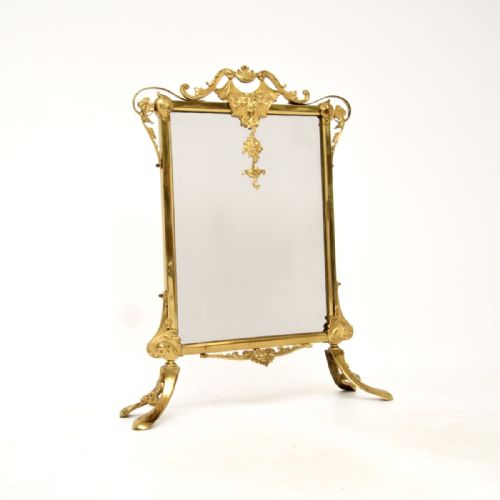
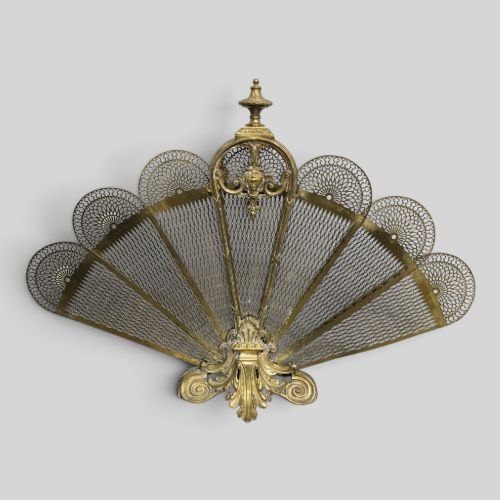
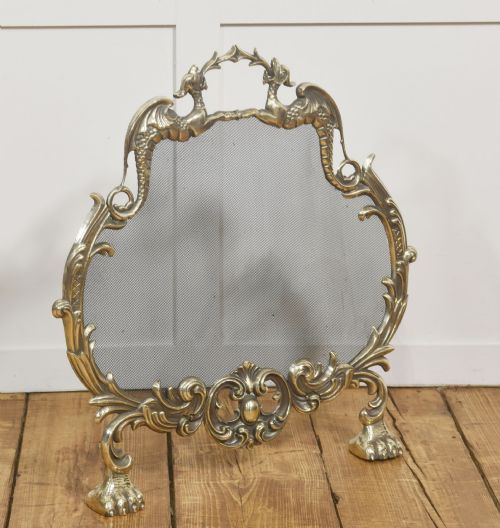
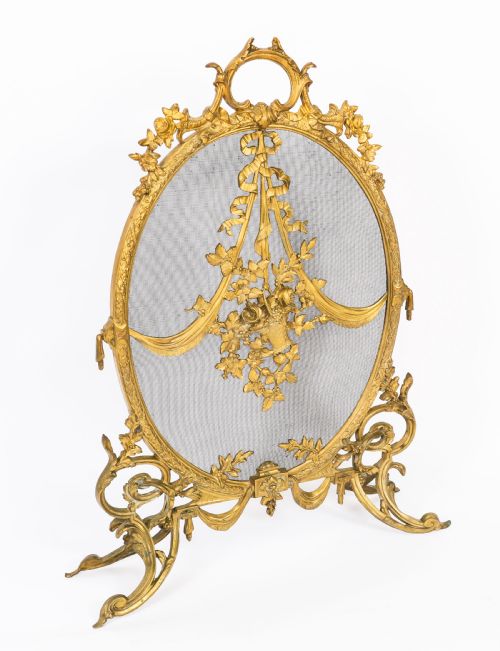
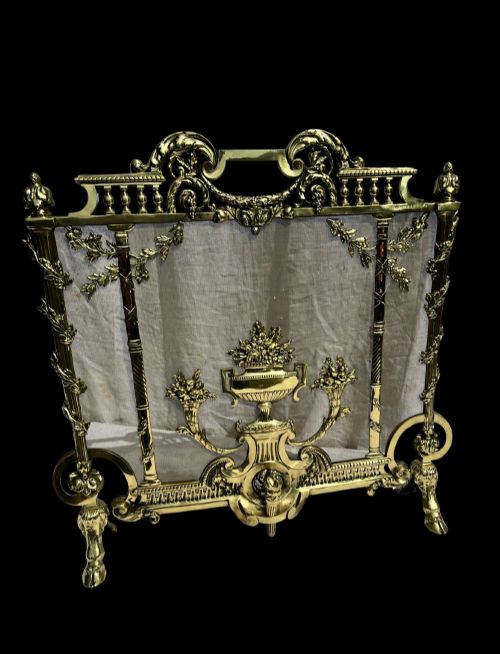
A gold metal fireguard serves as both a protective barrier against hearth sparks and a decorative centrepiece in a room. When buyers search for a gold metal fireguard, they encounter brass, ormolu, gilt bronze, and wire mesh screens designed in French rococo, Louis revival, and Victorian styles.
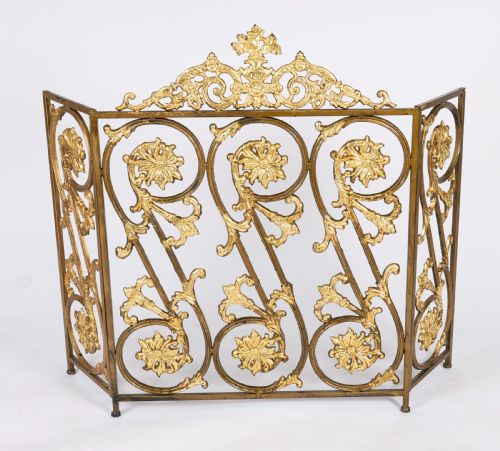
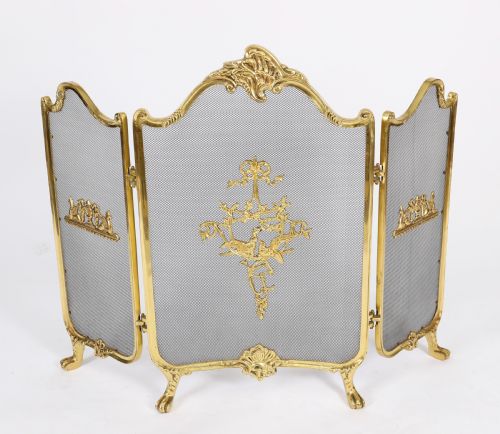
The pieces on this page span from the nineteenth century into the Edwardian era, taking the form of fire screens, spark guards, and fenders. Folding tripartite designs and ornate pierced brass panels appear alongside peacock screens and gate-fronted guards.
Materials and construction
Metalwork for these pieces relies heavily on brass, bronze, and gilt bronze, shaped into intricate frames and mounts. Wire mesh and metal mesh form the protective panels that catch embers while maintaining visibility of the fire.
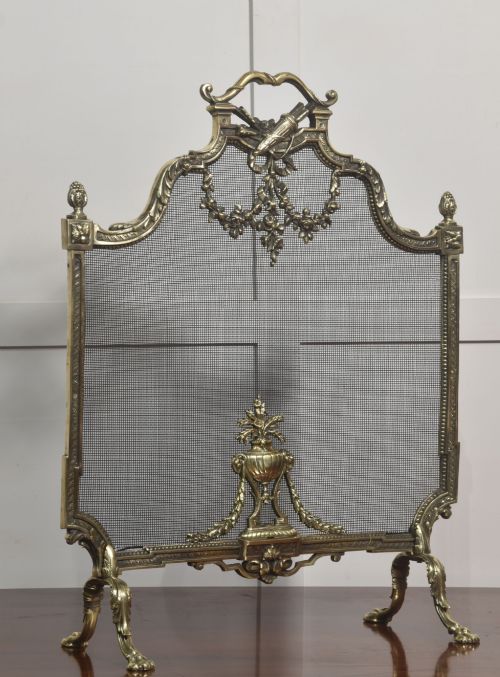
Casting techniques deliver the detailed scrollwork, floral motifs, and musical trophies seen on French rococo and Louis XIV revival examples. Ormolu and fire gilding impart the characteristic warm metallic finish across nineteenth-century and Edwardian pieces.
Gold Metal Fireguard Retail Price Guide 2026
Typical asking prices for gold metal fireguard among the pieces listed under this phrase on Sellingantiques today, from the lower quarter to the upper quarter. They describe what is for sale here now, not the wider market.
Look closely for the cast dolphins and musical trophies hiding in plain sight among the scrolling French rococo brasswork.
Assessing quality and craftsmanship
Quality rests in the crispness of the cast ornamentation, from the depth of pierced brass work to the fine detail of gilt bronze flaming torches and dolphin motifs. Heavier gauge metal and robust hinges on tripartite folding screens distinguish superior construction.
The finesse of the chased surface work and the integration of the mesh into the structural frame separate standard production from exceptional French revival examples. Original mercury gilding or well-preserved ormolu retains a richer tone than later applied finishes.
E F Caldwell New York
The Gold Metal Fireguard Glossary
- Fire Screen
- A decorative barrier placed in front of a fireplace to block heat or conceal an unlit hearth when not in use. They often feature folding panels or mesh guards.
- Ormolu
- Finely ground high-carat gold applied to a bronze base using a mercury amalgam technique. This produces the bright golden finish seen on French antique pieces.
- Rococo Revival
- A nineteenth-century design movement characterised by asymmetrical scrolls, C-scrolls, floral elements, and shell motifs. It draws inspiration from earlier French eighteenth-century decorative arts.
- Spark Guard
- A functional mesh or wire screen designed specifically to contain flying embers from an open fire. Many examples combine this utility with ornate brass or bronze frames.
- Tripartite
- Divided into three sections, typically describing folding fire screens with a central panel and two hinged side wings.
Gold Metal Fireguard: Frequently Asked Questions
How do I choose the right size?
Measure the width and height of your fireplace opening to ensure the screen provides adequate coverage against stray sparks. Consider whether a folding tripartite design or a flat standing screen best fits the hearth space.
Account for any protruding fenders or hearth furniture so the guard sits securely on the floor without obstructing the fire area.
Are these screens safe for open fires?
Most pieces incorporate wire mesh or metal mesh specifically designed to catch embers and sparks from an active fire. Historical pieces should be checked to ensure the mesh remains secure and structurally sound.
Delicate gilt bronze and ormolu finishes benefit from careful placement to avoid excessive heat exposure that could damage the surface over time.
How do I clean brass and gilt bronze?
Dust the metal surfaces regularly with a soft, dry cloth to prevent the accumulation of soot and grime. Avoid abrasive cleaners or harsh chemical polishes that can strip away original gilding or patina.
For gilt bronze and ormolu, gentle cleaning preserves the historic surface finish without altering the tone of the metal.