


Ornate Fireplace Screen
An ornate fireplace screen protects a room from stray sparks while bringing sculptural metalwork and revival style directly to the hearth.
Ornate Fireplace Screen
An ornate fireplace screen stands before the grate as both a spark guard and a decorative centrepiece for the room. When buyers search for an ornate fireplace screen, they encounter pieces fashioned during the nineteenth century, including Victorian examples alongside French revival designs.
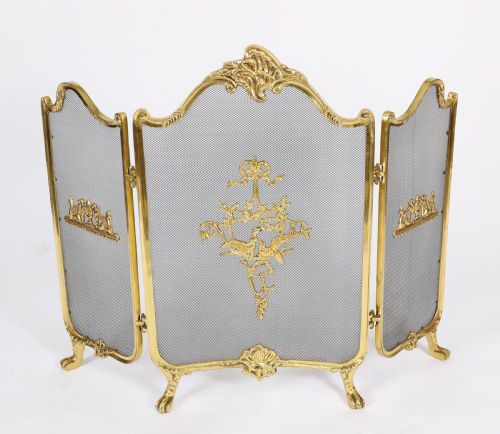
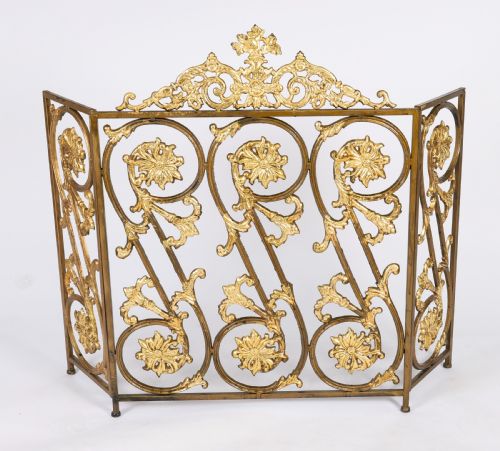
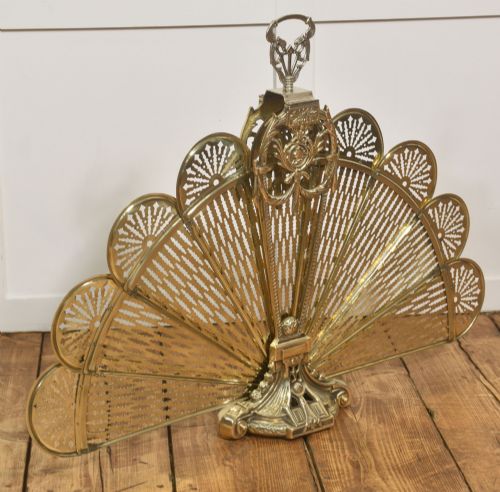
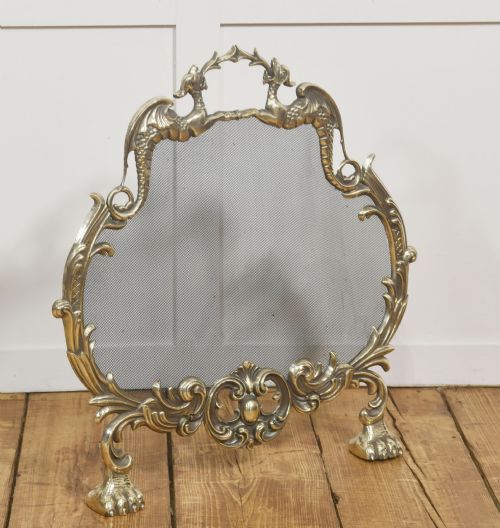
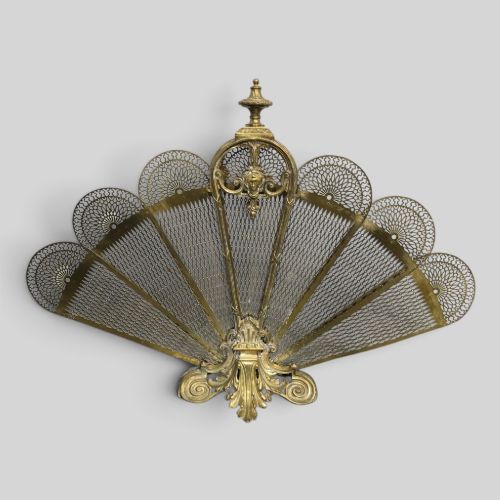
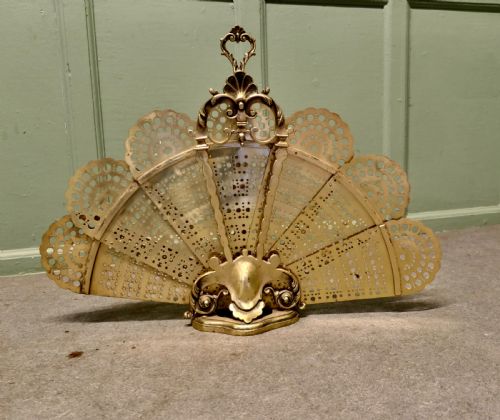
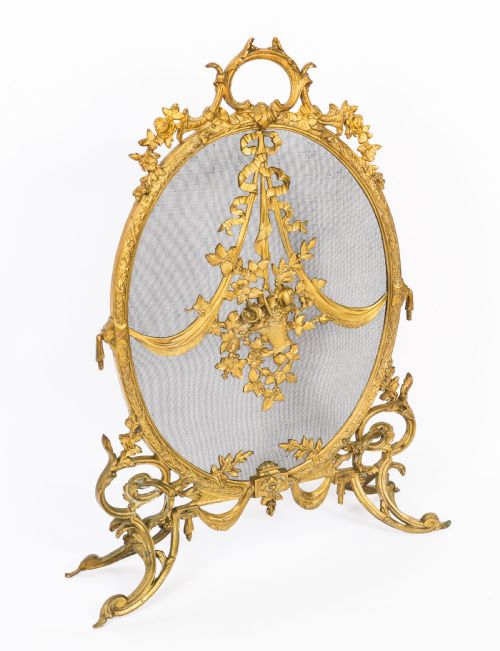
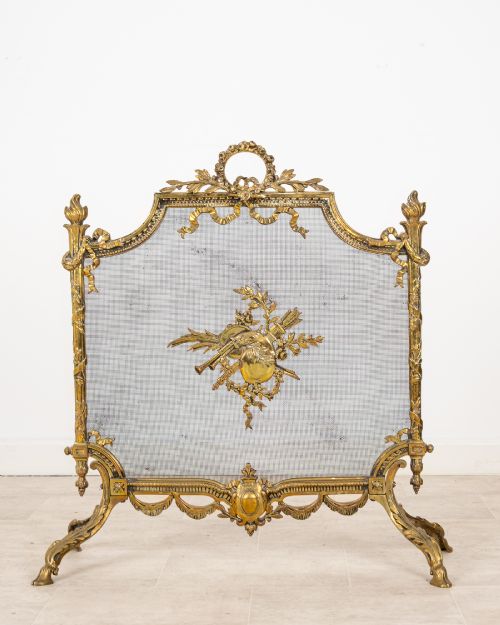
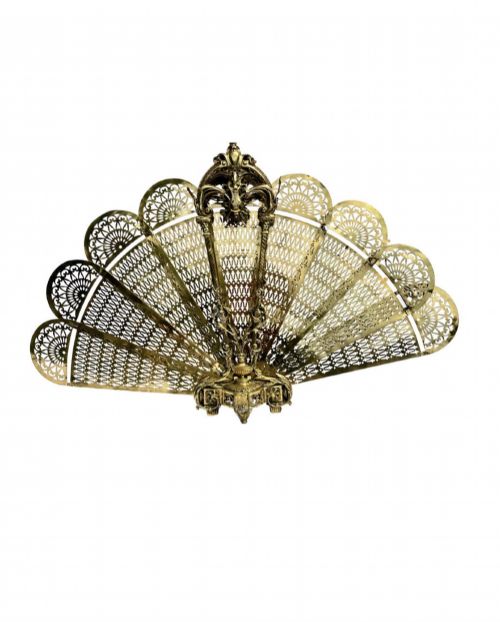
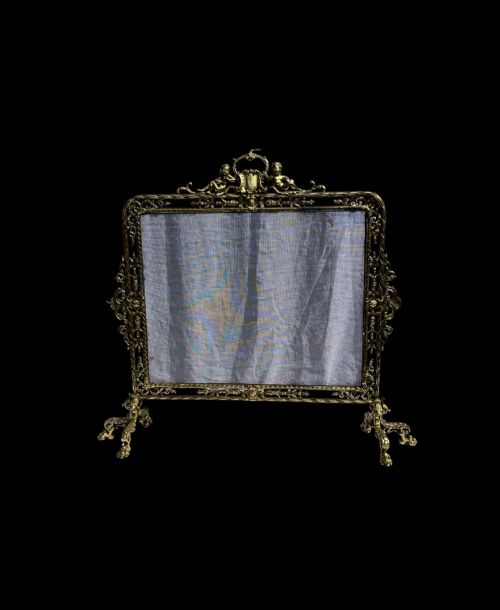
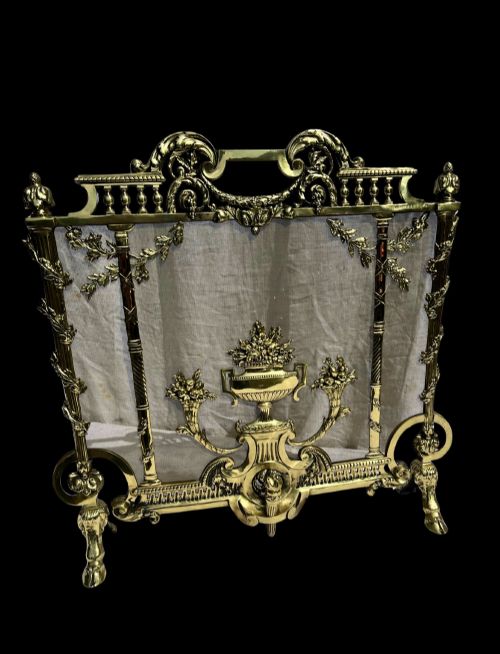
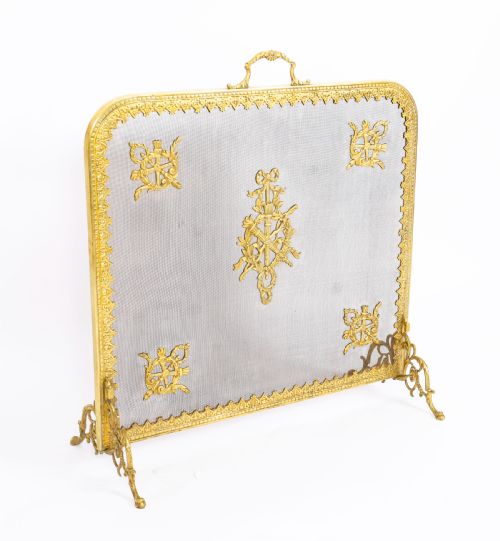
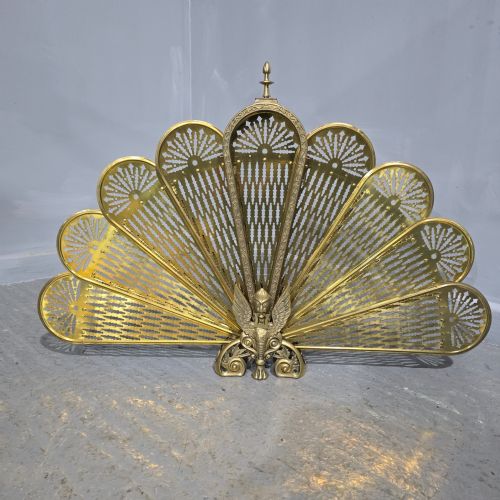
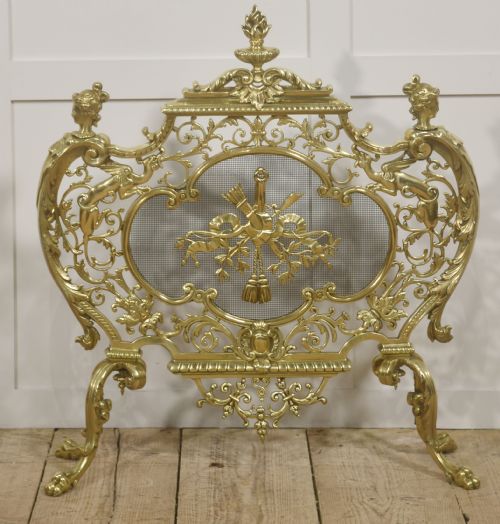
The selection ranges from folding peacock fan guards to solid brass and gilt bronze frames adorned with rococo scrolls, dolphins, and classical trophies. Many take the form of heavy metal frames fitted with wire mesh, while others utilise expanding fan blades that fold away when the hearth is unlit.
Materials and Construction
These pieces are constructed primarily from brass, gilt bronze, and cast brass, often combined with metal wire mesh to catch embers safely. Artisans shaped these metals through casting, piercing, and carving to achieve the elaborate asymmetry of the rococo manner and the symmetry of Louis style revivals.
Finishes vary between polished brass, gilt surfaces, and blackened wrought iron, occasionally accompanied by carved oak in Black Forest variants. The frames utilise hinges for folding sections or sturdy feet to remain free-standing on the hearth floor.
Several brass screens mimic the elaborate plumage of a peacock opening its tail by the hearth.
Judging Quality
Quality rests upon the crispness of the casting and the weight of the metal used in the frame. Heavier gauges of brass and finely chased gilt bronze display sharper relief in decorative motifs such as floral garlands, torches, and scrolls.
The sophistication of the stylistic revival also dictates distinction, where French rococo and empire revival pieces exhibit more elaborate pierced work and sculptural depth than simpler utilitarian designs.
The Ornate Fireplace Screen Glossary
- Rococo Revival
- A nineteenth-century stylistic movement reviving the ornate, asymmetrical scrolls and natural motifs of the eighteenth-century French court. It dominates many of the decorative brass frames seen here.
- Gilt Bronze
- Bronze metal that has been coated with a thin layer of gold, providing a rich, durable surface finish. This material is frequently found on French decorative fire guards from the nineteenth century.
- Peacock Fan Screen
- A fire guard featuring overlapping metal blades that expand outwards like a tail fan. This design folds flat when not in use to save space.
- Spark Screen
- A protective mesh barrier designed to catch flying embers from an open fire. In these listings, mesh is often paired with heavy brass or gilt frames.
Ornate Fireplace Screen: Frequently Asked Questions
How do I use a folding fan screen?
The metal blades expand across the opening of the fireplace to catch embers while the hearth is active. They fold tightly together into a compact unit when the fire is extinguished.
This space-saving mechanism allows the decorative brass silhouette to sit neatly beside the fireplace without obstructing the room.
Are these screens safe for open fires?
Most pieces incorporate wire mesh or solid metal panels designed specifically to act as spark guards during use. They provide a physical barrier between burning logs and the room.
Heavier cast brass and bronze models remain stable on the hearth floor while blocking stray sparks.
How do I identify French revival styles?
French revival pieces often display characteristic motifs such as rococo scrolls, dolphin figures, classical trophies, and gilt bronze finishes. These designs emulate the grandeur of Louis XIV, Louis XV, and Louis XVI periods.
Maker details are scarce, but the stylistic vocabulary points directly to nineteenth-century interpretations of these earlier aesthetics.
What is the difference between brass and gilt bronze?
Brass is an alloy of copper and zinc with a bright golden metal appearance that can be polished or aged. Gilt bronze involves a bronze base applied with a fine gold surface layer, offering deeper warmth and sharper cast detail.
Both materials were utilised extensively across nineteenth-century hearth accessories.