


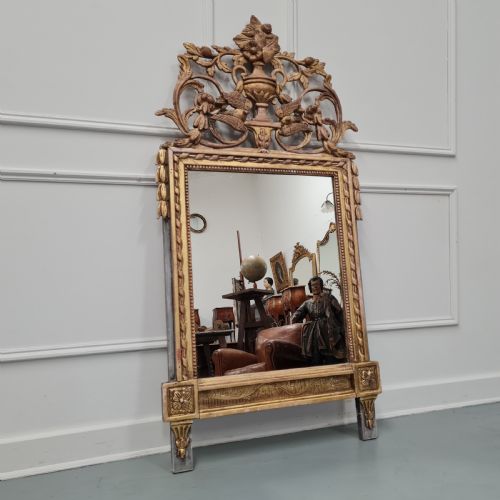


Gold Leaf Trumeau Mirror
A gold leaf trumeau mirror brings architectural presence and reflected light to a room, combining painted timber frames with decorative panels.
Gold Leaf Trumeau Mirror
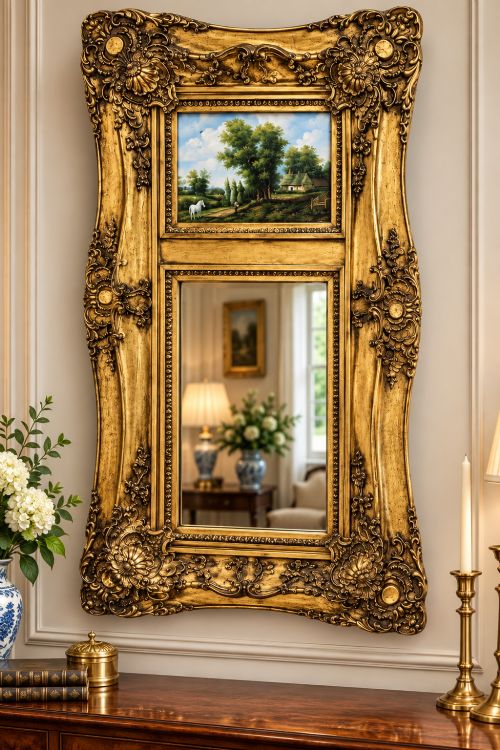
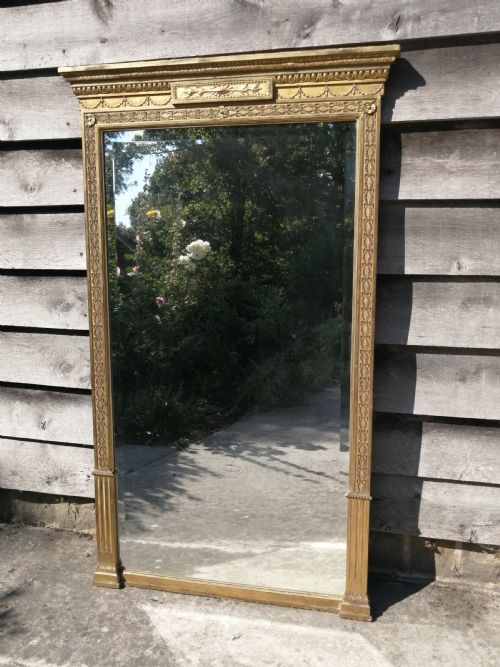
A gold leaf trumeau mirror is a wall-hanging or pier-mounted glass plate integrated with an upper panel, often set above a console table or mantelpiece. Buyers seeking this form encounter pieces originating primarily from the eighteenth and nineteenth centuries, spanning French, Regency, and Dutch traditions.
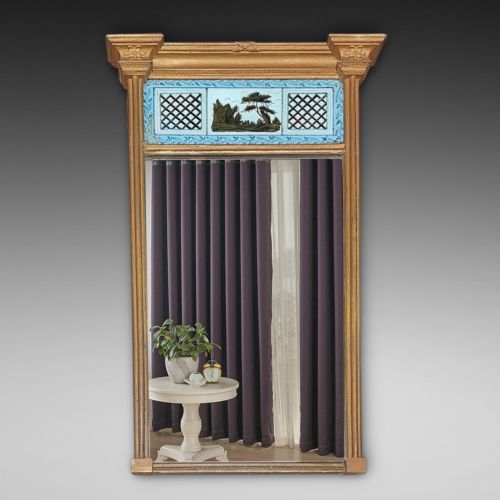
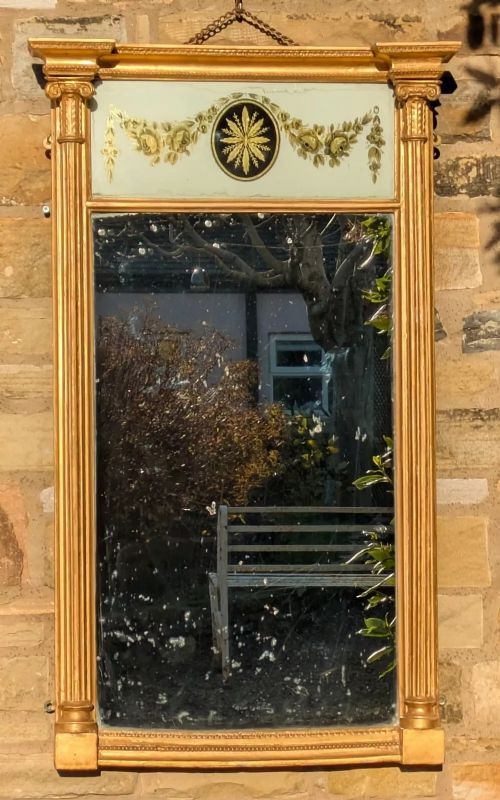
The format typically includes a vertical mirror plate beneath an oil painting, canvas, or decorated glass panel such as verre eglomise. Surviving examples range from tall nineteenth-century French pier mirrors to matching console table and mirror sets.
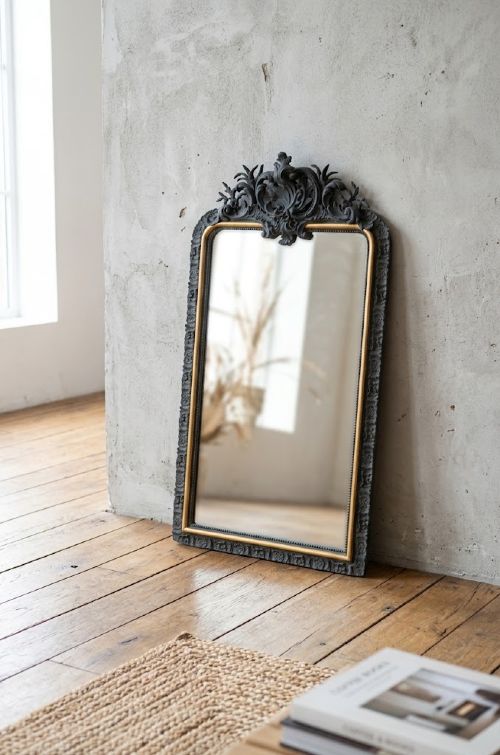
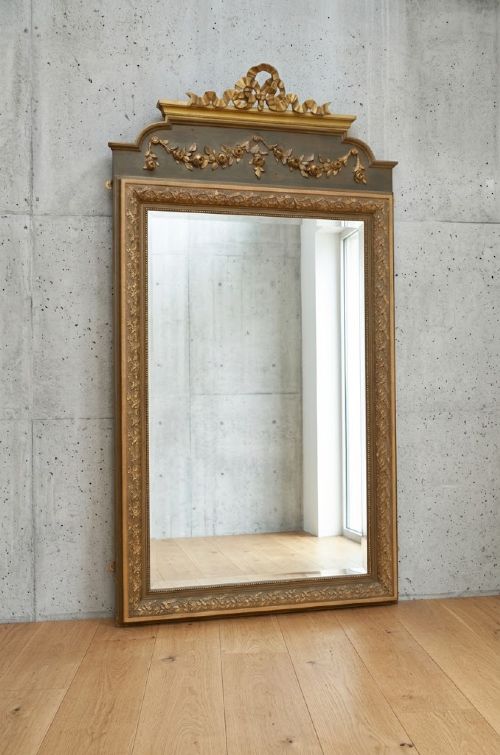
Stylistic variations draw on French Empire, Louis XVI, and Rococo vocabularies, featuring carved crests, ribbon motifs, and parcel gilt finishes on painted wood.
Materials and construction
Frames are constructed from carved wood and gesso, providing a stable foundation for the application of delicate gold leaf and painted layers. Artisans built these structures using traditional joinery before laying down thin metallic leaf over prepared grounds.
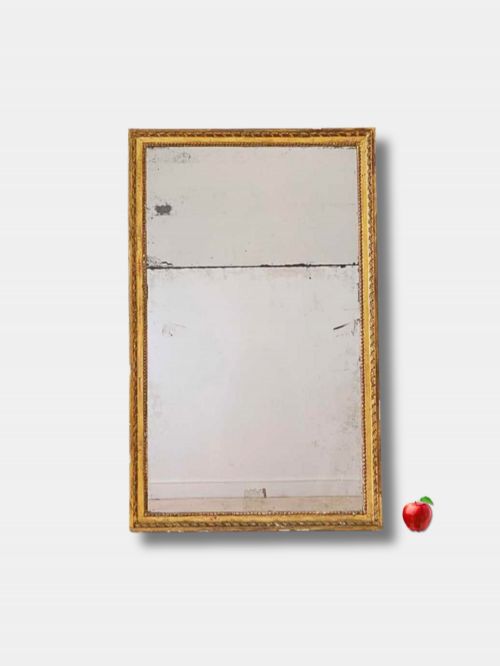
Glass plates in older examples frequently consist of mercury glass or original silvered plates showing distinctive age oxidation. Upper sections incorporate painted canvas panels or reverse-painted verre eglomise to complete the architectural composition.
Listings feature items spanning the eighteenth to the twentieth centuries, including Regency, French Empire, Louis XVI, and Belle Epoque styles.
Judging quality and preservation
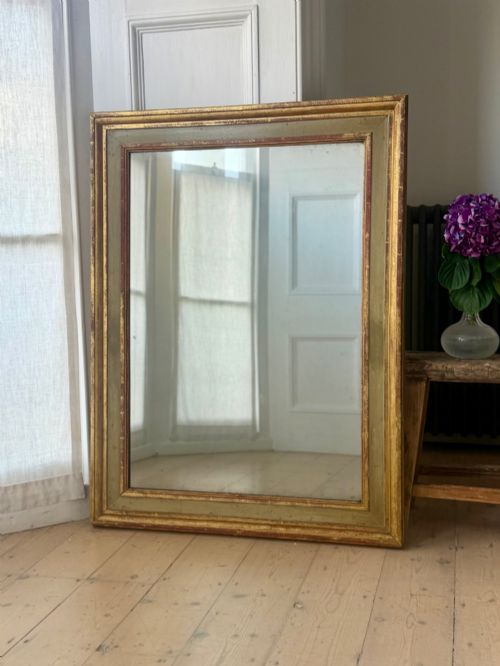
Quality rests on the crispness of the original wood carving and the survival of the early gilding and gesso surfaces rather than plain uniform brightness. Pieces retain greater character where the painted highlights and gold leaf layers show authentic patination.
The integrity of the ensemble depends on whether the original mirror plate and upper decorative panel remain together within the frame. Retaining original mercury glass plates or period verre eglomise sections elevates the integrity of the object.
The Gold Leaf Trumeau Mirror Glossary
- Trumeau
- An architectural mirror incorporating a painted or decorated panel directly above the glass plate. This form was traditionally designed to fit the space between windows.
- Verre eglomise
- A cold decoration technique where designs are painted and gilded on the reverse side of glass. It appears frequently in upper panels of Regency mirrors.
- Gesso
- A plaster-like mixture applied to carved wood frames to create a smooth surface for gilding. It holds sharp relief details through centuries.
- Giltwood
- Timber coated with a thin layer of gold leaf over a prepared base. It defines the warm metallic finish of these frames.
- Pier mirror
- A tall vertical glass designed to hang on the wall space between two windows. These pieces often match console tables positioned underneath.
Gold Leaf Trumeau Mirror: Frequently Asked Questions
What is a trumeau mirror?
A trumeau mirror combines a vertical glass plate with an upper decorative panel, which may feature an oil painting, canvas, or reverse-painted glass.
Originally designed for eighteenth and nineteenth-century interiors, these pieces hung on wall partitions between windows to maximise reflected light.
Where should I hang a pier mirror?
Pier mirrors work best on narrow wall spaces, particularly above a console table, mantelpiece, or sideboard where their height can balance the room.
Their tall, narrow proportions were traditionally scaled to fit between architectural openings and draw natural light deeper into reception rooms.
How do I identify mercury glass?
Mercury glass plates exhibit a characteristic dark, mottled backing with uneven reflectivity and tiny pinprick voids within the silvering layer.
These older plates differ markedly from modern uniform mirror glass by showing soft grey shadows and authentic signs of age.
What is verre eglomise?
Verre eglomise is a decorative technique involving gilding and painting on the reverse side of glass panels.
In trumeau mirrors, this method creates ornate dark borders or pictorial scenes situated directly above the main mirror plate.