

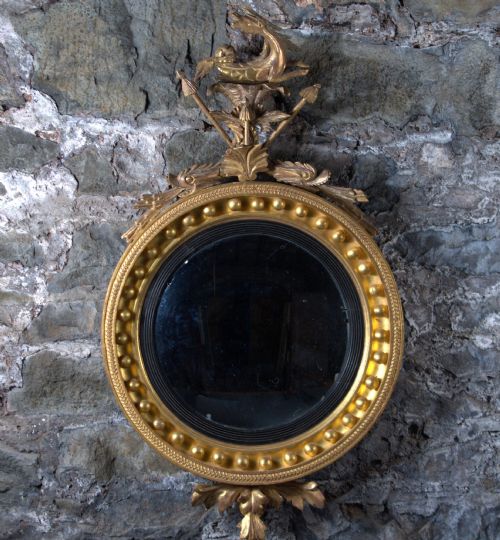


Gold Leaf Circular Mirror
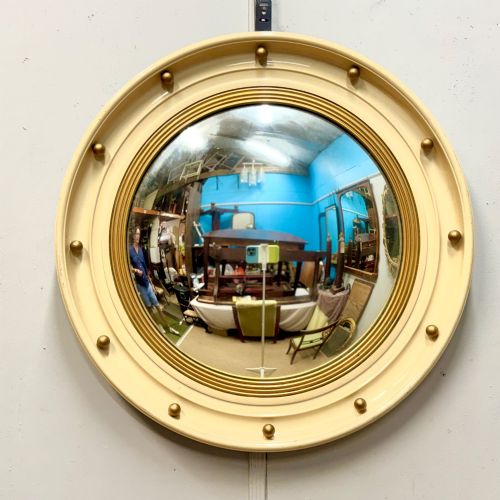
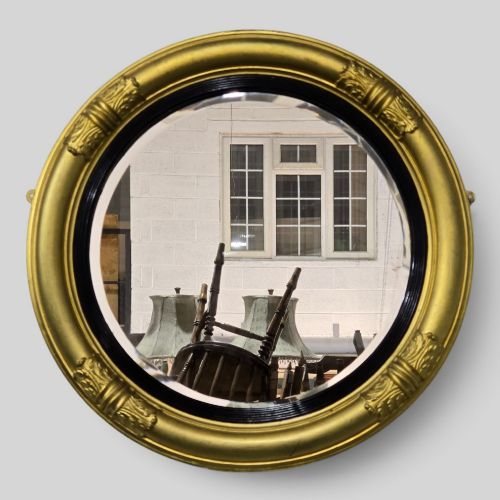
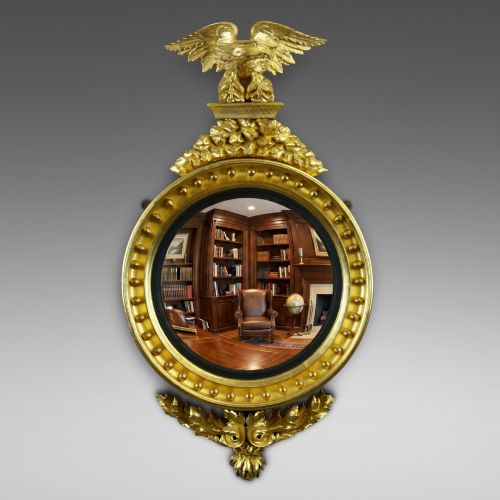
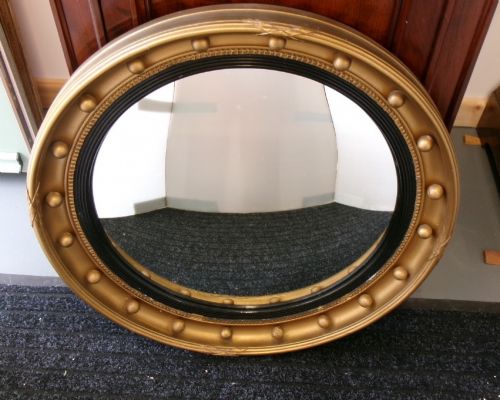
These gold leaf circular mirror examples deliver the classic convex reflection that opens up a room with bright, curved depth.
Gold Leaf Circular Mirror
A gold leaf circular mirror brings a distinct, curved optical presence to a wall, capturing light across a rounded frame. These pieces appear frequently in Regency and Victorian designs, where round wall mirrors and convex porthole formats dominate the selection.
Most examples rely on giltwood, gesso, or painted wood structures finished in gold leaf, often paired with ebonised details. The forms span grand scale Regency interpretations down to smaller Edwardian round gilt mirrors and Florentine pairs.
Buyers selecting a gold leaf circular mirror engage with centuries of design, from authentic early nineteenth century Grecian revival pieces to later revival styles. Each round mirror serves as both an optical instrument and a focal decorative anchor.
How They Were Made
The construction of these frames typically involves carved wood or moulded composition over a wooden base, providing the structural depth required for a heavy rounded form. Artisans applied layers of gesso to smooth the surface before laying fine gold leaf across the profile.
Convex glass plates are set within the rebate, often accompanied by ebonised slip rings or decorative appliques such as carved dragons or classical motifs. The combination of brilliant gilding and dark wood contrasts defines the traditional appearance.
Convex mirrors were once known as banker's mirrors, historically hung in counting houses so clerks could keep an eye on the entire room at once.
What Varies in Quality
The finesse of the carved detail and the depth of the original gilding set the finer pieces apart from standard production. Crisp execution in the gesso work and well-preserved leaf surfaces indicate superior craftsmanship.
Proportion and scale dictate the visual impact, ranging from intimate small frames to grand scale four-foot diameters. The integrity of the convex glass plate and the stable condition of the underlying wooden frame govern the enduring character of each piece.
The Gold Leaf Circular Mirror Glossary
- Convex glass
- Curved mirror glass that bulges outward to provide a wide-angle, warped reflection of the interior space. This type of glass is characteristic of traditional butler and porthole mirrors.
- Giltwood
- Timber carved and subsequently covered with a thin layer of gold leaf or gold paint. It provides the brilliant metallic finish seen on historical frames.
- Gesso
- A plaster-like mixture applied to wood frames to create a smooth surface for gilding. Skilled application allows for crisp, detailed carving relief.
- Ebonised wood
- Timber treated to resemble ebony, providing a stark dark contrast against bright gold leaf. This technique frequently appears on inner rings and decorative accents.
- Regency revival
- A later architectural and decorative style reproducing the distinct neoclassical forms of the Regency period. Pieces from this movement adapt earlier aesthetic principles for Victorian and Edwardian interiors.
Gold Leaf Circular Mirror: Frequently Asked Questions
Where should I hang a convex mirror?
These mirrors excel in entrance halls, formal dining rooms, or above mantelpieces where their wide-angle reflection can capture the entire room. Placing them opposite a window maximises the natural light they disperse.
Because they project visually from the wall, ensure they hang at a comfortable eye level where the curved perspective can be fully appreciated.
How do I date a gold leaf circular mirror?
Dating relies on examining the construction of the wooden frame, the composition of the gesso, and the characteristics of the glass plate. Regency examples often feature distinct neoclassical motifs like reeded bezels or carved crests, whereas Victorian and Edwardian pieces show variations in moulding.
Archive records and stylistic cues such as Grecian revival design help narrow the decade of manufacture when makers marks are absent.
How do I clean a giltwood frame?
Dust the surface gently with a soft, dry brush to prevent any abrasion to the delicate gold leaf layer. Avoid chemical cleaners or moisture, which can damage the underlying gesso and wood.
Professional conservation is recommended for older gilt surfaces to preserve the original finish without stripping the historical patina.
What is the difference between a convex and a flat mirror?
A convex mirror utilises a curved glass plate that pushes the reflection outward, creating a panoramic view of the room within a compact circular frame. Flat mirrors provide a direct, unwarped perspective.
Historically, convex mirrors served practical purposes in grand houses for observing staff or monitoring large spaces from a single vantage point.