




Regency Style Round Mirror
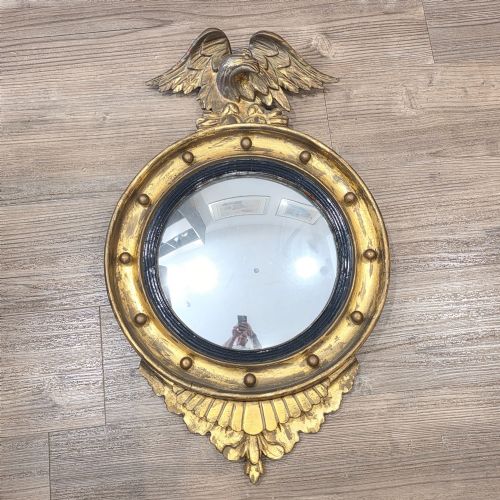
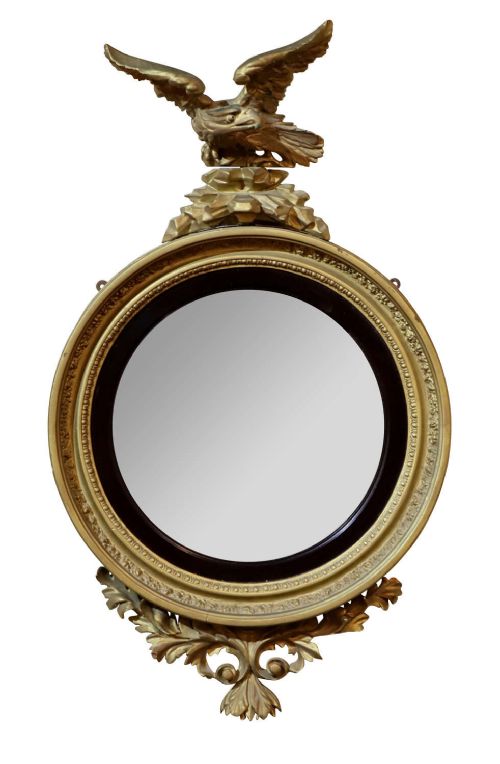
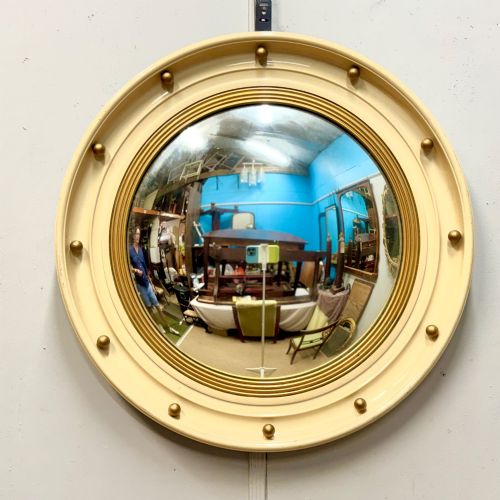
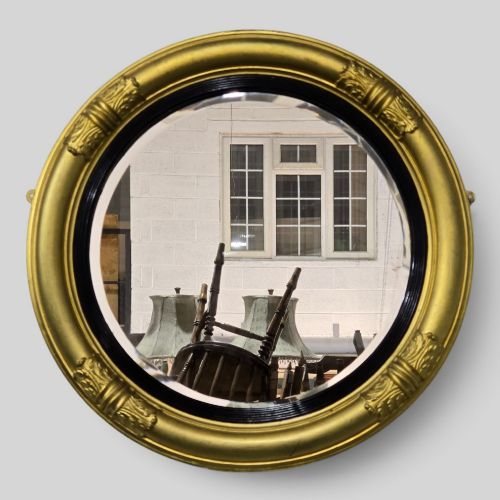
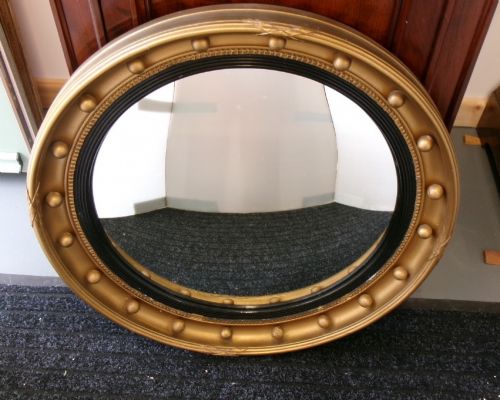
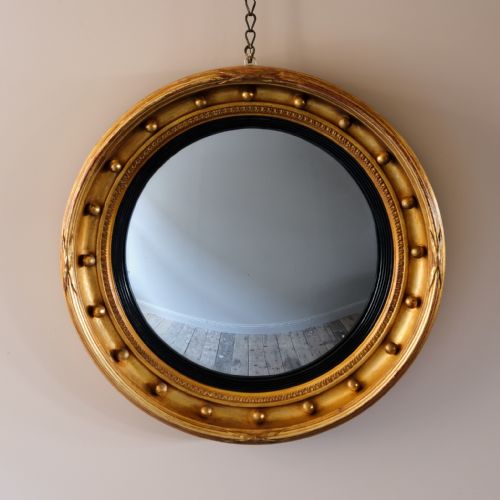
These pieces known as a regency style round mirror combine curved convex glass with gilded timber frames.
Regency Style Round Mirror
A regency style round mirror is a circular wall glass designed to distort reflections and cast light across an interior. Most examples found here date from the nineteenth century into the early twentieth century, spanning original Regency periods through to later Victorian revivals.
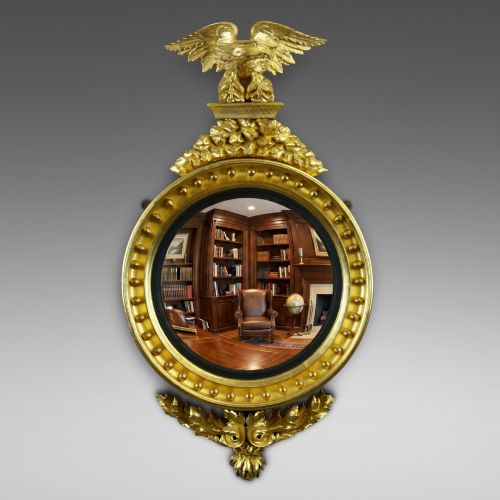
The form typically uses a convex lens set within a round wooden or gesso frame, often described as a butler's mirror or porthole mirror. Common variations include architectural elements such as an eagle surmount positioned at the top of the timber frame.
How they were made
Frames rely on carved wood, gesso, and ebonised timber, finished with applied gilt or paint. Artisans shaped these materials into circular mouldings designed to hold curved mirror glass securely.
Surmounts like eagles involve detailed carving, mounted onto the upper portion of the frame to give the circular glass greater height and presence on a wall.
Listings feature items spanning the nineteenth century, the Victorian era, and the nineteen-twenties using giltwood, mahogany, and brass.
What varies in quality
The refinement of the frame carving defines the upper tier of these mirrors. Crisp detailing in the giltwood and the presence of a well-proportioned eagle surmount separate finely worked pieces from simpler utility objects.
The clarity and distortion of the convex glass itself also alter the visual weight of the piece. Older or more substantial mirrors exhibit heavier framing materials such as mahogany and brass alongside traditional gesso work.
The Regency Style Round Mirror Glossary
- Convex glass
- Curved glass that bends outwards to create a wide-angle, circular reflection of the room.
- Giltwood
- Timber coated with a thin layer of gold leaf or gilt powder over a prepared gesso base.
- Surmount
- An ornamental feature placed at the very top of a mirror frame, such as a carved eagle.
- Ebonised wood
- Timber treated with a stain or finish to imitate expensive ebony.
- Gesso
- A plaster-like mixture applied to wood frames to create a smooth surface for gilding.
Regency Style Round Mirror: Frequently Asked Questions
What is a convex mirror used for?
These mirrors were traditionally placed in butler's pantries or dining rooms to monitor staff and guests across a wide angle.
The curved glass gathers light from across the entire room, brightening dark corners without needing direct windows.
How do I hang a heavy gilt mirror?
Secure hanging requires locating a solid wall stud or using heavy-duty wall anchors rated for timber and gesso weight.
The hanging wire or bracket on the back must be inspected to ensure it connects firmly to the main frame structure.
Are all these mirrors from the Regency period?
While the style originates in the early nineteenth century, many pieces date from later Victorian revivals and the early twentieth century.
Makers continued producing this circular design through eighteen-nineteen-hundred and nineteen-twenty, utilising similar wood and glass techniques.